Culture

Culture

The good, the bad and the ugly in books, exhibitions, cinema, TV, dance, music, podcasts and theatre.

Why we must defend Radio 3 from threatened cuts

Radio

Who doesn’t love Eurovision? All that razzmatazz. The ghastly frocks and gloopy pop songs, the false bonhomie and bare-faced bias when the voting comes around. It’s an irresistible annual event, guaranteed to put a smile on your face and provide the pretence that we are all one happy European family. But all that showbiz comes at a cost (€6.2 million, and rising), with the host country’s broadcaster expected to cough up about one-third of that. What might have to be lost by the cash-strapped Corporation in the next year, or curtailed, to ensure that we put on the biggest and best show ever next year? The BBC budget has become a hot topic in recent weeks.

Rivals Wagatha Christie for its lowbrow twists: FT’s Hot Money – Who Rules Porn? reviewed

Radio

It was recently reported that almost 8 per cent of global internet traffic is to pornographic websites. The rise of working from home may make this statistic less startling than it might have been three years ago, but still, that’s an awful lot of procrastination and, well, not much WFH. Given the dominance of the porn industry, it’s a wonder there hasn’t been an exposé of the kind produced by the Financial Times before now. The newspaper’s investigation into who lurks behind the webcams and controls this business took more than six months to complete and has now been turned into a riveting eight-part podcast series. Hot Money: Who Rules Porn? rivals Wagatha Christie for lowbrow twists.

Why is post-colonial guilt only applied to Western classical traditions? Radio 3’s World of Classical reviewed

Radio

The blurb accompanying the Radio 3 series World of Classical, inviting us to ‘join the dots between classical music traditions of the world’, suggests an introduction to the field of comparative musicology. Such a noble venture – searching for commonalities in melodies, ornamentation, rhythms, use of instruments, vocal styles and techniques and so on – would once have been a vital part of Radio 3’s continued adherence to the Reithian ideals of informing and educating as well as entertaining. Jon Silpayamanant’s series however resembles more a series of episodes of Late Junction, married to a moralising and historically unbalanced commentary.

A belter of a podcast, featuring a mad South African: Smoke Screen reviewed

Radio

I go back and forth on tobacco companies. On the one hand, they are merchants of death. On the other, cigarettes are fun and delicious. On the one hand, they push cigarettes on children, which is unconscionable. And on the other, I remember how I would gather in the park with other children to collectively venerate a ten-pack of Marlboro Lights, our soft, pink fingers shivering and struggling with the lighter mechanism, our untutored lips puffing ineffectually at the speckled filter, all of us beginning to grow woozy from the acrid smoke filling our virgin lungs as we stood there and thought: this is the life. Luckily, Smoke Screen sidesteps this question to focus more squarely on corporate espionage within the tobacco industry.

Hearing Percy Bysshe Shelley read aloud was a revelation

Radio

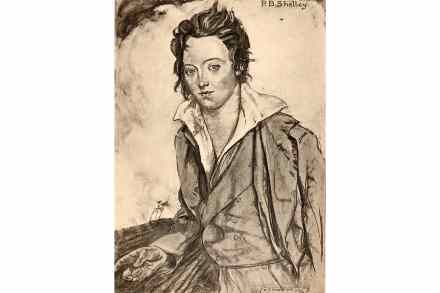
Last week I heard the actor Julian Sands give a virtuoso performance of work by Percy Bysshe Shelley to mark the bicentenary of the radical poet’s death this month. A couple of days later, I listened to a bit more Shelley, this time on the radio, and this time in the voice of Benjamin Zephaniah. Hearing his verses read aloud is so much more intimate than reading them silently. You may be sitting in a crowd, but as Shelley’s words fall into your ears, it’s possible to feel that you’re having a private audience with him. Reading the same poems in an empty room can be comparatively distancing. Zephaniah said something similar when he described his first encounter with the poetry at school.

No genre of storytelling is more formulaic or more exhausted than true crime

Radio

Nothing new under the sun. Or at least it feels that way these days, doesn’t it? The movies are TV shows are comic books are children’s toys. The TV series are podcasts are non-fiction books are magazine articles. The radio shows are real-life stories are Twitter threads are TV series. Even the interesting movies are remakes now. Intellectual property is king, franchises rule the entertainment world and audiences are left to chew the cud from a hundred-stomached cow. Sunrise, sunset and nothing new to offer. So it is with radio, and especially with true crime, the staple crop of narrative radio. No genre of storytelling is more formulaic or more exhausted. No narrative form more consistently fails to deliver what it promises. Yet on it goes.

How interesting an art is fashion?

Radio

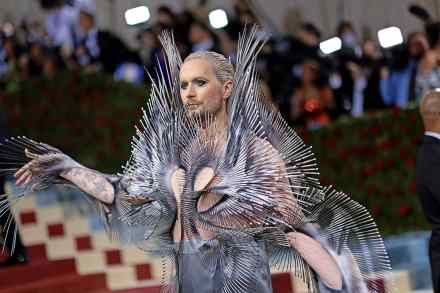
One of the New York Met Gala stylists is sharing tips for wearing a corset to an evening do. ‘Breathe a lot in the morning,’ he tells the Gucci Podcast, with a discernible smile, ‘and by the time you put on the dress, you’ll be full of oxygen.’ The image of a puffed-up toad comes to mind. It’s a bit nuts, isn’t it, the fashion world? The Met Gala is the ball where anything goes – the costumes are witty and extreme – but even so the commentary on it can be pretty earnest, especially in the American press. The stylists on this podcast speak of dressing celebrities like disco balls to reflect their evening personalities, and of relinquishing control to the fashion house.

The cruelty of reality TV was part of the appeal

Radio

Jade Goody appeared on Big Brother in 2002. She was a short, loud, blonde-haired woman who broadcast her every thought and feeling, either in her thick Cockney accent or with her unforgettable face. She became a star. In 2007 she appeared on Celebrity Big Brother, where she made racist comments about her fellow contestant, the Bollywood actress Shilpa Shetty. Effigies of Goody were burned in India; the Sun called her ‘the face of hate’. Hoping to redeem herself, she agreed to appear on Indian Big Brother, where she was told she had cervical cancer with the cameras still rolling. She died less than nine months later. It was a three-act drama that only reality TV could have delivered. Call it 45 minutes of fame.

Boldly and brilliantly unoriginal: Kermode and Mayo’s Take reviewed

Radio

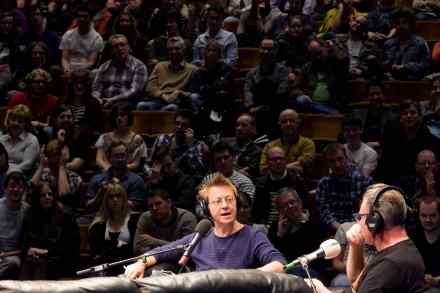
Last April Fools’ Day, Mark Kermode and Simon Mayo wound up their award-winning film review show on BBC Radio 5 Live after 21 years on air. A little more than a month later they are back with Kermode and Mayo’s Take, a podcast so similar in flavour and format that you could call it an up-yours to their critics. While Mayo stressed that it was their decision to go their own way – ‘we have decided, and to be clear: that’s no one else has decided’ – he was slightly more candid about his experience in an interview with the Radio Times a few weeks ago. People of my generation have grown up with Kermode and Mayo, and were as surprised as any by their departure. But we needn’t fret.

Enjoyably plummy and male: Battleground – The Falklands War podcast reviewed

Radio

The Battleground podcast on the wars of the 20th century, said presenter Saul David happily, ‘will have lots of bombs and bullets but we’re also interested in other aspects of conflict: social, political and cultural’. He’s a military historian. His co-presenter, Patrick Bishop, went on: ‘Alongside the personalities, the battles and the technology – and there will be plenty of that, we promise – expect to hear some thought-provoking stuff that puts conflict into its wider context.’ He is a veteran foreign correspondent who has written lots of war books; I first met him in Kosovo.

A podcast with real emotional heft: Philippa Perry’s Siblings in Session reviewed

Radio

Have you ever taken a piece of advice? I’m not asking a rhetorical question. Have you ever once in your life been given a piece of advice that you’ve then acted on? I ask this question a lot at parties, and generally find the answer is: ‘No, not that I can think of.’ It may be that when we take good advice, we begin to imagine we came up with the idea in the first place. It may be that we always just do whatever it is we were always going to do. All I can say for sure is that if you ask: ‘What’s the best piece of advice you’ve ever given someone else?’, people will keep you there all night. Best Friend Therapy bills itself as a chat between two best friends that will impart the blessings and insight of therapy.

A wonderfully unguarded podcast about the last bohemians

Radio

Ordinarily, if a podcast purports to be revelatory, you can assume it is anything but. There’s a glut of programmes at the moment featuring interviewer and interviewee locked in passionate heart-to-hearts in which a few, carefully selected beans are spilled to no real consequence or effect. The Last Bohemians makes no claim to shatter the earth with secrets, but the guests are so unguarded that the episodes possess that longed-for bite. Maggi Hambling reels off a to-do list she made at art school while she was seeking to lose her virginity: ‘Older man, younger man, black man, woman’. Dana Gillespie, singer and former flame of David Bowie, describes undoing her top button to be photographed in the cleavage-obsessed press of her youth.

Why we drink

Radio

‘I like to have a martini,/ Two at the very most./ After three I’m under the table,/ After four I’m under my host.’ I never fully appreciated the brilliance of that spurious quote of Dorothy Parker until I visited Dukes Bar in Mayfair. It used to be the case – it probably still is – that you may order no more than two martinis there owing to their potency. Had she not preferred whisky to gin, Parker might well have banged her fists on that table for a third. After one-and-a-half before dinner, however, this critic would be more inclined to dance on it. Humans may respond to drink in different ways, but we are, in fact, better at processing it than most other primates. In ‘Why do we use intoxicants?

New Marr is very much the same as the old Marr: LBC’s Tonight With Andrew Marr reviewed

Radio

Andrew Marr got his voice back this week. That may come as a bit of a surprise to everybody who’s been watching and listening to him on the BBC for the past 22 years but it’s the reason he gave when he announced last year that he was leaving. On Monday we heard the new voice. Marr made his debut on LBC. He’s presenting a 6 p.m. show four days a week in an hour nicked off Eddie Mair. Maybe ‘new’ voice is wrong. Not so much new, perhaps, as the old pre-BBC voice. The one he’d been forced to suppress. He called it ‘entirely my own voice’. After my own 51 years as a BBC journalist, I think I know what he means. If I sound a little hesitant it’s because in all those years nobody explicitly told me what to say or how to say it.

Some of the best social commentary around: Celebrity Book Club with Steven & Lily reviewed

Radio

When I was ten years old I had a babysitter who was a beautiful graduate student at an Ivy League university who loved to read celebrity gossip tabloids to ‘turn her brain off’. After I’d finished my homework, she and I would watch the only reality TV show I’ve ever loved, The Hills, and read magazines about Brangelina. This all ended when I was with my mom at the grocery store and I tried to buy a tabloid, and my mother, a Woman of Taste, asked what on earth I was doing. I said, copying my babysitter, ‘it’s to turn my brain off’, and my mom flipped out and made me to go to my room and read something like Stella Gibbons’s Cold Comfort Farm.

If you like First Dates, you’ll love This is Dating

Radio

The tagline of This is Dating, a new podcast from across the pond, is ‘Come for the cringe, stay for the connection.’ This sums up the listening experience pretty well. If the prospect of eavesdropping on a series of strangers’ first dates sends a shiver down your spine (some of us have endured enough disastrous dates of our own), give it ten minutes and cupid’s arrow should slowly begin to sink in. The concept is similar to that of First Dates, the reality TV show in which lonely hearts pair up for dinner and judgment while a sexy French maitre d’ looks on, pitying the lack of social skills on display before him. The difference is that This is Dating doesn’t play for laughs.

Glorious and bracing interrogation of the world’s smartest people: Conversations with Tyler reviewed

Radio

Tyler Cowen is a man who leaves you at once in awe and perturbed. He is the Holbert L. Harris chair in the economics department at George Mason University, and the co-host of the popular economics blog Marginal Revolution. But his intellectual interests are staggering in scope, enough to unsettle. He is a true polymath. He embodies the American work ethic. He goes through ‘five or ten books’ a day. His Marginal Revolution blog is not for the faint of mind: he sends up to 40 emails each week. At any time of his choosing, Tyler pops into your inbox to show you a new study he’s found (‘which words do men use more than women?’), tips for getting better at watching films (‘get a mentor!’) or news from Norwegian sex resorts.

The dark world of illness influencers

Radio

I have heartburn. I probably have heartburn simply because both my parents also had a lot of heartburn, and I have treated it the same way they treated it, with antacids. But lately, with all the sleep disruption and discomfort, I tried to get rid of my heartburn and regretted it. I didn’t talk to my doctor, however, because the last time I tried to schedule an appointment the earliest she could see me was in six months. Instead I went to the internet. I was told to change my diet, so I changed my diet. Still had heartburn. I was told to cut out red wine, so I cut out red wine. Still had heartburn. I was told to add preventive measures such as lime juice, so I mixed lime juice with seltzer every morning. Still had heartburn.

Disappointingly conventional and linear: BBC radio’s modernism season reviewed

Radio

This week marks the beginning of modernism season on BBC Radio 3 and 4, which means it’s time for some pundit or other to own up to abandoning Ulysses at page seven, or to finding T.S. Eliot a bore, or to infinitely preferring the landscapes of J.M.W. Turner to the repetitive squares of Kazimir Malevich. That pundit, however, won’t be me. Modernism is rather like the birth of the Roman Empire. It could be seen as a brilliant sloughing off of everything that had decayed in favour of sensible revolution, or as the predictably reactive consequence of years of wrangling over a loss of identity.

The best podcasts about dying, or almost dying

Radio

If there’s any form of entertainment that I will reliably find time for, no matter how big the to-read pile or how long the to-do list, it is the dying-on-an-adventure true story. I have yet to watch about half the films being called the best of the year, but I am devouring documentaries about hikers and extreme sports athletes going missing in national parks on every streaming service. I have work to do, but still I can’t put down Nastassja Martin’s In the Eye of the Wild, her memoir about barely surviving a bear attack in Siberia. Every winter, with the first snowfall, I send everyone I know the link to Peter Starks’s essay ‘Frozen Alive’, published by Outside Magazine years ago, about what it’s like to freeze to death.

Everything in me wanted to dislike it – but it’s lovely: BBC Radio 3’s Sound Walk reviewed

Radio

It’s a sweet, green, glowing dawn in north-west Scotland. All around us are empty hillsides of rock and heather. The cold air smells of moss. To the south, far mountain peaks resolve into high banks of mist and cloud, while up ahead stands the crumpled rock face of Ben Nevis, its broad shoulders beginning to fill the patchy, blueing sky as we walk towards it. It’s very beautiful. Look. A heron. Why are we here? To take the long view, because two million years of intermittent glaciers have frozen, thawed and hewn the mountain into its present-day shape. More immediately, because of the Norwegian public service broadcaster. In the 2000s, it decided to televise, in real time, the railway journey from Bergen to Oslo.

Radio 4’s Moominland Midwinter restores Moomintroll’s innocence

Radio

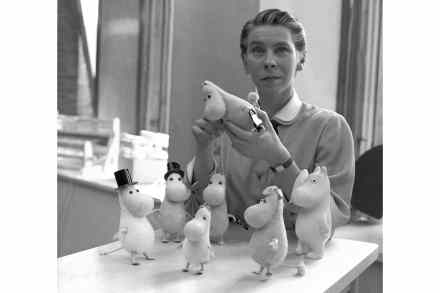
Moomins do not like winter. In one of Tove Jansson’s stories, Moomin’s Winter Follies, young Moomintroll bumps his head when the sea ‘goes hard’, prompting Moominmamma and Moominpappa to hurry the family into hibernation. They attempt to follow the tradition of their ancestors by scoffing pine needles and covering the furniture in dust sheets before bedding down on hay, but Moominpappa, for one, is troubled by the prickliness of all this: ‘Who said I must do like my ancestors?’ They briefly abandon the idea and postpone their sleep to try some winter sports, but Moomins are not really built for skiing.

Brought me to tears: Tortoise Media’s Sweet Bobby podcast reviewed

Radio

Eleven years ago, Kirat Assi received a message on Facebook from a man named Bobby. There was a family connection — he was the elder brother of her second cousin’s boyfriend, who had recently passed away. Bobby wanted a shoulder to cry on, someone to speak to as he processed the grief of losing a sibling. Kirat obliged. They grew closer. When he had work worries, health problems, when his marriage began to break down, he told her everything. Eventually, they became lovers. Except Bobby didn’t really exist. What started as a simple message turned into a decade of deception and coercive control at the hands of a master manipulator.

When will the Nineties revival end?

Radio

We’ve been living through a nostalgia for the 1990s that has lasted longer than the decade itself. That was back when music was cool, the only Batman movie wasn’t a fascistic fantasy of surveillance and control, and dresses over jeans looked good. Podcasts and documentary series have really dug into the decade to reinvestigate and reappraise everything that went down in those ten years. I’ve listened to a podcast that takes the top hits of the decade one by one and defends each song, I’ve watched specials on why every maligned woman of the era (Lorena Bobbitt or Tonya Harding or Monica Lewinsky) was good actually and the only bad thing here is patriarchy actually.

It’s amazing how little insight Paul McCartney has into the Beatles’ genius

Radio

The Paul people are out in force these days. A New Yorker profile, a book and a new documentary have put the Beatles, and particularly Paul, back in the papers. Not that they, or he, ever left. I should admit a bias. I have the same first name as John, and being a man of straightforward loyalties I took him as my favourite early on. Even now I find him the most interesting of the four: vain, sardonic, nasty, boyish, thoughtful, wounded; bright-eyed and pugilistic and blessed with an undermining cleverness that left him bored by whatever he came across. The even-tempered Paul just doesn’t entrance me in quite the same way.

The astonishing stories behind today’s culture wars: Radio 4’s Things Fell Apart reviewed

Radio

Martin McNamara, the writer of Mosley Must Fall, a play on Radio 4 this week, must have had a jolt when he opened the papers to find old Oswald back in the news. Oxford University is said to have accepted £6 million from a trust set up by the fascist leader’s son, the racing driver Max, using funds passed down through the family. Cries of ‘Rhodes Must Fall’ have been echoing down the High in Oxford for many years now. If Mosley must fall, too, then this play may prove particularly timely. Although set in Whitechapel, east London, in 1936, the story consciously teeters over live issues, including immigration, the polarisation of society and the threat of violent protest.

The best podcasts about money

Radio

Stories about money are never about money. They are about pain, about family, about atrocity, about luck, about health, about politics. And while we get a kind of vicarious thrill from listening to other people’s financial tales of woe, whether we are morally condemning a millennial for buying a daily flat white when she could be putting that $3 into a savings account that earns zero interest in the hopes that the city she lives in won’t be underwater from rising sea levels by the time she has enough for a deposit or just feeling gratitude that we are better off than the poor shmuck explaining their hundreds of thousands of dollars in student debt, rarely are these stories allowed to be as complex as their situations truly are.

In Bennington it was a badge of dishonour not to have slept with your professor

Radio

It is incredibly hard to convey the fleeting invincibility and passionate self-significance that we feel on the cusp of adulthood. Youth goes: the skin fades, the face slackens, the lower back begins to groan in protest. The world dims and we dim with it. Yet generally speaking, we’re as personally winded by that realisation as we are indifferent to it in others. When everyone suffers, no one cares. Why should I bother with someone else’s wasted youth? I’ve got one of my own right here. Still, I was intrigued by the appearance of Once Upon a Time at… Bennington College, an eight-part oral history of three literary superstars’ time at university together.