Culture

Culture

The good, the bad and the ugly in books, exhibitions, cinema, TV, dance, music, podcasts and theatre.

Eastern promise | 16 July 2015

Opera

These are nervous times at the opera. When should we expect the gratuitous rape scene? Will the director relocate the action to a Croydon laundrette? Who might be booed, and for how long? With Opera Holland Park’s Lakmé, however, almost any of these diversions might actually be welcome — anything to save us from the tasteful visual torpor that looms over Aylin Bozok’s production like a choking black cloud. Consider the riot of colours embedded in Delibes’ opera. We’re in India in the late 19th century, where officers of the British Raj fly the flag and march to fife and drums. There’s a bustling bazaar and glinting jewellery. Sensuous hues burst from the music. Flowers creep in everywhere, from the luminous lotus to the poisonous datura.

Shaw hand

Opera

When is a rape not a rape? It’s an unsettling question — far more so than anything offered up by the current headline-grabbing William Tell at the Royal Opera House — and one that lies beneath the meticulous dramatic archaeology of Fiona Shaw’s The Rape of Lucretia. Unlike William Tell, however, there seems little chance of this attack starting riots. Where the director of Tell asserts, Shaw interrogates — a delicate, insistent questioning that probes further and more intrusively, a violation of ideological rather than physical absolutes. Debuted in 2013 as part of the company’s touring season, Shaw’s production now returns to the main festival, where the chamber opera had its première in 1946.

Show and Tell

Opera

There’s no such thing as a tasteful rape scene — or there certainly shouldn’t be. It’s an act of grossest violation, of primal violence. It’s also a reality — and a growing one at that — of contemporary warfare, a ‘weapon’ increasingly deployed strategically, coolly, by armies rather than individuals. Setting his new production of Rossini’s Guillaume Tell in the Balkan conflict of the 1990s, director Damiano Michieletto puts the issue front and centre in a scene whose music was almost lost on opening night in the extraordinary and unprecedented chorus of boos and catcalls from the audience.

Better than Bayreuth

Opera

Which of Wagner’s mature dramas is the most challenging, for performers and spectators? The one you’re seeing at the moment, seems to be the answer for me. The better I know them, the more apprehensive I get about whether I can rise to their level, and whether the performers can, and whether we can pace ourselves and not flag at the prospect of the last act, in most of them the greatest and most exhausting. In the end, though, I think Tristan und Isolde takes the biscuit. It’s a matter of gratitude, almost, if the Prelude isn’t as overwhelming as it naturally tends to be. At Longborough this year it wasn’t, and I was duly grateful.

Between Kafka and Crossroads

Opera

We opera critics love gazing into crystal balls. We’re particularly good at discovering Ed Milibands and backing them to the hilt. Postwar opera is full of them. Take Hans Werner Henze. He was considered the future his entire life. Yet watching a presentation of two of his chamber operas at the Guildhall School of Music last week, it was hard not to think, how? Why? To be fair Henze never intended his early radio opera Ein Landarzt (1961) to work on stage. Originally conceived as a vehicle for Dietrich Fischer-Dieskau, the piece concedes nothing to dramatic interest (even in this theatrical adaptation). An overwrought Kafka monologue — in which a doctor hallucinates for half an hour — is coolly despatched in an orchestral game of pass-the-parcel.

Blowing hot and cold | 11 June 2015

Opera

The opera director David Alden has never been one to tread the straight and narrow. Something kinky would emerge, I’m sure, even if he directed the Queen’s televised Christmas message. So matching him up at English National Opera with the madness, obsessions and phantasmagoria of Tchaikovsky’s whirring and troubling The Queen of Spades was simply asking for trouble. The Alden fingerprints quickly emerge. We’re in several periods at the same time: Pushkin’s Imperial Russia, yes, but also Stalin’s ossified Soviet Union, plus splashes of the frivolous 1920s and 60s and a snatch of the 18th century.

Carmen v. Carmen

Opera

It’s been a busy operatic week, with a nearly great concert performance of Parsifal in Birmingham on Sunday (reviewed by Anna Picard in last week’s Spectator), Carmen at the Coliseum on Wednesday, Donizetti’s Poliuto at Glyndebourne on Thursday and Carmen, also at Glyndebourne, on Saturday. A trajectory that Nietzsche would have approved of, moving from brooding northern transfiguration to sunlit, brilliant southern violence and destruction. Poliuto is mostly known, if at all, in the live recording made at La Scala in 1960 as a vehicle for Callas’s return, in a role that made comparatively small demands on her, and much larger ones on Franco Corelli and Ettore Bastianini.

Lost boys

Opera

In Beryl Bainbridge’s novel An Awfully Big Adventure the producer Meredith Potter issues a doughty injunction on the subject of staging Peter Pan: ‘I am not qualified to judge whether the grief his mother felt on the death of his elder brother had an adverse effect on Mr Barrie’s emotional development, nor do I care one way or the other. We all have our crosses to bear. Sufficient to say that I regard the play as pure make-believe. I don’t want any truck with symbolic interpretations.’ Symbolic interpretation hangs heavily over the rough-and-tumble jumble of Janacek, Beethoven, Stravinsky, Satie, Handel, Vivaldi, sea shanties and klezmer in Lavinia Greenlaw and Richard Ayres’s half-brilliant, half-bewildering operatic adaptation for Welsh National Opera.

Polite pillage

Opera

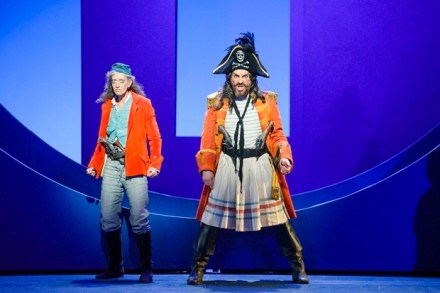
Forget the pollsters and political pundits — English National Opera called it first and called it Right when it programmed Gilbert and Sullivan’s The Pirates of Penzance to open just days after the general election. Who else is the target audience for an operetta that guilelessly proclaims, ‘We love our House of Peers’, and celebrates both the dynastic possibilities of marriage and the material aspirations of a Major-General who bought his ancestors along with his faux-baronial castle, if not Tories (shy or otherwise)? But if ENO has hit a political home run, the same can’t be said artistically of a production Gilbert himself might have described as ‘skim milk masquerading as cream’. Mike Leigh swore he would never direct an opera.

Ways of hearing

Opera

‘What gives your lies such power?’ asks the bewildered Sicilian leader in Szymanowski’s opera Krol Roger. The question is addressed to a charismatic shepherd, on trial for propagating a lascivious new religion of unbridled sensuality. Roger’s wife, Roxana, has already converted along with many of his subjects, while the city’s conservative and clerical factions clamour for the blasphemer’s death. But Roger resolves to see for himself. Or rather hear for himself.

Triple triumph | 30 April 2015

Opera

Three staples of the Italian repertoire, performed and seen in very different circumstances, have confirmed my view that they deserve their place in the repertoire, however many other works by their composers or contemporaries may be unearthed. I saw OperaUpClose’s version of Donizetti’s The Elixir of Love in the Mumford Theatre Cambridge, an underused venue that has the advantage of being 200 yards from my house. It is by far the best thing I have seen OUC do, and I regret catching only the last of many performances, but the only one here, where there is almost no interest in opera.

Off colour

Opera

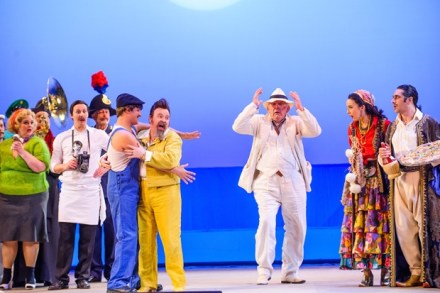
Big slats of orange, burning yellows, an Adriatic in electric blue: I wish I’d bought my sunglasses to the Royal Opera’s latest revival of Il turco in Italia. Moshe Leiser and Patrice Caurier’s production of Rossini’s opera buffo first burst on to the Covent Garden stage in 2005, and its shrieking colours haven’t dimmed with the years. For good or bad, this is one show when you do actually come out whistling the sets (they’re by Christian Fenouillat). I was humming Agostino Cavalca’s costumes too, from gypsy confusion through bouncing fezzes to the absurd glitter of the climactic masked ball.

Falling down

Opera

This week, some 200 years since Goya’s ‘The Disasters of War’, almost 80 years after Picasso’s ‘Guernica’, and over 50 since Malcolm Browne won a Pulitzer for his photograph of a self-immolating Buddhist monk, the British media found itself questioning whether art should, or even could, ever represent the horrors of recent history. It was a conversation that picked minutely over the ethical responsibilities of an opera based on the events of 9/11 — was it too soon? how would the families feel? would it exploit tragedy for drama? — but one whose ceaseless moral whys and wherefores prevented it ever arriving at the only real artistic question: how?

Beauty and the bleak

Opera

The Ice Break is Michael Tippett’s fourth opera, first produced at Covent Garden in 1977 and rarely produced anywhere since, though there is an excellent recording of it. Its brevity (75 minutes) rather took the wind out of the Royal Opera’s sails, since they had envisaged a full evening’s piece. So, I imagine, did its wackiness, though more extreme things in that line were to follow from Tippett. There are numerous ingredients in The Ice Break, but it gives the impression that its composer was so fascinated by all of them that he restlessly moves from one to another, leaving his audience to see whether they can make sense of them. As with his previous opera, The Knot Garden, almost all the characters have strange names — Lev, Yuri, Olympion, Astron etc.

Why we should revel in the empty virtuosity of Handel’s pasticcios

Opera

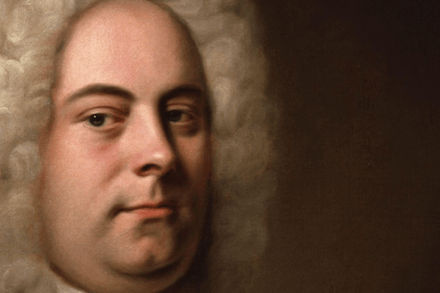
Before the jukebox musical, back when Mamma Mia!, Jersey Boys and Viva Forever! were still dollar-shaped glints in an as-yet-unborn producer’s eye, there was the pasticcio opera. Literally a musical ‘pastry’ or ‘pie’, these brought together arias from different operas, often by different composers, in a single work, designed as a way of feeding an 18th-century public whose appetite for opera was greater than composers’ ability to sate it with new music. Everyone did it — Vivaldi, Mozart, Haydn, and of course that ultimate musical pragmatist Handel — but that didn’t make the practice any the more respectable, as one satirist’s pasticcio ‘recipe’ makes clear.

Royal Opera’s Rise and Fall of the City of Mahagonny review: far too well behaved

Opera

Brecht/Weill’s Rise and Fall of the City of Mahagonny was premièred in 1930, Auden/Stravinsky’s The Rake’s Progress in 1951. Twenty-one years separate them, but it seems, as one looks back, enormously more than that. Think of 1994 and now, no time at all, and not only for an ageing opera reviewer. Both works tend to be routinely referred to as masterpieces, but seeing them both in the space of three days — Mahagonny at the Royal Opera, The Rake’s Progress at the Royal Academy of Music — I felt fairly strongly that they are both patchy pieces, neither representative of their composer at or even near his best.

Alice in Wonderland at the Barbican reviewed: too much miaowing

Opera

Charles Lutwidge Dodgson loved little girls. He loved to tell them stories, he loved to feed them jam, he loved to set them puzzles, and he loved to take their photographs. On 25 March, 1863, he composed a list of 107 prepubescent portrait subjects, arranged alphabetically by forename. Below the Agneses came the Alices, including Alice Liddell, the little girl for whom he created Alice in Wonderland. Mostly good-mannered, occasionally lachrymose and stuffed full of half-remembered governess-led learning, the fictional Alice displays behaviour quite out of step with her age. Instead of doing what she is told to do by the creatures she meets, she behaves like an adolescent (though adolescence was to Dodgson a destructive force) and learns to disobey.

ENO’s Indian Queen reviewed: Peter Sellars’s bold new production needs editing

Opera

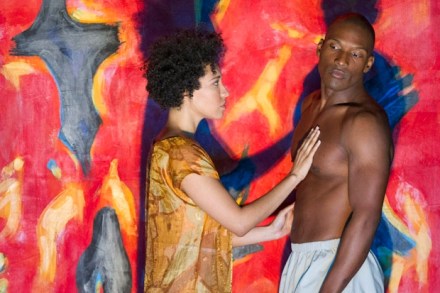
When is an opera not an opera? How much can you strip and peel away, or extend and graft on to the genre, before it simply ceases to be itself? These questions dominated a week in which directors turned vivisectors for new productions — reimaginings — of Purcell’s Indian Queen (ENO) and Mozart’s Don Giovanni (Silent Opera). Anyone familiar with Peter Sellars’s work will know better than to expect any paring back from the larger-than-life American. Amplification is the order of the day for Purcell’s semi-opera — expanded from a trim 50 minutes of unfinished music yoked to a play by Dryden and Howard to a three-and-a-half-hour musico-dramatic spectacle. If that sounds pretentious and portentous, then that’s about right.

Opera North’s Gianni Schicchi and La vida breve reviewed: a flawless double helping of verismo

Opera

Is there a more beautiful aria than ‘O mio babbino caro’ from Puccini’s Gianni Schicchi? There are more overwhelming moments in opera, to be sure, but few arias can rival it for the way its beauty kicks you in the back of the knees; its gentle rocking motion causes your shoulders to slump while the little floated top notes dilate the music’s gaze, drawing the listener irresistibly into its secret promise of untroubled bliss. Nor does it help that the aria’s whole point is to be irresistible. ‘Daddy dearest, I love him so,’ sings Schicchi’s teenage daughter Lauretta.

La Donna del Lago, Metropolitan Opera, review: Colm Toibin on a night of masterful singing

Opera

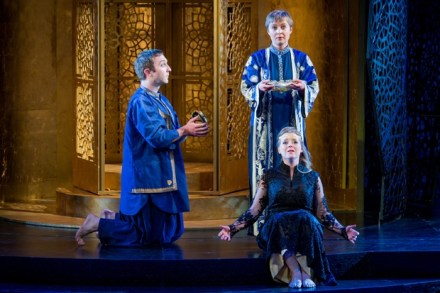
La Donna del Lago, based on a poem by Sir Walter Scott, is one of the nine serious, dramatic operas that Rossini wrote for Teatro San Carlo in Naples between 1815 and 1822. At the time the opera was produced he had at his disposal not only a great soprano, for whom he wrote with considerable flair, but two expert tenors and a contralto taking the part of the young male lover. In the first-ever production at the Met in New York that has just opened, the colours move from the sultry sky of Scotland in the first act to the starkness of a field after battle and then the sumptuous golds in King James V’s palace in the second act. Something like this happens too in the vocal writing, which ranges from the stunningly beautiful to tones that are darker and more restrained.

Mastersingers of Nuremberg, ENO, review: ‘a triumph’

Opera

ENO’s new production of Wagner’s The Mastersingers of Nuremberg is a triumph about which only the most niggling of reservations can be set. Every aspect — orchestral, vocal, production — works in harmony to effect one of the richest, most intensely absorbing, energising and delightful afternoons and evenings I have ever spent in the theatre. It is above all a team effort, and since individuality and teamwork are very much what Mastersingers is about, that made it still more satisfying. However, two people must be singled out: Richard Jones for the finest of all the productions of his I’ve seen. This one comes from Cardiff, where it was unveiled almost five years ago.

Why we should say farewell to the ENO

Opera

It’s easy to forget what a mess of an art form opera once was. For its first 100 years it had no name, it had no fixed address, it didn’t really know who it was or what it was doing. You’d find it at schools, at weddings, at political functions. It was an artistic whore for hire. Embroiled in an epic tug-of-war as to which of the three art forms — word, music or dance — should be primary, it was also lithe and experimental. In fact, it was more like performance art than anything you’ll witness in a modern opera house. Why this historical detour?

An artistic crime is committed at the Royal Festival Hall

Opera

In one of the more peculiar concerts that I have been to at the Royal Festival Hall, Vladimir Jurowski conducted excerpts from Das Rheingold in the first half of the programme, and Rachmaninov’s little-known opera The Miserly Knight in the second half. The idea, I gleaned from a pre-concert chat by the conductor and others, was that the first half would shed some light on the second, showing that although Rachmaninov, at one time an industrious operatic conductor, almost certainly never conducted Wagner, he was strongly influenced by him. The point seems academic, unless you are interested in the minutiae of musical history. Anyway, the Rheingold excerpts failed miserably, on their own terms and as a portent.

Andrea Chénier, Royal Opera House, review: like a Carry On – but without the jokes

Opera

Who on earth could have predicted that a hoary old operatic melodrama set in revolutionary France would find resonance in the present where the pen as a weapon against bigotry and hypocrisy has suddenly achieved iconic status. But hold up, let’s not get carried away. We’re talking about Giordano’s Andrea Chénier. Though its eponymous poet does indeed extol free expression at the service of love, the sentiments — the voices of reason in a time of high anxiety — don’t run too deep. And so we’re back where we started, with a hoary old melodrama.

Royal Opera’s Orfeo, Roundhouse: shouts its agenda so loudly the music struggles to be heard

Opera

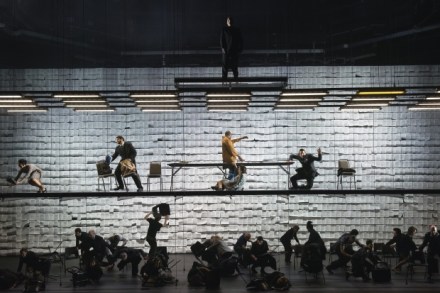
What a week to stage an opera about art’s power to challenge institutional authority, oppression — even death itself. Orfeo’s weapon might be a lyre rather than a pen, but the metaphor is silhouetted clearly against the monochrome backdrop of the Royal Opera’s new production of Monteverdi’s opera. Director Michael Boyd, former artistic director of the RSC, has taken a world of nymphs and shepherds and stripped it for conceptual parts. A battle between Gods and men is reinvented as a struggle between individual creative autonomy and faceless obedience to church and state. In Tom Piper’s designs, meadows and bucolic loveliness are out and 24-style metal walkways and gantries are in.

Royal Opera’s Un ballo in maschera: limp, careless and scrappy

Opera

Whether by chance or bold design, the Royal Opera’s two Christmas shows were written at precisely the same moment, between 1857 and 1859, and both mark a high point of refinement in their respective traditions. Both Wagner’s Tristan und Isolde and Verdi’s Ballo in maschera sometimes give the impression of being entranced by their abstract musical fantasy; the drama on stage is suspended, drawn out, barely engaged with as the characters and audience peer down into the writhing or transfixed world being created in the orchestra pit. In my view, neither composer ever did anything better in musical terms. But sometimes you feel that there is no hope for Ballo.

Royal Opera’s Tristan und Isolde: an absurd production – but still a magnificent night

Opera

Any adequate performance of Tristan und Isolde, and the first night of the Royal Opera’s production was at least that, leaves you wondering what to do with the rest of your life, as Wagner both feared and hoped it would. What Tristan does — one of the things — is to present an image of romantic love, in both its torments and its ecstasies, which makes everything else seem trivial; and at the same time to undercut that image by asserting the claims of ordinary life, but in the subtlest way.

Agents will be queuing up to sign this 26-year-old baritone from Sichuan

Opera

The Royal Academy of Music’s end-of-term opera can always be looked forward to because it never disappoints: the repertoire is enterprising, the musical performance is invariably on a high level, and the productions are almost always sane and unpretentious: qualities that can’t be relied upon in more prestigious houses. This term’s production(s) were no exception: the strongest two of Puccini’s Il trittico. If you have to say that one of the three is weaker than the others, my vote goes to Il tabarro, Puccini’s attempt at verismo, a B-opera comparable to B-movies of the 1940s, except that they tended to be not quite so relentlessly conscientious in building atmosphere and more intent on actually getting on with the plot.

Forget the Germans. It’s the French who made classical music what it is

Opera

The poor French. When we think of classical music, we always think of the Germans. It’s understandable. Instinctive. Ingrained. But unfair. We forget that most of the heavy lifting — most of the intrepid leaps forward in harmony, colour, rhythm and form — was done by the likes of Berlioz, Debussy and Boulez. The most completely forgotten of these Gallic explorers is Jean-Philippe Rameau (1683–1764), who died 250 years ago this year. His operatic output, begun when he was 50 and comprising 30 works, is an acquired taste. I remember the exact moment I fell for him. The exact notes in fact. It was the opening aria of his one-acter Pigmalion. Three flutes, comforted by strings, sob in a corner.