Culture

Culture

The good, the bad and the ugly in books, exhibitions, cinema, TV, dance, music, podcasts and theatre.

Hole in the heart | 6 October 2016

Opera

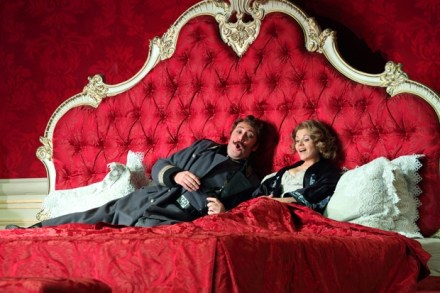
Richard Jones’s new production of Don Giovanni at ENO bears some passing resemblances to the opera as envisaged by its librettist and composer. Mainly, however, it goes its own way, refusing most of the time, especially at key moments, to listen to the music Mozart wrote, with consequences that Jones no doubt regards as ‘creative infidelity’. When we enter the auditorium we see a contemporary streetlight and a phone booth, straight out of Jones’s production of Siegfried at the Royal Opera 20 years ago. The curtain rises on a huge ‘Wanted’ poster of Christopher Purves, followed by a depressing series of bleak rooms, in one of which the Commendatore is bedding a prostitute and wearing white boxers, signifiers of nudity at ENO.

Losing heart | 29 September 2016

Opera

The subtitle for Mozart’s Così fan tutte may be ‘The School For Lovers’, but it’s as a school for directors that the opera is most instructive. From four lovers and two different romantic pairings, the composer spins a parable whose moral is as elusive as its morals. Faced with so much ambiguity (and so little political correctness) directors tend either to sand down the rough edges with laughs, or fling a capacious concept over the whole lot. It says something about the awkward profundity of this most inscrutable and affection-resistant of the Mozart-Da Ponte collaborations that it can take it. It says even more that you so rarely see an outstanding production.

Pole apart

Opera

Alas, poor André Tchaikowsky. A survivor of the Warsaw Ghetto, with an assumed name that probably did his musical career as much harm as good (he was born Robert Andrzej Krauthammer), he died of cancer in 1982 shortly after his only opera, The Merchant of Venice, was rejected by ENO. He’s remembered today principally for bequeathing his skull to the Royal Shakespeare Company for use as a prop, in which capacity he starred alongside David Tennant in Hamlet in 2008. That skull had a tongue in it and could sing once.

Super Norma

Opera

The Royal Opera has opened the season with a triumph, and in one of the most difficult of operas, Bellini’s Norma. Not only is the work itself extraordinarily demanding on its three leading singers, but it is the one opera which is now so indelibly linked to one singer that all later performances are defined by whether they are in the same mould or whether they are resolutely different. One can’t envy listeners who have never heard Callas, in one or another of her many recordings of Norma, because it is so overwhelming an experience, but it would make life less disappointing than it already tends to be. I preferred not to go to Bartoli’s recent performance in Edinburgh, having heard her interpretation on CD.

Saintly sins

Opera

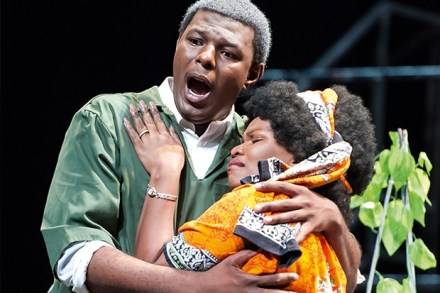
They say that the devil gets all the best tunes, and on the basis of this week’s opera-going it would be hard to disagree. Performances by Cape Town Opera and Opera Rara turned their attention on two historical icons: South Africa’s anti-apartheid campaigner and president Nelson Mandela, and ancient Assyria’s murderous and would-be incestuous queen regent Semiramis. No prizes for guessing who came out on top. When it comes to art, evil takes it nearly every time. Who wouldn’t choose The Rake’s Progress over The Pilgrim’s Progress, Don Giovanni over Don Ottavio, sex over sanctity? For a good man, Nelson Mandela has inspired a lot of really, really bad art.

My idea of fun

Opera

We don’t really do operetta in Britain these days — and at this stage in the game, I don’t really need to tell you why, do I? We’re simply too philistine in these benighted islands, goes the argument; too coarse, too provincial, too clodhoppingly Anglo-Saxon ever to grasp the ineffable lightness and sophisticated wit of Offenbach, Lehar and Strauss. So anyway, here’s Offenbach’s Croquefer, or The Last of the Paladins: a one-act comedy set in the time of the Crusades, which climaxes with the leading characters belting out a stormy ensemble as they succumb to a collective attack of explosive diarrhoea. Basses heave; the brass section emits ripe, flatulent parps. There’s your Gallic sophistication for you, right there.

What’s love got to do with it?

Opera

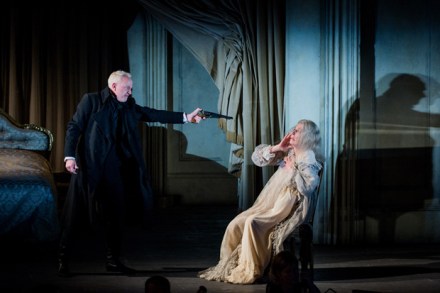
Tchaikovsky’s The Queen of Spades is probably his greatest opera, certainly the one in which his characteristic strengths are on display. Pondering on them inevitably leads one to think about what the operas lack, too, and it turns out be quite a lot. Unlike the finest opera composers, of whom there are regrettably few, he can’t create complete characters: what he is interested in is characteristics, especially — or perhaps only — obsessions, even if the obsession, as with Eugene Onegin, is with not being obsessed with anything, until close to the end.

Dorset’s winning formula

Opera

Dorset Opera seems to receive far less coverage than the rest of the country-house summer shows, although it is in most respects well up to the standard of any of them except Glyndebourne, which is in a category, social and artistic, of its own. The Dorset productions take place in the Coade Theatre of Bryanston School, and are the result of a brief but what must be an incredibly intense period of preparation, with some big names in the major roles, and the smaller parts and chorus taken by a large collection of young singers who are strenuously trained for the week-long rehearsals. I like going on the last day, when one opera is performed at 2 p.m. and another at 7 p.m.

Snakes and ladders | 4 August 2016

Opera

In Luis Buñuel’s 1962 film, the ‘exterminating angel’ of the title is a mystery illness. A debilitating virus — much worse even than man flu — that attacks the social immune system and shuts down your ability to act, to think, to be. It prevents you from remembering how to behave at middle-class dinner parties. You arrive at a friend’s house twice. You forget to leave. Open doors become terrifying, impassable geometric objects. Your handbag contains not keys but feathers and chicken legs. Occasionally it kills. The bug is Buñuel’s metaphor for a society gripped by cowardice. Composers can catch it. Not Thomas Adès, though. There is bravery (insanity?

French connection | 28 July 2016

Opera

It takes a particularly wilful wit to alight on Berlioz’s Béatrice et Bénédict as the perfect operatic nod to a Shakespeare anniversary. To walk past Verdi’s Otello, Falstaff and Macbeth, to pass over Purcell’s Fairy Queen, Gounod’s Roméo et Juliette and Bellini’s I Capuleti e i Montecchi and instead opt for this curiously and idiomatically French piece of musical flummery, in which Shakespeare’s Much Ado About Nothing finds itself stripped of any sour notes and whipped up into a sugary dramatic froth, is bold indeed. If it weren’t for the revival of Britten’s A Midsummer Night’s Dream, opening at Glyndebourne later this season, it might even look a bit like taking le piss.

On full beam

Opera

What’s the best first opera for a sceptical adult first timer? It’s a favourite topic among opera buffs, and once you get past the assumption that novices need to be spoon-fed familiar tunes, the consensus — slightly surprisingly — often settles on Jenufa. Surprisingly? Well, yes: Janacek still isn’t guaranteed box office (maybe people conflate that spiky Czech name with a mental picture of Eastern bloc bleakness). In fact, this is a piece that can upend every lazy prejudice about the form: a concentrated plot, a concise running time, and no heroes or villains, just believable characters with painfully human failings. And all set to music that never judges, never sentimentalises: simply cuts raw and direct to the heart.

First thing’s first

Opera

Leonore is the first version of Beethoven’s Fidelio, and Stephen Medcalf thinks it’s better. ‘What Leonore gives us is more discursive but more dramatic,’ he declares in the programme of this Buxton Festival production. Well he would, wouldn’t he? He’s the director. You’d hope he’d have some faith in the piece. And what’s undeniable is that with Leonore you get more Beethoven for your buck than in Fidelio. True, there’s no ‘Abscheulicher!’ and no glowing declaration of universal brotherhood from the Minister.

Fifty shades of grey

Opera

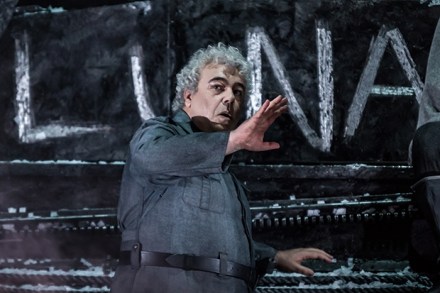
Grey men in grey overcoats walking through grey architecture. If you had to pick an image to reflect the current mood, the prevailing fashion in opera productions, this would be it. We may have outgrown the overtly Nazi settings of a few years back, but stepping into their highly polished boots are a whole platoon of non specifically fascist, 20th century exilic fantasies — all brutality, brutalism and barbed wire. Glyndebourne’s Poliuto, the Royal Opera’s Guillaume Tell, Idomeneo and Nabucco, even English National Opera’s Force of Destiny, the list goes on, and now boasts a new member in David Bösch’s Il trovatore. At least Bösch isn’t going gentle into that all obliterating fascist night.

Light and shade | 30 June 2016

Opera

Comedy and tragedy sit close beside one another in Mozart’s operas. Whether it’s the grinning horror of the Così finale — lovers joined, perhaps for ever, to the wrong partners — or the violence and mental instability so barely contained in the flimsy comic fabric of La finta giardiniera, there’s a continuum of emotion that belies the easy binaries of opera buffa and opera seria. Two new productions explore the shifting light of the composer’s chiaroscuro world, letting sunshine into the near-tragedy of Idomeneo and glancing into the darker corners of Le nozze di Figaro.

The eyes have it | 23 June 2016

Opera

Tchaikovsky knew what he thought of the title character of his Eugene Onegin. ‘I loved Tatyana, and was furiously indignant with Onegin who seemed to me a cold, heartless fop,’ he wrote to a friend; and directors, by and large, have been happy to leave it at that. And why not? Dishy but emotionally unavailable Regency dandies have been a growth area in recent years — blame it on Colin Firth, if you like — and Eugene Onegin is probably the standard repertoire opera you’re least likely to see subjected to a directorial updating, in the UK at any rate. Michael Boyd’s new production at Garsington certainly doesn’t update anything.

Wardrobe malfunction

Opera

It is at the Coliseum that I have seen the most wonderful Tristan and Isoldes of my life, both of them under Reginald Goodall, in 1981 and, even more inspired, in 1985. Neither was particularly well produced, but nothing stood in the way of the musical realisation, as complete as I can ever imagine its being. After last year’s quite glorious Mastersingers, I had the highest hopes of Edward Gardner’s conducting of this new production, but they were dashed — in the case of the music, not drastically; but the idiocy of the costumes and the production is so gross that no performance could survive it. The settings are fashionably by Anish Kapoor, but though they aren’t repulsive they do nothing to help our understanding of the drama.

No laughing matter | 9 June 2016

Opera

Rossini is the meat-and-two-inappropriately-shaped-veg of summer opera; he’s the wag in the novelty bow tie, the two satyrs shagging enthusiastically among the lupins and lobster on the cover of this year’s Glyndebourne programme. His comic bel canto frolics are the natural soundtrack to this off-duty opera-going, a champagne-perfect combination of frothy plots and fizzing coloratura. So why are they so hard to pull off? Perhaps it’s the pressure of expectation. It has been more than 30 years since Glyndebourne last staged Il barbiere di Siviglia, and hopes were high for Annabel Arden’s new production. For the first half-hour it looks as though they’re going to be met.

The supremes

Opera

When I interviewed Richard Farnes in Leeds six years ago about Opera North’s project of performing the complete Ring, he struck me as the most modest conductor I had met or could imagine, with the possible exception of Reginald Goodall, who actually at a deep level wasn’t modest at all. Everything I had heard Farnes conduct had been on the highest level, but none of it had been Wagner. I wasn’t sceptical of his ability to do a complete Ring cycle, just bemused in a general way about the boundless ambition of the work and the unassertiveness of the man who would lead it. Year by year my highest hopes have been fulfilled, as each of the four parts of the Ring received the best performance that I have heard live for many years, certainly during the present century.

Myth-making

Opera

For years I have been telling people that they should listen to, in the absence of staged performances, Enescu’s opera Oedipe, preferably in the marvellous EMI recording from 1990, still available. It only occurred to me when I was preparing to go to the Royal Opera’s new production that I haven’t actually listened to a recording for many years — it seems to belong with its contemporary Busoni’s Doktor Faust as something more admired in the breach than the observance. My feelings now, after seeing the production by La Fura dels Baus, are mixed. There is a lot of lovely music here, and some strong drama. I’m not sure that the music, mostly, supports the drama or indeed that it, the music, has any specific qualities.

Speech impediment | 19 May 2016

Opera

‘So you’re going to see the gay sex opera?’ exclaimed my friend, open-mouthed. People certainly seem to have had some odd preconceptions about Mark Simpson’s new chamber opera Pleasure. The distinguished critic of the Daily Telegraph let it be known that he awaited ‘with trepidation, something set in the lavatories of a gay nightclub’. And to be fair, the news that Pleasure was to star Lesley Garrett — last seen in Welsh National Opera’s Chorus! ascending to the heavens aboard an enormous pair of lips — didn’t exactly dampen suspicions that we were about to see some sort of camp spectacular: Adès’s Powder Her Face meets RuPaul’s Drag Race.

Divine comedy | 12 May 2016

Opera

You have to be quite silly to take Gilbert and Sullivan seriously. But even sillier not to. G&S is still a litmus test for a particularly British type of operatic snobbery: ‘Is there a place for Gilbert and Sullivan in the 21st century?’ asked a Radio 3 presenter last year, about the time that ENO’s new Pirates of Penzance broke all audience records for live cinema relays in the UK. The Royal Opera, of course, won’t touch it. Which, considering how comprehensively it botched Chabrier’s L’Étoile, is probably just as well. Scottish Opera’s new Mikado is very silly indeed. Nanki-Poo (Nicholas Sharratt) simpers and lisps like Gussie Fink-Nottle. A puppet bird flaps its wings to ‘Willow, titwillow’.

Bell canto

Opera

Cursed, or perhaps blessed, with almost no visual memory at all, I had almost completely forgotten what the Royal Opera’s current Tannhäuser, directed by Tim Albery and with set designs by Michael Levine, looks like. Or perhaps it was the natural tendency to repress the memory of unpleasant experiences. Wanting to enjoy the Overture, I closed my eyes until the moment the Venusberg ballet that Wagner composed for the doomed Paris version in 1861 began. However many hundreds of times I hear that Overture, with its wind chorale and weary strings, I still hang on every bar. It was instantly clear that Hartmut Haenchen, the conductor of this first revival, was going to be lighter and fleeter than Semyon Bychkov had been first time round. Mainly, Haenchen’s way is preferable.

Sound and vision | 28 April 2016

Opera

Janacek’s Jenufa, his first great opera, had a one-night stand at the Royal Festival Hall last Monday, courtesy of the wonderful Czech Philharmonic Orchestra conducted by Jiri Belohlavek, the Czech Philharmonic Choir Brno, a large body that had all of five minutes’ singing, and a mainly excellent cast, with Karita Mattila making her transition from the title role, which she has so often performed to powerful effect, to that of the Kostelnicka, the terrifying figure of rectitude who drowns her daughter-in-law’s illegitimate baby rather than bring disgrace on the family.

Whose opera is it anyway?

Opera

Disguises and mistaken identities are a staple of opera, but usually as part of the onstage, not the offstage, action. So what are we to make this week of a Handel opera that isn’t by Handel at all, and a Mozart opera that was largely composed in 1990? As usual in the opera house, there are good — if complicated — explanations. Every year the London Handel Festival tests the theory that forgotten operas are forgotten for a reason, rooting around the darkest corners of the composer’s output to find some abstruse treasures for their audience. This year they’ve outdone themselves, with a performance by Opera Settecento of Elpidia — an opera not heard since its initial run in 1725. The reason?

There will be blood | 14 April 2016

Opera

Lucia di Lammermoor is one of the two or three Donizetti operas that have never fallen out of the repertoire, and the more of his operas it’s possible to see, or at least to hear on CD, the less explicable that becomes. The late and rightly venerated Rodney Milnes called Lucia ‘a blazing masterpiece’, but that does seem to be overdoing it, and in fact several of his other works are more worthy of that accolade. Throughout much of its history Lucia was prized primarily for its glorious sextet, and for the maddest of all mad scenes, added to by generations of sopranos until it became the ultimate coloratura showpiece.

Comic relief | 7 April 2016

Opera

Comic opera is no laughing matter. Seriously, when was the last time you laughed out loud in the opera house? The vocal slapstick of Gianni Schicchi, laid on six banana skins deep? The farcical plot convulsions of Il barbiere? What about the arrival of Mozart’s ‘Albanians’ in Così? (Oh, those moustaches! Oh, those naughty boys!) It’s all about as spontaneous as a health-and-safety briefing, and almost as funny. Thank goodness, then, for Gerald Barry’s The Importance of Being Earnest — an opera that’s dangerously, anarchically hilarious. The project sounds like a joke in itself. Have you heard the one about the Irish composer who tried to improve on Oscar Wilde?

The kids are all right

Opera

In a remote fishing village a lone figure confronts an unexplained death, standing tormented but unbroken against fate, the community and the elements of sea and wind that surge through every note of the score. No, not Peter Grimes: this is Vaughan Williams’s 1932 operatic setting of Synge’s Riders to the Sea. But Vaughan Williams’s operas are undramatic, runs the received wisdom. There were no great British operas between Purcell’s Dido and Aeneas and the premiere of Grimes in 1945, we’re repeatedly told. This student production of Riders to the Sea didn’t just refute those assumptions: it threw them into a riptide and watched them being dragged under and swept away.

Carry on Don

Opera

One of these days I will probably see a production of Don Giovanni set in a research station in the Antarctic. English Touring Opera, ambitious and valiant, haven’t gone that far yet. But Lloyd Wood’s new staging, part of an ETO threesome now hopping round the country, still makes the eyebrows shoot up. This time the Don and his girl bevy are scuttling round the Viennese sewers, circa 1900. Well, that’s what the programme booklet tells us; though if it hadn’t been for Elvira’s Wiener Werkstätte dress, the hint of a Klimt mosaic and a tiddly horn gramophone, you might just accept Anna Fleischle’s grim designs as a fair solution to the simple need for a single set, easily transported.

Original sin | 17 March 2016

Opera

The Royal Opera has bitten the bullet so far as Musorgsky’s Boris Godunov goes, and opted to stage the original 1869 version, with no modifications or additions from his revised 1874 edition, which used to be called ‘definitive’ but which seems to be under a cloud nowadays. Rimsky-Korsakov’s version has been pushed right to the back of the doghouse, so that it might soon be revived for its historical interest. Before I launch into my praise of the new production, which is an unqualified triumph, I would like to register some reservations about the work itself, in any of its versions. It’s routinely said that the hero of the opera is not Boris but the Russian people, tormented and downtrodden as they have always been and still are.