Culture

Culture

The good, the bad and the ugly in books, exhibitions, cinema, TV, dance, music, podcasts and theatre.

Whose opera is it anyway?

Opera

Disguises and mistaken identities are a staple of opera, but usually as part of the onstage, not the offstage, action. So what are we to make this week of a Handel opera that isn’t by Handel at all, and a Mozart opera that was largely composed in 1990? As usual in the opera house, there are good — if complicated — explanations. Every year the London Handel Festival tests the theory that forgotten operas are forgotten for a reason, rooting around the darkest corners of the composer’s output to find some abstruse treasures for their audience. This year they’ve outdone themselves, with a performance by Opera Settecento of Elpidia — an opera not heard since its initial run in 1725. The reason?

There will be blood | 14 April 2016

Opera

Lucia di Lammermoor is one of the two or three Donizetti operas that have never fallen out of the repertoire, and the more of his operas it’s possible to see, or at least to hear on CD, the less explicable that becomes. The late and rightly venerated Rodney Milnes called Lucia ‘a blazing masterpiece’, but that does seem to be overdoing it, and in fact several of his other works are more worthy of that accolade. Throughout much of its history Lucia was prized primarily for its glorious sextet, and for the maddest of all mad scenes, added to by generations of sopranos until it became the ultimate coloratura showpiece.

Comic relief | 7 April 2016

Opera

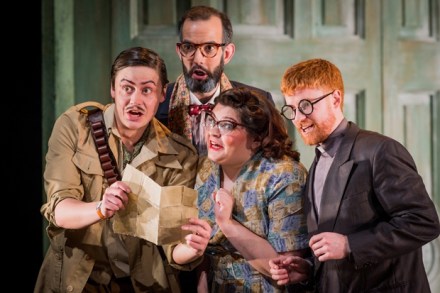
Comic opera is no laughing matter. Seriously, when was the last time you laughed out loud in the opera house? The vocal slapstick of Gianni Schicchi, laid on six banana skins deep? The farcical plot convulsions of Il barbiere? What about the arrival of Mozart’s ‘Albanians’ in Così? (Oh, those moustaches! Oh, those naughty boys!) It’s all about as spontaneous as a health-and-safety briefing, and almost as funny. Thank goodness, then, for Gerald Barry’s The Importance of Being Earnest — an opera that’s dangerously, anarchically hilarious. The project sounds like a joke in itself. Have you heard the one about the Irish composer who tried to improve on Oscar Wilde?

The kids are all right

Opera

In a remote fishing village a lone figure confronts an unexplained death, standing tormented but unbroken against fate, the community and the elements of sea and wind that surge through every note of the score. No, not Peter Grimes: this is Vaughan Williams’s 1932 operatic setting of Synge’s Riders to the Sea. But Vaughan Williams’s operas are undramatic, runs the received wisdom. There were no great British operas between Purcell’s Dido and Aeneas and the premiere of Grimes in 1945, we’re repeatedly told. This student production of Riders to the Sea didn’t just refute those assumptions: it threw them into a riptide and watched them being dragged under and swept away.

Carry on Don

Opera

One of these days I will probably see a production of Don Giovanni set in a research station in the Antarctic. English Touring Opera, ambitious and valiant, haven’t gone that far yet. But Lloyd Wood’s new staging, part of an ETO threesome now hopping round the country, still makes the eyebrows shoot up. This time the Don and his girl bevy are scuttling round the Viennese sewers, circa 1900. Well, that’s what the programme booklet tells us; though if it hadn’t been for Elvira’s Wiener Werkstätte dress, the hint of a Klimt mosaic and a tiddly horn gramophone, you might just accept Anna Fleischle’s grim designs as a fair solution to the simple need for a single set, easily transported.

Original sin | 17 March 2016

Opera

The Royal Opera has bitten the bullet so far as Musorgsky’s Boris Godunov goes, and opted to stage the original 1869 version, with no modifications or additions from his revised 1874 edition, which used to be called ‘definitive’ but which seems to be under a cloud nowadays. Rimsky-Korsakov’s version has been pushed right to the back of the doghouse, so that it might soon be revived for its historical interest. Before I launch into my praise of the new production, which is an unqualified triumph, I would like to register some reservations about the work itself, in any of its versions. It’s routinely said that the hero of the opera is not Boris but the Russian people, tormented and downtrodden as they have always been and still are.

Round-up of new opera

Opera

A mixed year so far for new opera. A few really dismal things have appeared from people who should know better. Did the world really need an operatic treatment of Dante’s Divine Comedy for orchestra and chorus? Louis Andriessen thought so; his La Commedia (2004–8) luckily only reared its drab head for one night at the Barbican. If you’re going to splurge as much money as opera often has to splurge, you have to ask yourself why. If you don’t, you create a situation in which operas come about merely because they can, often just to continue the tradition in the most inoffensive way possible. ‘Don’t mind me!’ says this kind of zombie opera.

Excess baggage

Opera

Near the end of Elena Langer’s new opera Figaro Gets a Divorce, as the Almaviva household — now emigrés in an unnamed 1930s police state — prepares to flee, the Countess announces that she intends to leave her trunk behind. It’s not the subtlest moment in David Pountney’s libretto. Any opera that sets itself up as a sequel to The Marriage of Figaro is already courting comparisons that are both completely unavoidable and massively unfair. When the production of Figaro is as good as this one, that baggage can become so heavy that it’s immovable.

…Long live ENO!

Opera

The three most moving, transporting death scenes in 19th-century opera all involve the respective heroines mounting a funeral pyre — partly, no doubt, a matter of operatic convention and fashion, but also recalling opera to its duty as a rite of purification. Berlioz’s Didon in Les Troyens, like her creator, is so relentless in her grasp of the truth that she fails to achieve anything but a vision of Carthage overcome by Rome, and ends in despair and execration. Brünnhilde in Götterdämmerung rides into Siegfried’s pyre in a state of ecstasy, imparted to the audience with all Wagner’s unlimited capacity for exaltation.

ENO must go…

Opera

Last week Darren Henley, chief executive of Arts Council England, revealed that opera receives just under a fifth of the Arts Council’s total investment in our arts organisations, which amounts to many millions of pounds. Yet it accounts for ‘between 3 and 4 per cent of live audiences in theatres’. How can these figures possibly be justified? Especially when the art form is so obviously a plaything of the wealthy. Once upon a time there was an organisation that had the intention of providing opera at reasonable prices to the less well-off. It was based in a poor part of London, where it pursued its ideals by presenting everything in English and emphasising the dramatic aspect of its chosen repertoire.

Not a pretty sight

Opera

‘Forget Downton Abbey!’ exhorts David Pountney in the programme for Figaro Forever, Welsh National Opera’s season of Beaumarchais operas, The Barber of Seville, The Marriage of Figaro and Elena Langer’s Figaro Gets a Divorce. ‘A televisual age in which the vast narrative panorama of a “series” strung out across many episodes seems to capture people’s imaginations is perhaps exactly the right moment to follow the fortunes of the Count and Rosina, their servant Figaro and his fiancée, Susanna,’ he continues. What WNO’s artistic director means is the opposite of what he says.

Mozart magic | 11 February 2016

Opera

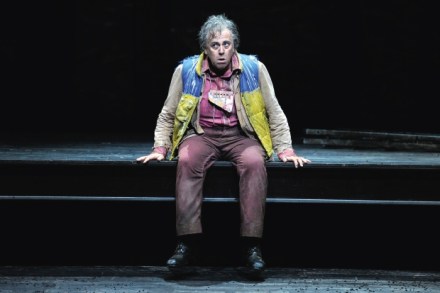
Centre stage, there’s an industrial-looking black platform, secured by cables. The Three Ladies snap the unconscious Tamino on a mobile phone. The Three Boys look like Gollum in a fright wig. And Papageno, dressed as an ageing vagrant, simulates urination (at least I hope that’s what it was) into an empty wine bottle. Simon McBurney’s production of The Magic Flute could have been designed to raise the collective blood pressure of Against Modern Opera Productions, the Zeffirelli-worshipping Facebook group that’s opera’s equivalent of the Mail on Sunday letters page.

Straight talking

Opera

It’s widely agreed that the most difficult form of opera to bring off is operetta, whether of the Austro-German or the French tradition — interesting that the Italians wisely eschew the genre (so far as I know), while the British stay with G&S and their inviolable traditions, including the audience’s laughing in all the right places. In the past four days I have been to two performances of French operetta, neither of them much of a success, for quite different reasons. Opera Danube is a young company devoted to nurturing singers who recently graduated from one or another of the many music schools. It works with the Orpheus Sinfonia, a small orchestra of players at the same stage of their careers.

Northern lights | 28 January 2016

Opera

Opera North continues to be the most reliable, inspiring, resourceful and enterprising opera company in the United Kingdom, and all that without taking account of its extremely limited budget. From April through July it will be presenting its remarkable interpretation of Wagner’s Ring cycle in various cities, including London, so it may not be surprising that before that it is mounting much more modest fare — as indeed everything else is. Giordano’s Andrea Chénier (1896) seems to be undergoing something of a revival, and this new production in Leeds is the first time it has ever been performed in the north of England.

In two minds

Opera

There are some operas, as there are some people, that it is impossible to establish a settled relationship with, and in my case Debussy’s Pelléas et Mélisande is one of them, in fact by far the most pressing one. I never know in advance how I’m going to react to it, and to some extent the actual performance I see is not the determining factor. I’d like, just once, to see the play and find out how I reacted to that. For Debussy offers such a vivid and sometimes perplexing counterpoint to Maeterlinck’s words that one’s reactions to the characters and their actions are always in flux — at least so long as you don’t see the opera too often.

Double trouble | 7 January 2016

Opera

It’s scene five of Kasper Holten’s production of Tchaikovsky’s Eugene Onegin and Michael Fabiano’s Lensky is alone with a snow-covered branch and his thoughts. Well, not quite alone. At the other side of the stage stands the man he is about to face in a duel: his friend Onegin, who’s apparently arrived ahead of the appointed time and is listening to every word of Lensky’s anguished soliloquy. Except he isn’t: this is the Onegin of the present, looking back on a tragedy in his past. Or possibly imagining it? He can’t, after all, have heard Lensky’s words, for the practical reason that he wasn’t there. Can he? Oh, is that applause? The aria’s over.

Royal Opera’s Cavalleria rusticana isn’t nearly vulgar enough

Opera

How often do you get a chance to see two operas by Leoncavallo in the same city in the same week? Never, until this last week in London, when Opera Rara gave a concert performance of Zazà at the Barbican, and six days later the Royal Opera mounted its first production since the 1980s of Cav. and Pag. Both Leoncavallo and Mascagni are routinely thought of as one-opera composers. Zazà didn’t do a lot to undermine that view, and I doubt whether if it had been staged it would have made any stronger an impression. Like Pag., its libretto is by the composer: Wagner seems to have made that temporarily mandatory. But the plot is feeble almost to the point of nonexistence.

Lost in translation | 3 December 2015

Opera

About 15 minutes into act one of Jenufa, the student in the next seat leaned over to her companions and whispered, ‘They’re singing in English!’ And so they were, in Otakar Kraus and Edward Downes’s translation. Janacek was obsessed with the shapes and intonations of speech; for a non-Czech speaker, a first-rate singing translation is really the only way to make Jenufa strike home with anything like the immediacy and realism he intended. But even with surtitles, the effort is useless if — as was the case throughout much of act one of this performance by Opera North — the singers are almost inaudible. It might have sounded clearer in the circle. From the front stalls, however, the situation was impossible.

Has there ever been a better time to be a lover of Baroque opera?

Opera

Time was when early music was a 6 p.m. concert, Baroque began with Bach and ended with Corelli’s Christmas Concerto, and speeds were so portentously slow that you’d have to start the B Minor Mass shortly after lunch in order to make it home in time for bed. Those dark days — caught between Baroque and a hard place — are over now. Period ensembles have never been better or more numerous, Handel and Monteverdi are a staple of operatic programming, and even Vivaldi, Cavalli, Cesti and Steffani are making their mark. Baroque is back, and this time it’s here to stay. One of the biggest success stories of recent years is the Globe’s new indoor theatre. Opened just last year, it’s already hard to remember musical life before the Sam Wanamaker Playhouse.

All at sea | 19 November 2015

Opera

The Royal Opera House seemed nervous about Georg Friedrich Haas’s world première Morgen und Abend. They sent out a pdf of the libretto in advance, which they only ever do when they think that the words or the plot are unintelligible. Thrilled to report that it was a double whammy. An introductory soliloquy was spoken by actor Klaus Maria Brandauer. He’s apparently an Austrian national treasure. I’m not sure he’d get a part in Hollyoaks here. He wobbled on to the stage in wellies, paunch, beard and alcoholic’s nose. He was the spit in fact of Ricky Tomlinson in The Royle Family, except he said things like ‘he’ll be alone for ever alone’, instead of ‘my arse’, which coincidentally were very close to my feelings that evening.

That Force of Destiny isn’t a great evening is the fault of Verdi not ENO

Opera

The Force of Destiny, ENO’s latest offering to its ‘stakeholders’, as its audiences are now called thanks to Cressida Pollock, the new CEO, is perhaps Verdi’s most interesting failure. It’s an opera with too much fine, even magnificent, music to be neglected, but it doesn’t add up to a satisfactory experience. Even epics, which Force is routinely categorised as, have their limits of accommodation. Henry James described War and Peace as ‘a loose, baggy monster’, but what would he have called Force if he had had the least interest in opera or music? There are times when we are longing for the central story of vengeance and fate to get a move on.

Northern Ireland Opera’s Turandot will fill you with awe and revulsion

Opera

Chords as bright and sweet as pomegranate seeds burst and spill in Turandot, a splinter of bitterness at their centre. Left incomplete at Puccini’s death in 1924, the opera is his most radical and most cruel. You can taste something of Stravinsky’s Rite of Spring in the instrumentation, a musky roughness that rubs against the Italian composer’s customary silky precision. Woodwind and strings cling to the voices of the monstrous princess Turandot, her intoxicated suitor Calaf, and Liù, the slave who slavishly adores him because he once smiled at her. So closely scored is the writing that it is almost suffocating. This is love as an addiction: violent, sleepless, lethal. The renaissance of opera in Northern Ireland has not been timid or gentle.

Irish ayes

Opera

It’s Halloween, and right on lightning-flash cue enters an operatic ghost story exhumed from the grave of long-since-buried works. You couldn’t hope for more discerning grave-robbers than Wexford Festival Opera, however, who have long made it their mission to bring forgotten operas back to life. Mascagni’s Guglielmo Ratcliff is a proper blood-on-the-tartan gothic thriller, all duels, doomed lovers, fainting heroines and family curses, with a score as fleshy with tunes as the composer’s more famous Cavalleria rusticana — think Lucia di Lammermoor without the fey bel canto warblings. So why so long neglected? There are no musical mad wives lurking in Guglielmo Ratcliff’s attic, but there are more than a few technical demons.

I doubt Goethe intended Werther’s sorrows to be as unremitting as this

Opera

There are some things the French do better than everyone else. Cheese, military defeats and extra-marital affairs are a given, but what about opera? English Touring Opera’s autumn tour sets out a tasting plate of the nation’s Romantic finest, hoping to persuade audiences that there’s more to France than just Carmen. Debussy’s delicate tragedy Pelléas et Mélisande sits between the fragrant melodies of Offenbach’s The Tales of Hoffmann and the Armagnac-soaked passions of Massenet’s Werther. It’s a typically wide-ranging programme from this small company, but one whose compromises inevitably equal its ambitions.

Ariadne shows what a wonderful operetta composer Richard Strauss could have been

Opera

‘Oh, those Greeks! They knew how to live. What is required for that is to stop courageously at the surface, the fold, the skin, to adore appearance... Those Greeks were superficial — out of profundity [Nietzsche’s own italics].’ Thus said Nietzsche in the preface to The Gay Science. I expect Richard Strauss knew the passage. At any rate, many of his works give the impression of being composed by someone who wasn’t sure how profound he could be, or wanted to be, or indeed what profundity was. This is most evident in Ariadne auf Naxos, which deals explicitly with these issues. To add to his perplexities at this time, Strauss had Hugo von Hofmannsthal lecturing him in letters.

Please let’s have more musicals like this Kiss Me, Kate at Opera North

Opera

Opera North’s new production of Cole Porter’s masterwork Kiss Me, Kate has been so widely and justly praised that I wonder whether there is much for a week-later reviewer to add. It’s not as if the work needs much exegesis or critical commentary, though it may be worth pointing out that what we hear in Leeds amounts to a new critical edition, in which the conductor, David Charles Abell, has played a major role. Musicals have been treated with as little respect as Italian operas were in the 19th century, with arias and whole scenes added or subtracted according to the taste and abilities of the performers, the management’s judgment of the initial reception, and the casualness with which manuscripts and orchestral parts have been handled.

Lady killer

Opera

‘Kiss me, Sergei! Kiss me hard! Kiss me until the icons fall and split!’ sings Katerina Ismailova, adulterous antiheroine of Lady Macbeth of Mtsensk. Stalin was not amused by Shostakovich’s bleak black comedy but our culture would be poorer without bored wives like Katerina. Perhaps all that Emma Bovary, Anna Karenina and Laura Jesson needed was a proper kiss — the sort that mutes the white noise of disappointment. But a kiss is never enough in these cautionary tales of bourgeois bed-hopping. One thing leads to another and before you know it you’re knocking back the arsenic, throwing yourself in front of a train or back home listening to the wireless with poor dear Fred, a man whose kisses were never that hot.

Fossilised Figaro

Opera

Is there a more extraordinary, more heart-stilling moment in all opera than the finale of Mozart’s The Marriage of Figaro? The Count, suddenly understanding his wife’s fidelity, begs her forgiveness — ‘Contessa perdono!’ Her answer comes like a musical benediction, but not until after the very slightest pause — space to doubt, to hope. It’s a touchstone for any production, and it says everything about the current revival of David McVicar’s long-lived Figaro that, on press night, the audience laughed. Since 2006, McVicar’s elegant period update — poised in the fragile political hinterland between France’s First and Second Republics — has done the business at the Royal Opera.

All roads lead to Callas

Opera

Bellini belongs to that category of not-quite-great operatic composers whose works are also very difficult to perform adequately, and don’t seem to be all that popular when they are. But Welsh National Opera’s theme for the season of Madness means that as one of the leading exponents of operatic insanity Bellini is bound to turn up, and WNO does him proud vocally, if not in production, by mounting I puritani, his last and for some aficionados his finest opera. Norma seems to me to be clearly superior, certainly as drama. I puritani has a wretched libretto, not only linguistically feeble but also with a hopeless plot. It certainly does contain wonderful music, above all of course Elvira’s mad scene in Act II (she has one in each of the three acts).