Culture

Culture

The good, the bad and the ugly in books, exhibitions, cinema, TV, dance, music, podcasts and theatre.

Kanye West is a sanctimonious prat – which is exactly why he’s so great

What’s the difference between Kanye West and the space cadets of Speakers’ Corner? Without having access to their bank statements, the biggest distinction between the two parties is that when Mr West (‘Yeezus’ to his friends) played a gig in London on Friday, he was standing on a state-of-the-art stage set rather than a stolen classroom chair. Otherwise, it’s pretty hard to make a distinction. You won’t find many differences in their public speech, that’s for sure. ‘I am Shakespeare in the flesh!’ he once declared, before dropping the false humility and admitting that he was in fact ‘God’s vessel.

Shot at Dawn: an emotionally charged WWI musical

A court-martial — followed by an execution: not exactly promising ingredients for a musical. But Ross Clark’s new music drama Shot at Dawn turns out to be unexpectedly moving. On the outbreak of the first world war, Adam, a farm labourer, enlists in the army, despite being underage, and is later shot for cowardice; his sister Georgina fights to clear his name.  That’s the plot in short. With a minimum of props and a piano, nine actors manage to captivate and draw in the audience. How? Through the emotional charge generated by the words and music. It’s an evening that leaves you surreptitiously reaching for a handkerchief. Highly recommended....

A Glastonbury adventure with Led Zeppelin, Lana del Rey, drug dealers – and my son

Music

‘Charlie. E. Powder,’ said the friendly, helpful man working his way through the crowd during the mindblowing Friday-night headline set by the American dubstep DJ Skrillex. I looked wistfully at his man-bag of chemical  enhancers. Skrillex was good. Maybe the best electronic act I’ve seen in 24 years of Glastonburies. (‘Slivers of mutant dancehall, booty house, Daft Punk arpeggios and big pop choruses, all mangled into oblivion with his signature sub-bass wobbles,’ as the Guardian’s critic so rightly put it.) But imagine just how much more trippy that Transformers light show would look if...‘Dad?’ said Boy, next to me. ‘I’m really tired. Can we go soon?’ Yes.

Roger Wright’s legacy at Radio Three – and his one big mistake

Music

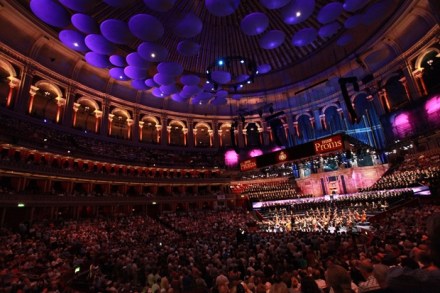
Roger Wright’s precipitate departure from both Radio Three and the Proms came as a surprise. At first the news was that he would go at the end of the season, but then it became apparent he was leaving at the beginning of it. Whatever his reasons may have been — and one sympathises with the idea of a carefree summer holiday after all these years — it brings Edward Blakeman, who becomes acting director of the Proms during the interregnum, deservedly into the limelight. Wright, meanwhile, will become the chief executive of the Aldeburgh Festival from September. Wright has been the controller of Radio Three since 1998, and has been in charge of the Proms since 2007.

Glastonbury: a middle-aged mudbath for those who failed to misspend their youth

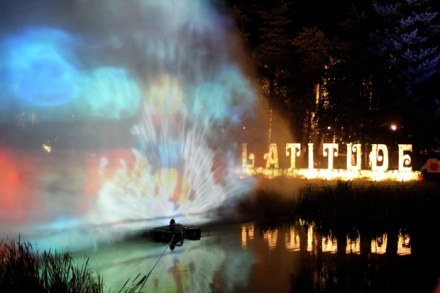
In 2010, Brendan O'Neill suggested that Glastonbury had become an authoritarian, corporate pigpen. From the looks of things this year, nothing has changed. Here's Brendan's piece: Most people, when they hear the word Glastonbury, think of mud, drugs, drunkenness, moshing, free love, the lighting up of spliffs, and generally harmless experimentation in a field. Well, they’re right about the mud. Yet far from being a site of hippyish self-exploration, the Glastonbury music festival has become a tightly regimented gathering of middle-class masochists who don’t mind being bossed around by nosey cops and kill-joy greens for three long days.

I think I’ve found the new Alfred Brendel

Music

Can you tell how intelligent a musician is by listening to him play? Last year I discovered a recording of Schumann’s Piano Sonata No. 3 in F minor, a sprawling and spidery work that can fall apart even under the nimblest fingers. Not this time. Francesco Piemontesi, a young Swiss–Italian pianist, totally nails it. Believe me, it takes some nailing. In the opening Allegro brillante and the final Prestissimo possibile, Schumann stretches lyrical melodies across madcap scales and arpeggios that dart in every direction. The rhythms are insistently dotted: Schumann at his most obsessive-compulsive. There are lots of crunching gear changes and scampering pianissimo passages that turn to mush if the pianist seeks safety in the sustaining pedal.

The BBC’s music strategy is a shambles

Tony Hall made some terrible music announcements yesterday. They come hot on the heels of some terrible arts announcements he made a few months ago. Among the most lousy is the proposal to set up a music awards ceremony - because we don’t have enough of those. The suggestion is that the ceremony would become a rival to the BRIT Awards, with a focus on younger musicians and better music, which in principle sounds good until you realise it’ll be the BBC deciding the music and the musicians. He also hopes to ‘surprise audiences’ with ‘unexpected performances’. To do that he’s gone and bagged the BBC Concert Orchestra! I know! Exciting, eh, to know that Britain’s least respected orchestra will be involved in this celebration of great music.

Has any band of the past 20 years been as consistently irritating as Coldplay?

Music

It’s a long time, a very, very long time, since I bought a Coldplay album. Has any band of the past 20 years been so consistently irritating? Oasis were aggressively annoying, which isn’t the same thing. I quite liked the first Coldplay album, particularly ‘Trouble’, and A Rush of Blood to the Head was a fine record, full of the sense of an ambitious young band finding out what they were capable of. After that, though, they made the fatal Faustian decision to become the biggest band in the world. Although I have made it my business to hear subsequent albums, partly out of curiosity and partly to confirm my prejudices, actual folding money has not been involved.

When The Spectator helped butcher Richard Strauss

To be honest I'm not certain that Michael Nyman, The Spectator's music critic in the late 60s, was one of the performers on this infamous (and in my opinion greatest) recording of Richard Strauss's Also Sprach Zarathustra. But what is certain is that Nyman (alongside Brian Eno and Gavin Bryars) did become an enthusiastic member of the Portsmouth Sinfonia and had been a fan ever since he first witnessed one of their deliberately execrable concerts: 'I sat through the first half... and I was so moved and entertained and excited by the music that I went up to Gavin [Bryars] in the interval and said, 'Is there a spare instrument? I'd like to join.' They had a spare cello, so suddenly I was playing In the Hall of the Mountain King in the second half.

Why it’s good to remember that Bach could be a tedious old windbag

Music

When I was first learning about classical music, 50 years ago, the scene was more streamlined than it is now. Beethoven was king, with Brahms and Mozart next in line, and Haydn slowly establishing himself. Mahler was the new kid on the block; Bruckner was largely unknown and mistrusted. If one wanted the full symphony orchestra experience in late romantic music, it was to Tchaikovsky that most promoters turned. Tchaikovsky cycles, Beethoven cycles, Haydn’s ‘London’ symphonies, Mozart’s last three symphonies were the way to guarantee a crowd, with general knowledge of all Beethoven’s music — string quartets, piano trios, Lieder — at an all-time high. Now Bach is king.

I could be dead soon. What should I listen to?

Music

If I live as long as my father, I’ll be checking out on 9 December 2017. Since every man in my family drops dead of a heart attack at a ridiculously young age, it’s not inconceivable. I mean, obviously the chances of me dying on precisely that day are tiny, but it’s my ballpark figure. This faces me with big questions. Given that I’m probably croaking soon anyway, should I try smack? (I mean, try it properly: the only time I was handed a heroin pipe, by a professor, I was far too scared to inhale.) Do I need to worry about my miserably empty pension pot? Is there a God? And if there is, should I stop being so monstrously selfish? Big questions, as I say, but I still shunt them to the back of my mind.

How the Suzuki method changed my life

Columns

Do you ever wonder, as your little darling balks at doing her violin or piano practice again, what all the pain is for? All those battles, and then when she escapes your clutches she’ll give it up. In later life the blanket of amnesia will fall over those childhood years and it might be as if she’d never played at all. I learnt the violin by the Suzuki method from the age of three until about 14. It was a newish fad back then in London, although Shinichi Suzuki, the movement’s founder, was in his eighties and had been teaching in Japan since the war. Suzuki’s idea was simple and had come to him as he watched toddlers learn to speak: start a child young enough and he will learn music the way he does language — naturally and easily.

Why Gary Barlow should hang on to his OBE

Columns

‘Strip him of his knighthood!’ Or life peerage, or CBE, OBE — or whatever. The cry goes up with a kind of automaticity these days, and with increasing shrillness. As I write, elements in Fleet Street are hyperventilating about Gary Barlow’s OBE. Barlow and two other members of the band Take That are reported to have avoided paying tens of millions of pounds in tax by investing in the Icebreaker Management scheme, deemed by HMRC to be a vehicle for tax avoidance. Note ‘avoidance’. Steer clear of the word ‘evasion’ because there has been no suggestion of criminality: Mr Barlow and others in his band are threatened only with a hefty bill for unpaid tax. And a fat lot it will do my own media profile to defend him.

Michael Jackson’s back from the dead. Again.

Pop humpty-dumpty Michael Jackson has a new album out today. If that statement seems odd, you don’t know the half of it; five years after his death, Jackson is only on album number two. Compared to a trooper like Tupac – who still manages a couple of albums per year, despite having copped it in 1996 – his posthumous output is actually pretty sluggish. Record labels have always had a talent for cashing in on their dead charges. The zombie discs that result are generally made up of songs the 'artist' was too embarrassed to release when he recorded them. Michael Jackson's new one, Xscape goes one further. It’s a cut 'n' paste job of unused demos and vocal off-cuts remixed by some producers who were quite cool circa 2002.

Eurovision: It was the beard wot won it

I enjoyed Fraser’s preview of the Eurovision Song Contest; I had not known that he was such a fan. You work with someone for years, oblivious to their dark secrets, their strange peccadilloes. It was typically brave of him to come out, in public. I watched the thing, again. I thought the entry from The Netherlands was the best song I have ever heard at a Eurovision Song Contest, and by some margin. But that may be because Europop makes me feel ill, and their song definitely wasn’t Europop. It’s the first time I’ve heard a pedal steel in this competition. That being said, the Dutch have form as purveyors of catchy, country-lite, soft rock – anyone remember “Mississippi” by Pussycat?

We watched Eurovision – so you didn’t have to

I like Europe, even if this may not be the place to admit it, and I like this moment, when our brothers are forced to make fools of themselves in a language none bar the Irish can speak convincingly. Sauf les Français, obviously. ‘Ukraine will win. Europe has solidarity. You’ll see,' says my European flatmate. But after the first batch of votes, it becomes clear that either Ukraine’s entry wasn’t very good, or Putin actually takes the competition seriously. Having missed both Maria Yaremchuk’s Tick-Tock and the inner machinations of the Kremlin’s ministry of culture, my guess is one or both of those things. Many horrors were committed in the process of the panels’ announcements. Azerbaijan begging approval from mother Russia.

Exclusive poll: Brits think we’re doomed in Eurovision (and blame the BBC)

Seven million of us will be tuning in at 8pm tomorrow night for the Eurovision final, rising to nine million when the UK number is played. But what do we expect to see, and do we think it’s rigged? The Spectator's Culture House Daily blog, in conjunction with YouGov, is able to give you an exclusive poll of 1,860 Brits, seeing what the nation thinks about world’s most-watched cultural event. Seventeen years of hurt has led Britain to think that we just can’t win this thing anymore. A pitiful 1 per cent of those polled think Molly’s Children of the Universe will take the crown tomorrow night, a low figure given that the bookies have her at 8-1. Just over half of us think she’ll finish bottom of the table.

One man’s guilty pleasure is another’s palpable greatness

Music

The film critic Anne Billson wrote a typically pugnacious piece recently about the phrase ‘guilty pleasures’, which has spread like Japanese knotweed beyond its origins in pop music and taken root throughout popular culture. In film a guilty pleasure would be something like Four Weddings and a Funeral, which we’re not ‘supposed’ to like because it’s not La Règle du Jeu, but which we do like very much because it’s fab. My nomination in this category, and a possible reason my career as a film critic never quite reached the heights, would be Star Trek II: The Wrath of Khan.

The Eurovision Song Contest is starting – and for once, Britain is in with a chance

There are those to whom the word ‘volare’ means nothing. But for  us Eurovision enthusiasts, it’s all starting with the opening ceremony tonight. Two semi-finals this week, then the big one on Saturday. It’s transmitting live in China, New Zealand and Canada this year – making Eurovision the most-watched non-sporting television event on the planet. The annual, spectacular clash of nations, cultures and politics is also becoming a major betting event. A friend of mine in Sweden (where Eurovision is not seen as a massive gay pride festival) usually makes a killing getting it right. To do so requires pretty good knowledge of music, European politics, trends in trading relationships, and popular (as opposed to governmental) opinion.

British choirs can’t match up to those from abroad

Music

To curate a festival these days is to put oneself in the firing line. There is every chance that all one will earn is the charge of stirring up apathy. It is a risk; and there will be no knowing how it has gone until it is much too late to withdraw gracefully. In the recently concluded first edition of the London International A Cappella Choral Competition, held at St John’s Smith Square, it could have gone either way. What will stick in my mind is how the wind got behind it round about day three, so that by the end a packed house could go mad at a Spanish victory.

Britpop 20 years on: the Tory voters who love Oasis

It’s twenty years since the height of Britpop, but does anyone still care about it? YouGov has carried out some polling on the subject today. Although 35 per cent stated that they like or really like Britpop (compared to 20 per cent who dislike/really dislike), 44 per cent replied 'don’t know'. There’s also a lot of indifference on whether music has been better or worse since. Nine per cent think better, 26 per cent worse, and 34 per cent stated they also don’t know. At the height of Britpop, Oasis painted themselves as a working class band, the lads, in contrast to the perceived effete and posh boys of Blur. Based on this public image, one would expect Oasis fans to be natural Labour supporters (like Noel Gallagher, who posed in No.

In the mood for Parsifal, my Passiontide fare

Music

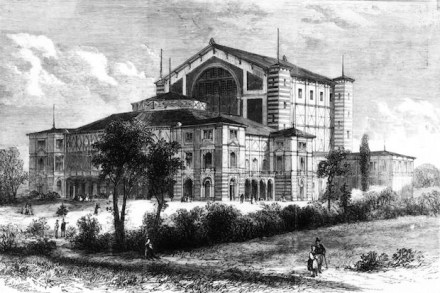
This week, I have been mostly listening to Parsifal. Not the St Matthew Passion, which is my usual Passiontide fare. And, boy, it’s been quite an experience. You have to be in the mood for the Bach, but for the Wagner you really have to be in the mood. Parsifal is nearly five hours long. I’m reluctant to say that not a lot happens, because it’s a story of overpowering philosophical transformation. But, alas, no two commentators agree on the nature of that transformation and, unlike the Ring Cycle,  it doesn’t offer many plot twists by way of distraction. The knights who guard the Holy Grail, the chalice of the Last Supper, have lost their second most precious possession, the lance that pierced Christ’s side.

Pop has become a conservative art form and an old man’s game

Music

It is coming to something when relatively young pop stars die not of drugs or misadventure but, essentially, of old age and decay. Frankie Knuckles, the house DJ and producer, breathed his last recently at the age of just 59, and several ageing ex-clubbers of my acquaintance told me that it was the end of an era. But it always seems to be the end of an era these days, and very rarely the beginning of one. We read that the New Musical Express, that inky irritant to generations of music lovers who bought it every week even if they disagreed with every word it printed, now sells about three copies a week and is in danger of going under.

House music is great music – or can be

When Chicago DJ Frankie Knuckles died last week, a novelty number by a Brylcreemed Aussie pop punk group had just reached number one. It displaced Duke Dumont & Jax Jones’s I Got U and ended a three week-run of house singles at the top of the charts. I suspect the following statement may piss off dance nerds, but it’s fair to say that Knuckles had as much claim as anyone to having ‘invented’ house music thirty odd years ago. Essentially, he took the kitsch out of disco and turned it into a synthesiser-heavy global brand. Was it worth the effort, though? Frankie Knuckles and the other Chicago house pioneers made some genuinely great music.

The mean, bullying maestro is extinct – or should be

Music

W.H.Auden once wrote: ‘Real artists are not nice people. All their best feelings go into their work and life has the residue’ — which puts those who aspire to be artists in a bit of a quandary. Is it a measure of one’s success as a ‘real artist’ that one is not a nice person? Is it in fact possible to be a real artist and a nice person? And, if it is not, is it better to be a real artist or a nice person? Auden, who was speaking from first-hand experience, implies that it must be one or the other. By the time he wrote this, Auden was sure of his standing both as an artist and as a person. His friends might say that he was a nicer person than he thought he was, but no one was going to say he was not a great artist.

Remember what really bad, racist TV looked like? I give you London Live

So Lebedev’s London Live has launched. And I don't know about you but I’m hooked. I’d totally forgotten what really bad TV looked like. It's as if the chief execs at Channel 5 got together with Alan Partridge for a 21st-century rebrand. London's new TV channel did get one nice review from the, oh, Lebedev-owned Independent - moving swiftly on. From what I’ve seen of London Live's first full day, it’s as if a posh, ethnically very chic primary school won a Blue Peter competition where they got to dress up as adults for the day and run their very own TV channel - all by themselves! The top news story was the announcement that Emma Watson’s dress was white and pretty.

Menuhin is the world’s toughest violin competition. Why is it packed with Asians, and no Brits?

Music

‘The truth is,’ says Gordon Back, lowering his voice, ‘that if the violin finalists from the BBC Young Musician of the Year were to enter the Menuhin Competition, they wouldn’t make it to the first round.’ Not through the first round, note, but to the first round: they wouldn’t be good enough to compete. Back is artistic director of the Menuhin, held every two years in a different country. In effect, it’s a search for the next Yehudi Menuhin, who recorded the Elgar concerto with the composer at the age of 15. Some critics think Menuhin never quite fulfilled that astonishing early promise — but I wouldn’t dare suggest that to Gordon Back.

Disposable dance-pop at its best and a Lennon-lite yawnfest. Kylie and George Michael’s new albums reviewed

George Michael and Kylie Minogue have albums out this week. And while they might both be distinctly second-division these days, they’re both still rather remarkable. George Michael got famous for not being Andrew Ridgeley, and has since redefined the status of adult-oriented pop. He has also written the only Christmas song in history worth playing all year round and made the Hampstead branch of Snappy Snaps a tourist destination. I like him a lot. Minogue, meanwhile, is cheesy, knowing and resolutely budget in the international diva stakes. As Aldi is to Waitrose, so Kylie is to Beyoncé. But she’s made some terrific records – have you given up pretending you don’t like Can’t Get You Out of My Head yet?