Culture

Culture

The good, the bad and the ugly in books, exhibitions, cinema, TV, dance, music, podcasts and theatre.

We watched Eurovision – so you didn’t have to

I like Europe, even if this may not be the place to admit it, and I like this moment, when our brothers are forced to make fools of themselves in a language none bar the Irish can speak convincingly. Sauf les Français, obviously. ‘Ukraine will win. Europe has solidarity. You’ll see,' says my European flatmate. But after the first batch of votes, it becomes clear that either Ukraine’s entry wasn’t very good, or Putin actually takes the competition seriously. Having missed both Maria Yaremchuk’s Tick-Tock and the inner machinations of the Kremlin’s ministry of culture, my guess is one or both of those things. Many horrors were committed in the process of the panels’ announcements. Azerbaijan begging approval from mother Russia.

Exclusive poll: Brits think we’re doomed in Eurovision (and blame the BBC)

Seven million of us will be tuning in at 8pm tomorrow night for the Eurovision final, rising to nine million when the UK number is played. But what do we expect to see, and do we think it’s rigged? The Spectator's Culture House Daily blog, in conjunction with YouGov, is able to give you an exclusive poll of 1,860 Brits, seeing what the nation thinks about world’s most-watched cultural event. Seventeen years of hurt has led Britain to think that we just can’t win this thing anymore. A pitiful 1 per cent of those polled think Molly’s Children of the Universe will take the crown tomorrow night, a low figure given that the bookies have her at 8-1. Just over half of us think she’ll finish bottom of the table.

One man’s guilty pleasure is another’s palpable greatness

Music

The film critic Anne Billson wrote a typically pugnacious piece recently about the phrase ‘guilty pleasures’, which has spread like Japanese knotweed beyond its origins in pop music and taken root throughout popular culture. In film a guilty pleasure would be something like Four Weddings and a Funeral, which we’re not ‘supposed’ to like because it’s not La Règle du Jeu, but which we do like very much because it’s fab. My nomination in this category, and a possible reason my career as a film critic never quite reached the heights, would be Star Trek II: The Wrath of Khan.

The Eurovision Song Contest is starting – and for once, Britain is in with a chance

There are those to whom the word ‘volare’ means nothing. But for  us Eurovision enthusiasts, it’s all starting with the opening ceremony tonight. Two semi-finals this week, then the big one on Saturday. It’s transmitting live in China, New Zealand and Canada this year – making Eurovision the most-watched non-sporting television event on the planet. The annual, spectacular clash of nations, cultures and politics is also becoming a major betting event. A friend of mine in Sweden (where Eurovision is not seen as a massive gay pride festival) usually makes a killing getting it right. To do so requires pretty good knowledge of music, European politics, trends in trading relationships, and popular (as opposed to governmental) opinion.

British choirs can’t match up to those from abroad

Music

To curate a festival these days is to put oneself in the firing line. There is every chance that all one will earn is the charge of stirring up apathy. It is a risk; and there will be no knowing how it has gone until it is much too late to withdraw gracefully. In the recently concluded first edition of the London International A Cappella Choral Competition, held at St John’s Smith Square, it could have gone either way. What will stick in my mind is how the wind got behind it round about day three, so that by the end a packed house could go mad at a Spanish victory.

Britpop 20 years on: the Tory voters who love Oasis

It’s twenty years since the height of Britpop, but does anyone still care about it? YouGov has carried out some polling on the subject today. Although 35 per cent stated that they like or really like Britpop (compared to 20 per cent who dislike/really dislike), 44 per cent replied 'don’t know'. There’s also a lot of indifference on whether music has been better or worse since. Nine per cent think better, 26 per cent worse, and 34 per cent stated they also don’t know. At the height of Britpop, Oasis painted themselves as a working class band, the lads, in contrast to the perceived effete and posh boys of Blur. Based on this public image, one would expect Oasis fans to be natural Labour supporters (like Noel Gallagher, who posed in No.

In the mood for Parsifal, my Passiontide fare

Music

This week, I have been mostly listening to Parsifal. Not the St Matthew Passion, which is my usual Passiontide fare. And, boy, it’s been quite an experience. You have to be in the mood for the Bach, but for the Wagner you really have to be in the mood. Parsifal is nearly five hours long. I’m reluctant to say that not a lot happens, because it’s a story of overpowering philosophical transformation. But, alas, no two commentators agree on the nature of that transformation and, unlike the Ring Cycle,  it doesn’t offer many plot twists by way of distraction. The knights who guard the Holy Grail, the chalice of the Last Supper, have lost their second most precious possession, the lance that pierced Christ’s side.

Pop has become a conservative art form and an old man’s game

Music

It is coming to something when relatively young pop stars die not of drugs or misadventure but, essentially, of old age and decay. Frankie Knuckles, the house DJ and producer, breathed his last recently at the age of just 59, and several ageing ex-clubbers of my acquaintance told me that it was the end of an era. But it always seems to be the end of an era these days, and very rarely the beginning of one. We read that the New Musical Express, that inky irritant to generations of music lovers who bought it every week even if they disagreed with every word it printed, now sells about three copies a week and is in danger of going under.

House music is great music – or can be

When Chicago DJ Frankie Knuckles died last week, a novelty number by a Brylcreemed Aussie pop punk group had just reached number one. It displaced Duke Dumont & Jax Jones’s I Got U and ended a three week-run of house singles at the top of the charts. I suspect the following statement may piss off dance nerds, but it’s fair to say that Knuckles had as much claim as anyone to having ‘invented’ house music thirty odd years ago. Essentially, he took the kitsch out of disco and turned it into a synthesiser-heavy global brand. Was it worth the effort, though? Frankie Knuckles and the other Chicago house pioneers made some genuinely great music.

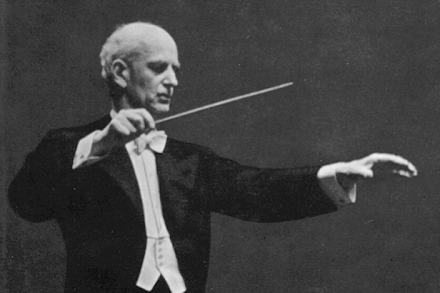
The mean, bullying maestro is extinct – or should be

Music

W.H.Auden once wrote: ‘Real artists are not nice people. All their best feelings go into their work and life has the residue’ — which puts those who aspire to be artists in a bit of a quandary. Is it a measure of one’s success as a ‘real artist’ that one is not a nice person? Is it in fact possible to be a real artist and a nice person? And, if it is not, is it better to be a real artist or a nice person? Auden, who was speaking from first-hand experience, implies that it must be one or the other. By the time he wrote this, Auden was sure of his standing both as an artist and as a person. His friends might say that he was a nicer person than he thought he was, but no one was going to say he was not a great artist.

Remember what really bad, racist TV looked like? I give you London Live

So Lebedev’s London Live has launched. And I don't know about you but I’m hooked. I’d totally forgotten what really bad TV looked like. It's as if the chief execs at Channel 5 got together with Alan Partridge for a 21st-century rebrand. London's new TV channel did get one nice review from the, oh, Lebedev-owned Independent - moving swiftly on. From what I’ve seen of London Live's first full day, it’s as if a posh, ethnically very chic primary school won a Blue Peter competition where they got to dress up as adults for the day and run their very own TV channel - all by themselves! The top news story was the announcement that Emma Watson’s dress was white and pretty.

Menuhin is the world’s toughest violin competition. Why is it packed with Asians, and no Brits?

Music

‘The truth is,’ says Gordon Back, lowering his voice, ‘that if the violin finalists from the BBC Young Musician of the Year were to enter the Menuhin Competition, they wouldn’t make it to the first round.’ Not through the first round, note, but to the first round: they wouldn’t be good enough to compete. Back is artistic director of the Menuhin, held every two years in a different country. In effect, it’s a search for the next Yehudi Menuhin, who recorded the Elgar concerto with the composer at the age of 15. Some critics think Menuhin never quite fulfilled that astonishing early promise — but I wouldn’t dare suggest that to Gordon Back.

Disposable dance-pop at its best and a Lennon-lite yawnfest. Kylie and George Michael’s new albums reviewed

George Michael and Kylie Minogue have albums out this week. And while they might both be distinctly second-division these days, they’re both still rather remarkable. George Michael got famous for not being Andrew Ridgeley, and has since redefined the status of adult-oriented pop. He has also written the only Christmas song in history worth playing all year round and made the Hampstead branch of Snappy Snaps a tourist destination. I like him a lot. Minogue, meanwhile, is cheesy, knowing and resolutely budget in the international diva stakes. As Aldi is to Waitrose, so Kylie is to Beyoncé. But she’s made some terrific records – have you given up pretending you don’t like Can’t Get You Out of My Head yet?

Addicted to Vole

Music

Earworm: what a wonderful word. It describes, as nothing else quite can, the effect a really invasive melody can have on your consciousness. Hear the song once and you will hear it again and again, on a loop in your brain. At the pub quiz the other night, the answer to a question was Brotherhood of Man, and at least two of us subsequently suffered the torture of hearing ‘Save Your Kisses For Me’ in our heads for the rest of the evening. I don’t usually think of myself as Drinking To Forget, but this evening might have been an exception. So are people who love pop music more susceptible to earworms, or are people who are susceptible to earworms more likely to love pop music?

Review: John Harle/Marc Almond, Barbican Hall. Ignore the prog-rock pretension. Almond is a joy.

Funny how quickly you forget the makeup of the average highbrow pop concert. It’s 96 per cent male, obviously, and very partial to a receding hairline-ponytail combo; last night’s performance by saxophonist and composer John Harle and former Soft Cell singer Marc Almond brought these types out to the Barbican in force. They were here to see The Tyburn Tree, a psychogeographical song cycle (!) based around  London folklore and mysticism. Thus, whatever the evening promised, a degree of mass chin-stroking was inevitable. The audience sat down to complain about the quality of the craft beer on offer to their imaginary girlfriends, and the band began to tune up. This went on for a very, very long time. Finally, though, the overture to the performance began.

Less subsidy means better music

Music

One of the unlooked-for side effects of the financial crisis has been what might be called the desocialising of music funding. Whereas once many arts organisations could expect to survive solely on public money, just recently there has been an almost unseemly rush to tap private sources of cash. The time lag between the original catastrophe and the realisation that oblivion may be just round the corner is probably explained by the disinclination of politicians to dump high-profile organisations overnight. But now, finally, there is no escape. Philanthropists the world over are besieged.

Tweeting the Aurora Borealis

Some people have been pointing their cameras at the night sky. The results are rather special: https://twitter.com/AngusMacNeilMP/statuses/439164673230135296 https://twitter.com/Akhan2001/statuses/439155568796651520 https://twitter.com/carlmilner/statuses/439130792414175233 https://twitter.com/weermanrobert/statuses/439143984238428160 https://twitter.com/ObservingSpace/statuses/439136185378553856 https://twitter.com/owenhumphreys1/statuses/439156693822214144 https://twitter.com/mfn1234/statuses/439154169018998784 https://twitter.com/DeffGeff/statuses/439154891882123264 https://twitter.com/orkneyrd/statuses/439159852888498177 https://twitter.com/ObservingSpace/statuses/439155901883097088 https://twitter.

Sir Paul McCartney’s media manipulation

Having been whole-heartedly hacked off during the phone hacking scandal, one assumes that Sir Paul McCartney has always been an advocate of high standards in journalism. Not so. While collecting a gong for songwriting at the NME Awards last night, the former Beatle admitted trying to slip fake stories past the music magazine: ‘One of the things we used to like to try and do was to plant a false story in the NME,’ he said. ‘We actually got in with 'George was Billy Fury's cousin', which he wasn't. Living on the edge, man, you know what I'm saying?’ Someone send for Leveson.

Let’s call a ban on Katy Perry. Why I’m siding with the mad mullahs.

Call me a fruitcake, but I am all for Islamic censorship when it comes to Katy Perry. In the last few days, there's been a terrible fuss about Perry's latest song, 'Dark Horse', because the video for it features an Arabic man wearing an 'Allah' pendant, who is burned alive. A bunch of angry Muslims, led by someone called Shazad Iqbal from Bradford, have campaigned against the video on the grounds that it was blasphemous. They launched a petition calling for the video to be removed from  YouTube, and got more than 60,000 signatures. The video has now been edited to remove the offensive pendant, and Shazad has declared a victory on behalf of the prophet.

Is Pussy Riot’s music actually any good?

Victims of state persecution, ambassadors for day-glo knitwear and wank fodder for beardy liberals the world over, the members of Pussy Riot have been filling both prison cells and column inches since 2012. In the process, they’ve also become one of the most famous bands on the planet. But let me ask you this – have you ever actually heard any of their music? And crucially, is it any good? Was it purely their politics that led the Cossacks to attack them with horsewhips last week, or is that just the way they do pop criticism in the Caucasus? We took to the internet to get some balanced and entirely un-facetious critical perspective.

The greatest recordings by the oldest pianists

Age has never been an impediment to great musicianship. YouTube is full of extraordinary late musical testaments from pianists who, refusing to retire, hit their stride in their eighth, ninth and, in Alice Herz-Sommer's unique case, tenth decades. Here is a selection of the finest: 1. Mieczysław Horszowski gave his first recital at the age of eight in 1900, his last at the age of 98 in 1991. He was present at the premiere of The Rite of Spring in 1913. He heard Busoni perform, played for D'Albert, Fauré and Saint-Saëns and was pals with Granados, Villa-Lobos and Szymanowski. His Chopin at the age of 98 in this Wigmore Hall recital is breathtaking: 2. Shura Cherkassky continued to give recitals until the year of his death at the age of 86.

RIP Alice Herz-Sommer

The 110-year-old pianist and oldest known Holocaust survivor, Alice Herz-Sommer, who was imprisoned in Theresienstadt concentration camp, has died. Her extraordinary life, which included childhood encounters with Gustav Mahler and Franz Kafka, latterly became the subject of several documentaries, the most recent of which, The Lady in Number Six, was this year nominated for an Oscar. A clip from it can be seen above.

We watched the Brits so you didn’t have to…

It goes without saying that the Brits are not the draw they once were. But I was sick of being cynical about them. I sunk into my chair with the reservoir of alcohol I had bought and waited to witness something other than James Corden and mediocre musical performances. And did I? The fact that Ellie Goulding was named best British female solo artist should tell you everything. Of course I bloody didn’t. Unless you count David Bowie’s unionist shout out, delivered by a Kate Moss-shaped proxy, as inflammatory (it wasn’t), this junket was as boring and self-congratulatory as last year’s. And the year before. And the year before that. Compère James Corden did some things he thought people would find amusing. Which they didn’t.

My night in Zambia with Ian Dury 

Low life

Every time I hear that song ‘Sex & Drugs & Rock & Roll’ played on the radio, I think, Lord, how I miss Ian Dury. Then I wish they’d play something other than that plodder, especially when there are so many great songs of his to choose from. Some people knew all the words to Dark Side of the Moon; others to Sergeant Pepper; but we knew all the words to New Boots and Panties!!. And what words! He was our poet laureate. Put that record on and everybody would sing their heads off, especially to ‘Billericay Dickie’. ‘I bought a lot of brandy/ when I was courting Sandy/ took eight to make her randy/ and all I had was shandy/ another thing with Sandy/ what often came in handy/ was passing her a ‘Mandy’/ she didn’t half go bandy.

Are hymns dying? 

Music

I love a good hymn, so long as I’m not expected to sing it. Lusty declarations of faith sound ridiculous coming out of my mouth and embarrass the hell out of me, so I pretend that I’ve forgotten to pick up a hymnbook on my way in. If someone shoots me an accusatory glance, then I move my lips like John Redwood singing the Welsh national anthem. (Talking of whom, has it dawned on the jolly self-important Dr Redwood, former Fellow of All Souls, director of Rothschild’s, cabinet minister, etc., that one day he’ll be remembered only for that delicious video clip?) The earliest Christian hymns were chanted — but when we talk about a ‘hymn’ in everyday speech we mean a harmonised sacred song in which every verse uses the same melody.

Prefab Sprout’s comeback gives hope to the over-50s

Music

Every musical career has its own narrative, and most of them include at least one comeback. To come back, you first have to go away; then you have to stay away; and finally, when everyone has forgotten your name, you wander nonchalantly back under the arc-lights and wave modestly to screaming fans and waiting reporters. Well, that’s the plan, anyway. As has been discussed here before, the gaps between record releases for all but the most irresponsibly prolific artists have become so wide that simply making another album becomes a comeback in itself. Thus has the currency of the comeback been devalued. Sometimes it feels as though there’s a different one every day. A few of them could usefully have stayed away a little longer.

How Claudio Abbado bridged old and new

Music

Not long ago the great conductors of classical music were general practitioners. They expected to give satisfactory interpretations of music written from the beginnings of symphonic composition to the present day, and audiences took it for granted that, if they knew what they were doing with Mozart and Beethoven, they could be trusted with Handel and Stravinsky. Their orchestras adopted the same approach and, within a narrow definition that bespeaks a more innocent age, everyone was content.