Culture

Culture

The good, the bad and the ugly in books, exhibitions, cinema, TV, dance, music, podcasts and theatre.

End of the Rainbow

Music

The golden age of pop music may be long gone, but the golden age of pop musicians’ obituaries is definitely with us. Soon I shall have to start apologising for returning to this subject with such regularity, but barely a week now seems to pass without some rock legend turning his or her eminent toes up. Last week it was John Renbourn, gruff beardy guitarist for Pentangle, and the week before Daevid Allen, who founded Soft Machine and about 73 different manifestations of Gong. On social media Nick Hornby asked us to name which dead people we had seen live (when they were alive, obviously). His list included Bobby Womack, Luther Vandross, Bob Marley, Joe Strummer, the Ramones, Rory Gallagher and Lee Brilleaux of Dr Feelgood (a lot). Hundreds of people responded.

Eight remastered classical recordings you need to hear

In the magazine this week I've written about spectacular new advances in the art of remastering vintage classical recordings. Many restoration engineers are removing hiss and correcting pitch so that historic performances are no longer muffled or distorted. But one of them stands out from the rest: Andrew Rose, whose Pristine Classical label is more interventionist than others. In particular it uses something called ambient stereo to spread the mono output between speakers. This yields a more lifelike sound than the original microphones were able to capture. In many cases the results are astonishing. The Spectator and Pristine have put together a terrific offer for our existing and new subscribers – visit new.spectator.co.

Our hero worship of Bach is to blame for rubbish like ‘Written By Mrs Bach’

Music

My impression that Bach has come to rival Shakespeare as a flawless reference point in the cultural life of the nation has recently received some further corroboration. Remember the fuss that some academics, in the hope of recognition, created around the authorship of the bard’s works and where it got them? I don’t know how far the non-specialist public has been swayed by the BBC4 television programme entitled Written By Mrs Bach, but the Earl of Oxford came to mind as I watched it. The claims in the programme are so obviously rubbish that I would have thought the average film company might have thought twice about filming it, let alone the BBC airing it. But if it hadn’t been Bach in question no one would have taken it up. Who cares who wrote Haydn’s piano trios?

Why you should never trust songwriting credits

Music

Songwriting credits are, as we know, not always to be trusted. Since the dawn of music publishing, there has always been a manager or an agent or a well-connected representative of organised crime willing to take a small cut of a song’s royalties, in return for services rendered or threats not carried out. Who actually wrote any song? Well, we know that Bob Dylan wrote ‘Subterranean Homesick Blues’, but after that it gets a little murky. Lennon/McCartney songs, after the first couple of albums, were written by Lennon or McCartney but rarely by Lennon/McCartney.

Måns Zelmerlöw’s ‘Heroes’ shows why Sweden rules the pop world

This is a blog written after the first screening of Måns Zelmerlöw's Heroes, which went on to win the Swedish nomination and the 2015 Eurovision Song Contest. The world’s most-watched cultural event is some time away, but for Eurovision affectionados the entertainment has started already. Britain and Sweden are the continent’s two greatest exporters of pop music, but the UK Eurovision contestant is annointed by the BBC whose institutional snobbishness and soft xenophobia prevents it from understanding the contest. Sweden asks Swedes to choose from one of 28 entries in a six-stage event called Melody Festival, now in full flow. For MelFest, a song starts with songwriters.

Madonna fell off the stage at the Brit Awards and we laughed because we’re sadistic

Go on, admit it, you laughed, didn’t you? When Madonna was yanked off the stage by a dancer pulling her cloak during her finale performance at the Brit Awards, you gasped in horror for one brief moment and then… you laughed out loud. Then you pressed 'rewind' and watched it again. And then once more for luck. Because it’s not often we get to watch a celebrity fall flat on their face – or in Madonna’s case, flat on her back. The fact that we were watching a 56-year-old mother of four fall downstairs and smash to the ground - that this was not normally something we would or should find funny - did not seem to occur to us.

There’s nothing wrong with getting into Thomas Tallis on the back of Fifty Shades of Grey

Music

Great works of art may have a strange afterlife. Deracinated from the world that created them they are at the mercy of what people think is important centuries later. Nothing shows this more clearly than the contribution that Tallis’s ‘Spem in alium’ has made to Fifty Shades of Grey. In case you are none the wiser, ‘Spem in alium’ is probably the most complex piece of music to come from the 16th century, and just possibly from any century. Written for 40 independent voices, it is unlikely to be sung with every note in place, though any sort of approximation shows just how majestic it is. Whether this was in the mind of E.L.

Oscars 2015: Neil Patrick Harris took it too far

Birdman soared past longtime favourite Boyhood at the 87th Academy Awards, as Alejandro González Iñárritu's hilarious Hollywood satire unexpectedly took both of the top prizes - best picture and director - and joint top number of awards overall, in a slightly awkward ceremony where many of the host's razor-edged jokes drew clear disapproval from the audience. While many were predicting a slightly irreverent evening, Neil Patrick Harris, a veteran host of the Tony Awards, arguably took his jokes at the podium too far.

Classical music’s greatest political butt-kissers: Dudamel, Gergiev and Rattle

Music

On 8 March 2013, Gustavo Dudamel stood by the coffin of the Marxist autocrat Hugo Chavez and conducted the Simon Bolivar Symphony Orchestra in the Venezuelan national anthem. He assumed, like everyone else, that the coffin contained a fresh corpse: the president of Venezuela was reported to have died from cancer on 5 March at the age of 58. Not so, it is now claimed. According to his former head of security, Chavez died on 30 December 2012. The news was kept secret while his lieutenants panicked. The funeral — covered with ludicrous sycophancy by the BBC — was, at least in part, a masquerade. Whatever the truth, Dudamel — who’d recently taken up residence in America as music director of the Los Angeles Philharmonic — had to be there.

James Blunt’s sense of entitlement is so palpable you could wear it as a hat

Music

Only a fool would mess with James Blunt. As his Twitter followers know, he has a sharp wit, and, as befits a former officer in the Life Guards, he is always ready for a fight. Indeed, the grievous suffering around the world caused by his greatest hit, ‘You’re Beautiful’, has been offset to some extent by his snappy tweets, several widely disseminated photographs of him looking a prawn, and a general sense that he can take a joke. Not long ago someone else tweeted as follows: ‘If you receive an email with a link to the new James Blunt single, don’t click on it. It’s a link to the new James Blunt single!’ The singer promptly retweeted it. Even so, he may have overreached himself with his open letter to Chris Bryant the other day.

Chris Bryant: I am not James Blunt’s sex toy

After Mr S revealed that Chris Bryant has broken two ribs getting out of bed, speculation is rife that his nemesis James Blunt could be to blame for the incident. The duo fell out after the Labour MP claimed that British culture should not be dominated by the likes of privately educated crooners such as Blunt. The You're Beautiful singer swiftly replied in an open letter in which he called Bryant a 'classist gimp'. Keen to avoid any confusion about the cause of his injury, Bryant took the opportunity at a mock leader election debate at King's Place to clear the singer's name: 'Just to clarify – James Blunt played no part in my injury. He called me a gimp, which I believe is some sort of sex toy. Well I’m not his sexual toy, and never will be. He’s gutted.

Spotify: saint or sinner?

Music

We have all read about the current woeful state of the CD industry — how it is 28 per cent down on last year, which was 25 per cent down on the previous year, and so on — but do we know why? Is it the endless financial crisis? Or is it that CDs, as a concept, are knackered? And this is despite the fact that more people are taking an interest in recorded music than ever before. The villain of the piece is of course the internet. Where previously the music one wanted was not available without going into a shop and buying it, now there is every chance that there will be a version of it somewhere on the net, which you can listen to for nothing. If it happens to be on YouTube, you may get visuals as well, or a score to follow.

Cameron reckons Gove prefers a ‘chillax playlist’ to ‘hip-hoppy’ Beyoncé tunes

After Sarah Vine revealed that her husband Michael Gove's ringtone that infamously disrupted a cabinet meeting was the latest Beyoncé hit, David Cameron has thrown doubt on this version of events. Speaking to LBC this morning, the PM was tackling the big issues. When host Nick Ferrari played a series of Beyoncé tunes, Call Me Dave seemed confused: 'I don’t think it was any, my memory is it sounded like something from the sort of chillax playlist on Spotify. It wasn’t... that’s all a bit more you know sort of hip-hoppy and I don’t think it was that. But I mean it didn’t last very long. So we weren’t playing beat the intro. We were trying to have a cabinet meeting let’s be clear.' The mystery continues...

Confessions of an illegal downloader

Music

I’ve never been into shoplifting, though I once had a friend who was. And, no, before you ask, I’m not using that old ‘friend’ device to hide my own identity. She was a girl I met at university. Bookshops were her hunting ground. I’m assuming she was driven by some sort of compulsion because she couldn’t enjoy the books she nicked and — she assured me — God would always punish her by making a contact lens drop out of her eye within hours of the crime. I wouldn’t enjoy a stolen book, either. But if I listened to classical recordings illicitly downloaded from the internet, would my conscience drain the music of colour? That’s easy to answer.

The Spectator at war: War music

From ‘Music and the War’, The Spectator, 16 January 1915: The war, so far, has not thrown up any supreme musical product. It would be an affectation to pretend that the taste of the average British soldier is elevated. As in the Boer War, his repertory is confined to music-ball tunes and songs of an extreme and lugubrious sentimentality. The average "Tommy " does not sing folk-songs or graceful chansons populaires, e.g., Meunier tu dors, Ton moulin va trop vite, like our allies, but at least he does not submit to dictation from above: he chooses for himself.

The cook, the critic, the composer and the love child

Michael Kennedy, who died on New Year’s Eve, was the Sunday Telegraph’s music critic when I was for a while assistant arts editor there about 20 years ago. He was of course musically knowledgeable beyond reproach, but his writing had the compulsive readability of a man who was always a journalist, a storyteller. He was elitist in his taste but populist in his communicative instincts, something that I rapidly absorbed as I subedited his copy. Critics are usually obsessively protective of their work, often wounded by disagreement rather than stimulated. Kennedy was an exception, robustly open to the possibility of others improving and developing work he could get nowhere with.

His lyrics are hopeless, his covers are catastrophic, yet I still love Bryan Ferry

Music

There were two new albums I wanted for Christmas — the Bryan Ferry and the Pink Floyd — and to my delight I got both. Others may prefer the unknown and the experimental as presents, but at this time of year I favour the pop music equivalent of a decent scarf or a new pair of slippers. The Pink Floyd we shall leave until later, on the reasonable grounds that I haven’t listened to it yet. But the new Ferry album, Avonmore (BMG), is splendid, as warm and elegant as a cashmere scarf, as perfectly snug as the fluffiest slippers. For those of us who have followed Ferry moderately slavishly for several decades, it ticks all the boxes. And what are those boxes, precisely? It’s the same but different.

Does anyone have the balls to bring back castrati?

Music

One of the most complete bars to the authentic performance of both baroque opera and some renaissance polyphony is the current unavailability of castrati. There isn’t much to be done about it of course, but we might regret that we can no longer hear a sound which, at its best, fascinated all who did hear it. And we don’t know what that sound was. The two famous and unique recordings of Alessandro Moreschi, made in old age in 1902 and 1904, give us some clues, but can hardly represent the sound of the greatest 18th-century practitioners. There are some pointers in contemporary reports.

Bob Dylan and the illusion of modern times

Features

I was talking the other day to a young woman who knows a lot about the history of rock. We shared an enthusiasm for Bob Dylan’s later work — especially Blood on the Tracks (1975). As we talked, it occurred to me that Dylan recorded this ‘late’ effort 40 years ago, only 13 years into his career. So why do we treat it as belonging more to our time than, say, his folk ballads from the early 1960s? Some baby-boomer journalist must have decided around 1970 that something Dylan did in 1965 or 1966 — maybe his switch to electric instruments or his motorcycle accident — marked a critical break in history. We stupidly accept this view of things: Dylan is now in his sixth decade as a symbol of American youth. But time does keep moving on.

Michael Tanner’s five least objectionable opera performances of 2014

1. Khovanskygate A typically brilliant and wayward production by the Birmingham Opera Company of this unfollowable opera, with stupendous choral singing by local inhabitants. 2. Dialogues des Carmélites The Royal Opera did Poulenc's gamey masterpiece proud, in a direct and intense account, with ideal all-round casting. 3. Götterdämmerung Opera North, under the inspiring leadership and baton of Richard Farnes, brought the greatest enterprise that a company can undertake to a stupendous close, and in two years' time will be performing the entire Ring cycle. 4. Macbetto The live relays from the New York Met.

Ismene Brown’s best of dance in 2014

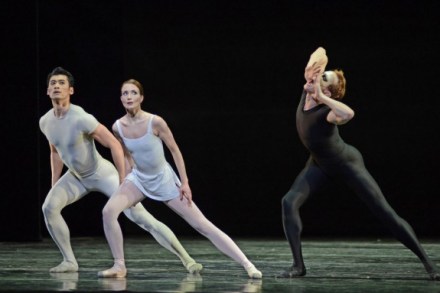
As the revels of the year end, here are my best memories. I think new was the word: new names, and new directions from familiar names. Stories rushed back into fashion. There was big emotion and bold movement, and untraditional means: collaborations with composers and communities thinking large on tiny budgets. Here are my highlights - what are yours? 1. Crystal Pite’s mesmerising abstract mass ensemble, Polaris, in Thomas Adès’s one-off music and dance evening at Sadler’s Wells (see picture above) 2. Matthew Bourne and Scott Ambler’s gutwrenching community dance creation, Lord of the Flies 3. English National Ballet’s ambitious, satisfying night of war-inspired premieres, especially Akram Khan’s Dust 4.

Kate Chisholm’s radio top five from 2014

1. My top gong would be shared by June Spencer and Patricia Greene for their brilliant character acting on Radio 4’s The Archers, creating in Peggy and Jill two resilient women of their time yet also strong-minded, decisive, fiercely independent and in Jill’s case always game for a laugh. 2. Not far behind is Neil MacGregor for creating another superb series for Radio 4, Germany: Memories of a Nation, encouraging us to think about what the world might look like from a German point of view in 25 bite-sized insights. 3. Radio 3's most heart-stopping moment on air was Zoe Norridge visiting the technical school in Murambi where thousands of Tutsi took refuge during the bloody civil war of 1994. ‘The smell is biting,’ she told us. 4.

Why Joe Cocker was the only singer to improve a Beatles song

Joe Cocker died yesterday, just 70 years old, from lung cancer. He was one of a handful of rock singers whose voice was instantly recognisable, adding a new dimension to any song he sang. And perhaps this is why his cover versions worked so well – they did sound completely different, and yet still thrilling and authentic. He could take a well-loved song, and transform it in a way that was loved by those who loved the original. To me, Cocker was the only person to improve a Beatles song. His 1968 With A Little Help From My Friends is unforgettable, right off from the intro. It sounds like a completely different song, shooting off in a direction that even the Beatles couldn’t quite manage.

From the archive: Sound of the season

Features

Some songs are hits — No. 1 for a couple of weeks. Some songs are standards — they endure decade after decade. And a few very rare songs reach way beyond either category, to embed themselves so deeply in the collective consciousness they become part of the soundtrack of society. They start off the same as all the other numbers, written for a show or a movie, a singer or an event, but they float free of the writer, they outlast the singer, transcend the movie, change the event. And Irving Berlin’s ‘White Christmas’ is perhaps the song that transformed American Christmas.

Why we love hating the music we hate as much as we love loving the music we love

Music

With seconds to spare, I think I have chanced upon my music book of the year. Such choices are always frighteningly subjective, relying as they do on the narrow musical tastes of the chooser, his or her sex, age, education and ambient level of grumpiness. So I make no claims for this book beyond the fact that I liked it a lot. You might not like it, although the book’s author would probably think you were wrong. He has been a rock critic for many years, and old habits of the species (intellectual arrogance, superhuman obstinacy, absolute belief in the correctness of one’s tastes) die very hard. Andrew Mueller’s It’s Too Late To Die Young Now (Foruli Codex, £9.99) is subtitled ‘Misadventures In Rock and Roll’.

Why Church music is back in vogue – and squeaky-gate music has had its day

Music

One of the growth areas of contemporary music is in setting sacred texts. It might be thought that I had a special interest in claiming this, but in fact what I am about to describe represents a sea change in recent practice. Where there was once ‘squeaky gate’ (or ‘dripping tap’) music — as very dissonant writing used to be called — many leading composers are now writing in a style that is at least tonal and can occasionally seem almost naïve. There was a time when the first performance of a recent commission struck fear into the most broad-minded listener. We used to brace ourselves for horror and were rarely disappointed. In those days, the struggle to write more atonally than the next man was palpable.

Is this 65-year-old British pianist the next big thing in classical music?

Music

Earlier this month the Wigmore Hall was sold out for a Schubert recital by a concert pianist whose only solo recordings consist of two volumes of the Mozart piano sonatas. That would be understandable if he were 23 years old and the next big thing. But he’s 65. Though he may indeed be the next big thing. Christian Blackshaw started big, faded into obscurity, then burst back at around the time he qualified for Boris’s Freedom Pass. Whether he owns one I can’t say. I wouldn’t dare ask, since he can be a bit prickly. In fact, he’ll probably take offence at that, so let’s note immediately that he doesn’t look his age. He has the features of a matinee idol and the swept-back silver hairstyle that Beethoven would have sported if he’d owned a comb.

Actually, Bob, they do know it’s Christmas (we checked)

Barometer

Yeah, Bob, they know The answer to the rhetorical question posed by the Band Aid single, ‘Do they know it’s Christmas?’, is broadly yes. Christmas Day is a public holiday everywhere in Africa except Mauritania, Western Sahara, Morocco, Algeria, Tunisia, Libya and Somalia, although countries have widely differing customs associated with the event. — In Liberia, one of the Ebola-affected countries, it more resembles Halloween, where children go from door to door dressed as demons and begging for presents. — The two countries where Bob Geldof’s line might be appropriate are Ethiopia, the target of the first record in 1984, and Egypt.

Spare us a Bob?

Leading article

Anyone listening to the BBC this week could be forgiven for thinking that the musician Bob Geldof had just emerged from Africa, like a latter-day Dr Livingstone, the first westerner with news of a deadly new virus. He and his makeshift band of celebrities have adopted Ebola, their song blazing from the radio while Geldof himself has been in every studio exhorting people, with his usual stream of expletives, to buy it. Unless you have been in isolation for the past six months, the Band Aid single will not have raised your awareness of the disease one bit. Since the outbreak was first confirmed in Guinea on 22 March, many hours of news coverage had been broadcast and many millions raised to help the aid effort.