Culture

Culture

The good, the bad and the ugly in books, exhibitions, cinema, TV, dance, music, podcasts and theatre.

Musicians are roasting at the Proms; freezing at the Bachathon

Music

Gossip that an orchestral player fainted while performing in the Albert Hall during the recent heatwave points to a strange lacuna in the policing of concert conditions. The unions who like to stipulate how professional musicians are treated — Equity and the MU — have long made a big song and dance about minimum temperatures in the workplace. If the temperature falls below the agreed level, we are all entitled to walk out, without any further questions asked, since obviously the management is trying to save money on heating bills, to the detriment of the workers’ health. But global warming has produced a different set of difficulties.

Happy 80th birthday, Dame Janet Baker

Music

Raise your glass on 21 August to wish a happy 80th birthday to one of the greatest singers and singing actresses this or any other country has produced — Dame Janet Baker, the mezzo-soprano from Yorkshire, who never went to a music college and won the hearts of her audiences in a career spanning 35 years. Joining us in our toast will be some shades from the past who have much for which to thank and applaud her. Make way for Bach, Handel, Elgar, Monteverdi, Britten, Mahler, Strauss, Purcell, Schubert, Berlioz, Schumann and Wolf, all of whose music she has sung with penetrating insight. In the concert hall and the opera house she has lavished her art on theirs. It is now more than 30 years since she sang in public.

Hell is other people’s taste in music

Music

‘I don’t really like most of the music you play,’ said the tall blonde woman with whom I share my life. ‘There are no tunes. Where are the tunes? A lot of it sounds like the sort of thing you’d hear in Topshop.’ I was outraged. Admittedly, the song playing at that moment — a droll little thing called ‘Boring’ by The Pierces — didn’t exactly boast a killer melody, but even so. Like any music obsessive worth his salt, I pride myself on my ability to spot a decent tune from 40 paces, even if many of them are couched within the acoustic, minor-key, vaguely melancholy textures I tend to favour.

Melissa Kite is punished for ignoring the Madonna of the sea

Real life

‘Benvenuti alla Small Cluster Band!’ And about time, too. We had been sitting in the Castello in Castellabate for half an hour watching an empty stage, while members of La Small Cluster Band stood around eating slices of pizza from takeaway boxes. ‘They’re on Italian time,’ I told my mother, as she sat in her place wearing an expression communicating polite but profound dissatisfaction. It had been my idea to spend an evening in the historic hilltop town of Castellabate listening to La Small Cluster Band playing ‘Concerto Swing’ after seeing a poster advertising the event on a wall. What could be more sophisticated, I thought, than an evening of live music in Castellabate, which boasts of being the most beautiful town in Italy.

70th anniversary of Composer of the Week

Music

Mention of the 70th anniversary of Composer of the Week brings to mind a distinguished list of long-running programmes on Radio 3. They all beg the question of how they have managed to survive so long in an atmosphere of constant doubt about the value of a station that has so few listeners. Time and again it has seemed as though dumbing down would be the fate of all these old shows, if not of Radio 3 itself, and every time a peculiarly British mix of grudging respect for the arts alongside a trenchant nostalgia for familiar things — of the kind that has kept The Archers going since 1951 — has saved them. Composer of the Week can outrank The Archers, however, having been launched (as This Week’s Composer) in August 1943.

Why has nobody heard of the miraculous Czech composer Zelenka?

Music

When I was in my late twenties I discovered the joy of drinking alone. Well, perhaps ‘joy’ is putting it too strongly. I’d been thrown out of the flat I shared with one of my closest friends from university after a series of drunken rows about his social-climbing girlfriend. I was living in a converted gardener’s cottage in west London. It was painted pink, for some reason (‘a pink cottage — just right for you,’ harrumphed my ex-flatmate), and furnished so miserably that it didn’t seem worth the effort to throw out the empty wine bottles or bother with ashtrays. Now I could binge-drink and, just as important, binge-listen. The late Beethoven quartets, in virtuosic but slightly unhinged performances by the Lindsays, suited my mood.

The last taboo in pop: fat old men

Music

Don’t worry, I’m not going to go on about Glastonbury. I wasn’t there, I never have been and, unless forced at gunpoint, I never will be. It has been a source of great comfort to discover that rock critics far more professional than I detest festivals as much as I do. My friend Andrew Mueller tells the story of his appearance on Sky News as a token anti-Glastonbury grouch, doing a two-way with some idiot in a stupid hat standing in knee-deep mud (these are his words). The festival-goer went first, and talked of community and spirit and laughter in the face of adversity. The presenter turned to Andrew and said, ‘Well, Andrew, what do you say to that?’ Andrew said, ‘I’m indoors.

‘It was like 26-dimensional chess’: Roger Wright on managing the Proms

Music

It sounds like a dream job — being in charge of what is now regarded as the greatest classical music festival in the world. But most of us would quail at the challenge. Quite apart from needing enough musical imagination to come up with 75 nightly programmes, it must surely be a logistical nightmare, corralling 300 musical artists and 315 works into a two-month season? Roger Wright, director of the BBC Proms since 2008 (as well as Controller of BBC Radio 3), obviously relishes the task. ‘I don’t do sitting in the chair dreaming about what we might put on,’ says Wright. ‘Nor is every single thing my personal choice.

The Stones at Glastonbury: the greatest show EVER

Music

Yes, I’m sorry, the Stones at Glastonbury really were that good and if you weren’t there I’m afraid you seriously need to consider killing yourself. You missed a piece of rock’n’roll history, one of the gigs that will likely be ranked henceforward among the greatest EVER. So again, sorry if you weren’t there to enjoy it. Boy and I were. And we did. A lot. Perhaps it helped that so few of us were expecting much. I was hanging around the afternoon beforehand in the EE tent waiting for my phone to recharge, having one of those random Glasto conversations with strangers — an A&E nurse, a geeky kid — and we all agreed that the Stones were a band we planned to see more out of duty than pleasure.

Fête de la Musique: Couldn’t we just get over ourselves, risk a bit of foreign and join

Music

One of the many cultural initiatives to have come out of France in the past 50 years — and therefore by definition to have been viewed with suspicion by the British establishment — is the Fête de la Musique. One need look no further than Margaret Thatcher and Unesco to get the flavour of what follows; but so complete has been the disinterest in the Fête around here that even I, Europhile to the core and anyway booked to perform in Paris on 21 June, had no idea what I was contributing to. This Fête began life in 1982 when Jack Lang, then minister of culture in Paris, framed a festival that would put ‘the music everywhere and the concert nowhere’.

Down with the Glasto smugfest

I suppose this will seem churlish, but I’d just like to add my support to the grime rapper Wiley who, upon arriving at the Glastonbury festival, tweeted to Michael Eavis: ‘Fuck you and your farm.’ I’m not sure what motivated this annoyance but credit where it’s due, it’s roughly what I’ve felt about this bloated middle class smugfest for the last fifteen years. If it persuades the badger-strangling but otherwise impeccably PC post-hippy Eavis to call it a day, so much the better. Why in Christ’s name would anyone wish to attend a music festival in which the headline acts are almost double the ages of the cabinet (and slightly further to the right)?

Barometer | 27 June 2013

Barometer

Field reports The Glastonbury Festival is once again being held at Michael Eavis’s dairy farm at Pilton, just outside the Somerset town. The venues of some other famous festivals: — Monterey: the festival most associated with the 1967 ‘Summer of Love’ was held at the Monterey County Fairgrounds, previously used for jazz festivals. — Woodstock: the 1969 festival was to have been held on an industrial park, but the local council placed a restriction limiting attendance to 5,000, so it moved to a dairy farm owned by Max Yasgur. He was paid $50,000 but was barred from the local shop. — Isle of Wight: the third Isle of Wight festival became the largest festival ever staged, with 600,000 attending.

The syphilitic sound of Schumann’s violin concerto is part of its genius

Music

Robert Schumann met a wretched end. He died in a lunatic asylum where he thought the nurses were feeding him human faeces. Meanwhile he drove his fellow residents mad by sitting at the piano and bashing out nonsense-music until he had to be dragged away — a grotesque indignity for the creator of the most bewitching quicksilver fantasies in the history of the instrument. After Schumann’s death in 1856, the violinist Joseph Joachim hid away the strange concerto that the composer had written for him in 1853 because it showed evidence of softening of the brain. Clara, Robert’s widow, agreed. That became the conventional wisdom.

Has music died? If not, where are the new decent pop tunes?

Music

I am suffering, as we all do from time to time, from a shortage of decent new tunes. Of course, ‘suffering’ may be a slight exaggeration here. Very little physical pain has been involved. But research has shown that music obsessives need a constant upgrade of their personal tunebanks in order to perform at full capacity. It’s all very well going back and playing the Electric Light Orchestra’s Out of the Blue at top volume and singing along to every vocal harmony, as I might have done once or twice this past week, but a long-term solution it is not. It’s where to find these new tunes that has become the problem. I try radio station after radio station, and then I try them all again in a different order.

Spectator Play: The highs and the lows of what’s going on in arts this week

Christopher Purves began his musical career playing doo-wop and rock and roll with the band Harvey and the Wallbangers . These days however, the stages of Glyndebourne and La Scala are his new stomping ground. In this week’s magazine, Julian Flanagan chats to the baritone about his transition from pop to opera, the pivotal events of his opera career, and the ambitions he has yet to fulfil. In his latest role, Purves plays Walt Disney in Philip Glass’s The Perfect American at the ENO, which has proved to be a physical challenge for the singer. But ‘I’ve never gone for the easy life’, he tells us. His career path so far certainly corroborates that statement.

Music: the German love affair with all things British

Music

The current love affair that the Germans seem to be having with all things British has deep roots. It was Schlegel who first claimed Shakespeare for the German-speaking world when he said that the bard was ‘ganz unser’ (entirely ours). Goethe was equally obsessed. There are now more productions of Shakespeare’s plays in Germany every year than in England, with the advantage that he not only translates unusually closely into German but also that the audiences are hearing him in contemporary language. Then there is the instinctive German respect for the British sense of humour, which threatens anarchy, but, by some miracle they dare not trust, never quite delivers it.

Four recordings of Beethoven’s Ninth on a £10 app

Music

Last weekend my iPad sucked me deeper into Beethoven’s Ninth Symphony than I thought possible. Deutsche Grammophon and Touch Press have released an app devoted to the work that rendered me slack-jawed with wonder, like a Victorian on his first visit to a cinema. The app gives you four complete performances of the Ninth: by Ferenc Fricsay with the Berlin Philharmonic (1958); Herbert von Karajan with the same orchestra (1962); Leonard Bernstein with the Vienna Philharmonic (1978); and Sir John Eliot Gardiner with his preposterously named Orchestre Révolutionnaire et Romantique (1992). Icons for the performances are next to each other, and the gentlest touch will transport you to and fro. The technology is a marvel.

Scotland’s 2013 Eurovision triumph

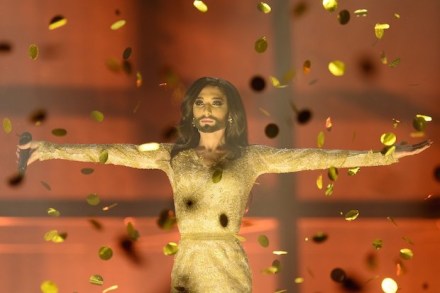
Last night’s Eurovision was, as always, a collision of music, culture and politics. As always, the official British entry was dire – but, as always, the invisible hand of Britain’s world-class musicians lay behind many acts that did well. So it was with Denmark’s winner, Emmelie de Forest, whose song Only Teardrops won by quite a margin. For CoffeeHousers who didn’t catch last night’s awards, here it is. From the first note, you can tell something is up. If this is a Danish entry, why the Celtic flute? It wasn’t a homage to Belfast Child. Ms de Forest has, since the age of 14, been learning from and performing with Fraser Neill, one of Scotland’s world class folk musicians. His influence was audible last night.

Chic’s Nile Rodgers on Daft Punk’s new single

Music

Every new product, whatever it is, needs a bit of ‘buzz’, and indeed vast numbers of people around the world make a decent living trying to generate that ‘buzz’, while the rest of us spend much of our time trying to ignore it. Last week, though, much chatter was to be had in music-loving circles about the new single from Daft Punk, a French duo who make dance music and dress up as robots whenever they play live. I bought their 2001 album Discovery, which was awash with references to old soft-rock hits of the late 1970s, and was so influential you could hear blatant steals from it on countless chart hits from the subsequent decade.

Interview with the musician Paul Lewis

Music

Being an English pianist must be a lonely calling at times. There is no native tradition like the ones that, say, German or Russian musicians are heir to, so many superb pianists have been unjustly overlooked. It used to be said of John Ogdon that, had he been born Ogdonski, in Minsk rather than Mansfield, his profile would have been greater. Perhaps; but would he have been a finer musician? If you were born in Huyton, the son of a docker, the odds against gaining international recognition are greater still. Yet, in his 42nd year, that is where Paul Lewis stands today as he approaches the final furlong of a three-year survey of Schubert.

Pick of the Proms

Music

With the publication of this year’s Proms brochure it is clear that what was already large has just become larger; and what was already a smooth production has just got smoother. Whether this is sustainable growth, or even desirable growth, are questions for the future; but I think I’ve discerned one of the main reasons for the current expansion — Wagner’s anniversary. Verdi’s has had less impact. It is inconvenient when two great names share a year. Bach and Handel made 1985 difficult to manage, while Lassus and Palestrina caused some of us agonies of balance and regret in 1994. On both of those occasions, one composer got a larger bite of the cherry than the other, and so it is going to be this year.

Are today’s composers up to the challenge of writing sublime music?

Music

When we describe music as ‘sublime’, what do we mean? For the Romans, sublimis signified greatness beyond measure. In the 18th century, Englishmen looked to The Spectator for clarification. Joseph Addison, in his Essay No. 339 of 1712, suggests that the sublime often achieves greatness without stirring up ‘pathetick’ human passions. The example he gives is Milton’s description, in Paradise Lost, of the Messiah looking down on his new Creation, ‘when every Part of Nature seem’d to rejoice in its Existence; when the Morning-Stars sang together, and all the Sons of God shouted for joy’. Whether a composition is sublime is essentially a matter of opinion.

The brilliant fun of Bryan Ferry’s The Jazz Age

Music

When you can do anything you like, what do you do? In Bryan Ferry’s case, the answer seems to be ‘make a 1920s instrumental jazz record out of some of my old songs’. I have to admit that the mere idea of The Jazz Age (BMG), which is credited to The Bryan Ferry Orchestra, appealed to me not at all, and it seems that I wasn’t alone in this, for the record, released just before Christmas, reached only number 50 in the charts and may end up selling something adjacent to Bugger All. The first time you play it, it’s essentially a parlour game. Which one is ‘Slave To Love’? Is that really ‘Virginia Plain’? What on earth have they done to ‘Love Is The Drug’?

Richard Wagner at 200

Music

‘The overpowering accents of the music that accompanies Siegfried’s funeral cortège no longer tell of the woodland boy who set out to learn the meaning of fear; they speak to our emotions of what is really passing behind the lowering veils of mist: it is the sun-hero himself who lies upon the bier, slain by the pallid forces of darkness — and there are hints in the text to support what we feel in the music: “A wild boar’s fury”, it says, and: “Behold the cursed boar,” says Gunther, pointing to Hagen, “who slew this noble flesh.” The words take us back at a stroke to the very earliest picture-dreams of mankind.

Parsifal at Salzburg Easter Festival

Music

To hear Christian Thielemann conduct the Dresden Staatskapelle in Wagner’s ‘stage consecration play’, in Salzburg at Easter, proved a musical experience that could only deepen anybody’s love of this extraordinary opera. To see it was another matter, as it often is. But let us first praise the musicians who, guided by their conductor, gave it wings. At six minutes under four hours (battle-hardened Wagnerians will appreciate the timings) this was not a long Parsifal.

The ideal place to hear classical concerts

Music

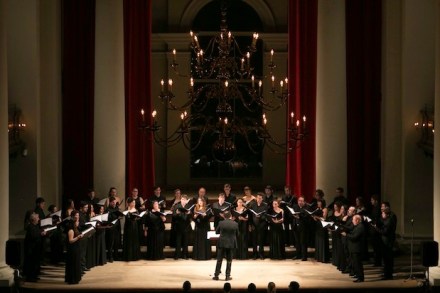
What sort of room do you prefer to hear classical concerts in? We have all got used to industrial-strength symphony halls and opera houses, capable of holding 3,000 people, with dry acoustics and omni-look interiors. As with art galleries around the world, once inside you could be anywhere: there is little to tell you which culture any particular one comes from, apart from the signs indicating the lavatories. The general public have come to accept the implicit anonymity of many halls, where individuality has often been sacrificed to size and comfort. Three thousand is a lot of seats, each occupant requiring good sight-lines and good facilities.

Beethoven at dinner parties: how to bluff it

Music

I’ve just been reunited with a man whose pungent and patronising views on great composers have haunted me for more than 30 years. His name is Gervase Hughes, and I’ve discovered from Wikipedia that he was an upmarket travel agent who died in 1984. I had no idea, because I knew him only through his book Fifty Famous Composers, published as a Pan paperback in 1972, which mentions his short career as an opera conductor but not his main source of income, which was apparently ‘offering European tours in Rolls-Royce cars’. I lent Fifty Famous Composers (an expanded edition of The Pan Book of Great Composers, 1964) to a friend when I was at university, explaining that it was the wittiest and wisest introduction to the classical canon ever written. He promptly lost it.

If David Bowie really has returned to form, I’ll cry

Music

I haven’t heard the David Bowie album yet, but the Amazon order is in and Postie has been alerted as to the importance of the delivery. How often these days do any of us feel so excited about an imminent release? The ten-year gap between Bowie albums might have something to do with it, but the 30-year gap between decent Bowie albums is probably more relevant. And all this is down to the excellence of the single. Gary Kemp of Spandau Ballet wept the first time he heard ‘Where Are We Now?’, and I was blubbing well into the song’s third or fourth week on Radio 2.

Class prejudice is keeping talented children out of classical music

Music

Musicians have always had an uncertain social status in England, the traditional reactions varying from amused condescension to mild repulsion. The former was the old class-based judgment on men who had chosen to take up a profession which at best was associated with society women and at worst seemed menial; the latter directed towards brass players from rough backgrounds whose lips juggled pint pots with mouthpieces and not much else. The most respectable practitioners were probably organists, often referred to as ‘funny little men’, but taken seriously.