Culture

Culture

The good, the bad and the ugly in books, exhibitions, cinema, TV, dance, music, podcasts and theatre.

The cook, the critic, the composer and the love child

Michael Kennedy, who died on New Year’s Eve, was the Sunday Telegraph’s music critic when I was for a while assistant arts editor there about 20 years ago. He was of course musically knowledgeable beyond reproach, but his writing had the compulsive readability of a man who was always a journalist, a storyteller. He was elitist in his taste but populist in his communicative instincts, something that I rapidly absorbed as I subedited his copy. Critics are usually obsessively protective of their work, often wounded by disagreement rather than stimulated. Kennedy was an exception, robustly open to the possibility of others improving and developing work he could get nowhere with.

His lyrics are hopeless, his covers are catastrophic, yet I still love Bryan Ferry

Music

There were two new albums I wanted for Christmas — the Bryan Ferry and the Pink Floyd — and to my delight I got both. Others may prefer the unknown and the experimental as presents, but at this time of year I favour the pop music equivalent of a decent scarf or a new pair of slippers. The Pink Floyd we shall leave until later, on the reasonable grounds that I haven’t listened to it yet. But the new Ferry album, Avonmore (BMG), is splendid, as warm and elegant as a cashmere scarf, as perfectly snug as the fluffiest slippers. For those of us who have followed Ferry moderately slavishly for several decades, it ticks all the boxes. And what are those boxes, precisely? It’s the same but different.

Does anyone have the balls to bring back castrati?

Music

One of the most complete bars to the authentic performance of both baroque opera and some renaissance polyphony is the current unavailability of castrati. There isn’t much to be done about it of course, but we might regret that we can no longer hear a sound which, at its best, fascinated all who did hear it. And we don’t know what that sound was. The two famous and unique recordings of Alessandro Moreschi, made in old age in 1902 and 1904, give us some clues, but can hardly represent the sound of the greatest 18th-century practitioners. There are some pointers in contemporary reports.

Bob Dylan and the illusion of modern times

Features

I was talking the other day to a young woman who knows a lot about the history of rock. We shared an enthusiasm for Bob Dylan’s later work — especially Blood on the Tracks (1975). As we talked, it occurred to me that Dylan recorded this ‘late’ effort 40 years ago, only 13 years into his career. So why do we treat it as belonging more to our time than, say, his folk ballads from the early 1960s? Some baby-boomer journalist must have decided around 1970 that something Dylan did in 1965 or 1966 — maybe his switch to electric instruments or his motorcycle accident — marked a critical break in history. We stupidly accept this view of things: Dylan is now in his sixth decade as a symbol of American youth. But time does keep moving on.

Michael Tanner’s five least objectionable opera performances of 2014

1. Khovanskygate A typically brilliant and wayward production by the Birmingham Opera Company of this unfollowable opera, with stupendous choral singing by local inhabitants. 2. Dialogues des Carmélites The Royal Opera did Poulenc's gamey masterpiece proud, in a direct and intense account, with ideal all-round casting. 3. Götterdämmerung Opera North, under the inspiring leadership and baton of Richard Farnes, brought the greatest enterprise that a company can undertake to a stupendous close, and in two years' time will be performing the entire Ring cycle. 4. Macbetto The live relays from the New York Met.

Ismene Brown’s best of dance in 2014

As the revels of the year end, here are my best memories. I think new was the word: new names, and new directions from familiar names. Stories rushed back into fashion. There was big emotion and bold movement, and untraditional means: collaborations with composers and communities thinking large on tiny budgets. Here are my highlights - what are yours? 1. Crystal Pite’s mesmerising abstract mass ensemble, Polaris, in Thomas Adès’s one-off music and dance evening at Sadler’s Wells (see picture above) 2. Matthew Bourne and Scott Ambler’s gutwrenching community dance creation, Lord of the Flies 3. English National Ballet’s ambitious, satisfying night of war-inspired premieres, especially Akram Khan’s Dust 4.

Kate Chisholm’s radio top five from 2014

1. My top gong would be shared by June Spencer and Patricia Greene for their brilliant character acting on Radio 4’s The Archers, creating in Peggy and Jill two resilient women of their time yet also strong-minded, decisive, fiercely independent and in Jill’s case always game for a laugh. 2. Not far behind is Neil MacGregor for creating another superb series for Radio 4, Germany: Memories of a Nation, encouraging us to think about what the world might look like from a German point of view in 25 bite-sized insights. 3. Radio 3's most heart-stopping moment on air was Zoe Norridge visiting the technical school in Murambi where thousands of Tutsi took refuge during the bloody civil war of 1994. ‘The smell is biting,’ she told us. 4.

Why Joe Cocker was the only singer to improve a Beatles song

Joe Cocker died yesterday, just 70 years old, from lung cancer. He was one of a handful of rock singers whose voice was instantly recognisable, adding a new dimension to any song he sang. And perhaps this is why his cover versions worked so well – they did sound completely different, and yet still thrilling and authentic. He could take a well-loved song, and transform it in a way that was loved by those who loved the original. To me, Cocker was the only person to improve a Beatles song. His 1968 With A Little Help From My Friends is unforgettable, right off from the intro. It sounds like a completely different song, shooting off in a direction that even the Beatles couldn’t quite manage.

From the archive: Sound of the season

Features

Some songs are hits — No. 1 for a couple of weeks. Some songs are standards — they endure decade after decade. And a few very rare songs reach way beyond either category, to embed themselves so deeply in the collective consciousness they become part of the soundtrack of society. They start off the same as all the other numbers, written for a show or a movie, a singer or an event, but they float free of the writer, they outlast the singer, transcend the movie, change the event. And Irving Berlin’s ‘White Christmas’ is perhaps the song that transformed American Christmas.

Why we love hating the music we hate as much as we love loving the music we love

Music

With seconds to spare, I think I have chanced upon my music book of the year. Such choices are always frighteningly subjective, relying as they do on the narrow musical tastes of the chooser, his or her sex, age, education and ambient level of grumpiness. So I make no claims for this book beyond the fact that I liked it a lot. You might not like it, although the book’s author would probably think you were wrong. He has been a rock critic for many years, and old habits of the species (intellectual arrogance, superhuman obstinacy, absolute belief in the correctness of one’s tastes) die very hard. Andrew Mueller’s It’s Too Late To Die Young Now (Foruli Codex, £9.99) is subtitled ‘Misadventures In Rock and Roll’.

Why Church music is back in vogue – and squeaky-gate music has had its day

Music

One of the growth areas of contemporary music is in setting sacred texts. It might be thought that I had a special interest in claiming this, but in fact what I am about to describe represents a sea change in recent practice. Where there was once ‘squeaky gate’ (or ‘dripping tap’) music — as very dissonant writing used to be called — many leading composers are now writing in a style that is at least tonal and can occasionally seem almost naïve. There was a time when the first performance of a recent commission struck fear into the most broad-minded listener. We used to brace ourselves for horror and were rarely disappointed. In those days, the struggle to write more atonally than the next man was palpable.

Is this 65-year-old British pianist the next big thing in classical music?

Music

Earlier this month the Wigmore Hall was sold out for a Schubert recital by a concert pianist whose only solo recordings consist of two volumes of the Mozart piano sonatas. That would be understandable if he were 23 years old and the next big thing. But he’s 65. Though he may indeed be the next big thing. Christian Blackshaw started big, faded into obscurity, then burst back at around the time he qualified for Boris’s Freedom Pass. Whether he owns one I can’t say. I wouldn’t dare ask, since he can be a bit prickly. In fact, he’ll probably take offence at that, so let’s note immediately that he doesn’t look his age. He has the features of a matinee idol and the swept-back silver hairstyle that Beethoven would have sported if he’d owned a comb.

Actually, Bob, they do know it’s Christmas (we checked)

Barometer

Yeah, Bob, they know The answer to the rhetorical question posed by the Band Aid single, ‘Do they know it’s Christmas?’, is broadly yes. Christmas Day is a public holiday everywhere in Africa except Mauritania, Western Sahara, Morocco, Algeria, Tunisia, Libya and Somalia, although countries have widely differing customs associated with the event. — In Liberia, one of the Ebola-affected countries, it more resembles Halloween, where children go from door to door dressed as demons and begging for presents. — The two countries where Bob Geldof’s line might be appropriate are Ethiopia, the target of the first record in 1984, and Egypt.

Spare us a Bob?

Leading article

Anyone listening to the BBC this week could be forgiven for thinking that the musician Bob Geldof had just emerged from Africa, like a latter-day Dr Livingstone, the first westerner with news of a deadly new virus. He and his makeshift band of celebrities have adopted Ebola, their song blazing from the radio while Geldof himself has been in every studio exhorting people, with his usual stream of expletives, to buy it. Unless you have been in isolation for the past six months, the Band Aid single will not have raised your awareness of the disease one bit. Since the outbreak was first confirmed in Guinea on 22 March, many hours of news coverage had been broadcast and many millions raised to help the aid effort.

Yes, Bob Geldof, Africans know it’s Christmas. Do you know it’s time to pack Band Aid in?

In this week's Spectator, out tomorrow, our leading article looks at the Band Aid 30 single and why it's time for Bob Geldof to pack Band Aid in. Pickup a copy tomorrow or subscribe from just £1 here.  Anyone listening to the BBC this week could be forgiven for thinking that the musician Bob ­Geldof had just emerged from Africa, like a ­latter-day Dr Livingstone, the first westerner with news of a deadly new virus. He and his makeshift band of celebrities have adopted Ebola, their song blazing from the radio while Geldof himself has been in every studio exhorting people, with his usual stream of expletives, to buy it.

Pink Floyd’s new album: it’s not hip – but it is good

Yesterday, I popped into Rough Trade West record store to purchase the new Pink Floyd album. That isn’t something I expected to say in my lifetime, but 20 years after their 14th album The Division Bell, one final album has been added to the band’s canon: The Endless River. Although this laddie does not think of himself as a professional music critic, I like to think I know my Floyd so here is a quick take on their new release. The Endless River is not on a par, and nor should it be, with the following albums: Dark Side of the Moon, Wish You Were Here, The Wall, The Division Bell or anything else Pink Floyd have released.

A reverend at war

This evening – Armistice Eve – Ben Fleetwood Smyth (no relation) and Hugh Brunt will be putting on their annual British Art Music Series concert: this year, in aid of St Paul’s, Knightsbridge. Narrated by Judith Paris, and interspersed with Victorian and Edwardian music from the BAM Consort and the BAM Ensemble, the event will tell the story of one London community’s life, both at home and abroad, across the full span of the First World War, focussing on extracts from the parish magazines of the time, read by the current vicar, Fr Alan Gyle, and by yours truly.

Is there anything a gospel choir can’t cheer up?

Music

‘I’m starting to think that all of the world’s major problems can be solved with either oyster sauce or backing vocals.’ That was Brian Eno writing in his diary one evening, after a long day’s thinking and maybe a glass or two of something agreeable. I am not entirely convinced by the bivalve mollusc argument, but the second half of his apophthegm makes perfect sense. Last week I was listening to Tim Burgess’s 2012 album Oh No I Love You (OGenesis), a recent and possibly inspired purchase. Mr Burgess is perhaps better known as lead singer and increasingly large face of The Charlatans, the long-serving Midlands indie band who enjoyed a brief spell in the sun during the Britpop horror.

Pop stars at prayer – from Madonna to the Beatles, and jihadist Cat Stevens

A spoof in the Israeli Daily recently had Eminem planning to convert to Judaism and move to Tel Aviv. But I don’t think we’ll be seeing that any time soon - he’s not really waiting for the Messiah, he’s just a very naughty boy. Still, stranger things have happened. I was very amused by the Reverend Richard Coles recently; when asked if he is the only vicar who has ever topped the British pop charts, he said 'Yes, but I met the vicar of Hitchen the other day and I said 'We've met, haven't we? Was it through the church?"' Apparently the vicar of Hitchen replied 'No, I was in Pigbag in the 1980s!

Peter Phillips is mugged by a gang of Praetorius-loving six-year-old girls in China

Music

We have read about the remarkable opening up of China in recent years: how many people live there and how good they are at business, perhaps finding the prospect of them rushing into our world rather daunting. However, a part of this process has been the sudden curiosity there for western art-forms. Not long ago the idea of a tour of China by a European early music group would have seemed completely fantastical. What space was there in a country which for many years had allowed only eight ‘model plays’ to be publicly staged — all of them about the achievements of the army — for the votive antiphons of Tallis, or the Passions of Bach? Not everyone in that vast country is ready for such delicacies yet, but a light has begun to shine.

The drunk conductor who ruined Rachmaninov’s career

Music

Would musical history have turned out differently if Alexander Glazunov hadn’t been smashed out of his wits when he conducted the first performance of Rachmaninov’s Symphony No. 1 in D minor? The best of Glazunov’s own neatly carpentered symphonies hover on the verge of greatness. Perhaps if he hadn’t been such a toper — swigging from bottles of spirits during lectures at the St Petersburg Conservatory, where he was director — they would do more than hover. Unfortunately, his drinking didn’t just screw up his own career. The 23-year-old Sergei Rachmaninov had spent two years working on his first symphony, whose climaxes erupt from melodic cells borrowed from Orthodox chant. Not that Glazunov would have noticed. He barely glanced at the score before the premiere.

Why, if Cecilia Bartoli invites you to a party, you drop everything and go

Classical music has a few certainties: Götterdämmerung will always be that little bit longer than you remember, it will reliably rain if you pack a Glyndebourne picnic, and if Cecilia Bartoli invites you to a party, you drop everything and go. Which is why I found myself in Paris earlier this week, along with most of the record industry, prepared for serious music and some even more serious thrills at the launch of Bartoli’s new disc St Petersburg. There are times when only a palace will do. For most of us those times are few and far between, but if you’re mezzo-soprano Cecilia Bartoli – ‘La Gioiosa’, a classical music phenomenon and one of its biggest-selling stars – then life, and art, are far from everyday.

Why Yes are still the funniest rock band in the world (although Radiohead are catching up)

Music

My favourite comment about the Scottish referendum came from the eminent comedian and novelist David Baddiel. ‘What if Yes wins, but due to a typographical error, the prog-rock band gets in and Jon Anderson becomes First Minister?’ You probably had to be there to find this funny, and in this case ‘there’ is the early 1970s. Having been there myself, I too remember Yes as the most intrinsically amusing of progressive bands, along with Emerson, Lake and Palmer. Genesis were quite funny in their early days, when Peter Gabriel dressed up as a flower. Pink Floyd weren’t funny, although Roger Waters is. The Beatles aren’t funny any more, but the Rolling Stones are as hilarious as ever. Many prominent 1980s acts — U2, Duran Duran, Spandau Ballet — were sidesplitting.

Christopher Hogwood: the absolutist of early music

Music

The death of Christopher Hogwood has deprived the world of the most successful exponent of early music there has ever been, or is ever likely to be. It has also reduced by one the quartet of conductors who have been called ‘the Class of ’73’, a term coined by Nick Wilson in a recent study of the early-music revolution of the 1970s and 80s. It refers to four groups that were founded in that year that are held to have changed the face of modern concert-giving: Hogwood and the Academy of Ancient Music; Trevor Pinnock and his English Concert; Andrew Parrott’s Taverner Choir; and my own Tallis Scholars. Of these it was Hogwood who had the most immediate impact and commercial success. It is also fair to say that his recordings are the most numerous, but least played, of all the Class.

If the idea of disturbing kraut-punk sung by a troll appeals, you’ll love The Fall

Music

I had a fair idea of what I was in for when I went to see The Fall at Brixton’s Electric last Friday. They’re a middle-aged band from Manchester, just like the Stone Roses, or the various incarnations of New Order. In journalese, this almost makes them ‘Heritage Rock’. I can’t remember when people started using this term, but it’s gone from the repertoire of niche music writing to being A Thing. You can’t go a week without some old beat combo or other announcing their re-formation, and in return they get a sort of protected status. Old rock music has become to the British what films about unfaithful middle-class couples are to the French. That is, culturally important but not very interesting. Consummately psychotic: Mark E.

David Cronenberg’s Map to the Stars: threesomes, incest, a dead dog and whiny farts

In a scene that sticks from Map to the Stars, David Cronenberg’s Grand Guignol of a Hollywood satire, Julianne Moore, playing an ageing Hollywood never-has-been, sits on the loo in front of her PA, expelling tired whiny farts from her arse, while listing – her trout pout doing its best impression of a quivering anus – the names of the laxatives and prescriptive drugs she needs as if they were old friends. Except she doesn’t have any friends; the only people she knows are casting directors who don’t call back. And it’s no wonder Havana Segrand’s bodily functions have stalled (surely a first for Cronenberg).

By all means protest against Exhibit B, but do not withdraw it

Having met with an equal mix of critical acclaim and revulsion at the Edinburgh Festival, Brett Bailey’s Exhibit B - based on the 'human zoos' and ethnographic displays of the late 19th century - opens today at the Barbican. I have not seen it yet, but as someone with coloured South African heritage - well aware of the European brutality during the 'Scramble for Africa' - I have little desire to. To some, Exhibit B will be racist and needlessly provocative. To others, it will be thought-provoking and poignant. The show ostensibly uses stark, racist imagery to make an anti-racist statement. Is Exhibit B offensive? The 19,000-odd people who have signed the e-petition to have it withdrawn certainly think so.

Wedding music lives or dies at the hands of the organist

Music

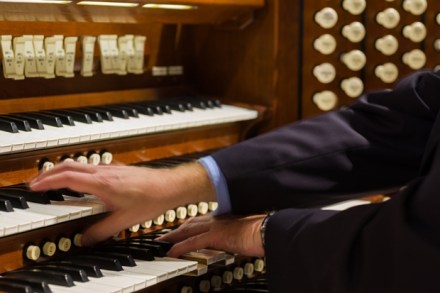
A few weeks ago I was at the perfect wedding. My young friend Will Heaven, a comment editor at the Telegraph, married the beautiful Lida Mirzaii, his girlfriend since university. The service was in Wardour Chapel in Wiltshire, a neoclassical masterpiece described by Pevsner as ‘so grand in its decoration that it seems consciously to express the spirit of the Catholic ecclesia triumphans’. Most of the guests were in their mid-twenties and doing their best to control their boisterousness. The Oratorian priest wore an antique cope; if it had been a Mass he might have been allowed to borrow the chasuble in the sacristy believed to have been worn by Cardinal Wolsey at the Field of the Cloth of Gold. Will was a boy chorister at Salisbury so the choice of hymns was spot on.

The secret to a long and happy pop career? Don’t die

Music

As everybody in the world except me seems to have seen Kate Bush’s live shows — against all apparent arithmetical sense — these have been gloomy weeks in the primary Berkmann residence. Even the mother of my children managed to acquire a last-minute freebie, even though she only really likes the first two or three albums and Bush didn’t play those. Admittedly, I would have had more chance of getting tickets if I had applied for some, but no sensible English male turns down the chance to sulk like the teenager he most certainly was when he stuck the poster that came free with Lionheart on his bedroom wall. No doubt everyone under 40 thinks we have all gone mad. If so, it’s a madness that was seeded a long time ago.