Culture

Culture

The good, the bad and the ugly in books, exhibitions, cinema, TV, dance, music, podcasts and theatre.

Might ITV make a better fist of finding a Eurovision song?

About 200 million people tuned in to the Eurovision Song Contest last night, and will have seen Britain finish third-last. The country of Adele, Ed Sheeran, the Mumfords and The Beatles was defeated by countries with a twentieth of our population (and musical talent) – so what’s going wrong? The answer is fairly simple: the UK entry is controlled by the BBC. Asking it to choose a Eurovision Song Contest winner is like asking the Parliamentary Culture Committee to choose a Christmas No1. I'm a huge fan of the BBC and its Eurovision coverage is generally first class, as are Paddy O’Connell and Graham Norton. But choosing a winning musical act is a another skill.

Is Zayn Malik as delighted as I am by Azealia Banks’ Twitter ban?

There aren't too many things I have in common with Zayn Malik, but as of this week, we do at least now have a shared enemy: Azealia Banks, the American rapper and part-time witch. She took to Twitter on Wednesday to send racist tweets to the former One Direction star, including one in which she called him a ‘curry scented bitch'. The think pieces have not stopped since. This is not a think piece from an outsider though, but from one of Miss Banks’ other victims. I first came into contact with her last month when she threatened on Twitter to kill a friend of mine’s mother using a voodoo curse, after the said friend mocked her ancient African magic ‘powers’.

Unsung hero | 12 May 2016

Music

One of the greatest choral symphonies of the 20th century, entitled Das Siegeslied (Psalm of Victory), has been heard only three times since it was composed in 1933. The last performance took place in Bratislava in 1997. The text is a German translation of words from Psalm 68: ‘...as wax melteth before the fire, so let the wicked perish at the presence of God’. One critic has described Das Siegeslied as ‘a shattering, armour-plated juggernaut of a symphony’, whose huge orchestra marches in a frenzy across ‘voice parts conceived wholly in terms of the harsh consonants and barking vowels of German’. Yet there is also captivating beauty: the lapping of harps and muted horns; a serene interlude for a capella choir.

There’s a reason why Prince didn’t release his archive – most of it isn’t very good

Prince’s vast archive of unreleased music is legendary. The ‘vault’ in Paisley Park, the late musician’s home-cum-studio complex in suburban Minneapolis, contains thousands of hours of recordings that have never seen the inside of a tape deck. The unpublished music tells a story. Material was shelved when band members left, after the tragic death of his newborn son, and at the end of his first marriage. Some projects were cancelled for more prosaic (commercial and legal) reasons. The Black Album, which was abandoned in mysterious circumstances a week before it was due to be released, became one of the most bootlegged records of all time.

Last words | 5 May 2016

Music

This, my 479th, is to be my last contribution as a regular columnist to The Spectator. I have written here for 33 years and 4 months, a way of life really, and one I have greatly enjoyed. I thank Auberon Waugh in absentia for suggesting me to Alexander Chancellor in the first place; and Charles Moore for keeping me on in the early years, once we were up and running. I also thank three quite exceptional arts editors: Gina Lewis, Jenny Naipaul and the doyenne of these pages, Liz Anderson. Things have moved on from my habitual think pieces, outraged rants, ad hominem demolition of palpable idiots written in the back of aeroplanes.

Sex offender

Music

I saw Prince play once. I was bored rigid but couldn’t mention this to the girls I’d gone with: as far as they were concerned, watching the purple sex dwarf (he was 5ft 2in) masturbating with and fellating his guitar and generally getting off on his sublime pixieness was like experiencing the second coming. Me, I could have done with a few more tunes. I like ‘When Doves Cry’ a lot: the keyboard hook, the demonic guitar, the naggingly catchy tune, the otherworldly vocals that make him sound like some kind of lascivious reptile from Venus. Whenever I hear it, though, I’m reminded of my fundamental problem with Prince: he was a really great pop star who wouldn’t do pop.

Prince and me

Features

This is only interesting, well a bit interesting, because the poor man died last Thursday and for a few short days almost anything with the word Prince in it stands a chance of getting some traction. So forgive me if this feels a bit rushed. And opportunist. And exploitative. And attention-seeking. It’s all of those things because I’m cashing in. Obviously. If you want nothing more to do it with it, I can only applaud you. But for those of you who want to know more about the incredible untold story of my time with Prince, read on. I met him six years ago. Downstairs in his house in Los Angeles. A woman I was hopelessly in love with said, ‘Tom, come and say hi.’ I stepped forward. Prince shook my hand and said, ‘Hello Tom.

The Rolling Stones’s Saatchi show is clearly a money-spinner – what’s wrong with that?

The most restless, resilient, rapacious rock & roll group in the world is on the move again. Less than two weeks after finishing a routinely Herculean tour of Latin America with an epochal show in Cuba, the Rolling Stones were back in their London hometown, disrupting traffic on the King's Road as Mick Jagger, Keith Richards, Charlie Watts and Ronnie Wood glad-handed a media scrum at a red carpet event to mark the opening of their latest project, Exhibitionism at the Saatchi Gallery. Towards the start of this 'immersive' odyssey, you find yourself in a room that looks like the set of a Harold Pinter play. Grease-plastered dishes are piled up in a blocked sink; overflowing ashtrays spill over the mantelpiece; a lingering smell of stale fish and chips permeates the air.

Modernist cul-de-sac

Music

The intransigence of Maxwell Davies, Boulez and Stockhausen is coming home to roost. Here were three composers, famous if not exactly popular, who called many shots by the time they died yet whose works were little loved in their lifetimes by the concert-going public and stand little chance of performance now they are dead. How was such imbalance possible? The intransigence had a lot to do with it. People thrill to a bold stance, and they don’t come much bolder than Boulez and Stockhausen in the Sixties. To be fair, Max was a very British version of this attitude. When Boulez died, the French press focused on a national hero whose main achievement, it seemed, had been to impress generations of foreigners while building monuments in Paris, as a true Frenchman should.

Bored of the dance

Features

[audioplayer src="http://rss.acast.com/viewfrom22/thespectatorpodcast-politicalcorrectness-budget2016andraves/media.mp3" title="The Spectator Podcast: The end of raving" startat=1080] Listen [/audioplayer]At 19, I dropped out of university to pursue a career as a rave promoter. I went into business with a schoolfriend. We rose through the ranks of party promotion, founded a record label, and started an annual dance music festival. After more than ten years, though, we’ve regretfully decided to close down. And here’s why: young people these days just don’t know how to rave. They are too safe and boring. Rave, like all youth movements, was meant to be about freedom, rebellion and pissing off your parents.

It’s not child’s play

Miscellaneous

Aldous Huxley observed that ‘Where music is concerned, infant prodigies are almost the rule. In the world of literature, on the other hand, they remain the rarest exceptions.’ This, he believed, was because good literature could not be written without experience of the outside world, while music was the art least connected with reality. ‘Like mathematics,’ he said, ‘it is an almost unadulterated product of the inner world.’ Musicians may dispute the last point, but the fact remains that musical and artistic ability can emerge with dizzying speed. When it does, the question is how best — and how far — to nurture it?

Manon Lescaut is a shambolic opera – but the Met’s production is mainly excellent

Manon Lescaut Met Opera Live Puccini's Manon Lescaut is his first opera worth seeing and hearing, and marks an astonishing progress from what preceded it. But Puccini had yet to learn how to bully his librettists into producing the well-constructed dramas of his later operas, and for all its delights Manon Lescaut is a shambles. Richard Eyre has updated it to France in 1941, to stress the moral ambiguity of everything there and then, with occupying forces, indecisive leading characters, a general unease. That works reasonably well, though the real problem is that Puccini is uncertain about the motives of his central characters, especially Manon herself, who veers between helpless anxiety and ruthless scheming.

This year’s Oscars was the biggest gathering of smug, self-important asses in living memory

The American comic Toby Muresianu put it best: last night’s Oscars felt like ‘three hours of being told to eat your vegetables’. If there has ever been a more grating gathering of smug, self-important asses keen to educate the TV-watching blob about Serious Stuff, then I’m struggling to remember it. Hollywood has clearly forgotten what its job is: to make us squeal and swoon, not raise our awareness about rape and paedophilia and the heat death of the planet and all the other misanthropic bilge the beautiful people spouted last night. Black people must have been counting their blessings.

Why I hate Adele’s vapid, deathless ballads

Music never dies, but if Adele makes another record, there is going to be a murder. Probably of me, by me, because I can’t take it any longer. Right now, there is no escaping her. In 2015, 25 was the fastest-selling album, ever, on both sides of the Atlantic. Her single ‘Hello’ was downloaded a million times in a week and was the most-streamed song in Spotify’s history. Last week, despite her meltdown at the Grammys, she swept up at the Brits. Which is stupendous news, if you, like everyone else, love Adele. But I don’t. I can’t. I won’t. I simply hate her. Or, rather, not her. But it – her music. When Coldplay was played this ubiquitously, at least no one ever admitted to being complicit.

Organic chemistry

Music

My old Oxford college, Mansfield, isn’t a famous establishment, though its current principal, ‘Baroness Helena Kennedy’, as she incorrectly styles herself, has raised its profile by lefty networking. (Owen Jones, no less, has lectured there.) The building is pretty, however, and its nonconformist chapel splendid, so long as you avert your eyes from the gruesome stained-glass Reformed divines. The organ was played by Albert Schweitzer and makes a mighty racket. This I know because in the 1980s the chapel was unlocked, which allowed me to creep in after a night on the sauce. I’d pull out all the stops, cackling like Vincent Price in The Abominable Dr Phibes. No pedals, though.

Sound and fury | 28 January 2016

Music

No one is consulted. No one is held to account. No one has the authority to turn it off. How is it that muzak has slipped through every legal control? The blame, I’d say, lies with those who are frightened of silence — with those who spend more money in shops that buzz to a friendly background hum, and laugh too loudly when all around are mute. To moderate their visceral fear of the quiet they cling to cheaply produced, intellectually demeaning and superficially comforting sub-music. Muzak comes in various forms — piped, performed live, and through other people’s headphones, when you can’t actually hear pitched sounds, only a desiccated, insistent beat. Live it can be most memorable. Everyone must have their least favourite story.

Age concern | 21 January 2016

Music

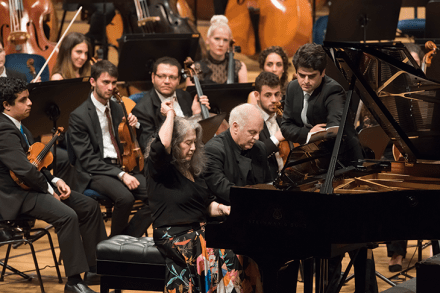
Daniel Barenboim back at the Festival Hall! Cue The Grand March of the Musical Luvvies Across Hungerford Bridge, a bustling overture by Karl Jenkins in which a trombone farts out the epigrams of Simon Callow and the violas mimic the gentle swing of David Mellor’s shoulder-length bob — modelled, I’m told, on Anna Ford’s barnet c.1982. Jolly fine it looked, too, on Sunday night. Barenboim doesn’t have much hair these days, but baldness suits him. Sixty years after his RFH debut, as a 13-year-old playing Mozart under Joseph Krips, he has the same baby-pink skin as Winston Churchill in old age. He also shares Churchill’s belief in his own indestructibility.

Public will now choose UK’s Eurovision entry – but should we trust the BBC with the shortlist?

For almost two decades, Britain has failed dismally at Eurovision – and deservedly. Our entries have been so bad as to represent a passive-aggressive insult to an entire continent. You can blame the BBC: it picks the song, and just doesn’t understand Eurovision. It seems to think it’s the equivalent of a musical bad taste party, where the aim is to send in cheesy songs. You Europeans have awful taste, the BBC seems to say, so here’s a song so crap that you’ll love it! They tend not to. Today, the BBC has announced that the public will choose the song. Its musical politburo won’t. This is a step forward, but it raises a very important question: can the BBC actually draw up a decent shortlist?

Bowie once praised Adolf Hitler… but he was always changing his tune

Columns

[audioplayer src="http://rss.acast.com/viewfrom22/projectfear/media.mp3" title="Rod Liddle and Kaite Welsh discuss David Bowie's legacy" startat=678] Listen [/audioplayer]I was desperately worried that you hadn’t read or heard enough platitudinous drivel about David Bowie — and therefore felt compelled to weigh in with my own observations. In all honesty I haven’t heard so much repetitive, imbecilic guff since Mandela shuffled off this mortal coil. It was even worse than the confected sobfest that greeted the passing of the charming and likeable Lou Reed.

Starman

Music

The DJ and sage Mark Radcliffe once said that he didn’t think he could ever like anyone who didn’t love David Bowie’s song ‘Heroes’, and while that might be going a bit far, I can see what he means. As it happens, ‘Heroes’ is still my favourite Bowie song, and Low and Heroes are still my favourite albums, slightly more than 38 years after they were first released. No one told us when we were teenagers that our barely formed music tastes would stay with us for the rest of our lives, but if we didn’t even suspect it then, we know it for certain now. If you do have to die, though, you might as well do it as Bowie has just done, without anyone outside your intimate circle having an inkling and thus with dignity and integrity intact.

Boulez est mort

Music

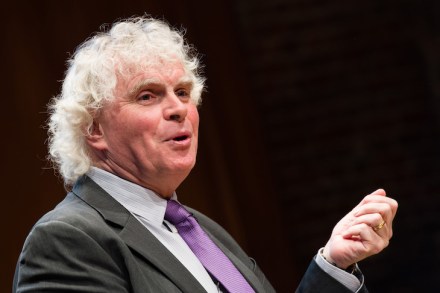
Pierre Boulez, who died last week at the age of 90, would have been the last person, one hopes, to want a unanimous chorus of praise to surge from the media, to an extent that has not been seen at the death of any other classical musician — certainly not at Stravinsky’s, to mention one far greater figure. His fellow musicians have been among the most fulsome: ‘He taught us how to listen, he gave us new ears,’ said Sir Simon Rattle, and on the many specially devised programmes others have made similar claims, if less succinctly. They really ought to know better. That kind of remark shows the same ignorance of and contempt for history as Boulez himself delighted in.

David Bowie’s dignified death is a reminder of the sanctity of private life

Everyone is paying tribute to David Bowie’s musical feats, as well they should. Seldom, if ever, has one man made such a massive, beautiful dent on pop music and pop consciousness. A gender-bending, genre-hopping genius, deserving of all the accolades coming his way today. But I want to pay tribute to another of Bowie’s feats, which strikes me as quite extraordinary: the fact that he kept his cancer private, or ‘secret’, as the press insists, for 18 months. This, more than anything, has blown me away today. In this era of too much information, when over-sharing is virtually mandatory, Bowie’s decision to suffer away from the limelight, among those closest to him, appears almost as a Herculean achievement.

Please spare us the sob signalling over David Bowie

By 9am this morning, I’d turned down two offers from two newspapers to write about the freshly-dead David Bowie. I told both plainly what I felt: ‘I haven't been a fan since I was a teenager, when I worshipped him, and I don't want to add to the chorus of people with nothing to say, but who'll say it anyway, for a fee.’ However, humour is always the exception to the rule. By 10am I’d posted this (totally true) status on Facebook: ‘To illustrate how odd my voice is (accent and speed) I just spent five minutes waking up my husband Dan and telling him that David Bowie had died. I told him that people were weeping in the streets, and that it was like the Queen Mother dying all over again.

Jan Moir predicts a ch-ch-change to David Bowie’s peace of mind

This morning the nation has gone into Twitter mourning after news broke that David Bowie had passed away following a battle with cancer. As hacks and fans rush out messages of sincere condolences, Jan Moir may well be regretting the timing of a feature she has had published in today's Mail. In the article -- entitled 'the bitterness of Mrs Bowie' -- Moir speaks to Bowie's first wife Angie. In the piece, Angie hits back at Bowie in 'viciously indiscreet style' -- leaving the ever-insightful Jan Moir to note: 'Dear old Angie has been quiet for years, but her painfully discreet ex-husband can expect some big ch-ch-changes to his peace of mind henceforth.' Well, at least Moir was right about something.

David Bowie, 1947 – 2016: the only Englishman to have landed on the moon

David Bowie has died at the age of 69. In 1972, Duncan Fallowell was quick to highlight his merits in The Spectator's pop column: I am writing about David Bowie, and had originally intended to do so by jotting down on pieces of paper all the appropriate epithets and phrases, putting them into a silver top hat, shaking it all about, you know, selecting them at random and typing out the results with a dash between each. It began as follows: Deciduous/carnivorous — sleeve as tattooed prophylactic — erectile lyric, retractile music — car mechanic catamite — henna in the works — lurex (that word contains everything) — butch drag inverted to reveal its true nature: sequins and axle-grease — cult then fashion . . . and so on for another four pages.

Murder, he wrote

Music

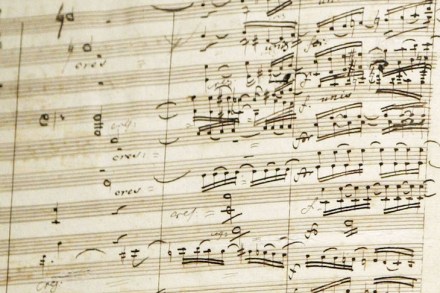
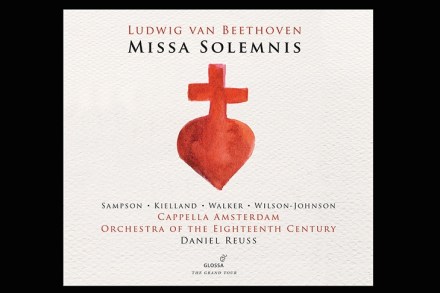
The allure of Carlo Gesualdo, eighth Count of Conza and third Prince of Venosa, has been felt by music-lovers from the humblest madrigal singer to the likes of Stravinsky, Boulez and Werner Herzog. Now, just three years after celebrating the 400th anniversary of his death in 1613, his birth in 1566 gives us a second chance to remind ourselves of that heady mix of murder and chromaticism that so famously characterises his life and work. For most classical composers the music is the way into the biography. Beethoven’s deafness becomes interesting once one has got to know the Missa Solemnis. Enquiry into the circumstances that surrounded Mozart’s death begins with hearing the Requiem.

Lemmy was a national treasure – a unique collision of swing and amphetamines

Lemmy is what happens when a small slice of 1960s counterculture just keeps on going, oblivious to the changing world. He was a national treasure: a Methuselah of the British music scene, and one of its more thoughtful members. His driving forces remained a unique collision of baby boomer passions: jitterbug, skiffle, swing, rock’n’roll, and a lot of amphetamines. He was playing chirpy Mersey Beat numbers in a suit, a tie, and a smile with the Rocking Vicars when most televisions were still black and white. When the world changed, so did he. In the late 1960s he roadied for Jimi Hendrix, and later even had the patience to show Sid Vicious of the Sex Pistols how to play the bass.

Christmas tips from Niall Ferguson and Annie Nightingale

For the Spectator’s Christmas survey, we asked for some favourite seasonal rituals – and what to avoid at Christmas. Niall Ferguson Every Christmas — or, to be precise, every Hogmanay — all the members of the jazz band I played in at university gather together with their families at our place in Wales. We eat and drink gargantuan amounts and play music with steadily deteriorating precision. It is a wonderful way to see in the new year. Annie Nightingale My favourite ritual is visiting people, and I have some rules. A bottle of bubbly to each. Be charming, be fun, but be brief. Quit while you’re still popular. Then you can book a cab home to watch Some Like It Hot and High Society. Now that’s what I call Christmas.