Culture

Culture

The good, the bad and the ugly in books, exhibitions, cinema, TV, dance, music, podcasts and theatre.

Snoop Dogg: Neva Left

More from Arts

The problem Calvin Broadus has is persuading the rest of us that he still a baaaad muthafucka. Snoop is now 45 and a rather avuncular figure in the US, with his own reality TV show in which he comes across as, God help us, likeable. Those days of running with the Crips in Los Angeles are long behind him, a testament to the redemptive power of huge amounts of money. Is he still of the streets? Neva Left is the defiant response, his best collection for many years. Snoop has immersed himself in a studio with a collection of artists who broke through at about the same time as he did. So this is kinda trad rap, much as Kenny Ball used to dotrad jazz. But none the worse for it — the album is richly melodic (Snoop always had an ear for a good tune) and the rhythms hugely sophisticated.

White-knuckle ride

Music

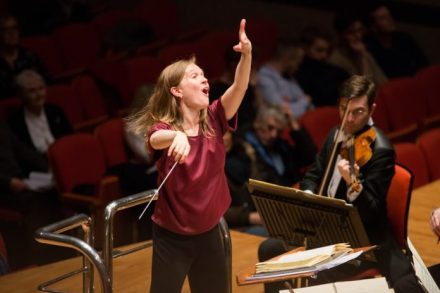
Playing in an orchestra that disintegrates mid-concert is not an experience you forget. One moment everything’s motoring along nicely. Suddenly a harmony doesn’t quite fit, the soloist enters on the wrong beat: it doesn’t matter, because before you can work out what to do next the confusion spreads, the conductor signals frantically and with a pit-of-the-stomach lurch the floor drops out of the music and you’re all sat there facing the audience amid the one sound that no one present has paid to hear: mortified silence. The Aurora Orchestra has worked out a way to monetise that sensation. Well, maybe that’s putting it a bit cynically.

The rise of toytown pop

Music

Pop’s counterfactuals tend to be built on questioning mortality: what if Jimi Hendrix had lived? Or Buddy Holly? Rarely does geopolitics enter into the speculation. Nevertheless, there’s a case for arguing that the landscape of British pop would have been markedly different had Harold Wilson acceded to the wishes of President Lyndon Johnson and sent British forces to Vietnam. That’s worth contemplating now, ahead of the latest reissue — deluxe and expanded and remastered, as these things always are — of Sgt. Pepper’s Lonely Hearts Club Band, released last week for the 50th anniversary of the original album.

In defence of Mahan Esfahani

Seven years ago I ripped the CD off the front of a music magazine and found myself in the thick of a Poulenc concerto that was being played as if life depended on it. Now Poulenc is the acme of laid-back and the solo instrument, the harpsichord, had been consigned to the junkshop before young Brahms was running errands for ladies of the Reeperbahn. This recording was, for me, an act of instrumental resurrection. So I tracked down the harpsichordist, Mahan Esfahani, by name, and took him to breakfast. He turned out to be young, gay, Iranian, Presbyterian, Stanford-educated, restlessly intellectual and altogether full-on. What’s not to like?

PWR BTTM: Pageant

More from Arts

How about some queercore garage punk? PWR BTTM — the name means something empowering to do with buggery — are a young, gay, two-piece band from New York State who live apparently hectic lives. Their new album, Pageant, was released last week and a couple of days later they were kicked off their record label and current tour after allegations of sexual predation were made against the pantomimely camp singer, Ben Hopkins. The greatest surprise was that the complaints came from a woman. Their career is now in limbo. Hopkins denies the allegations, of course, claiming that he is a consensual and democratic kind of chap. But it’s all rather a shame because Pageant is a thrilling album: tuneful, frenetic and funny. Forget the garage punk tag.

Around the horn

Music

The concert began with a flourish and a honk. Well, of course it did. Telemann wrote his last Ouverture-Suite in F major for the Landgrave of Darmstadt. The Landgrave loved hunting, and in the 18th century hunting meant horns. And horns mean honks. If you’ve ever played the horn — applied 12 feet of coiled metal tube to your face and tried, through a combination of lip muscles and willpower, to make the damn thing sing — you’ll know that no amount of hoping, praying or practice can prevent the occasional squawk. The two excellent players in Florilegium’s concert at St John’s Smith Square, moreover, were using 18th century-style horns — without the valves and additional plumbing that render the modern beast just about controllable.

Period drama

Music

Harpsichordists are supposed to make love, not war: Sir Thomas Beecham famously compared the sound they make to ‘two skeletons copulating on a tin roof’. But now two masters of the instrument, the Iranian-American Mahan Esfahani and the German Andreas Staier, are locked in mortal combat. For connoisseurs of finely tuned insults, it’s riveting stuff. For their colleagues it’s a wretched business, because one of the two musicians is setting fire to his own reputation. Also, a third harpsichordist — a gifted young Frenchman, Jean Rondeau — has been cruelly dragged into the feud. It goes without saying in period instrument circles that Esfahani picked the fight.

Blondie: Pollinator

More from Arts

Ah, Blondie. Those happy days of glorious power pop, chilly disco and rich, fruity vocals — Debbie Harry yearning away like a very bad alleycat on heat. ‘X Offender’, ‘In the Flesh’, ‘Picture This’ and that one where she’s in the phone booth, apparently gagging for it. People knock it, but the late 1970s wasn’t a bad time to be a teenager. And while Blondie may have been a rather calculating act, cleverly positioned on the fringe of punk and the fringe of pop and the fringe of disco and later even rap, they were at least likeable and the tunes were, largely, effortlessly and simplistically terrific. And then there was Debbie.

Bingeing on Bach

Music

Coined in 1944, ‘completism’ is a modern term for a modern-day obsession. What began as a phenomenon of possession — whether of comic books, records or stamps — has evolved in the age of Spotify, Netflix and cloud computing. No activity defines current cultural trends better than binge-watching, completism taken to its logical extreme: art turned extreme sport. It’s an attitude that has found a natural home in the concert hall and opera house (what is Wagner’s Ring Cycle, after all, if not the original box set?) where length has long been fetishised and endurance accepted. But just as new media has changed the way we make art, so new contexts have changed how we consume it.

Secrets and spies

Music

Spare a thought for Emil Gilels, still revered today by Russians as the foremost pianist of the Soviet era. The first to win a competition abroad (Brussels, 1938), Gilels was also first to be let out after Stalin died to reconnect cultural ties and earn hard dollars for the state coffers, of which he got back a few cents. Universally acclaimed, Gilels made countless recordings, among them an unsurpassed pair of Brahms concertos on Deutsche Grammophon and a transcendent set of Grieg’s Lyric Pieces, a performance so revelatory I use it to demonstrate the inexpressible difference between an interpreter of genius and all the rest. Gilels, abroad, played the role of Homo Sovieticus. At home, he was a haunted man.

Beyond comprehension

Music

The London Philharmonic Orchestra’s ‘Belief and Beyond Belief’ season is drawing to a close, without making it in any degree clearer what it was supposed to be about. Many major works have been played, and the season will end with Eschenbach conducting Beethoven’s Ninth. But then any series of concerts with a pretentious name ends in that way; in fact, I have devised several imaginary series of that kind myself, and will gladly forward the details to any orchestra looking for a grandiose rubric. I would be grateful if whoever devised the name of this current season would tell me what ‘Beyond Belief’ means.

Ray Davies: Americana

More from Arts

There is some surprise that after all these years Ray Davies has turned his attention to America. He is the most quintessentially English of pop musicians, a witty and acute observer of the British way of life whose best tunes were drawn from music hall and calypso — even while, with his brother Dave, he was inventing that most doggedly, turgidly, horribly English of genres, heavy metal. And yet The Kinks most famous hit, ‘Lola’, had a real American swagger about it, in the wonderful rolling rhythm, as Davies expressed his profound confusion at meeting a transgendered lady in a Soho bar. It was the first record I ever bought, at the age of ten, much to my parents’ disgust and consternation.

Mission impossible?

Music

Just before Peter Donohoe played the last of Alexander Scriabin’s ten piano sonatas at the Guildhall’s Milton Court on Sunday, the autograph score of the piece was beamed on to the wall behind him. It was just a glimpse —- but enough to show us that Scriabin had the most beautiful musical calligraphy of any composer since Bach. On the face of it, that’s surprising. You would expect the Cantor of St Thomas’s to inscribe neatly — and indeed baroque musicians often play Bach straight from his own manuscripts, preening as they do so. But Scriabin is often regarded as a messy composer, in thrall to the mystical fads of pre-revolutionary Russia. So you might envisage a scrawl covered in ink blots and frenzied crossings-out.

Passion indeed

Music

‘The dripping blood our only drink/ The bloody flesh our only food…/ Again, in spite of that, we call this Friday good.’ In spite of that. Anglo-Catholic convert T.S. Eliot knew a thing or two about Easter. The Passion story might end with resurrection and redemption, but it’s a celebration that we achieve in spite of agony, torture and abandonment, a tale whose root lies in the Latin ‘passio’, meaning suffering. Musical Passion settings are no different — or shouldn’t be. A performance of Bach’s St John or St Matthew Passion should disquiet, even distress, as much as it consoles.

The decade the music died

Music

For much of the past half-century, London has been the world’s orchestral capital. Not always in quality, but numerically without rival. Five full symphony orchestras and twice as many pint-sized ones kept up a constant clamour for attention. Each month brought new recordings with premier artists. Every orchestra had its own ethos, history and thumbprint. The Philharmonia was moulded by Karajan and Klemperer, the London Philharmonic by Boult and Tennstedt, the Royal Philharmonic by Beecham, the BBC by Boulez and the London Symphony Orchestra by its high spirits. Tales abound of maestros departing with a punch on the nose and beer bottles rolling in rehearsal. All of which added greatly to the sum of human happiness. London musicians, always cheap, learned to be quick.

Bob Dylan: Triplicate

More from Arts

Having seen Bob Dylan play live a few years ago, I’m pretty sure he is not the first person I would choose to cover three albums’ worth of American jazz-age standards. The sound which came out of his mouth on that occasion resembled that of a demented, elderly dog. ‘Just Like A Woman’ had a chorus which went: ‘Grassum, grassum — rassum rassum rassum’, a neat twist on the original lyrics. It was joltingly inhuman. However, he has been on the Benylin, I think, because his voice here is not quite so gratingly hilarious.

Rued awakening

Music

It’s always promising when the orchestra won’t fit on the stage. For the UK première, some 97 years after it was written, of the Danish composer Rued Langgaard’s Sixth Symphony (The Heaven-Rending), the BBC Scottish Symphony Orchestra filled every available inch of platform space, with four additional trumpeters perched in the choir seats. Everything was set for what the conductor Thomas Dausgaard described, pre-concert, as a ‘cosmic struggle between good and evil’. And god knows, it certainly made a fantastic noise. In a venue as compact as Glasgow City Halls, the onslaught of two sets of timpani had an almost physical impact. You felt the air wobble.

All’s well that ends well | 23 March 2017

Music

There’s a moment in the finale of Beethoven’s Appassionata sonata when the frenzied piano writing turns unexpectedly jolly. The late Antony Hopkins described it as a bit of an anticlimax, ‘a little too near to the traditional Gypsy Dance that appears so often in the less probable 19th-century opera’. I’m not sure whether I agree — but one thing I can tell you is that this is the perfect moment to tap the Uber icon on your phone if you want to be whisked away during the first burst of applause, before the pianist has had the chance to play an encore. That’s the effect Maurizio Pollini’s playing has on me.

Why wasn’t Chuck Berry eulogised as much as David Bowie? I think I know…

Belatedly, goodnight to Chuck Berry. Almost everything that has been worthwhile in rock music for 60-odd years has derived from his clever, knowing, mix of cracker-country and black blues. Most of the guitar solos you ever heard had their roots in that raucous and effective two string – E and b – chiming of Chuck’s: 'like he was ringin’ a bell.' I can’t think of anyone who was more influential within the confines of that most conservative of mediums, rock n roll. Dylan, maybe, later, I’d grant you. Berry took the best riffs from the dead old blues giants and made them effervesce, allied them to a country bass motif and invented a genre which appealed to black and white alike.

Cheltenham Festival 2017: Susan Hill’s betting tips

For 23 years I lived in the North Cotswolds, heart of National Hunt racing country, where March comes round with a quickening of hearts. From Monday night of Gold Cup Week, helicopters bringing racegoers clattered over my chimney pots, en route to the hotel on the hill. Those were the days when the independent bookie, Simon, of Roughley Racing in Chipping Campden, wore a sports jacket and a flower in his button hole. Sadly, his friendly little betting shop was swept away by the rise of the internet and the demise of a lot of old boys who hung out every day for hours, watching the races on his TV and putting 50p on each way here and there. It was all great fun. The pubs and hotels put on Race Nights in the run-up.

Sound storms

Music

Nothing pleased Iannis Xenakis more than a great big rattling storm. The sound of a thunderclap would have him running out of his home half naked to join the elements. If he was at sea, he’d sniff out any lightning and sail his yacht directly at it. The Greek composer was what we might call a hard bastard — a musical Ray Mears. As part of the Greek resistance during the war — battling first the Nazis then the British — Xenakis lost an eye to shrapnel. His compositions betray the same traits: those of the adrenalin junkie, the adventurer, the kamikaze. What would happen if I composed a piece solely made up of the swooping sounds we call glissandi, he asks in Mikka ‘S’ (1976). Apart from make the audience seasick?

Let’s not dance

Features

Why will people simply not believe you when you tell them that you don’t want to dance? Their reactions mimic the classic pattern of grief: first confusion, then denial, then anger. They tug at your arm like they’re trying to pull it from the socket. ‘Come on, you have to dance!’ ‘No I don’t.’ ‘Oh come on! You want to really.’ ‘No I don’t.’ ‘Yes you do! Of course you do! Everybody likes dancing!’ It’s at this stage that I sometimes get all dark on them, losing the smile, injecting a note of firmness or perhaps even menace, and pointing out that if I wanted to dance I would be dancing, but as I’m not dancing they can safely infer that I don’t want to dance.

Drake’s progress

Music

Those poor Canadian rappers. Hailing from a country with a functioning benefits system, sensible firearms restrictions and relatively harmonious race relations, it must be a job convincing people of their authenticity. Aubrey Drake Graham, however, has risen above this cruel accident of birth — in Toronto, to a white Jewish mother — to become not only one of the world’s most respected rappers, but its biggest pop star too. For a man with the world at his feet, Drake manages to find an impressive number of things to complain about in his lyrics, from fickle friends to the administrative headache of paying two mortgages. But if the approval of others is all he really needs, he certainly got it at a sold-out O2.

Age concern | 9 February 2017

Music

Brahms didn’t always have a beard. The picture in the London Symphony Orchestra’s programme book showed him clean-shaven, and rightly. The beard didn’t reach its final imposing form until 1878, around the time Brahms started sketching his Second Piano Concerto. (‘Prepare your wife for the grisly spectacle,’ he wrote to his friend Bernhard Scholz, ‘for something so long suppressed cannot be beautiful.’) But this concert opened with the First Piano Concerto, premièred in January 1859 when the composer was still a few months short of his 26th birthday. Younger, in fact, than tonight’s conductor — the 26-year-old Alpesh Chauhan — and not much older than the soloist, Benjamin Grosvenor.

Bruckner by numbers

Music

It used to be said that Bruckner composed the same symphony nine times, whereas, thanks to the comparative frequency of performances now, we know that his nine numbered symphonies are as different from one another as Beethoven’s nine. Nothing could make that clearer than the performances of the Fifth and the Ninth given by the Philharmonia Orchestra under Andris Nelsons, three days apart, at the Royal Festival Hall. The Fifth, as befits its stature and length, was given alone. It is Bruckner’s most demanding symphony both to listen to and to conduct. Nelsons is still, I think, at an early stage in his Brucknerian pilgrimage, and his account of the work was not a complete success, but then very few are.

The xx: I See You

Music

The xx is a trio of Londoners whose eponymous first album, released in 2009, has defined the way pop music sounds today. I remember knowing, when it came out, that I was listening to something both distinctive and familiar, which is usually an indicator of success. The schtick was to plunder various music canons which they were way too young to have heard first hand — Nineties house and rave, lachrymose mainstream Eighties synth-pop, angst-ridden shoegazing — strip it down and mix it all up with very clever beats, provided by the genuine talent of Jamie Smith. ‘Radically pleasant’ is what I thought at the time, a little sniffily, and also somewhat precious.

Safe and sound

Music

This week the Southbank Centre began its ‘Belief and Beyond Belief’ festival — a series of concerts and talks claiming to explore the influence of religious inspiration on music. Last summer, after reading its miserably right-on publicity material, I wrote in this column that ‘Beyond Parody’ might be a better title. Jude Kelly, the Southbank’s artistic director, accused me of jumping to conclusions before the programme had been finalised. Well, now it has. In addition to concerts with no discernible connection to their composers’ faith, we’ll be treated to ‘How to be a Shaman’, ‘Mindfulness’, ‘What If God Was A Woman?’ and ‘Right to Die?’.

Lin Cook, who died before Christmas, personified that odd breed: the celebrity widow

Amid the flurry of famous deaths during 2016, one particular passing has been more or less forgotten. Peter Cook’s third and final wife, Lin Cook, died on the eve of Advent, at the age of 71, shortly after the BBC broadcast Victor Lewis-Smith’s new documentary about Peter, for which Lin gave a rare interview. I got to know Lin in the Noughties, while compiling two biographical collections of her late husband’s work. It was an intriguing insight into the world of that strange showbiz phenomenon, the celebrity widow. Celebrity widows are a paradox – ostensibly public people, they’re actually intensely private. Lin personified this odd breed. Although I was in touch with her for over 15 years, when she died I realised I barely knew her at all.

Why I was ashamed to love Status Quo

Columns

I bought a record in a second-hand shop in the summer of 1981. A double album. I made sure nobody was looking when I handed over my money, and kept the purchase hidden in its brown paper bag all the way home. Back in my room, I locked the door to make sure my house-mates couldn’t surprise me — and plugged in my headphones. What followed was more than an hour of dirty bliss, a guilty pleasure before the term had been invented. What I was listening to was a compilation album of Status Quo’s singles and most popular album tracks. I can’t remember what it was called — ‘Again and Again and Again and Again and Again’ would have been fitting, but too arch for the Quo.