Culture

Culture

The good, the bad and the ugly in books, exhibitions, cinema, TV, dance, music, podcasts and theatre.

Thank God for hymns!

Features

Before embarking on this hymn to hymns, I’ll admit that hymn-enthusiasts feel a slight sense of anticlimax on Easter Sunday, when the pleasingly austere hymns of Lent are replaced with the too-happy, exclamation-mark-ridden hymns of Easter. Within minutes of the start of the Easter Eucharist, our mouths will ache from repetitive singing of the over-vowelled word ‘Alleluia’. I’ll also admit that I sometimes long for hymns to be over. I check to see how many more verses there still are: three down, three to go. I’m relieved if the vicar says ‘omitting verses five and six’ of a slow seven-verser. Anything to speed up our increasingly padded and long-winded Anglican services.

The return of plainchant

‘I’m still warmed up from last night,’ said Sophie Bevan early on a Sunday morning in the practice-room behind the presbytery of St Birinus Catholic Church in the charming village of Dorchester-on-Thames, Oxfordshire – a tiny Pugin-esque gem dwarfed by the enormous Anglican abbey up the road. She and the other four members of the Davey Consort (two of them her cousins from the musical Bevan clan) were running through a Renaissance polyphonic mass, with Sophie’s husband, the composer and conductor Ryan Wigglesworth, directing from the practice harpsichord.

Billie Eilish: When We All Fall Asleep, Where Do We Go?

More from Arts

Grade: A– If your 12-year-old daughter’s a bit thick, she probably likes Ariana Grande. Come on, dads — you’ve got to face up to this stuff, you’ve got to JUDGE. Be ruthless. If, however, she’s a bit smarter, but also sullen, lazy and probably prone to self-harming, she’ll be a big Billie Eilish fan. Only just 17, from Los Angeles, Eilish is kind of sparse and woke emo electropop misery, very self-consciously ‘edgy’. An agreeably large number of her songs seem to be about killing herself, or just ceasing to exist. The rest are a little darker, and terminally angst-ridden.

Hey Judith

Music

‘When a man takes it upon himself to write an oratorio — perhaps the most gratuitous exploit open to a 19th-century Englishman — he must take the consequences,’ wrote George Bernard Shaw, reviewing Parry’s oratorio Judith in 1888. The consequences for Judith seem to have been unusually drastic. Premiered at the Birmingham Triennial Festival, it was a major success: if not quite on the scale of its obvious model, Mendelssohn’s Elijah, then certainly not far behind it. And then it vanished. The most recent UK performance seems to have been in 1951, and while enterprising record labels have blown the dust off Victoriana ranging from Sullivan’s Kenilworth to Ethel Smyth’s Mass in D, there’s no recording of Judith.

Why Peter Sellars’s staging of the St John Passion – which I sang in – was deeply flawed

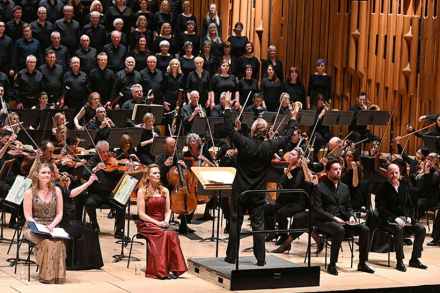
It has been my privilege over the past two weeks to sing in the chorus of the Orchestra of the Age of Enlightenment under conductor Simon Rattle and director Peter Sellars in a staged production of J.S. Bach’s St John Passion. The experience has been life changing for some of my colleagues; it has certainly been unique. Dressed in black casual clothing, we spend much of the performance sauntering around the stage making abstract gestures intended to highlight certain words and distill the myriad emotions found in the music. Some find this effective; others find it silly.

Splitting headache | 4 April 2019

Music

Back when the UK was assumed to be leaving the European Union on 29 March, the Aurora Orchestra was invited to Brussels to participate in Klarafestival: specifically, an evening of words and music ‘celebrating cultural links between Europe and the UK’. And because arts organisations in general (and orchestras in particular) change direction with the agility of a supertanker in pack ice, it went ahead regardless. The cellist Nicolas Altstaedt played John Tavener’s The Protecting Veil with exquisite purity of tone. Ian Bostridge sang Britten’s Les illuminations: brisk, earthy, vividly theatrical. The Aurora Orchestra’s strings, playing standing up, flashed and bristled back at him. Musicians like to talk about the power of their art to unite and heal.

Out of tune with the times

Music

A few years ago, I hooked up with a BBC team in Berlin to record a programme with Daniel Barenboim. We were shown in to his spartan offices at the Staatsoper and, without preliminaries, I conducted an interview with him across a low table for 45 minutes. When our time was up, Barenboim rose and left. I am not even sure if we shook hands. Knowing him from previous encounters, I was not particularly bothered. What did shock me was the sight of my BBC colleagues, their faces white with stress, their limbs rendered catatonic. No one creates tension in a room like Daniel Barenboim. Last month, seven musicians in his Staatsoper orchestra complained of a threatening atmosphere at work and added charges of bullying which, in post-#MeToo times, have to be taken very seriously.

Everything he’s done

Music

On 29 June 1991, a record called ‘(Everything I Do) I Do It For You’ by Bryan Adams entered the UK charts, at No. 8. At that point, I was blissfully in love with my girlfriend, had just got a first at university and had won a scholarship to a postgraduate journalism course. By the time it departed from the charts, on 14 December — after a run that included a still-record 16 weeks at No. 1 — I had been dumped by my girlfriend, had dropped out of the journalism course, and my dad, who had been poorly when the record entered the charts, was a month away from dying. During the course of one single’s chart run, all the certainties in my life had been overturned.

Sinking the unsinkable

Music

Garrick Ohlsson is one of the finest pianists of his generation. Why, then, was the Wigmore Hall not much more than half full for his recital last week? Brahms. Ohlsson is at present touring with four programmes, all Brahms’s solo piano music. He treated us mainly to solid chunks, though he ended with the enchanting and almost light-hearted Paganini Variations, fiendish for Ohlsson but enlivening for us. Actually, he played an encore by Chopin, the solitary Op. 45 Prelude, preceding it with a charming lecturette about how Brahmsian, avant la lettre, Chopin could be. Ohlsson was a student of the great Claudio Arrau, whose attitude to Brahms verged on the frosty.

Royal Trux: White Stuff

More from Arts

Grade:A Royal Trux are back — kind of. Singer (if that’s what you want to call what she does) Jennifer Herrema is ankle tagged for some misdemeanour, almost certainly involving narcotics, so may not show up at some gigs to promote the new album. And her partner and ex-husband Neil Hagerty has washed his hands of the whole business: ‘The album — I didn’t approve of it. I have no idea what it is. I’ve heard like ten seconds of one song. I’m out, man.’ So as ever, it’s chaos all round, opiate chaos. How these two people are still alive is a wonder. How they crawled from their shack in Virginia to muster the energy for a new album is also a miracle. A wonderful miracle.

Should Michael Jackson’s music be banned?

Why does it follow that, because an artist or performer is an appalling human being, his work should be banned? Speaking at Oxford in the late 19th century, Paul Verlaine introduced himself thus: ‘Je suis Paul Verlaine — poète, ivrogne, pédéraste.’ His work survived. Yet nearly a century and a half later, Michael Jackson has his music banned by the BBC.

It was Keith Flint’s aggressive, feral, live performances which made The Prodigy so great

Keith Flint, the fearsome looking frontman of British electronic dance group The Prodigy, has died at the age of 49. With him, you fear, has gone one of the most important music movements of the last 30 years. The Prodigy is, or was, a strange group, all things considered. They emerged from the rave scene of early 90s Essex, with hits such as ‘Charly,’ ‘Everybody in the Place’ and ‘Out of Space’. The latter became a popular, upbeat, conciliatory anthem the band ended every show with, whilst ‘Everybody’ just missed out on number one. But the group went mainstream with a much darker brand of music than the ‘kiddie rave’ of their debut work.

The Rite stuff

Music

It was Stravinsky himself who suggested that, in order to preserve its difficulty, the opening bassoon solo of The Rite of Spring should be raised by a semitone every decade. And it was a performance by Birmingham Royal Ballet in 2005 that convinced me that he wasn’t entirely joking. The audience nattered away over the opening bars; the unlucky bassoonist wobbled and cracked. Clearly, this orchestra was not remotely prepared for what was about to hit it. Rhythms splintered like shrapnel and misplaced entries spattered across every silence. As they hurtled into the final Sacrificial Dance, you could almost hear the prayers of musicians audibly struggling simply to hang on. It’s still, without question, the most thrilling Rite of Spring I’ve ever heard.

Ariana Grande: Thank U, Next

More from Arts

Grade: D Among the many reasons for moving to Iran is this vapid, talentless, derivative, hyperbolically oversexed drivel aimed at your 11-year-old daughter. The land of the mad mullahs is about the only place on earth you’ll be able to avoid this unmitigated crap, a collection of chemically processed ur-songs that make Taylor Swift seem like Debussy. It’s No. 1 everywhere you look. The UK, the USA, Australia, Ireland… hell, you hear this stuff and think to yourself, Christ, I have to escape — maybe to some glacier in the far north of Iceland, or to the wolf-infested lower slopes of the Tatra mountains in Slovakia. Nah, sorry. No. 1 in those places too. Face it: Iran or bust. Forswear alcohol and infidelism.

‘Scallop’

Notes on...

Benjamin Britten was adamant that he did not want any memorial sculpture of himself in Aldeburgh, the Suffolk coastal town where he lived for 30 years. He died in 1976 and he is remembered there by the Britten-Pears music school and Snape Maltings concert hall, by John Piper’s magnificent window in the church, and at the Red House, where Britten lived, which contains his entire library, art collection and musical archive. A bronze bust standing on the seafront was neither needed nor wanted. But the Suffolk artist Maggi Hambling was greatly inspired by Britten’s music, and especially his opera Peter Grimes, and in 2002 she had the idea of designing a tribute. Its form — that of a scallop shell divided into two parts and standing upright, came to her immediately.

The Berlioz problem

Music

Hector Berlioz was born on 11 December 1803 in rural Isère. ‘During the months which preceded my birth my mother never dreamed, as Virgil’s did, that she was about to bring forth a laurel branch,’ he writes in his Memoirs. ‘This is extraordinary, I agree, but it is true… Can it be that our age is lacking in poetry?’ And so on, for nearly 600 candid, facetious, outspoken pages. Berlioz’s Memoirs are the inner voice of the Romantic generation as you’ve always imagined it, and everyone who’s interested in music in the 19th century — no, scrub that, everyone who’s interested in European culture — should read them.

Licensed to trill

Music

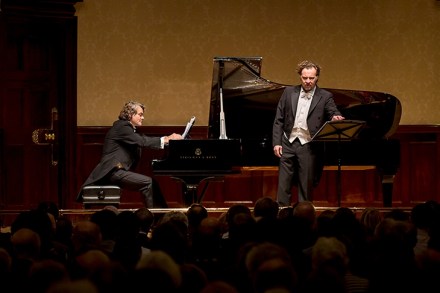
Broadly speaking, there are two kinds of approach to performing Schubert’s Winterreise, though sometimes there’s doubt or dispute about which one a given performer has taken. According to Jonas Kaufmann, Hans Hotter, for me the greatest of all performers of the cycle, as of so much else, insisted that the performer should be a narrator, not the Wanderer himself. But Kaufmann rightly insisted that Hotter’s various recordings are dramatic, with Hotter enacting, not narrating the monodrama. So it’s not always easy to tell. There was no doubt, though, in Christian Gerhaher’s recent performance of the cycle at the Wigmore Hall, with his long-time accompanist Gerold Huber, that we were witnessing the journey and sufferings presented directly.

The hypocrisy of the Eurovision boycott

The Guardian last week published a ‘we, the undersigned’ letter from 50 ‘artists of conscience’ urging the BBC to boycott this year’s Eurovision Song Contest because it’s taking place in Israel. ‘Eurovision may be light entertainment,’ they wrote, ‘but it is not exempt from human rights considerations — and we cannot ignore Israel’s systematic violations of Palestinian human rights.’ The signatories included such luminaries as Julie Christie, Peter Gabriel, Roger Waters, Vivienne Westwood and Ken Loach. Ken’s inclusion will have come as a surprise to those Israelis who saw his film I, Daniel Blake in Tel Aviv a couple of years ago.

The Dandy Warhols: Why You So Crazy

More from Arts

Grade: A– I’m here to make you feel old. It’s now nearly 20 years since the pleasing, laconic, Stones pastiche of ‘Bohemian Like You’ hit the charts, the breakthrough song of these faux-indie Portland slackers. They were ever a little despised, even then, partly for their pop sensibilities and partly because there is indeed something supremely irritating about them. Courtney Taylor-Taylor’s confected, ironic vocals, for a start. Courtney Taylor-Taylor’s name, for a second. Everything was a knowing pastiche, the catchy slabs of krautrock, the electronic noodling, the interminable hippy mantras. But they could write songs, at least — and they were cutely inventive with noise. Not much has changed — neither the format nor the derision.

Vanity and fake news lie behind Simon Rattle’s new concert hall plan

Like Theresa May with her thrice-spurned deal, the London Symphony Orchestra is pressing ahead with plans for a concert hall to be achieved at a price that no-one believes and for which it has no visible resources. Like Mrs May, the LSO is relying on friendly journalists to distract the public's attention from the huge black holes in the plan, hoping against hope that momentum alone will carry the day against all reasonable logic. You can see why they keep trying, though. The LSO promised Sir Simon Rattle it would build him a new hall if he signed on as music director.

It’s a girl thing

Music

The teenage girls are often right. They were right about Sinatra and they were right about Elvis. They were right about the Beatles and the Stones. They were right, too, about the 1975, whose emergence in 2013 playing tuneful and accessible pop-rock with unusually self-questioning lyrics was driven by a large and voluble following among those teenage girls. Naturally, that led a swathe of male critics to write them off. One dismissed them on the baffling grounds that their songs were ‘ridiculously catchy’, as if that were a bad thing; the NME proclaimed them the worst band in the world Six years on, the critics have caught up.

Nasty, brutish and brilliant

Music

If you take awards seriously (which of course you shouldn’t) you could argue that Rebecca Saunders is now Britain’s most important living composer. Last week she won music’s Nobel, the Ernst von Siemens prize. €250,000. And its record is pretty good — if you ignore 1974 (Britten) and 1987 (Bernstein). There are many reasons to love Saunders. Her post-concert talk was terrifically cheering. Explaining why she rarely writes vocal compositions, she told us blithely that it was because she ‘didn’t have anything to say’: ‘I don’t want my works to mean anything.’ Quite right. Meaning should be to music what shame is to Theresa May. A distant and hazy thing.

Mirror, mirror…

Music

We increasingly accept the collision between life and art. Whether we’re puzzling over the real identity of Elena Ferrante, choosing our own adventure in Bandersnatch, or boycotting the latest Polanski film, we’re buying into culture that’s more mirror than window. But wasn’t it ever thus? It’s a case Barbara Strozzi would certainly argue. The most-published Italian composer of her age, a musician whose work could stand alongside Cavalli, Rossi, even Monteverdi, was caught throughout her career in the double-bind of biography. You have only to look at her famous portrait — gazing insolently out at the viewer, breast bared — to see the erotics of performance at work.

A tribute to Woolworths, the naff hero of the high street

Won’t somebody think of the Woolwennials this weekend? Precisely one decade has passed since Britain lost the true hero of the high street. And for those aged over 24, whose childhood weekends were wasted in its labyrinth of kitsch, this Woolworths anniversary stirs up communal grief. So spare a knowing nod to fellow rustlers of the DVD bargain-bucket, a reassuring squeeze to the hand clutching the cola-bottle scooper, and a sympathetic cheek-stroke to the vacant-eyed browser of discounted superhero pyjamas. Together, somehow, we’ll muddle on. Nostalgia, like love, is blind – and the world is filled with hackneyed wasn’t-it-wonderful articles of bygone Britain. And, yes, Woolworth worship is the very stuff of satire.

Books Podcast: Ed Vulliamy – how music helps me report from the frontline

In this week’s books podcast we’re going to the wars. My guest is Ed Vulliamy, the veteran war correspondent who has written a fascinating memoir called When Words Fail: A Life With Music, War and Peace. In it, Ed talks about how his lifelong love of music — he saw Hendrix at the Isle of Wight — has threaded through his terrifying adventures in conflict zones from Bosnia to Iraq to the Mexican/American border; and of how music really can salve the soul when everything else is broken. He describes his own terrifying experiences with PTSD, snagging the last interview with BB King, and how playing “Kashmir” over and over again while roaring unembedded around a battle-zone led him to a friendship with Led Zeppelin’s Robert Plant.

Heuberger: Der Opernball

More from Arts

Grade: A– 1898: two Parisiennes and a housemaid secretly invite each other’s partners to the Paris Opera ball and… c’mon, you can guess the rest. It’s Christmas: you don’t want Götterdämmerung. You want luxury, you want tunes and you want irresponsible fun. Richard Heuberger’s waltz-operetta Der Opernball is basically a deluxe box of musical liqueur chocolates, and it’s never been easier to guzzle the lot. Heuberger was a moonlighting music critic (he famously remarked that Schoenberg’s Verklärte Nacht sounds ‘like someone smeared the score of Tristan while the ink was still wet’), and he was working to a tight deadline.

High and mighty | 13 December 2018

Music

In this 200th anniversary of the birth of Mrs C.F. Alexander, author of ‘Once in Royal David’s City’, all of us for whom Christmas properly begins when we hear the treble solo of verse one on Christmas Eve should remember her and be thankful. She was born Cecil Frances Humphreys, ‘Fanny’, to a successful land agent in Dublin in 1818, and she seems to have been genuinely mild, obedient, good as He. From an early age she had an instinctive liking for vicars, rectors, deans, bishops and archbishops, although she was shy and at her most relaxed with children and dogs. She eventually married a Church of Ireland rector of her own, William Alexander, who later became a bishop, and they lived a long, happy life of parenthood and charitable works.

The saddest music in the world

Music

It’s a strange compliment to pay a composer — that the most profound impression their music makes is of an absence. I can’t claim much prior experience of the composer Mieczyslaw Weinberg, who died in 1996: a vague sense of a Shostakovich-like figure who had a bad time of it under Stalin, and the composer of an opera, The Passenger, for which great claims are made by people whose judgment I respect but who probably, on balance, spend too much time with their heads in Eastern Europe. By the end of the first evening of this ‘Weinberg Weekend’, devised by Mirga Grazinyte-Tyla and the City of Birmingham Symphony Orchestra, I felt slightly ashamed about that. Gidon Kremer played his own violin transcription of Weinberg’s 24 Preludes for solo cello.

The 1975: A Brief Inquiry Into Online Relationships

More from Arts

Grade: C A derided year in pop music, 1975 — and yet a great one. The mainstream was horrible, but we had Neil Young’s Tonight’s The Night, Patti Smith’s Horses, Guy Clarke’s Old No. 1 and Television just beginning to break through. It is in the lacunae, before the next big wave, that we hear the most inventive music, which is why ’75 — with Queen and disco hogging the charts and the blind alleys of prog and metal as your only alternative — was so good. But I suppose you want to hear about the band, The 1975 — one of Britain’s biggest. Oh, Britain. The 1975 are a bunch of middle-class Mancs led by a gobby SJW junkie — hell, what’s not to like.