Culture

Culture

The good, the bad and the ugly in books, exhibitions, cinema, TV, dance, music, podcasts and theatre.

Pole position | 18 July 2019

Music

Of all the daft notions about the classical music business, the daftest is that it’s a business at all. Seriously: an industry that’s structured to make a loss, unable to survive without subsidy? If you enjoy conspiracy theories, classical music’s façade of white-tied affluence, combined with fading memories of Herbert von Karajan’s private jet, might imply the existence of some vast global musical-industrial complex. Perhaps it even existed, once. But the modern reality is a fragile network of (to quote Sir James MacMillan) cottage industries: ensembles, promoters, boutique record labels, all heads down in their silos, sweating away at whatever it takes for their own corner of this unsustainable ecosystem to break even.

Out of this world | 11 July 2019

Music

In Stockhausen’s Klavierstück XI hands become fists, arms and elbows clubs, shoving, pounding and ker-pow-ing the keyboard to near oblivion. No wonder Pierre-Laurent Aimard had slipped on a pair of gloves before starting to stop his fingers from bruising or bleeding. The sound created is monstrous, alarming, thrilling. Aimard threw the full weight of his body behind each blow to such an extent that I could see his backside hovering above his stool. It’s not easy to beat up a Yamaha grand. We always dismiss Stockhausen when he claimed that he came from the star Sirius. But his work backs him up. His Klavierstücke are exactly what you might expect from a dazed alien.

Will Philip Pullman forgive my ‘gross insult to Beethoven’?

In my first week as an MEP, I was delighted to find that my Twitter feed included lots of interest in classical music and literature: Beethoven and Schiller. It soon became apparent that it wasn’t a cultured debate, but vicious condemnation of us turning our backs during “Ode to Joy”. The EU officials had demanded that we stand for the “national” anthem, and we objected to that great work being hijacked as a federalist "Anthem of Europe". We were accused of being philistines and disrespecting European civilisation. Novelist Philip Pullman scolded me for my “gross insult to Beethoven”.  As it happens, I love the universal brilliance of Beethoven; all the more reason to object to the EU claiming him for itself.

Bruce Springsteen: Western Stars

More from Arts

Grade: B– The first Springsteen song I ever heard was ‘Born To Run’, back when I was 14. I clocked the impassioned, overwrought self-mythologising, the grandiosity of the opening riff, the strange lack of a chorus given the promise of the verse. Well, OK, interesting, I reckoned — maybe even good. But great? Never. I shifted my judgment only once over the following 45 years. Born in the USA had the tunes and stories and the sheer heft that for once matched the chutzpah and the looks. The rest has been either just good or, more often than not, quite a bit less than good. I always reckoned that perpetual sideman Nils Lofgren was by far the superior songwriter, but Nils isn’t quite as alpha male as Bruce.

Male order | 4 July 2019

Music

Another turn around the block for David McVicar’s handsome 1830s Figaro at the Royal Opera — the sixth since the production’s 2006 premiere — scarcely raises an eyebrow, let alone a pulse. But a quick glance down the cast list of the current revival reveals some curiosities. First to catch the eye is Kangmin Justin Kim — the first countertenor in the company’s 250-year history to play sexually rampant page Cherubino, traditionally a trouser role for a woman. Read on and you’ll see starry German baritone Christian Gerhaher making an unexpected mid-career role debut as Figaro, as well as a main-stage house debut for his Susanna — young American soprano Joelle Harvey, who bewitched last summer as Glyndebourne’s Cleopatra.

Stormzy was good but Miley Cyrus was better: Glastonbury Festival reviewed

Glastonbury was almost ruined for me by Kylie Minogue. Very selfishly, she started her sunbaked set – in the Sunday afternoon slot reserved for pop legends - while Boy and I were packing up the tent ready to make a quick getaway later that evening. By the time we got to the Pyramid Stage, the crowds were so thick you could barely push your way through to a view of the video screens at the side, let alone the stage itself. 'Please don't let her have done my favourite song yet,' I said to a chap in a shiny red jacket. (I decided to stand near him because he'd said 'You're James Delingpole!' as I stumbled past, in a friendly way, not in a nasty way which is always my fear amid so many greenies). 'What's your favourite song?' 'The one that goes "La la la. La lalalaa la. La la la.

The great irony of Stormzy’s Glastonbury set

Look, I like Stormzy. I’ve been listening to his new single on a loop for the past week. He’s a talented guy. But the fawning over his Glastonbury performance has been bizarre. Everyone from Glasto’s mostly white middle-class attendees to Jeremy Corbyn and his online army has been hailing it as a high point of musical rebellion and a historic two-finger salute to the evil Tory government. Get a grip — it was nothing of the kind. In fact, musically Stormzy’s set may have been thrilling, but politically it was kind of ridiculous. Sure, he said ‘Fuck the government’ — making square lefties chirp with excitement — but his show was infused with government thinking.

King of rock

Music

‘Invest in your hair,’ advises David Coverdale, a man with a shag of the stuff glossier than a supermodel’s and as big as a guardsman’s bearskin, even at the age of 67. (He won’t say that number. He insists his age is ‘three score and seven’.) ‘People say to me: “Do you colour your hair?” And I say: “Absolutely not.” ’ He pauses for half a beat. ‘ “I have a super hairdresser who does it for me.” Some guy came on Instagram, telling me: “Come on, David, it’s time to get rid of the wig.” It’s not something I bought from Frederick’s of Hollywood, you silly bastard! It’s a crowning glory!’ David Coverdale’s hair matters because of who and what he is.

Fashion victims

Music

There is something inexplicably exciting about pop’s notion of a ‘scene’: young musicians of similar outlooks drawn together by a common aim to transform music, referring to the past to create something of the present. But enough of Fleetwood Mac and the British blues boom. Instead, to fashionable Dalston, where a young quartet called Black Midi played to an uncomfortably full room in a converted cinema.

The grrrls are back in town

Music

The last time Bikini Kill played in London was in a room that now serves as the restaurant of a pub in Kentish Town. What a change 26 years can bring: on their return to the city last week, they filled the 5,000-capacity O2 Academy, Brixton, for two nights. That changed status, in truth, is not the result of the timelessness of their music — scrappy punk rock that at its most tuneful was pleasingly familiar and at its least tuneful approximated the sound of fingernails scraping down a blackboard at extreme volume. So why had 10,000 people bought tickets to see them in London?

Let’s hear it for the Girls

Music

If you’ve paid even passing attention to early reports of the Spice Girls comeback tour, you will be aware of problems with the sound, the car parking, the lax and/or overbearing security checks, the bad weather, bad tempers, bad karma, bad you name it… Some of it may even be true. But having observed the Spice Girls sashay through a maelstrom of fake news since long before the phrase was invented, I was not altogether surprised to discover that the show was far better performed and produced, and certainly a lot more fun, than the media mavens would have us believe. No one would describe the Ricoh Arena in Coventry as a place of visual or acoustic beauty.

Real Housewives of Windsor

Music

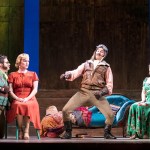
‘Tutto nel mondo e burla’ sings the company at the end of Verdi’s Falstaff — ‘All the world’s a joke’ — and how much you enjoy this opera probably depends upon how far you accept that truth. The 79-year-old Verdi coming out of retirement for one last laugh, finding in Arrigo Boito a librettist who could remake Shakespeare in the sun-kissed Italian of Boccaccio and Petrarch, and then composing a score that saves its deepest compassion for old fools and young lovers, its sweetness (according to Boito) ‘sprinkled across the comedy as one sprinkles sugar on a tart’: seriously, what right-thinking opera-lover, experiencing all of that, wouldn’t want to clink glasses with Sir John Falstaff?

More sex, please

Music

Where was the desire, the frisson, the flicker of attraction? Hell, where was the sex? I ask because a week spent at the seedier end of the romance spectrum has left me feeling profoundly unsatisfied. Two classic femmes fatales — Puccini’s convent-girl manqué Manon Lescaut and Janacek’s dark-eyed gypsy Zefka — had their chance to beguile and blew it. There was disquiet, revulsion, confusion and a certain amount of modish awkwardness, but the itchy urgency of it all was absent — the emotional ignition without which neither Manon Lescaut nor The Diary of One Who Disappeared can find their flame. A chilly night launched Opera Holland Park’s 2019 season, and there wasn’t much more heat coming from the stage.

Morrissey: California Son

More from Arts

Grade: B Rock stars who utter something a little gamey, something a tad right-wingish, are usually coerced by the lefties into a cringing apology before you can say a-wop-bop-a-lu-bop. This is not a new thing — it happened to Eric Clapton after his ‘Enoch’s right’ outburst in 1976 (which very quickly spawned the Socialist Workers Party-led Rock Against Racism movement). The message has always been: get with the programme, right-wing scum, or we’ll hate you and your career will be over. Credit, then, to Morrissey for refusing to resile from his belief that England is ceasing to be the England he knew and loved and that there are too many foreigners in the country. I kind of agree with him, up to a point. But the liberal bullies will have their way.

The weakest link

Music

May was a cruel month for those middle-aged liberals who treasure their old alternative rock heroes. There was Morrissey, appearing on American TV wearing a For Britain badge. There was XTC’s Andy Partridge tweeting that ‘the holocaust is not holy writ, it isn’t a religion, it can be historically revised’. And there was Bobby Gillespie of Primal Scream — the idiot inter pares of rock stars who foment revolution from the gates of their kids’ private school — appearing on Newsnight to say Madonna was ‘a total prostitute’ for performing at the Eurovision Song Contest in Israel (has he said the same to his friend Nick Cave, who has played Israel and called the cultural boycott ‘cowardly and shameful’?).

Shock tactics | 30 May 2019

Music

Igor Levit has rapidly achieved cult status, as he certainly deserves. He has already reached the stage where he can programme enormous and pretty obscure works, such as Ronald Stevenson’s Passacaglia. Clearly, Levit’s taste runs to large-scale works, but his recently released disc, Life, shows his command of shorter pieces too. His first concert in this run of three was Bach’s Goldberg Variations, a performance that commanded an instant hush and was greeted with almost unseemly cheering and stamping from the Wigmore audience. Levit began this masterpiece in a remarkably quiet way, almost casually, but with an amazing singing tone.

Life’s a Beach

Music

At the Wigmore Hall last Friday, the Takacs String Quartet and Garrick Ohlsson played a piano quintet that was once revered as a masterpiece but then fell out of fashion and wasn’t heard for decades. It’s by Amy Beach, a name which always makes me smile because it looks so incongruous underneath her photograph. ‘Amy Beach’ sounds like an old hippie who sells ethnic tapestries and hogs the limelight at her women-only Seattle book club. But the photos show a Bostonian society hostess straight out of Henry James: unsmiling, with eyes peeled for a social climber who picks up the wrong knife at dinner. The 21st-century musical establishment portrays Beach (1867–1944) as a prisoner of social convention.

The odd couple | 23 May 2019

Music

Many is the pop star who has craved gravitas. Only Sting, however, has pursued it by covering John Dowland on an album on which he played the lute. Only Sting has released an album of winter-themed madrigals. Only Sting has written a musical about the closing of the shipyards in Wallsend. He’s the rare pop star who could, should he wish, have a pop at Slavoj Zizek for being just a bit too populist and crowdpleasing. All of which makes his current activities — an album and a tour with Shaggy, the reggae star who’s the reduced-for-quick-sale ready meal of the genre, and a man who is to gravitas as Chris Grayling is to competence — rather astonishing.

Yesterday once more

Music

Being old is big business in live music nowadays, in a way it wasn’t even 25 years ago. When Take That were still a boy band in the early 1990s, as opposed to a man band, the idea that in middle age they would be one of the most successful live groups in Britain would have been laughable. Yet here they are, playing eight nights at the O2 Arena, making it a total of 34 shows they have played there since it opened, more than any other act. Just as fanciful would have been the idea that Pink Floyd’s drummer could put together a group featuring Gary Kemp of Spandau Ballet, and tour the world performing only songs Pink Floyd recorded before 1973’s The Dark Side of the Moon, the ones his former bandmates David Gilmour and Roger Waters don’t play. Yet here they are, too.

All about that bass

Music

Are Beethoven’s 'Diabelli' Variations really ‘the greatest of all piano works’, as Alfred Brendel claims? It’s hardly what you would call received wisdom. Even Stephen Kovacevich, who has given us two visionary recordings of the Diabellis, thinks some of the 33 variations are ‘boring’. I don’t agree, but I can understand why Brendel’s judgment seems odd. When the minor composer-cum-publisher Anton Diabelli sent his jaunty ‘waltz’ — really more of a country dance — to dozens of composers, he was hoping they’d each write one variation.

The Times has a bad Day

The Times prides itself as being the newspaper of record, but today it made an uncharacteristic blunder in its obituary of American actress and singer Doris Day. In the obituary, it featured a reference to the actress’ role in the 1965 film How to Murder Your Wife, saying: 'She starred in a couple of dreadful films, with titles such as How to Murder Your Wife.' Unfortunately, it seems that something went awry in the Times’ research, as Day in fact never appeared in the American satire, which instead features Virna Lisi. Mr Steerpike notes that as well featuring in ‘a couple of dreadful films’, the late Mrs Day can now add to her resumé starring in a couple of dreadful obituaries as well – a glimmering posthumous career.

Vampire Weekend: Father of the Bride

More from Arts

Grade: B– One of the things not to like about Vampire Weekend, other than their cloying preppiness, Ezra Koenig’s ingratiating voice, the bizarre cultural appropriation that never gets called out and the Upper West Side archness of the lyrics, is the fact they rarely put more than two decent songs on an album. That’s true right back to their very first: does anyone remember any song other than ‘Oxford Comma’ (their best by a mile) and ‘A-Punk’? This latest is a double album, so, faithfully sticking to the template, you get four decent songs. Much of it, actually, is pleasant in a slightly insipid Paul Simon kinda way. Very little offends, the hideous clunker ‘Sunflower’ aside.

Vocal heroes | 9 May 2019

Music

We’ve all read the article. It does the rounds with the dispiriting regularity of an unwanted dish on a sushi train. Classical concerts are dying and if they are to survive they need to evolve, to innovate, to banish (variously) seating, silence, dress codes (for musicians), dress codes (for audience), programme notes, formal venues… But among so much institutional hand-wringing and professional self-loathing I’d like to take a moment to celebrate one classical tribe getting innovation exactly right: period music groups.

Reaching the Tippett point

Music

In Oliver Soden’s new biography of Michael Tippett, he describes how Tippett wanted to open his Fourth Symphony with the sound of breathing: ‘as if the orchestra itself had lungs.’ Tippett had no idea how to achieve this effect, and at the première in 1977 they used an orchestral wind machine — a canvas band rubbing against a wooden drum. It proved about as convincing as it sounds, so at later performances a musician exhaled down a microphone. The effect, writes Soden, was reminiscent of an obscene phone call.

All at sea | 2 May 2019

Music

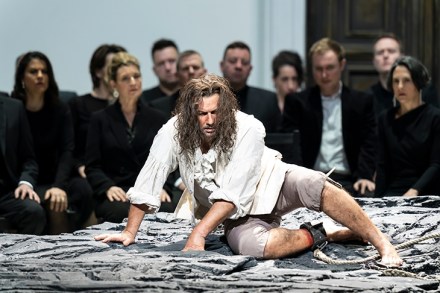
The climactic central scene of Benjamin Britten’s Billy Budd ends unexpectedly. The naval court has reached a verdict of death, and Captain Vere must depart to tell Billy his fate. Voices fall silent, the stage empties, and for two whole minutes the unseen drama is distilled into just 34 chords. And not sprawling elbowfuls of notes either, but plain old triads — the child’s building blocks of harmony. It’s wilfully, maddeningly ambiguous and utterly inspired. It’s also a touchstone for any performance — the moment the opera reveals itself either as a parable, groping gradually but surely towards redemption, or a darker tale of the indiscriminate cruelty of fate.

Peter Doherty & the Puta Madres

More from Arts

Grade: A Old skag head’s back, then — older (40 now!), probably none the wiser, still a very good songwriter. This may be the best thing he’s ever done, at least since those incendiary first moments of the Libertines. Yeah, I can do without the affected drawl skittering this way and that around the melody — he’s better doing his affected Steve Harley yelp — but there’s not too much of that, still less the old angular post-punk guitar. Instead you get the occasional lo-fi shambolic babyish jug-band thrash, all of which are good, and a bunch of slower songs illustrated with violin and delicately picked guitar.

Prima le parole

Music

‘I consider that music is, by its very nature, essentially powerless to express anything at all,’ wrote Stravinsky in one of his more honest moments, and when it comes to humour the old fox had a point. Strip away words, visuals, parody and extra-musical associations (the flatulent bassoon; the raspberry-blowing trumpet) and Orpheus, unaided, doesn’t have much left in his comic armoury. Two concerts at the Queen Elizabeth Hall could almost have been test cases. Geoffrey Paterson conducted the London Sinfonietta in the UK première of No. 50 (The Garden) by Richard Ayres, a composer whose playful, surreal sensibility cheerfully jettisons any idea of music as an end in itself.

Ecstatic misery

Music

Last autumn, anyone who a) has an interest in pop music, and b) reads the weightier end of the press, would have come to the conclusion that the world was shortly to enter some kind of musical singularity, in which all of civilisation would be transformed by the 39-year-old Swedish pop singer Robyn. ‘After more than a half-decade of psycho-analysis, a relationship meltdown, the death of one of her closest collaborators and four years spent working on her masterpiece… a new Robyn is ready to return,’ a profile in the New York Times solemnly pronounced, ahead of Honey, her first album for eight years. The Guardian devoted 6,000 words — 6,000! — to her ‘seismic cultural impact’.

Sister act | 17 April 2019

Music

Total immersion weekends can prove tricky. The established masters don’t need them, while lesser-known figures often turn out to be relatively obscure for sound reasons. Nonetheless, there are plenty of composers whose works are too rarely performed, not so much through neglect as because of the awkwardness of their demands — huge orchestras and choruses, or unlikely combinations of forces. The Boulangers present in all respects a special case.