Culture

Culture

The good, the bad and the ugly in books, exhibitions, cinema, TV, dance, music, podcasts and theatre.

The Green Room Podcast from Spectator USA: What do we get? Pete Shelley of Buzzcocks

Two poets named Shelley have graced the English language. One was Percy, and the other is Pete. Just as an intellectual is someone who can hear the William Tell Overture without thinking of the Lone Ranger, so a true lover of a three-minute pop song is someone who, hearing the words ‘Shelley’ and ‘Manchester', thinks not of ‘The Masque of Anarchy’ and the Peterloo Massacre, but of ‘What Do I Get?’. ‘Ever Fallen In Love (With Someone You Shouldn’t Have)?’, ‘I Don’t Mind’, and the dozens of other songs that Pete Shelley wrote and sang with Buzzcocks.

Mumford & Sons: Delta

More from Arts

Grade: D+ I promise you this isn’t simply class loathing. Yer toffs have contributed to British rock and pop and it hasn’t all been unspeakably vile. There were moments when Kevin Ayers held our interest, for example, and even Radiohead. And then there’s that man of the people, Joe Strummer. So let’s excuse Mumford & Sons their weighty class baggage and just concentrate on the music, which is irredeemably awful and makes Coldplay sound like the MC5. Someone has given them beats, cute little digital beats, to set beneath the faux folk which once irritated and now just bores one into a stupor. There is also that thing beloved by people who cannot write songs — atmospherics: ominous cymbals, metronomic piano, an overwash of organ and sonorous synths.

Yoko One: Warzone

More from Arts

Grade: A+ Ooh, you can have some fun with this when the unwanted guests swing by this Christmastide. These are the ‘greatest hits’ of a serially indulged caterwauling loon with the political disposition of a spoiled seven-year-old, redone to make them even worse than they were before. So, put on ‘Why’ as you hand around the cocktails and the seasonal canapés. Trumpeting elephants, angry crows, an ominous synth and Yoko howling ‘Why? Whhhhhhhhhhhhy? Wok Wah Wheeeeeeeee! Ag ag agag ag! Whhhhhhy?’ Like a particularly angry and talentless Diamanda Galas. But don’t let a smile give the game away as this unendurable, pretentious garbage resounds around the room. Instead, flip to ‘It’s Gonna Rain’.

Britten’s Blackadder moment

Music

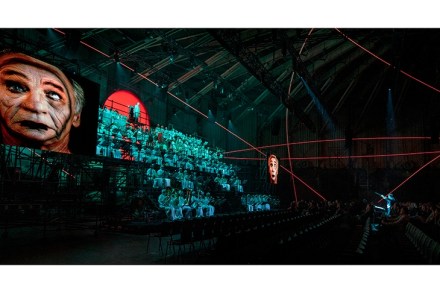
‘What passing-bells for these who die as cattle?’ We’ve heard a lot, lately, of the knell that tolls through the opening bars of Benjamin Britten’s War Requiem, and at Liverpool’s Anglican cathedral it was played on actual church bells. The Royal Liverpool Philharmonic Orchestra’s percussionist Graham Johns has had a set specially cast, and as he struck them video screens relayed the moment all the way down the cathedral’s length. The orchestra was a one-off, assembled half-and-half from the RLPO and the NDR Radiophilharmonie Hannover (the conductor Andrew Manze holds positions in both cities), and this was a major civic occasion, attended by gold chains of all sizes and preceded by speeches from city worthies.

Once in a lifetime

Music

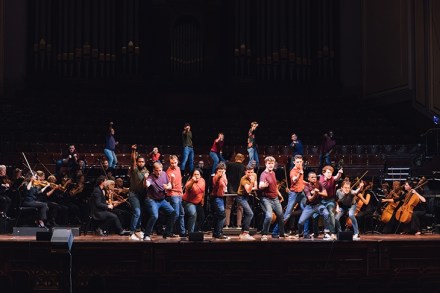
Let’s get the ‘was-it-good?’ stuff out of the way first. Yes, it was good. It was better than good. It was incredible, fabulous, dazzling. It was whatever adjective you want to throw at it. I can’t recall seeing a more engrossing pop production, ever. You don’t just get great songs — come on, you’re not going to quibble about ‘Once in a Lifetime’, or ‘Burning Down the House’, or ‘Slippery People’, or ‘Road to Nowhere’, are you? — played by brilliant musicians. You get them presented in a way no one has thought to present a rock show before. That way was to remove all fixed points from the stage.

Cypress Hill: Elephants on Acid

More from Arts

Grade: A+ Easily album title of the year, maybe album of the year. A true bravura offering from these supposedly tired old men. Cypress Hill are now in comfortable middle age, almost as old as me, ffs. But they were ever ludicrously inventive and idiosyncratic, right back to that first album in 1991, which wrote the template for many lesser and even more profane hip hop gods. This one is mired in psychedelia, as even Charles Moore might have guessed from the title. There are very knowing nods to, especially, early Jefferson Airplane — although the guitar sounds more like Barry Melton than Jorma Kaukonen — and Sly and the Dead and Moby Grape.

Conduct unbecoming | 18 October 2018

Music

The morning after the first night of Ronald Harwood’s Taking Sides in May 1995, I received a call from Otto Klemperer’s daughter. ‘Tell me,’ said Lotte, ‘is it true that, in Mr Harwood’s play, the denazification attorney addressed Dr Furtwängler as “Wilhelm”, or even “Willi”?’ I said something in reply about dramatic licence and the interrogator being, erm, an American. ‘No one,’ thundered Lotte Klemperer down the phone, ‘ever called my father “Otto”.’ Appearances meant everything to the generation of great conductors that survived the Nazi era, whether as anxious refugees or, in the case of the Berlin Philharmonic chief, as a cultural poster boy for a criminal regime.

Christine and the Queens: Chris

More from Arts

Grade: B– Ooh goody — a parade to rain on! You wouldn’t believe the hyperbole expended by the rock critics on this middle-class French lass, real name Héloïse Letissier. Or maybe, being used to such mass gullibility, you would. ‘Bogglingly intelligent’ and ‘a thrillingly uncompromising artist, playing with ideas of gender, identity and individuality to pop-bright melodies’, for example. Her first album in English, Chaleur humaine, was similarly bestrewn with pop-hack ejaculate, to the extent that it resembled a plasterer’s radio. Why? Oh, check out the back story. Very gender fluid. Leftie. French. Channelling early 1980s electro pop and dance. And here she is with her hair cropped and calling herself Chris.

Almond ayes

Music

When Soft Cell first appeared on Top of the Pops in summer 1981, miming along to their version of Gloria Jones’s ‘Tainted Love’, it felt like a moment of palpable newness. Well, it certainly did if you were prepubescent and really had no idea what sex actually was. Romantic love — in either its glory or disappointment — was the everyday subject of the pop song, but here was this funny little fella in black, with studded accessories, singing of a love that was ‘tainted’. I had no idea what he got up to when the lights went out. I knew that homosexuality existed — in the same way that California condors existed, and Olympic athletes existed.

The write stuff | 20 September 2018

Music

No one any longer denies the immense significance of Wagner’s musical-dramatic achievement, even if they find it repellent. But his reputation as a writer — of operatic texts, autobiographical and biographical memoirs, practical essays on how to conduct particular pieces, vast and less vast theoretical works, ranging from speculations on opera and climate to theologico-political musings — is not high. Nor should it be, except for the more ‘occasional’ pieces. He was in fact a major contributor to mauvaises lettres, and no kind of systematic thinker, however much he might have liked to be. His only prose that is consistently readable comes in his letters, some of them enormous, all of them full of life and colour.

Bingo with Birtwistle

Music

A pregnant silence, a peaty belch from the tuba, and the scrape of brass on brass as gears lock into position and judder forward. It’s almost worth making a bingo card for a Harrison Birtwistle première these days, and I’m not complaining. His last big orchestral work, Deep Time, showed worrying signs of him mellowing into some sort of late period. Not here though, he isn’t. Grinding brass cogwheels? Tick. Sudden stillnesses, punctuated by deadpan creakings and poppings? Tick. Primal screeches from the woodwinds, jarring against chords of millstone grit? House!

The Spectator writers’ party, in pictures

It's the Spectator's 190th birthday this year and we celebrated with an end-of-summer drinks party in the garden for the writers and cartoonists who make the magazine what it is. In keeping with Fleet Street tradition, there was no food and plenty of booze – and everyone was kept entertained by great music from Charlie Wolfin and his jazz trio.

‘If you don’t want to taste the goat’s milk, at least watch the farmer in action’

Did Ashraf Marwan jump, or was he pushed? Not his fall off the balcony of his luxury apartment in London in July 2007, which is how Marwan, an Egyptian diplomat turned billionaire, met his unexplained and highly suspicious death, but his tumble into the arms of the Mossad, into whose tender embraces he slipped in 1970. At the time, Marwan was also in the even more tender embraces of Mona Nasser, daughter of Egyptian dictator Gamal Abdel Nasser. After Nasser’s death in 1970, Marwan became a close aide to Anwar Sadat, and brokered military and diplomatic deals with the Saudis and Gaddafi’s Libya. All the while, Marwan was supplying top-grade intelligence to a Mossad contact in London, while dodging surveillance by Nasser’s old advisers.

Britten at war

Music

‘I feel I have learned lots about what not to write for the theatre…’ There’s a prevailing idea that the ever-precocious Benjamin Britten was an operatic natural — a composer whose gift sprang fully formed with the première of Peter Grimes in 1945. But that’s not strictly true. Go back just a few years to 1941 and you’ll find Paul Bunyan — the oversized skeleton in Britten’s musical closet. Rewind those few years and Britten, darling of post-war England, was all but a national pariah. A pacifist who had escaped conscription by travelling to America, he was forced to take work wherever he could find it.

Striking the right note

Music

I was at a funeral the other day at which the music was so inspiring that I struggled to feel sad. That’s fair enough, you may think — but the person in the coffin was my own mother. This is a difficult point to explain in cold print, but there are reasons why I wasn’t grief-stricken at the death of the person who meant most to me in the world. My mother Pamela loved my sister and me with a passion; she radiated holiness, but in an unobtrusively English way. She was also a very private person, sometimes driven to distraction by her attention-seeking son. She never sought — and never received — any official recognition of her decades of service to the Catholic Church.

Hank Mobley, the greatest sax player you never heard

Jazz may be an egalitarian, collaborative music, but jazz musicians honor their best with the laurels of hierarchy. Everyone knows the royal monikers of ‘Duke’ Ellington and ‘Count’ Basie, and most people know that Billie Holiday was ‘Lady Day’. But there’s also a whole aristocracy of hip name-drops: ‘The Baron’ (Charles Mingus), ‘Pres’ (Lester Young), ‘The Court Jester’ (Ornette Coleman), ‘The High Priest’ (Thelonious Monk). The list goes on, and on. The mid-century saxophonist Hank Mobley (1930–86) was never ennobled in such fashion — unless you count Dexter Gordon’s hilarious handle for his friend, ‘The Hankenstein’.

The legend of Lawrence

Music

‘I could still be a pop star,’ says Lawrence, sitting on a footstool in his council flat, high up in a tower block above London EC1. ‘I know I’m not going to be a person who has a million hits on the internet. Do they call them hits? Views, or streams, whatever they are. I’m not going to be that person, but I still think I could have a hit record. For me a song like “Relative Poverty” is a song for this generation, and I don’t know why it shouldn’t be an anthem for today.’ Lawrence is now 57, and he has been trying (and failing) to become a pop star since 1979.

The Bruckner effect

Music

The lady behind me on Kensington Gore clearly felt that she owed her friend an apology: ‘It’s Bruckner. I don’t know how that happened.’ I felt for her. ‘It’s Nézet-Séguin and the Rotterdam Phil,’ I’d told a succession of my own musical friends. They’d seemed interested. Since the youngish Canadian conductor Yannick Nézet-Séguin took over at the New York Metropolitan Opera, he’s vaulted on to the A-list, and while the Rotterdam Philharmonic isn’t a super-orchestra, exactly, people do dimly recall that it was conducted by Valery Gergiev, back when that was still something to boast about. So, the inevitable question: what are they playing?

Neil Diamond: Hot August Night III

More from Arts

Grade: C+ Mumrock. A lucrative genre, dating from the beginning of the 1970s, when Mums suddenly wanted something a little bit hip. My own mother briefly succumbed to the inane imagery and kindergarten melody of ‘Song Sung Blue’, sometime in 1972, before she moved on to more sophisticated stuff (Gilbert O’Sullivan, as I recall). This is Diamond’s 40th anniversary collection of hits, live or otherwise, and his third Hot August Night containing the same songs. Hasn’t everybody got all this hideous dross by now? Is the only selling point this time that he’s singing them at 71, the voice still throatily pompous, the medallion still on display? Was he ever any good?

Gypsy king

Music

Looney Tunes was always at its best when soundtracked by a Hungarian gypsy dance. (Watch ‘Pigs in a Polka’ if you don’t believe me.) It’s music that was made to chase small cartoon animals — and terrify conductors. The gunshot syncopations. The hand-break turns in tempi. The banana-skin portamenti and rubato ravines… Musical tripwires everywhere. Nothing to faze conductor Ivan Fischer, however. Last week at the Proms, with the Budapest Festival Orchestra, Fischer was giving a guided tour of Hungarian gypsy music and its century-long cohabitation with classical music. It was a masterclass.

Beggar’s belief

Music

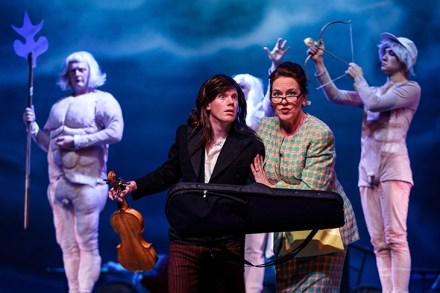
Robert Carsen’s new updating of The Beggar’s Opera is a coke-snorting, trash-talking, breakdancing, palm-greasing, skirt-hiking, rule-breaking affair — and every bit as wearyingly tedious as that sounds. Leaving behind the work’s original 18th-century setting, Carsen sets out boldly for present-day London (where the streets are paved with Brexit-related comedy gold), but in Ian Burton’s rewrite seems to land somewhere circa 1990. In a production originally created for Paris’s Théâtre des Bouffes du Nord, Peachum, Macheath and their band of criminal lowlifes are the kind of East End cockney schemers even DCI Jane Tennison would have found it nostalgic to investigate, while corrupt cop Lockit is more Pirates of Penzance than McMafia.

Teenage Fanclub reissues

More from Arts

Still got your record player? Dig it out. The crunchier the music, the better it sounds on vinyl: a broader noise, bigger than you get from a CD and many times fuller than what you’d hear from an execrable mp3 player. Technology does not always improve stuff. Five Teenage Fanclub albums have been re-released on vinyl, each one with its retinue of freebie extras, unreleased singles and so on, at about £18 a pop. I’ve chosen the three best. The raw Bandwagonesque set the power-pop template: The Byrds, Alex Chilton and Crazy Horse compressed into very agreeable three minutes slabs. It gave them an unrepeated US hit in ‘Star Sign’ and a concert staple in ‘The Concept’.

The problem with Siegfried

Music

There’s one big problem with Wagner’s Siegfried, and the clue’s in the name. None of Wagner’s mature works hangs so completely upon a single individual. The character himself isn’t really the issue either, however troublesome he might superficially appear (a ‘randy overgrown schoolboy’, if you believe the misguided programme note for this Usher Hall performance). As so often, confusion falls away once you assume that Wagner — who, after all, wasn’t a complete amateur — knew what he was doing, and take Siegfried as the life-force his creator intended. Someone’s still got to sing the damn role, though, and that’s an Olympian challenge.

Teen spirit | 9 August 2018

Music

In June, a 20-year-old man called Jahseh Onfroy was murdered after leaving a motorcycle dealership in Deerfield Beach, Florida. Onfroy was a rapper, who recorded under the name XXXTentacion, and he had become extraordinarily successful — his two albums had reached No. 2 and No. 1 in the US, despite moderate sales, because of the amount of online plays they had received. The day after he died, my social-media timelines were full of music writers discussing his death, and the tenor — from those with kids, at least — was clear. Post after post noted that XXXTentacion was a nasty piece of work, and few should mourn him, yet the writer’s 13- or 14- or 15-year-old was devastated by his death. XXXTentacion was, it is true, a nasty piece of work.

Lord of the dance

Music

Some conductors conduct from the fingers — think of Gergiev’s convulsive gestures, flickering up and down the keyboard of an invisible piano in the air — while for others (check out footage of an elderly Richard Strauss) it all comes from the wrist: graceful, fluid and utterly detached. You could cut off Toscanini and poker-down-the-back-of-his-tail-coat Karajan (famously dismissed by fellow-conductor Fürtwangler as ‘just a time-beater’) at the waist and lose nothing from their precise gestures; but try the same trick with the irrepressible Dudamel or Kristjan Jarvi and the life-force of movements that start from the feet and shudder up through the entire body would be gone. With Teodor Currentzis it’s all about the knees.

Simon says… farewell

Music

Early in 1987, a middle-aged woman approached me on the record counter of the Slough branch of Boots. ‘What do you have by Ladysmith Black Mambazo?’ she demanded. Nothing. Boots in Slough wasn’t big on South African isicathamiya choral music. ‘Well,’ she suggested, ‘you really ought to get their records in. They’re going to be huge.’ She was wrong, but I knew why she was so sure. Ladysmith Black Mambazo had been among the standout guests on Paul Simon’s Graceland, released a few months before. Graceland made Simon, by my reckoning, the first pop star who had emerged from the rock’n’roll era to make a major cultural impact across three decades. By the 1980s, the Stones had become just a touring machine. McCartney was adrift.

Knights at the opera

Music

I’ve been trying to pinpoint the exact moment when it became impossible to take Mascagni’s Isabeau seriously. It wasn’t when the scenery jammed, leaving half the cast briefly trapped inside a revolving tower. These things happen, after all: you simply suppress thoughts of Spinal Tap and re-suspend disbelief. I don’t think it was the entry of a character called Ubaldo of Edinburgh either, though people were definitely starting to snigger. It wasn’t even the bit when Mascagni, called upon to depict a trotting horse orchestrally, deployed what sounded like a pair of coconut shells. A score that had started as a weak but listenable slice of art-nouveau medievalism descended — clip clop, clip clop! — into pure Monty Python and the Holy Grail.

The essential Kubelik

Music

Rafael Kubelik is watching Wimbledon when I enter his suite at the Savoy. ‘Tennis fan?’ I ask, slightly surprised. He shakes his head. ‘No. Just her.’ It is 1983, the high summer of Martina Navratilova. ‘She will win,’ says Kubelik in the decisive tone that conductors use to save rehearsal time. ‘And one day my country will be free.’ He had flown out of Prague in February 1948 not daring to tell his wife and son until they landed in London that the communists had seized power and they could never return home. Sir Adrian Boult, a gent among time-beaters, offered to hand Kubelik his job with the BBC Symphony Orchestra, but there was no lack of bids for the exiled chief conductor of the Czech Philharmonic.

Spice girls back sceptics on Europe

More features

190 years of The Spectator   14 December 1996   The Spice Girls were at the time the biggest girl group in the world, their debut album selling 23 million copies. The interview brought the magazine its highest sales figure for a generation Interview the Spice Girls, I thought. But the Spice Girls are interviewed all the time. My interview, however, would be different. I would ask only questions that I would ask Mr Major, Mr Blair, Mr Heseltine or any other politician. Only one thing worried me about this plan. What if they weren’t interested in politics? It was a needless worry. They were completely political. Politics was really their subject. ‘We Spice Girls are true Thatcherites. Thatcher was the first Spice Girl, the pioneer of our ideology — Girl Power.