Culture

Culture

The good, the bad and the ugly in books, exhibitions, cinema, TV, dance, music, podcasts and theatre.

Poulenc’s Stabat Mater – sacred, fervent and always on the verge of breaking into giggles

Classical

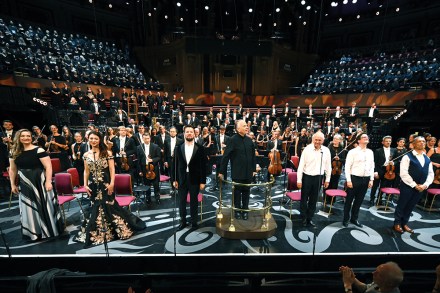
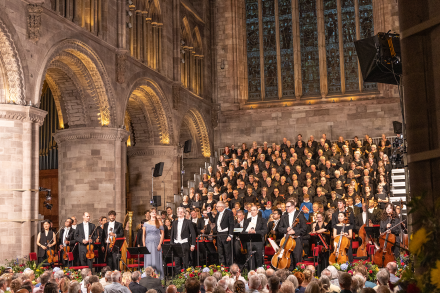
It’s funny what you see at orchestral concerts. See, that is, not just hear. If you weren’t in the hall during Poulenc’s Stabat Mater would you even realise that the tuba uses a mute in the final chord? Visually, it’s hard to miss – the thing’s huge, whether standing on the floor or being heaved into the instrument’s bell. The sound? A muffled, matte effect, quite unlike the usual nasal buzz of muted brass. But how droll of Poulenc, and how utterly in keeping with the raffish, trash-fabulous aesthetic of Gallic brass writing: a world where no symphony is complete without a pair of honking cornets à pistons. And how perfect, too, for this Stabat Mater, a fervent choral work that sounds nonetheless as if it’s about to break into giggles.

Winning little narrative adventure: South of Midnight reviewed

More from Arts

Grade: A– For this winning little narrative adventure we are in the South – all gris-gris gumbo yaya, decaying mansions and ghosts of the underground railway – and it is a bit midnighty, what with the sinister otherworldly beings you fight.  Our protagonist is sassy, cornrowed Hazel, a mixed-race Lara Croft, who sets out to rescue her social-worker mother after her mobile home is swept downriver in a hurricane. Her snooty grandma Bunny, rotting in her vast plantation house, is no help whatever. But Hazel does manage to half-inch some magic hooks from granny’s ottoman, which allow her to manipulate glowing magic strands in the air and use them to unravel ‘haints’, the ropey-looking demon-things that pop up from time to time to attack her.

Devastating: WNO’s Peter Grimes reviewed

Opera

Britten’s Peter Grimes turns 80 this June, and it’s still hard to credit it. The whole phenomenon, that is – the sudden emergence of the brilliant, all-too-facile 31-year-old Britten as a fully formed musical dramatist of unignorable force. W.H. Auden had urged him to risk everything – to step outside his admirers’ ‘warm nest of love’ – and in the first moments of Peter Grimes, Britten does precisely that. The folk-opera bustle of the opening tribunal scene dissolves into the desolate bird cry of the first Sea Interlude and straight away, you’re in the presence of something unimaginably vaster and more true. It pins you to your seat. That was certainly the impression I had from Tomas Hanus, conducting the orchestra and chorus of Welsh National Opera.

How could anyone seriously think that Wagner’s politics haven’t been discussed enough?

In a recent article, the historian Katja Hoyer describes an event at the German Embassy prior to a Royal Opera House performance in May of Wagner’s Die Walküre. There she spoke with various individuals, some of them clearly Wagner ‘fans’, and she righteously declares: 'having studied [Wagner] as a historical figure, I’m perhaps also less able than most to forget the man behind the music.' Following some discussions about the production, as well as chats with those who had visited Bayreuth, she declares that 'there didn’t seem to be the slightest notion of controversy around the modern-day Wagner worship.

Exhilarating – but also exhausting: ENB’s The Forsythe Programme reviewed

Dance

The first time I saw the work of Trajal Harrell I stomped out in a huff muttering about the waste of public money and is this what the art of dance has come to. But perversely I was drawn back for more of its weirdness, and after The Köln Concert I am relenting. The guy might be on to something. A middle-aged, Yale-educated African-American with a melancholy air on stage, Harrell should probably be classified as post-post-postmodernist. In any case, don’t expect meaning to emerge clearly or logic to govern the movement he creates. His territory is queer in every sense of the term, dippy-hippie in spirit, and aesthetically far to the left in its rejection of order or hierarchy. Yet it is also open-hearted, innocently comical and slyly beguiling.

Divorce are the best young British band I’ve seen in an age

Pop

Can we talk business for a moment? When reviewers like me go to big arenas, we get the best seats in the house, with fantastic sightlines and excellent sound (a PR who used to work for U2 told me she would routinely reassign press into even better seats than the already splendid ones they had originally been given; you do anything you can to get an extra 1 per cent more enthusiasm into the review). When we go to standing venues, though, we are as prone to the vagaries of geography as anyone else. And because we go to a lot of shows, we tend to arrive only five minutes before the turn we want to see goes on stage, which means we rarely find great positions.

An astonishingly good new album from Black Country, New Road

The Listener

Grade: A Is that a kind of nod to Oasis in the album title? I can’t think of a band less like that grunting Manc convocation, except in the fact that BCNR are just about the biggest band in the country right now, as the Gallagher bros were all those years ago. Vocalist (of a sort) Isaac Wood has left and with him has gone the occasional temptations to stray into stadium bombast, à la Arcade Fire. Instead, with three females sharing vocals, we have evanescent chamber pop, occasionally buttressed by a certain glam swagger, almost always underpinned by plucked acoustic guitar and May Kershaw’s superb and imaginative piano. It is a beautiful album, from the sweet harmonies of ‘Besties’, to the Revolver-era McCartney of ‘Mary’.

Van Morrison is sounding better than ever

Pop

There is a website called setlist.fm which allows its users to vicariously attend pretty much any concert. Search the name of an artist and a comprehensive history of their live performances will appear, spanning decades long gone to the hour just past. Setlist.fm is both a useful resource and a massive spoiler-fest; the music equivalent of skipping to the last page of a book. Those planning to see a band can discover in advance most of the songs they are likely to hear. Those whose interest starts waning mid-gig can check to see how many songs are left. Those who stayed at home can soothe themselves with the thought that the artist failed to play all, or indeed any, of their favourite tracks.

Sunny Schubert and iridescent Ravel: album of the week

The Listener

Grade: A Maurice Ravel was tougher than he looked. True, he dressed like a dandy and wrote an opera about a dancing teapot. But when he was rejected for military service in the first world war (he was 39 and 5ft) he practically forced his way to the front line as a lorry driver – sheltering for days in a forest near Verdun after his truck was disabled by shrapnel. Apparently, when he visited Vaughan Williams in London he went straight to the Victoria Station grill and ordered steak and kidney pudding. Just when you thought you couldn’t admire the man any more.  It’s the toughness that impresses in this new recording of his Piano Trio. OK, not toughness – more like tautness, perhaps; a clear-eyed, athletic sort of grace.

The liberating, invigorating music of Pierre Boulez

Classical

‘When you’re not offensive in life, you obtain absolutely nothing,’ declares a twinkly-eyed Pierre Boulez in one of the archive films that the Barbican were screening to celebrate the composer’s centenary. What a joy to be reminded of the young Boulez – the unashamed elitist, the unbeatable snob. Not even allies such as Schoenberg (too trad) and Messiaen (‘vulgar’) were safe from his tongue. To Boulez, pop music wasn’t good or bad; it didn’t exist. Ditto his own life. ‘I will be the first composer without a biography’, he proclaimed. Forget that Boulez was entangled in a love triangle with Camus’s mistress and for most of his time on earth screwing his valet, Hans… The music was everything.

Absorbingly repellent: Ed Atkins, at Tate Britain, reviewed

Exhibitions

In the old days, you’d have to go to a lot of trouble to inhabit another person’s skin. Today you can simply buy a customisable 3D avatar from Turbosquid.com, animate it with your own movements by wearing a sensor-filled motion-capture bodysuit, and presto! Lifelike but eerily soulless, Ed Atkins’s video portraits occupy a strange visual hinterland between computer-game graphics and deepfake realism. The close-ups elicit a tingling revulsion: this seems to be a human being, but something is off A man tosses and turns in bed before his home is violently swallowed up by a sinkhole; a besuited talkshow host puffs away on Silk Cuts while conversing with the disembodied voice of a woman (Atkins’s mother) about her struggles with depression. In both videos, the artist is incognito.

Perfection: The Rest is Classified reviewed

Radio

Interviewing for MI6 sounds to have been even scarier a century ago than it must be today. Candidates would enter an office to find a man with a ‘large intelligent head’ seated behind a desk and absorbed in paperwork. Everything would appear normal until he picked up a penknife and stabbed his own leg. A prospective agent who flinched at the sight might do himself out of the job. It is brilliant: carefully crafted, closely scripted, immaculately edited and best of all perfectly cast Rather like one of those rumoured Oxbridge interviews (candidates for a fellowship at All Souls were reportedly served a cherry pie at dinner to test what they would do with the stones), the ordeal was intended to weed out the weak.

Visit the King’s Head Theatre for one of the greatest theatrical surprises of the year

Theatre

Amanda Abbington’s new show is heavily indebted to Noël Coward’s Hay Fever.Coward’s early play follows the tribulations of the superficial Bliss family and at first it was rejected by producers because it lacked action or incident. The oddly titled show, (This is not a) Happy Room, opens on the eve of a family wedding. Disaster strikes when the groom dies in a car cash and the nuptials are hastily transformed into a funeral. (Don’t ask how the dead body was released for burial so quickly.) Abbington plays Esther Henderson, a careless matriarch, who walked out on her children when they were small and left her firstborn, Laura, in charge of the parenting duties. Laura struggled to raise the youngsters properly and she now feels responsible for their wonky personalities.

Rejoice at the Royal Ballet’s superb feast of Balanchine

Dance

Any evening devoted to the multifaceted genius of George Balanchine is something to be grateful for, manna in the wilderness indeed, but the Royal Ballet’s current offering left me hungry for more. Three works were on the programme, all created in the early stage of the great man’s career, two of them widely familiar, none of them reflective of anything he created post-war for New York City Ballet. Are his executors reluctant to licence productions of later masterpieces such as Agon or Stravinsky Violin Concerto, or is the Royal Ballet fighting shy of their stylistic challenges? Gripe over, and let’s just rejoice in a feast of superb choreography at Covent Garden, performed with much excellence by dancers coached by Balanchine’s apostle Patricia Neary.

Metal for people who don’t understand metal: The Darkness at Wembley reviewed

Pop

Midway through their thoroughly entertaining show at Wembley Arena, the Darkness played a song from a decade ago called ‘Barbarian’, about Ivar the Boneless and the Viking conquest of Britain. ‘Barbarian’ exists in a long tradition of men with long hair, tight trousers and loud guitars singing about our Danish friends. Led Zeppelin did it on ‘The Immigrant Song’: ‘The hammer of the gods/ Will drive our ships to new lands/ …Valhalla, I am coming!’ Iron Maiden did it on ‘Invaders’: ‘The smell of death and burning flesh, the battle-weary fight to the end/ The Saxons have been overpowered, victims of the mighty Norsemen.’ Scores of others you are less likely to be familiar with have, too. The Viking anthem is a rite of passage in hard rock.

The liberating force of musical modernism 

Classical

It’s Arvo Part’s 90th birthday year, which is good news if you like your minimalism glum, low and very, very slow. Lots of people seem to. The London Philharmonic’s concert on Saturday night was a reminder of an earlier, less ingratiating Part: the dissident composer in Soviet-controlled Estonia. Hannu Lintu revived Part’s First Symphony of 1963, and there’s nothing remotely minimal about its opening. There’s a swagger of brass, machine rhythms and an onslaught of string chords in which the dissonances don’t feel aggressive so much as mischievous. This is a young composer taking a manic glee in piling on the wrong notes just because he can.

The beauty and brilliance of Cradle of Filth

The Listener

Grade: B+ Satan’s devoted groupies Cradle of Filth are back with their shrieking, howling, portentous, Exorcist-style incantations, 30 years after effectively inventing the loser-boy goth-metal offshoot, black metal. They’ve got quite good at it. Rapid-paced minor-chord hard rawk, much as AC/DC might have churned out if someone had shown them some Edgar Allan Poe and told them who Wagner was. Except I’m not sure that AC/DC could manage heavy metal so relentlessly intricate, so utterly precise. As all the catchy, simple, heavy-metal riffs had been used up by about 1979, Cradle of Filth are forced into considerable complexity, which at times – ironically, in a genre that is largely despised for its musical conservatism – resembles what we used to call math rock.

Why we’re flocking to matinees

Arts feature

The Starland Vocal Band were on to something. In their 1976 hit ‘Afternoon Delight’ they sang, in gruesomely twee harmony: ‘Gonna grab some afternoon delight/ My motto’s always been when it’s right it’s right/ Why wait until the middle of a cold, dark night?’ Granted, they were singing about rumpy-pumpy, not theatre-going, but for many of us the same principle applies.  ‘I’ve turned into the kind of person who loves toddling off to matinees,’ admitted my actor friend Timmy recently. He’s not the only one. I’m at that age when lunch is preferable to dinner and matinees appeal far more than evening shows. There’s something hedonistic about a matinee. When everyone else is working (or should be), you’re luxuriating in the theatre.

Traditional music at its most graceful, ingenious and jaw-dropping 

Pop

I was talking recently to a rock guitarist about the amount of music an audience hears during a typical concert that is ‘on track’ – in other words, not played live in the moment but instead stored, supplied and sequenced via computer. They suggested that nowadays every artist, from pop starlets to indie rebels, relies on ‘track’ to a greater or lesser extent. Does it matter? Probably not, at least not much – although it’s one reason why so many acts now play the same songs the same way in the same order every night. Technology increasingly calls the shots. When a band’s set is entirely choreographed around the lighting cues – a scenario not uncommon in arena gigs – it seems a clear case of the tail wagging the dog.

What a joy to see some Merce Cunningham again

Dance

How salutary to encounter the cool cerebral elegance of Merce Cunningham’s choreography again. A figure at the heart of the abstract tendency in post-war American culture, the lover and collaborator of John Cage, Cunningham emptied barefoot dance of ideology, symbolism, plot, personality, pretension: instead it became purely an exploration of bodies in movement, responsive to chance, sound and light. Perhaps Cunningham’s language has been so deeply absorbed into the lexicon of modern dance that it no longer shocks or surprises. But its chaste beauty remains inviolate. Lyon Opera Ballet – France’s equivalent to Rambert – has made a speciality of performing Cunningham, who died in 2009 at the age of 90. For an all too brief visit to London, it presented two of his later works.

Splendid revival of an unsurpassed production: Royal Opera’s Turandot reviewed

Classical

Puccini’s Turandot is back at the Royal Opera in the 40-year old production by Andrei Serban and… well, guilty pleasure is an unfashionable notion these days, but I still feel a batsqueak of shame at enjoying it so much. It’s not the chinoiserie – anyone who believes that an opera based on an 18th-century Italian pantomime should be taken literally is probably beyond help. No, it’s a Spectator headline from years back that still nags. ‘Turandot is a disgusting opera that is beyond redemption’ was the gist of a review of this same staging by the late Michael Tanner, and if it was anyone else you’d put it down to snobbery and move on. But you can’t do that with Tanner, a thinker of piercing intelligence who spent decades interrogating how opera works and why it matters.

I wish someone would kill or eat useless Totoro 

Theatre

My Neighbour Totoro is a hugely successful show based on a Japanese movie made in 1988. The setting is a haunted house occupied by two little girls who encounter various creatures rendered on stage by puppets. The story has no action, danger or jeopardy so it’s likely to bore small boys and their dads. Perhaps mums and daughters will appreciate it more. The big selling point is the puppetry whose quality varies. The naturalistic animals are done well. Cute yapping dogs, fluffy chickens scampering about, mischievous goats that steal maize from unguarded fields. The silliest creature is an orange latex cat equipped with 12 spindly legs that don’t work. It looks like a cross between a bed bug and a crippled tiger.

Irresistible: Clueless, at the Trafalgar Theatre, reviewed

Theatre

Cher Horowitz, the central character in Clueless, is one of the most irritating heroines in the history of movies. She’s a rich, slim, beautiful Beverly Hills princess obsessed with parties, boys and clothing brands. According to her, the world’s problems can easily be settled by using the solutions she applied to the seating plan at her dad’s birthday dinner. But Cher is also a creation of genius because she draws us into her life and makes us understand the raw, damaged reality that lies behind her superficial perfection. She’s not a privileged brat. She’s all of us. At the start of this musical remake, Cher takes us on a tour of her luxury home. ‘The Greek columns date all the way back to 1975,’ she says.

The death of touring

Pop

Touring’s not what it used to be. When I were a lad, even big bands would do 30 or 40 shows around the UK to promote their new albums, stopping in places such as Chippenham Goldiggers, Hanley Victoria Hall, Ipswich Gaumont, Preston Lockley Grand Hall that would only see a major act today if they happened to need a local motorway services. Those days are gone. If you’re a superstar, you’ll do a handful of arenas in a few big cities. And if you are not a superstar, you might not even tour your new album at all, at least not in the old sense.

Who wants a ‘girl boss’ Snow White?

Cinema

Disney’s new Snow White is a live-action remake of the beloved 1937 classic that was cinema’s first full-length animated feature and is still regarded as Walt’s greatest masterpiece – even if fans of The Jungle Book will always have something to say about that. It stars Rachel Zegler, which set the cat among the pigeons, as she is Latino so doesn’t have ‘skin as white as snow’. However, because I’m not a stickler for ‘historical accuracy’ when it comes to fictional characters in fairy tales, this didn’t bother me. The problem with the film isn’t that it’s gone ‘woke’, it’s that it contains workaday narrative, blandly generic characters and a leaden script that wrings all the magic from the story.

Barbara Hannigan needs to stop conducting while singing

Classical

Last week, Barbara Hannigan conducted the London Symphony Orchestra in Haydn, Roussel, Ravel and Britten, though to be honest she had me at Haydn. It’s still relatively unusual to encounter him in a symphonic concert, and more than one promoter has told me that Haydn is ‘box office poison’, which is a shocking description of such life-enhancing music. Perhaps it’s down to sonic overkill. Bingeing on Shostakovich and Mahler has left our emotional reflexes distended and coarsened, and now we feel short-changed if every inch of the concert platform isn’t crammed with extra brass and percussion.

A luminous new recording of The Dream of Gerontius

The Listener

Grade: A– There’s a species of music-lover who enjoys pointing out that Elgar isn’t played much on the Continent – the musical equivalent of those social media bores who pop up each April to reveal that Saint George was Turkish, ackshully. It’s all rot, of course. Some of the best Elgar performances of recent years have come from Barenboim and Petrenko in Berlin; and, after all, it was Richard Strauss in Düsseldorf who put The Dream of Gerontius on the map.  And now here’s Gerontius from Helsinki. True, the conductor, Nicholas Collon, is British and I hadn’t previously had him down as an Elgarian. The choirs are a mixture of Finns and Brits (they blend well) and the soloists are about as fresh a crop as you could hope for right now.

The filthy side of Dame Myra Hess

Classical

The photograph on the cover of Jessica Duchen’s magnificent new biography of Dame Myra Hess shows a statuesque lady sitting at the keyboard, hair swept back into the neatest of buns. Add a pair of half-moon spectacles and she could be Dr Evadne Hinge, accompanist to Dame Hilda Bracket. This isn’t to imply that Dame Myra looked like a man in drag, but then neither did the ‘Dear Ladies’ played by George Logan and Patrick Fyffe, some of whose fans thought the singing spinsters actually were women. In their 1980s heyday Hinge and Bracket were national treasures – and so, on a far grander scale, was Dame Myra, who lifted Londoners’ spirits with her National Gallery concerts during the second world war.