Culture

Culture

The good, the bad and the ugly in books, exhibitions, cinema, TV, dance, music, podcasts and theatre.

We’ve underestimated Francis Rossi

Pop

I have a friend who insists that had Status Quo hailed from Düsseldorf rather than Catford, they would nowadays be as critically revered as Can, Faust, Neu! and those other hallowed Teutonic pioneers of unyielding rhythm from the 1970s. Maybe so. Very probably not. Canned Heat and ZZ Top seem more reachable comparisons. But it’s true that ‘the Quo’ have been underestimated and unjustly derided throughout their six-decade career, not least by themselves. The band has happily perpetuated their position as rock and roll neanderthals: a 2007 album is titled In Search Of The Fourth Chord. There was always a little more to it than that. Personally, I have always divined a terrible sadness at the heart of their music.

A spate of re-releases suggests that Wolfgang Sawallisch was no B-lister

The Listener

Grade: A It’s clearance-sale time for the great classical labels of the 20th century. As streaming platforms drain the remaining value out of once-prestigious recorded catalogues, even B-listers are being pulled up from the vaults and remastered for one last re-release. Eleven-disc Rafael Frühbeck de Burgos edition? Walter Weller’s complete Decca recordings? Now’s your chance: everything must go! The Bavarian conductor Wolfgang Sawallisch, who died in 2013, was never exactly B-list. His name always commanded respect. But in the golden age of LP collecting he was regarded as a safe pair of hands rather than a blue-chip name. Listening to a mini spate of Sawallisch re-releases suggests that we underrated him.

Our half-time scorecard on the Royal Opera’s Ring cycle

Opera

With Die Walküre, the central themes of Barrie Kosky’s Ring cycle for the Royal Opera are starting to emerge, and one of them seems to be wood. Not trees, so much; at least not as a symbol of life. After the rapid assembly of a world from theatrical nothingness (a bare stage), Hunding’s forest hall is simply a wall of blackened planks, with no World Ash Tree in sight. Then you notice the protruding hilt of the sword Nothung: no, that is the World Ash Tree, and Hunding has recycled it into building material. We knew he was a wrong ’un, but really: this is Sycamore Gap-level wickedness. Various ex-trees recur in Rufus Didwiszus’s designs. The huge, maimed log from Das Rheingold reappears during Siegmund and Hunding’s duel, spewing blood as the betrayed hero falls and dies.

I think I’ve found the new Van Morrison

Pop

Young male singers won the right to be sensitive in 1963, when The Freewheelin’ Bob Dylan was released. And in the 63 years since, being young and vulnerable and questing has been one of the great default settings. I’d say you can’t go far wrong singing sadly about your feelings, but of course you can, as the great mountain of discarded troubadours proves. Yet the size of that rejects mountain also tells us how alluring the prospect of baring one’s feelings to strangers can be. Zach Condon, who works as Beirut, and Dove Ellis are at different points on the sensitive young man spectrum. Condon is 39 for a start, so the young bit doesn’t even hold true.

Two hours of yakking about Israel: Giant, at the Harold Pinter Theatre, reviewed

Theatre

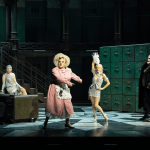
Two hours of yakking about Israel. That’s all you get from Giant at the Harold Pinter Theatre. Endless wittering laced with venomous bigotry. The year is 1983 and the celebrated kiddie author, Roald Dahl, has kicked up a massive stink by denouncing Israel for attacking Lebanon in late 1982. His latest scribble, The Witches, is about to be published in America but a handful of bookshops are threatening to boycott his work. Tom and Jessie, two executives from Dahl’s publishing firm, visit him at home and beg him to withdraw his anti-Semitic rant. Dahl refuses because he loathes the Jews, hates Israel and endorses all the usual myths about Jewish control of politics and finance.

Budget Ballets Russes: BRB2’s Diaghilev and the Birth of Modern Ballet reviewed

Dance

Although I doff my hat to Carlos Acosta’s BRB2, Birmingham Royal Ballet’s junior troupe, for a reminder of what is owed to the Ballets Russes – nothing less than the creation of a new art form – the programme it’s presenting in Diaghilev and the Birth of Modern Ballet is neither well balanced nor coherent. Between some highlights of the most familiar Fokine repertory, an extract from Nijinska’s Les Biches has oddly been inserted, and there was nothing here to suggest the fact that Massine was by far the most dominant choreographer of the Ballets Russes’s interwar era and someone indeed who had personally worked with BRB in its previous incarnation.

The powerfully disorienting world of Mark Eitzel 

Pop

There’s a lot to be said for an artist making an audience feel uncomfortable. Richard Thompson used to say that he considered it sound practice to keep punters ill at ease and on their toes. Mark Eitzel would probably agree, although it’s never been entirely clear whether the nervous exhaustion he induces among his fans is deliberate or unintended. Mercurial is one way of describing his on-stage aura. Volatile and unpredictable others. The first time I saw Eitzel perform, in 1993, he was still the singer in the great San Francisco group, American Music Club. That night, he drank a pint of whisky and returned for the encore with a slice of processed ham stuck to his forehead.

The repetitiveness made me cry with boredom: Mark Pritchard and Thom Yorke’s Tall Tales reviewed

The Listener

Grade: B+ You are in the wrong hands here for what is a homage to this duo’s favourite electronic music. The only Radiohead album I like is the guitar-driven Pablo Honey (and I wasn’t terribly mad on that to be honest.) My inclination is to mark down the genre itself, for its wafting and beeping and farting portentousness, all the way back to Stockhausen. But I suppose one has to put such prejudices aside. What we have is Yorke’s anguished, puppy-dog falsetto, occasionally tenor and on one song contralto, with Pritchard’s sweeping aural soundscapes and clever but often annoying rhythms. At times the repetitiveness made me cry with boredom, but I do understand that repetitiveness is part of the shtick.

Inspired: Scottish Opera’s Merry Widow reviewed

Opera

The Merry Widow was born in Vienna but she made her fortune in the West End and on Broadway. The original 1905 Viennese production was a shoestring affair. It was the English-language revivals in London and New York that made the Widow a global smash, and that happened only after extensive rewriting, done with Lehar’s wholehearted endorsement. Hanna Glawari (deemed unpronounceable) was renamed Sonia Sadoya, Zeta became Baron Popoff and the comedian George Graves inserted a humorous monologue about a chicken called Hetty. You probably had to be there. Anyway, the point is that operetta is protean. Rewrites, updates and changes of setting are not only forgivable; they’re intrinsic to the genre.

Igor Levit’s 12-hour performance of Satie’s Vexations was far too short

So, in the end, it was long but not that long. Twelve hours, compared to the 20 hours-plus many of us had been anticipating. The fastest on record? Very possibly. Igor Levit had started Satie’s Vexations just after 10am on Thursday 24 April, and completed repeat number 840 of this niggly little bastard of a phrase around 10.30pm, preventing any kind of mass sleepover at the Queen Elizabeth Hall. No screens were required in the end either – screens that the Guardian had reported were scheduled to appear around the pianist to hide his modesty when the toilet beckoned. (The logistics of this seemed ambitious.) Instead whenever Levit decided it was time for a loo break he simply walked off stage.

Igor Levit performing Satie's Vexations. Image: Pete Woodhead

Imagine Dua Lipa releasing an album of Victorian parlour ballads

More from Arts

Grade: B+ This is unexpected. A bright young cellist – one of the brightest, in fact – makes his recorded debut with a collection of opera fantasies. In the 19th century, touring virtuosos routinely ransacked hit operas for melodies, then decked them out with every conceivable bit of flummery, dazzlement and top-end-tinsel, the better to excite their fans. They were wildly popular. The young Wagner spent a miserable few months in Paris compiling opera fantasies for cash in hand. The process basically radicalised him. Nowadays, there’s no less fashionable genre, and for the excellent 26-year-old American cellist Zlatomir Fung to record a whole disc of the silly things – well, it’s as if Dua Lipa had suddenly released an album of Victorian parlour ballads.

Confusing but highly watchable: Slade in Flame reviewed

Cinema

Slade in Flame was glam-rock band Slade’s first foray into film – and also their last. It was a flop on its release in 1975 and that would have been that, end of story, gone and forgotten, except it has been rediscovered in recent years, with critic Mark Kermode even hailing it as ‘the Citizen Kane of British pop movies’. That, I think, may be something of an overstatement but it’s still a highly watchable 90 minutes, does offer some banging tunes, and Noddy Holder, who plays the lead, does not embarrass himself on the acting front. (The other band members play lesser roles, perhaps mercifully.)  Newly remastered by the BFI for its 50th anniversary, the film is currently out in cinemas and will be available on Blu-Ray/DVD from 19 May.

A triumphant show: Self Esteem, at Duke of York’s Theatre, reviewed

Pop

The most compelling character in the newish documentary One to One: John & Yoko isn’t either John or Yoko. It’s one A.J. Weberman, inventor of ‘Dylanology’ and ‘garbology’. He’s shown practising both in the film, rummaging through Bob Dylan’s bins for clues to the thought process of genius.  Fifty years on, two things struck me. The first is how odd it is that Lennon and Dylan would let someone as obviously potty as Weberman anywhere near them. The second is that everyone is now Weberman. Think of the Swifties who decode every missive from Taylor; the fanatics who obsess over the sexual antics of boy bands based on convoluted readings of song lyrics; and people like me who spend wintry Saturdays driving around the Jersey shore visiting Springsteen locations.

The disturbing ambient music of William Tyler

Pop

One could argue that all musical forms are essentially incomplete until the listener joins the party, but ambient music seems more needily co-dependent than most. Given that a typical sound bed is a blank canvas of amniotic electronica, much depends on the interpretation of whatever is laid over it: the drip and the drift; the scrape and the scratch; the arbitrary beauty of found sounds and field recordings. The meaning can be as banal or as profound as desired. Is that distant clanging the bells of mortal dread tolling for us all; or simply next door’s bin lid clattering on to the pavement?

The case for replacing nurses with robots

Theatre

Tending is a work of activism on behalf of the NHS. The script brings together the testimony of 70 nurses in a show spoken by three performers. It’s full of surprises and shocks. All NHS nurses are obliged to annotate their actions as they work. ‘If you haven’t documented it, you haven’t done it,’ they’re told. A nurse estimates that she spends 20 per cent of her time caring for patients and the rest of it chronicling her doings on bits of paper. There appears to be no feedback mechanism that enables the nurses to help managers find ways to improve the service. A nurse tells the story of a lunatic who barricaded himself inside a lavatory cubicle and slit his throat open. He couldn’t be helped because the locks operated from the inside only. Could this flaw be corrected?

Poulenc’s Stabat Mater – sacred, fervent and always on the verge of breaking into giggles

Classical

It’s funny what you see at orchestral concerts. See, that is, not just hear. If you weren’t in the hall during Poulenc’s Stabat Mater would you even realise that the tuba uses a mute in the final chord? Visually, it’s hard to miss – the thing’s huge, whether standing on the floor or being heaved into the instrument’s bell. The sound? A muffled, matte effect, quite unlike the usual nasal buzz of muted brass. But how droll of Poulenc, and how utterly in keeping with the raffish, trash-fabulous aesthetic of Gallic brass writing: a world where no symphony is complete without a pair of honking cornets à pistons. And how perfect, too, for this Stabat Mater, a fervent choral work that sounds nonetheless as if it’s about to break into giggles.

Winning little narrative adventure: South of Midnight reviewed

More from Arts

Grade: A– For this winning little narrative adventure we are in the South – all gris-gris gumbo yaya, decaying mansions and ghosts of the underground railway – and it is a bit midnighty, what with the sinister otherworldly beings you fight.  Our protagonist is sassy, cornrowed Hazel, a mixed-race Lara Croft, who sets out to rescue her social-worker mother after her mobile home is swept downriver in a hurricane. Her snooty grandma Bunny, rotting in her vast plantation house, is no help whatever. But Hazel does manage to half-inch some magic hooks from granny’s ottoman, which allow her to manipulate glowing magic strands in the air and use them to unravel ‘haints’, the ropey-looking demon-things that pop up from time to time to attack her.

Devastating: WNO’s Peter Grimes reviewed

Opera

Britten’s Peter Grimes turns 80 this June, and it’s still hard to credit it. The whole phenomenon, that is – the sudden emergence of the brilliant, all-too-facile 31-year-old Britten as a fully formed musical dramatist of unignorable force. W.H. Auden had urged him to risk everything – to step outside his admirers’ ‘warm nest of love’ – and in the first moments of Peter Grimes, Britten does precisely that. The folk-opera bustle of the opening tribunal scene dissolves into the desolate bird cry of the first Sea Interlude and straight away, you’re in the presence of something unimaginably vaster and more true. It pins you to your seat. That was certainly the impression I had from Tomas Hanus, conducting the orchestra and chorus of Welsh National Opera.

How could anyone seriously think that Wagner’s politics haven’t been discussed enough?

In a recent article, the historian Katja Hoyer describes an event at the German Embassy prior to a Royal Opera House performance in May of Wagner’s Die Walküre. There she spoke with various individuals, some of them clearly Wagner ‘fans’, and she righteously declares: 'having studied [Wagner] as a historical figure, I’m perhaps also less able than most to forget the man behind the music.' Following some discussions about the production, as well as chats with those who had visited Bayreuth, she declares that 'there didn’t seem to be the slightest notion of controversy around the modern-day Wagner worship.

Exhilarating – but also exhausting: ENB’s The Forsythe Programme reviewed

Dance

The first time I saw the work of Trajal Harrell I stomped out in a huff muttering about the waste of public money and is this what the art of dance has come to. But perversely I was drawn back for more of its weirdness, and after The Köln Concert I am relenting. The guy might be on to something. A middle-aged, Yale-educated African-American with a melancholy air on stage, Harrell should probably be classified as post-post-postmodernist. In any case, don’t expect meaning to emerge clearly or logic to govern the movement he creates. His territory is queer in every sense of the term, dippy-hippie in spirit, and aesthetically far to the left in its rejection of order or hierarchy. Yet it is also open-hearted, innocently comical and slyly beguiling.

Divorce are the best young British band I’ve seen in an age

Pop

Can we talk business for a moment? When reviewers like me go to big arenas, we get the best seats in the house, with fantastic sightlines and excellent sound (a PR who used to work for U2 told me she would routinely reassign press into even better seats than the already splendid ones they had originally been given; you do anything you can to get an extra 1 per cent more enthusiasm into the review). When we go to standing venues, though, we are as prone to the vagaries of geography as anyone else. And because we go to a lot of shows, we tend to arrive only five minutes before the turn we want to see goes on stage, which means we rarely find great positions.

An astonishingly good new album from Black Country, New Road

The Listener

Grade: A Is that a kind of nod to Oasis in the album title? I can’t think of a band less like that grunting Manc convocation, except in the fact that BCNR are just about the biggest band in the country right now, as the Gallagher bros were all those years ago. Vocalist (of a sort) Isaac Wood has left and with him has gone the occasional temptations to stray into stadium bombast, à la Arcade Fire. Instead, with three females sharing vocals, we have evanescent chamber pop, occasionally buttressed by a certain glam swagger, almost always underpinned by plucked acoustic guitar and May Kershaw’s superb and imaginative piano. It is a beautiful album, from the sweet harmonies of ‘Besties’, to the Revolver-era McCartney of ‘Mary’.

Van Morrison is sounding better than ever

Pop

There is a website called setlist.fm which allows its users to vicariously attend pretty much any concert. Search the name of an artist and a comprehensive history of their live performances will appear, spanning decades long gone to the hour just past. Setlist.fm is both a useful resource and a massive spoiler-fest; the music equivalent of skipping to the last page of a book. Those planning to see a band can discover in advance most of the songs they are likely to hear. Those whose interest starts waning mid-gig can check to see how many songs are left. Those who stayed at home can soothe themselves with the thought that the artist failed to play all, or indeed any, of their favourite tracks.

Sunny Schubert and iridescent Ravel: album of the week

The Listener

Grade: A Maurice Ravel was tougher than he looked. True, he dressed like a dandy and wrote an opera about a dancing teapot. But when he was rejected for military service in the first world war (he was 39 and 5ft) he practically forced his way to the front line as a lorry driver – sheltering for days in a forest near Verdun after his truck was disabled by shrapnel. Apparently, when he visited Vaughan Williams in London he went straight to the Victoria Station grill and ordered steak and kidney pudding. Just when you thought you couldn’t admire the man any more.  It’s the toughness that impresses in this new recording of his Piano Trio. OK, not toughness – more like tautness, perhaps; a clear-eyed, athletic sort of grace.

The liberating, invigorating music of Pierre Boulez

Classical

‘When you’re not offensive in life, you obtain absolutely nothing,’ declares a twinkly-eyed Pierre Boulez in one of the archive films that the Barbican were screening to celebrate the composer’s centenary. What a joy to be reminded of the young Boulez – the unashamed elitist, the unbeatable snob. Not even allies such as Schoenberg (too trad) and Messiaen (‘vulgar’) were safe from his tongue. To Boulez, pop music wasn’t good or bad; it didn’t exist. Ditto his own life. ‘I will be the first composer without a biography’, he proclaimed. Forget that Boulez was entangled in a love triangle with Camus’s mistress and for most of his time on earth screwing his valet, Hans… The music was everything.

Absorbingly repellent: Ed Atkins, at Tate Britain, reviewed

Exhibitions

In the old days, you’d have to go to a lot of trouble to inhabit another person’s skin. Today you can simply buy a customisable 3D avatar from Turbosquid.com, animate it with your own movements by wearing a sensor-filled motion-capture bodysuit, and presto! Lifelike but eerily soulless, Ed Atkins’s video portraits occupy a strange visual hinterland between computer-game graphics and deepfake realism. The close-ups elicit a tingling revulsion: this seems to be a human being, but something is off A man tosses and turns in bed before his home is violently swallowed up by a sinkhole; a besuited talkshow host puffs away on Silk Cuts while conversing with the disembodied voice of a woman (Atkins’s mother) about her struggles with depression. In both videos, the artist is incognito.

Perfection: The Rest is Classified reviewed

Radio and podcasts

Interviewing for MI6 sounds to have been even scarier a century ago than it must be today. Candidates would enter an office to find a man with a ‘large intelligent head’ seated behind a desk and absorbed in paperwork. Everything would appear normal until he picked up a penknife and stabbed his own leg. A prospective agent who flinched at the sight might do himself out of the job. It is brilliant: carefully crafted, closely scripted, immaculately edited and best of all perfectly cast Rather like one of those rumoured Oxbridge interviews (candidates for a fellowship at All Souls were reportedly served a cherry pie at dinner to test what they would do with the stones), the ordeal was intended to weed out the weak.

Visit the King’s Head Theatre for one of the greatest theatrical surprises of the year

Theatre

Amanda Abbington’s new show is heavily indebted to Noël Coward’s Hay Fever.Coward’s early play follows the tribulations of the superficial Bliss family and at first it was rejected by producers because it lacked action or incident. The oddly titled show, (This is not a) Happy Room, opens on the eve of a family wedding. Disaster strikes when the groom dies in a car cash and the nuptials are hastily transformed into a funeral. (Don’t ask how the dead body was released for burial so quickly.) Abbington plays Esther Henderson, a careless matriarch, who walked out on her children when they were small and left her firstborn, Laura, in charge of the parenting duties. Laura struggled to raise the youngsters properly and she now feels responsible for their wonky personalities.

Rejoice at the Royal Ballet’s superb feast of Balanchine

Dance

Any evening devoted to the multifaceted genius of George Balanchine is something to be grateful for, manna in the wilderness indeed, but the Royal Ballet’s current offering left me hungry for more. Three works were on the programme, all created in the early stage of the great man’s career, two of them widely familiar, none of them reflective of anything he created post-war for New York City Ballet. Are his executors reluctant to licence productions of later masterpieces such as Agon or Stravinsky Violin Concerto, or is the Royal Ballet fighting shy of their stylistic challenges? Gripe over, and let’s just rejoice in a feast of superb choreography at Covent Garden, performed with much excellence by dancers coached by Balanchine’s apostle Patricia Neary.