Culture

Culture

The good, the bad and the ugly in books, exhibitions, cinema, TV, dance, music, podcasts and theatre.

Pacy, fast-moving and graphically lavish: Tony Hawk’s Pro Skater 3 + 4 reviewed

More from Arts

Grade: B+ Tony Hawk is an old guy these days. The most famous sk8r boi ever to have lived is now 57. A sk8r geezer, if you will; and the video games celebrating his glory days are of an age too. Gamer-geezers who remember losing hours to the original Tony Hawk’s Pro Skater games will welcome this pacy, fast-moving, graphically lavish remake. The Sex Pistols and Run-DMC and suchlike blare in your ears as you guide your skater around any number of wildernesses of kneecap-imperilling concrete. (Gen-Z players will probably be mystified by the floating VHS tapes that you need to pick up as you skate.) You can do ollies and kickflips and medusas and acid drops, grinds and spine transfers and skitches, and manuals and reverts and wallplants.

One of the best productions of Giselle I have ever seen

Dance

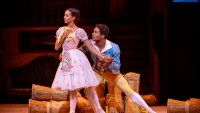
Giselle is my favourite among the 19th-century classics. Blessed with a charming score by the melodically fertile Adolphe Adam and a serviceable but resonant plot, the drama – loosely based on a story by Heine – holds water without being swollen by superfluous divertissements. Its principal characters – the village maiden Giselle and her nobleman-in-disguise seducer Albrecht – are complemented by strongly drawn subsidiary figures: Giselle’s jealous swain Hilarion, her anxiously protective mother and the merciless Queen of the Wilis who presides over Giselle’s afterlife. There’s plenty for the corps to do, as well as a jolly pas de deux in which younger dancers get a chance to shine as merry peasants. And it’s all done and dusted in two acts and less than two hours.

Wonderfully corny: Burlesque, at the Savoy, reviewed

Theatre

Inter Alia, a new play from the creators of Prima Facie, follows the hectic double life of Jess, a crown court judge, played by Rosamund Pike. As a high-flying lawyer with a family to care for, she knows that ‘having it all’ means ‘doing it all’. When not in court, she skivvies non-stop for her indolent husband and her useless son, who telephones her at work to ask why his Hawaiian shirt isn’t in the fridge where he left it. She races home, finds the shirt, irons it back and front, and then starts to prepare supper for eight guests. Husband and son pretend to help by Frisbeeing the dinner plates around the kitchen and tossing pots of taramasalata to each other. A spillage of gunk lands on the kitchen floor and Jess promptly kneels down and wipes it clean.

Why has the world turned on the Waltz King?

Arts feature

On 17 June 1872, Johann Strauss II conducted the biggest concert of his life. The city was Boston, USA, and the promoters provided Strauss with an orchestra and a chorus numbering more than 20,000. One hundred assistant conductors were placed at his disposal, and a cannon shot cued The Blue Danube – the only way of silencing the expectant crowds. Estimates vary, but the audience was reckoned to number between 50,000 and 100,000; in all, there must have been a minimum of 70,000 people present. This month’s Oasis reunion only played to 80,000. The result, in an age before modern amplification, was much as you might expect. ‘A fearful racket that I shall never forget as long as I live,’ was Strauss’s own description. Still, the point stands.

Magnificent: Stevie Wonder at BST Hyde Park reviewed

Pop

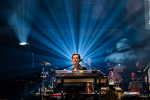
The highs of Stevie Wonder’s Hyde Park show were magnificently high. The vast band were fully clicked into that syncopated, swampy funk, horns stabbing through the synths, the backing singers adding gospel fervour. And Wonder – now 75 – sang like it was still the 1970s, his voice raspy one minute, angelic the next. Anyone who heard that phenomenal group play ‘Living for the City’ or ‘Superstition’ and didn’t feel ‘ants in my pants and I need to dance’, as James Brown once put it, should resign from life: they do not deserve such joy. That said, there were oddities. We were blessed with visits from four of Wonder’s nine children, two of whom were given whole songs to sing while the great man had a breather, as were three of the backing singers.

Irritatingly, Wet Leg’s new album is pretty good

The Listener

Grade: B+ There’s quite a lot to dislike about Wet Leg, even aside from their stupid name. The entirety of their lyrical canon, for starters – vapid and petulant millennial inanities, 50 per cent performative braggadocio, 50 per cent adolescent carping. Or there’s the commodification of their sexualities: they’ve traded up to being bi, just before the market peaks. Or there’s Rhian Teasdale’s frequent, bone-idle recourse to an affected, half-spoken monotone in lieu of, y’know, a tune – that shtick had begun to pall even before the end of their debut single, ‘Chaise Longue’. Or the unremitting chug chug chug of the guitars and the fact that Teasdale sings in the manner of a 16-year-old when she’s actually 32. All this and more.

I watched it between my fingers: Bring Her Back reviewed

Cinema

The Australian twins Danny and Michael Philippou started off as YouTubers known for their comically violent shorts – Ronald McDonald Chicken Store Massacre (2014) has accrued 67 million views. They then raised the money to make their first feature. This was the quietly disquieting Talk To Me (2022), which cost $4.5 million and made $92 million. Bring Her Back (they like three-word imperatives, these lads) is their second and it may not be as successful. It stars Sally Hawkins and this isn’t, alas, horror at its most fun, inventive and camp. This is horror horror: gory, grisly and one that properly goes for it at the end – which, if you are not a horror nut, can’t come soon enough.

A latter-day exercise in Dada: Nature Theater of Oklahoma reviewed

Dance

What to make of the Nature Theater of Oklahoma, which this week made its British debut at the Queen Elizabeth Hall? The bare facts indicate that it’s a ‘crazy shit’ performance group of some repute, the brainchild of Pavol Liska and Kelly Copper, established 19 years ago, based in New York, its weird name taken from Kafka’s unfinished novel Amerika. Beyond that, it’s an enigma. The title of its current show, No President, could suggest that satire of Donald Trump is intended, but if so, quite what is being implied remains obscure to me.

A theatrical one-woman show: Billie Eilish at the OVO Hydro, Glasgow reviewed

Pop

Like spider plants and exotic cats, certain artists are best suited to the great indoors. Lana Del Rey, for instance, proves the point that just because you can sell enough tickets to fill a stadium doesn’t mean you should necessarily perform in one. Some music blossoms in the sun, some ripens in the shadows. Billie Eilish belongs in the latter camp. Even though her biggest hit, ‘Birds of a Feather’, was the most streamed song on Spotify last year and is now approaching three billion listens, and her duet withCharli xcx on ‘Guess’ was another ubiquitous sound of 2024, her appeal remains slightly subversive.

A bland, reverential portrait of a socialist martyr: Nye at the Olivier Theatre reviewed

Theatre

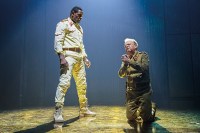
The memory of Nye Bevan is being honoured at the National Theatre. Having made his name as a Marxist firebrand, Nye was quick to take advantage of the privileges enjoyed by the governing classes whom he affected to despise. He entered parliament in 1929 and began to hang around the Commons bar plying female MPs with double gins. His future wife, Jennie Lee, referred to him as a ‘rutting stag’. Was he a serial bed-hopper as well as a problem drinker? It’s hard to tell from this bland, reverential portrait of a socialist martyr. The director, Rufus Norris, adds song and dance routines, requiring the services of two choreographers, as if to suggest that Nye was a gifted crooner with a great pair of pins as well. Is that true? Or just part of the packaging?

A startling inversion of the original opera: The Story of Billy Budd, Sailor in Aix en Provence reviewed

Opera

On the continent this summer, new operas from two of Britain’s most important composers. Oliver Leith likes guns, animals and dissolving sickly sweet sounds in acid baths of microtonality. In one recent orchestral work, the conductor becomes a pistol-wielding madman; his next, Garland, a vast pageant premiering on 18 September at Bold Tendencies, Peckham, sees a horse become a musician. He’s 35 and already has a school. Listen out for it – in the London new-music scene you can’t move for Leithians. The telltale sign is the sound of twisting metal: shiny pitches that warp and bend until brittle. He’s English but in an outsidery way – jokey, gentle, sad, eccentric. The opposite of arch, insidery Benjamin Britten.

Watch the 1978 version instead: Superman reviewed

Cinema

My father took us to the cinema (Odeon, Leicester Square) once a year at Christmas and in 1978 the film was Superman. I remember it vividly, and I remember it as thrilling, but hadn’t seen it since so I rewatched it and it is everything a superhero movie should be, the gold standard. It has wit. It has intelligence. It has charm, humour, warmth. It’s as interested in the person behind the superpower as it is in the superpower itself. It does not mistake spectacle for storytelling. (Superman in all his garb doesn’t even appear until nearly an hour in.) It wasn’t noisy CGI mayhem with nothing else going for it. Like this is. James Gunn’s Superman kicks off a reboot of the entire DC cinematic universe, so there will be plenty more where this came from, alas.

A contradictory staging, but the music floods the ear with splendour: Semele at the Royal opera reviewed

Opera

The past is a foreign country: they do things differently there – and opera directors really, really wish they didn’t. The problem is particularly acute if, like the Royal Opera’s Oliver Mears, you believe in staging Handel’s concert works as if they were operas. Broadly speaking, Handel’s oratorios affirm the moral and political consensus of Hanoverian England – Protestantism, marriage, loyalty to Church and Crown. All deeply uncool now, of course, so when Mears staged Jephtha in 2023 he duly inverted its central premise. The good guys became the bad guys. Unfortunately, Handel missed that production meeting and the result was as incoherent as it was dour. Semele is a slightly different case. Handel is trying something altogether friskier – disarmingly so, at times.

A delight: Sabrina Carpenter at BST Hyde Park reviewed

Pop

We all know, at heart, that economic theories of rational behaviour are rubbish. And that their application ruins so many areas of life. Football supporters, for example, are not ‘customers’; they are supporters. They are at the club before a new owner arrives, they remain there after that owner leaves. In the meantime, they do not make rational decisions. They do not, when QPR are rubbish, pop across west London to support Chelsea, though it might be the economically rational thing to do. Same with pop. I’m a music fan more than I am a customer.

More drama-school showcase than epic human tragedy: Evita reviewed

Theatre

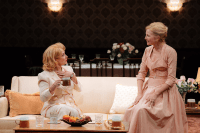
Evita, directed by Jamie Lloyd, is a catwalk version of the Andrew Lloyd Webber musical. The actors perform on the steps of a football stadium where they race through an effortful series of dance routines accompanied by flashy lights and thumping tunes. It’s more a drama-school showcase than an epic human tragedy. There are no interiors, no furnishings and no props – not even a suitcase for ‘Another Suitcase in Another Hall’. Rachel Zegler plays the lead in black pants and a bra from M&S. In Act Two, she changes into a new bra and pants. White this time, with silvery spangles. She looks like a majorette. Why no proper clothing?

No amount of discourse will make a good pop song into a great one

Pop

There is no higher calling than making great pop music, and no mechanism by which such an achievement can be faked or fudged. No lofty exposition, no pleading discourse, no mitigating circumstance, no ifs, buts or boo-hoo back story can bend a piece of so-so music into a great pop song. We simply know one when we hear one. Commentators may gush about Beyoncé’s genre-strafing cultural significance until the cows come home, but it doesn’t alter the plain fact that she hasn’t released a single piece of music in more than a decade that will stand the test of time come pop’s judgment day. ‘Pop’ implies freshness. Fizz. This doesn’t merely apply to the sound of the music, but the speed of delivery. It should be urgent, immediate, endlessly on tap.

The political climate at Glastonbury was not especially febrile

Pop

Everyone who wasn’t at Glastonbury this year knows exactly what it was like: a seething mass of hatred and rabid leftiness, characterised by an angry punk duo named Bob Vylan calling for the death of the IDF. But that’s just the tabloid hysteria talking – betraying also maybe a hint of envy towards those lucky enough to have bagged one of the £400 tickets. The truth is, the political climate was not especially febrile. Sure, the jaunty red, white, green and black of the Palestinian flag was very en vogue, but a few years back it was the blue and yellow of Ukraine and the EU. A few decades before that it was free Tibet. Flags of various communist regimes with questionable human rights records, meanwhile, dip in and out.

Depressingly corny: Quadrophenia, a Mod Ballet, reviewed

Dance

It’s all very well for people like me to sneer at dance makers for drawing on classic rock as a quick way of pulling in the punters, but the trick clearly does the business. Sadler’s Wells was pretty well full on the night I saw Pete Townshend’s Quadrophenia, a concept album that has endured several iterations and rewrites since the recording was first released on vinyl by the Who in 1973. An audience of all shapes and ages seemed to be having a good time, but although there’s nothing disgraceful about the show that director Rob Ashford has overseen, it seemed to me depressingly corny and laboured – a bumpy ride hitched to a creaky old bandwagon.

Brave and beautiful: Longborough’s Pelléas et Mélisande reviewed

Opera

King Arkel, in Debussy’s Pelléas et Mélisande, is almost blind, and he rules over a kingdom of darkness. Debussy’s score is so luminous that it’s easy to forget just how dark it supposedly is, this mythical realm of Allemonde – even despite the libretto’s references to gloomy caves, shadowy castles and forests that block out the sunlight. Many productions take their visual cues from the music rather than the words, providing endless opportunity for shimmering effects and the subtle play of light and shade. Jenny Ogilvie’s staging for Longborough Festival Opera doesn’t just embrace the darkness; it goes all in. Shadows texture the huge, brutalist wall of Arkel’s castle and occasionally – briefly – it’s pierced by shafts of sunlight.

Alfred Brendel was peerless – but he wasn’t universally loved

Classical

In middle age Alfred Brendel looked disconcertingly like Eric Morecambe – but, unlike the comedian in his legendary encounter with André Previn, he played all the right notes in the right order. OK, so perhaps I’m selling the maestro a bit short: I do think Brendel, who died on 17 June at the age of 94, was a peerless interpreter of the Austro-German repertoire, and for a time in the 1970s had a better claim than any other pianist to ‘own’ the Beethoven and late Schubert piano sonatas. But some of the media tributes have been embarrassingly uncritical, implying that Brendel was universally loved. He wasn’t, and he didn’t want to be.

I’ve rarely seen a happier audience: Grange Festival’s Die Fledermaus reviewed

Opera

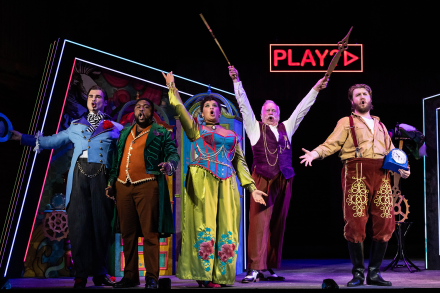
‘So suburban!’ That’s Prince Orlofsky’s catchphrase in the Grange Festival’s new production of Die Fledermaus, and he gets a lot of wear out of it. You couldn’t really describe the Grange Festival as suburban – it’s hard to imagine a corner of the Home Counties that’s more remote from urban civilisation. No, if the vibe at Garsington is plutocratic, and West Horsley is pure Stockbroker Belt, the Grange Festival is definitely county, in a comfy, faded, Aga-and-chintz sort of way. The picnic takes precedence over the opera, and you’ll see evening wear that was new around the time that Alan Coren retired from Punch. Anyway, this lively Die Fledermaus knows its public and wants them to enjoy themselves.

Dua Lipa sparkles at Wembley – but her new album is pedestrian

Pop

If, as is said, there are only seven basic narratives in human storytelling, then there should be an addendum. In rock and pop there is only one: the dizzying rise, the imperial period, the fall from grace (either commercial or ethical, sometimes both), and the noble return (historically prefigured with a glossy music mag cover proclaiming: ‘Booze! Fights! Madness! How Rubbish Band went to hell – and came back’). All three were on view in London this past fortnight. Waxahatchee was the one on the way up: this was, Katie Crutchfield announced proudly from the stage, the ensemble’s biggest-ever show. Dua Lipa was the one entering her imperial phase – her first Wembley headline, with a production to match.

The politics of horror

Arts feature

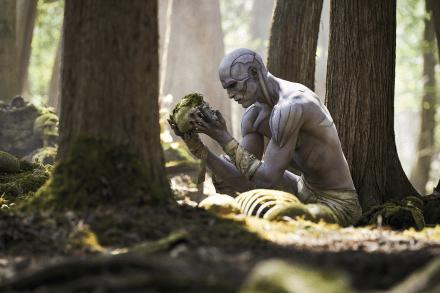
Everyone forgets the actual opening scene of 28 Days Later, even though it’s deeply relatable, in that it features a helpless chimp strapped to a table and forced to watch doomreels of ultraviolence until it loses its little monkey mind and eats David Schneider. But it’s eclipsed by the famous sequence that follows where Cillian Murphy wakes in a hospital bed to find that he has slept through a deadly pandemic and the ensuing collapse of civilisation. As Murphy drags his not-yet-world-famous cheekbones through an eerily abandoned metropolis, we see Piccadilly plastered with the names and faces of the missing and the dead. Audiences in 2002 were reminded of the recent World Trade Centre attacks, which happened in the middle of filming.

Jarvis Cocker still has the voice – and the moves

Pop

For bands of a certain vintage, the art of keeping the show on the road involves a tightly choreographed dance between past and present, old and new, then and now. It’s not a one-way transaction: there should be some recognition that the people you are playing to have also evolved since the glory years of the indie disco and student union. Halfway through the first date of Pulp’s UK tour following the release of More, their first album in 24 years, I started thinking about Withnail & I. Watching the film repeatedly as a young man, the booze-soaked antics of the dissipated ‘resting actor’ and his addled supporting cast seemed like great larks, albeit in extremis.

Astonishing ‘lost tapes’ from a piano great

Classical

These days the heart sinks when Deutsche Grammophon announces its new releases. I still shudder at the memory of Lang Lang’s 2024 French album, in which he drooled over Ravel’s Pavane pour une infante défunte; when I reviewed it I suggested that if the poor girl wasn’t dead when he started, then she certainly was by the time he’d finished. Now she’s been killed again, this time by the guitarist Robin Scherpen, whose Ravel Reimagined offers us ‘a peaceful and serene soundscape’. Then there’s Rêverie from Nemo Filou, a trio whose cocktail-lounge noodling allows ‘the listener to drift off into bliss’, and Sleep Circle, a ‘re-recorded version of the 2012 project Sleep’ by DG’s in-house snoozemeister Max Richter.

The artistic benefits of not being publicly subsidised

Dance

Paralysed rather than empowered by the heavy hand of Big Brother Arts Council, the major subsidised dance companies are running scared and gripped by dismally risk-averse and short-termist attitudes. Free from the deadening metrics of diversity quotas and targeted outcomes, smaller more independent enterprises – London City Ballet and New English Ballet Theatre among them – can be lighter on their feet: they have inherited something of the pioneering spirit of Marie Rambert and Ninette de Valois a century ago and they deserve support. Another such is Ballet Nights – a series of one-off galas masterminded by Jamiel Devernay-Laurence, who doubles up as an embarrassingly brash compère, introducing each performer as though they were contestants at a rodeo. I wish he wouldn’t.