Culture

Culture

The good, the bad and the ugly in books, exhibitions, cinema, TV, dance, music, podcasts and theatre.

The life of Artemisia Gentileschi is made for Netflix, but it’s the art that really excites

Exhibitions

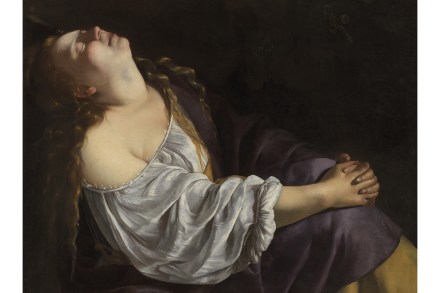
‘It’s true, it’s true, it’s true.’ Over and over she said it. ‘E vero, e vero, e vero.’ It’s true he raped me. It’s true I was a virgin. It’s true all I say. Even under judicial torture, even with cords wrapped around her fingers and pulled tight, she did not waver. ‘E vero.’ These words, spoken by the 17-year-old Artemisia Gentileschi, have come down to us in a trial transcript of 1612. This haunting document, never seen outside the state archives in Rome, will be shown for the first time in the National Gallery’s forthcoming Artemisia exhibition. Artemisia ought to have opened this month. Curator Letizia Treves has been through hell and high water. Italy in lockdown. American flights suspended.

The grisly art of Revolutionary France

Exhibitions

There was a basket of thick red wool and two pairs of large knitting needles at the start of University College London’s cleverly curated exhibition, Witnessing Terror: French Revolutionary Prints 1792–94. Visitors were invited to contribute their own lines of stitches before picking up a copy of A Tale of Two Cities, in which Dickens fictionalised the tricoteuses, the women who gathered around the guillotine knitting and waiting for heads to roll. The first six prints are French portraits of ‘revolutionary martyrs’ ranging from Louis XVI, wearing the bonnet rouge, or red cap of liberty, that was placed on his head when the crowd broke into the Tuileries Palace in 1792, to Robespierre, whose death in 1794 marks the formal, if not actual, end of the Terror.

To ‘review’ such supreme paintings is slightly absurd: Titian at the National Gallery reviewed

Exhibitions

In 1576 Venice was gripped by plague. The island of the Lazzaretto Vecchio, on which the afflicted were crammed three to a bed, was compared to hell itself. In the midst of this horror Tiziano Vecellio, the greatest painter in Europe, died — apparently of something else. He was in his eighties and working, it seems, almost to the end. Titian: Love, Desire, Death, which was briefly on at the National Gallery, before it was closed down this week by our own plague, contained several of the greatest masterpieces of his old age — and also of European art. It comprises just seven canvases, all done for Philip II of Spain — a villain of English history, the man who launched the Armada, but as far as Titian was concerned his most discerning patron.

Every bit as well observed as Rembrandt – and often funnier: Nicolaes Maes reviewed

Exhibitions

Nicolaes Maes (1634–93) relished the simple moments of daily life during the Dutch Golden Age. A woman peeling parsnips over a bowl; a young girl threading a needle; a peasant lugging pails of milk to sell on the doorstep. His paintings are sensitive, not showy, and, as you would expect from a pupil of Rembrandt, rendered with the most exquisite use of light. Maes was apprenticed to the Dutch master for about five years in his teens. He returned to Amsterdam later in life, but worked for two decades in his hometown of Dordrecht, 11 miles southeast of Rotterdam. Several of his paintings, including ‘The Apostle Thomas’ and ‘Christ Blessing the Children’, have wrongly been attributed to Rembrandt over the years.

Strange, sinister and very Belgian: Léon Spilliaert at the Royal Academy reviewed

Exhibitions

The strange and faintly sinister works of the Belgian artist Léon Spilliaert have been compared — not unreasonably — to those of many writers, Edgar Allan Poe among them. But as I walked round the Spilliaert exhibition at the Royal Academy, it was not any of these that came to my mind. It was the Father Brown detective stories by G.K. Chesterton. I wasn’t thinking of the neatly paradoxical plots, but rather of Chesterton’s mastery of atmosphere. Consider The Absence of Mr Glass (1914), which takes place in a ‘desolate’ seaside resort. As Father Brown investigates, ‘…the afternoon was closing with a premature and partly lurid twilight; the sea was of an inky purple and murmuring ominously’.

Slight: Steve McQueen at Tate Modern reviewed

Exhibitions

Steve McQueen’s ‘Static’ (2009) impresses through its sheer directness — and it’s very far from static. A succession of helicopter-tracking shots around the Statue of Liberty, it’s the first film you encounter in this quasi-retrospective from the Turner Prize-winning conceptual artist-turned-Oscar-winning film director. Shot shortly after the monument reopened after the 9/11 attacks, it offers the eye an exhilarating whirl of light and colour, while the mind — given the potency of that historical context — goes on an equally dizzying train of associations through the notion of American liberty. While you bring these associations yourself, they seem to emanate naturally and directly from what you’re seeing.

Pyramids of piffle: Tate Britain’s British Baroque reviewed

Exhibitions

British Baroque: it was never going to fly. Les rosbifs emulating the splendour of le Roi Soleil? Pas possible. Still, we had a go and the evidence is assembled in British Baroque: Power and Illusion, Tate Britain’s survey of the art of the Stuart court from the restoration of Charles II in 1660 to the death of Queen Anne in 1714.

My step-grandmother would have loved this show: Unbound At Two Temple Place reviewed

Exhibitions

My step-grandmother Connie was an inspired needlewoman. For ten years, as a volunteer for the charity Fine Cell Work, she taught embroidery to inmates at HM Prison Wandsworth. She once told me that she was tired of being a ‘committee woman’: ‘I wanted to be down in the arena with the sawdust.’ She believed in rehabilitation, not punishment. She never asked what her pupils had done; she didn’t want to know. All that mattered was finding calm and purpose in the next stitch. Picture her, silver-haired, elegant, teaching her chaps to embroider pheasants, artichokes and, her favourite, pineapples on to cushions. She was a member of the Royal School of Needlework at Hampton Court and one of the embroideresses who remade the Royal Opera House curtain.

Spiralling tributes to air, flight and lift-off: Naum Gabo at Tate St Ives reviewed

Exhibitions

‘Plunderers of the air’, Naum Gabo called the Luftwaffe planes. In Cornwall, during the second world war, Gabo kept cuttings of the attacks over London. One newspaper photo, pasted in his diary, was taken from the Golden Gallery of St Paul’s after a night of incendiary bombs. London looks like Pompeii. Enemy planes were a betrayal. Gabo was entranced by flight. His sculptures are spiralling tributes to air, light and lift-off. After an hour in the Naum Gabo retrospective at Tate St Ives, the first major show of the artist’s work for more than 30 years, you feel a certain springiness about the knees as if you could push off Porthmeor Beach and fly. The Icarus effect. Gabo was entranced by flight.

Dazzling and sex-fuelled: Picasso and Paper at the Royal Academy reviewed

Exhibitions

Picasso collected papers. Not just sheets of the exotic handmade stuff — though he admitted being seduced by them — but any scrap that could inspire, support or become part of an image. He jettisoned muses like there were endless tomorrows but clung on to Métro tickets, postcards, restaurant bills, bottle labels. When the thrill of a muse was gone her creative possibilities were exhausted, but you never knew, with synthetic cubism, when that old Métro ticket might come in handy. In a garret he would have had a hoarding problem. ‘Picasso throws nothing away,’ reported one lover. There was no filing system: a photograph in the exhibition shows a bulldog-clipped bunch of correspondence hanging from the ceiling at rue des Grands-Augustins.

Enchanting but outrageously expensive: Tutankhamun reviewed

Exhibitions

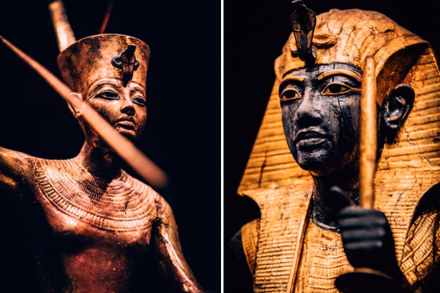
Like Elton John, though less ravaged, Tutankhamun’s treasures are on their final world tour. Soon these 150 artefacts will return permanently to Egypt. Nearly a century after Howard Carter disrupted their 3,000-year rest in the Valley of the Kings, they are to be retombed in the new Grand Egyptian Museum in Giza. But first they undergo their final ordeal, an outing in London. The genius of the Saatchi show, curated by Tarek El Awady, is to simulate the trials the pharaoh’s mummified corpse endured in the netherworld. After having his brain pulled out through his nose, Tutankhamun had to pass through 12 gates guarded by snakes, crocodiles, vultures and supernatural beasts.

Why did David Bomberg disappear?

Exhibitions

David Bomberg was only 23 when his first solo exhibition opened in July 1914 at the Chenil Gallery in Chelsea. ‘I am searching for an Intenser expression,’ the brash young painter wrote in the introduction to the catalogue. ‘I hate… the Fat Man of the Renaissance.’ As if to advertise his radical intentions, the first work in the exhibition, the strikingly geometric ‘The Mud Bath’, was hung outside the gallery, facing the street. Bomberg was endowed with a self-belief bordering on conceit. Born in 1890, the fifth of 11 children of Polish-Jewish immigrants, he spent his childhood in the overcrowded slums of Birmingham and east London.

The forgotten masterpieces of Indian art

Exhibitions

As late as the end of the 18th century, only a handful of Europeans had ever seen the legendary Mughal capital of Delhi, which, within living memory, had been the largest, richest and most spectacularly beautiful city on earth, twice the size of London and Paris combined. But after a century of anarchy, Delhi was not what it once was. By 1805, it lay half-ruined and sparsely populated, ruled by a blind Emperor from a crumbling palace. Delhi’s ruins bewitched the young artist James Baillie Fraser when he arrived in the 1810s from Calcutta. Fraser was already planning two series of aquatints, one on Calcutta, the other of the Himalayas.

To fill a major Tate show requires a huge talent. Dora Maar didn’t have that

Exhibitions

Dora Maar first attracted the attention of Pablo Picasso while playing a rather dangerous game at the celebrated left-bank café Les Deux Magots. She ‘kept driving a small pointed penknife between her fingers into the wood of the table’. From time to time she missed, and a drop of blood appeared on her gloves. This alarming form of digital Russian roulette was the basis for an early work by the performance artist Marina Abramovic, who will be featured at a major show at the Royal Academy next autumn. There is nothing so arresting in the large exhibition devoted to Maar’s work at Tate Modern as the images of the artist herself, and not only those by Picasso. There are some individuals who have an impact on the arts through sheer force of personality.

A museum-quality car-boot sale: V&A’s Cars reviewed

Exhibitions

We were looking at a 1956 Fiat Multipla, a charming ergonomic marvel that predicted today’s popular MPVs. Rather grandly, I said to my guide: ‘I think you’ll find the source of the Multipla in an unrealised 1930s design of Mario Revelli di Beaumont.’ He looked a bit blank. This exhibition is a rare attempt to explain the car, perhaps the most dramatic since the Museum of Modern Art’s 1951 New York show where Philip Johnson coined the term ‘rolling sculpture’. It is both occasionally brilliant and continuously exasperating. Rather as if in a crowded restaurant you are overhearing snatches of fascinating conversation coming from different tables. The context is significant. The V&A and the Science Museum were only separated in 1909.

Remarkable and imaginative: Fitzwilliam Museum’s The Art of Food reviewed

Exhibitions

Eating makes us anxious. This is a feature of contemporary life: a huge amount of attention is devoted to how much we eat, when we eat it, where it comes from, to toxic foods, organic and inorganic ones, environmentally damaging groceries, those that tot up too much mileage or cause damage to the rainforest. Some of these worries are relatively novel, but preoccupation with the nourishment we consume is not. A remarkable and imaginative exhibition at the Fitzwilliam Museum, Cambridge, Feast & Fast: The Art of Food in Europe, 1500–1800, documents just how obsessed our ancestors were with every aspect of their meals. At its heart are a series of recreations by Ivan Day, a specialist on the subject of what can only be described as edible art.

The extraordinary paintings of Craigie Aitchison

Exhibitions

One of the most extraordinary paintings in the exhibition of work by Craigie Aitchison at Piano Nobile (96–129 Portland Road, W11) is entitled ‘Georgeous Macauley in Blue against a Red Background’ (1968). It depicts the sitter, a Nigerian who was Aitchison’s favourite model of the 1960s and ’70s, wearing a peaked cap and double-breasted jacket. The catalogue quotes a reminiscence by the artist which provides a partial explanation of the headgear. ‘He wanted to be a traffic warden, and I said, “Why do you want to go about in the rain doing that?” And he said, “Because you get a uniform.”’ The art and life of Aitchison (1926–2009) were all like that: perfectly logical and at a unexpected tangent from normality.

John Flaxman is the missing link between superhero movies and Homer

Exhibitions

As you enter the forecourt of the Royal Academy, you see them. A row of artistic titans, carved in stone, peer down from their alcoves in the higher half of the gallery’s façade. Thanks to the name plaques, they’re easily identified. You can see Pheidias, the genius of the Parthenon; Leonardo and Raphael; Sir Christopher Wren. And then there’s… John Flaxman. Who? That’s a completely legitimate question. If these guys are, so to speak, the Avengers of art history, then Flaxman is the equivalent of Hawkeye. Hell, maybe he’s Agent Coulson. Even on his plinth, he has a mildly apologetic air. Under a bald pate, his hair hangs down in curly curtains. His hand, clutching a chisel, crosses his chest self-deprecatingly.

The truth about food photography

Exhibitions

While looking at the photographs of food in this humorous exhibition at the Photographers’ Gallery, I thought of how hopelessly outdated our own snaps will soon look. What seems fresh, clean and wonderfully modern to our eye — an Ottolenghi salad, say, dotted with pomegranate seeds and za’atar — will soon look almost tragic. How we photograph food betrays some of our deepest fantasies about ourselves. What’s more, good taste can quickly sour. Feast for the Eyes brings together food photography from the 19th century up to the present day and reveals just how much our attitudes to food change. At first, photographers emulated the principles of still- life painting, using symbolic gatherings and classical references.

The beauties of the universe are revealed in the paintings of Pieter de Hooch

Exhibitions

In the early 1660s, Pieter de Hooch was living in an area of what we would now call urban overspill surrounding the commercial boom town of Amsterdam. It wasn’t the best of neighbourhoods. Nearby was a little street nicknamed ‘whorehouse alley’ (het hoerenpad). Tanners plied their trade thereabouts, which involved soaking hides in urine. But smells and sounds are not necessarily recorded in pictures, and in this 17th-century version of affordable housing, De Hooch painted images of utter domestic tranquillity. One such picture, ‘A Mother’s Duty’ (c.1658–60), is among the star exhibits in a delightful little exhibition of De Hooch’s work at the Museum Prinsenhof, Delft.

You’ll be blubbing over a wooden boulder at David Nash’s show at Towner Art Gallery

Exhibitions

Call me soppy, but when the credits rolled on ‘Wooden Boulder’, a film made by earth artist David Nash over 25 years, I was blinking back tears. Funny what the mind will make human. Within a few minutes I started to think of Nash’s boulder, hewn from a storm-struck oak in the Ffestiniog valley in Wales, as ‘the hero of our story’. A hefty hero, weighing half a tonne, but buoyant. In October 1978, Nash launched the boulder into the Bronturnor stream near his studio at Capel Rhiw in the slate-mining village of Blaenau Ffestiniog in Snowdonia. For 25 years, switching from crackling film to high-def digital, Nash filmed the boulder, through snow, rain, heat and gloom of night, as it made its way downstream. Mired, moored, marooned on an inland sea.

A cast of Antony Gormley? Or a pair of giant conkers? Gormley’s RA show reviewed

Exhibitions

While Sir Joshua Reynolds, on his plinth, was looking the other way, a little girl last Saturday morning was trying to prise a littler sculpture from the pavement of the Royal Academy’s courtyard. For all its tininess — from a distance the sculpture’s curvy lumps, 12 x 28 x 17cm, resemble horse droppings a security guard might dig into their rose bed — she couldn’t shift it. ‘Iron Baby’ (1999) is a solid iron cast made by Sir Antony Gormley of his six-day- old daughter abased before the Enlightenment temple of art, buttocks facing Piccadilly in eloquent critique. But for the Instagramming hordes, you might step over her heedlessly on the way to the exhibition, a survey of Gormley’s works from the late 1970s to today.

The rare gifts of Peter Doig

Exhibitions

‘My basic intention,’ the late Patrick Caulfield once told me, ‘is to create some attractive place to be, maybe even on the edge of fantasy — warm, glowing, but often, by use, rather seedy.’ He frequently succeeded, as you can see from a beautifully mounted little exhibition at the Waddington Custot Gallery. It is a reminder of what a witty and inventive artist Caulfield (1936–2005) could be. Four screen prints from 1971, ‘Interior: Morning, Noon, Evening and Night’, give a virtuoso display of the visual legerdemain he could work using the simplest of props. These all have the same basic design: a window frame, consisting of thick, black lines, with a lampshade dangling in front of it.

Whooshing seedlings and squabbling stems: Ivon Hitchens at Pallant House reviewed

Exhibitions

Set down the secateurs, silence the strimmers. Let it grow, let it grow, let it grow. Ivon Hitchens was a painter of hedgerow and undergrowth, bracken and bramble. Whoosh! go his seedlings, sprouting, bolting, demanding repotting. The first Hitchens you see on the wall outside this exhibition at Pallant House is his lithograph ‘Still Life’ (1938). A squabble of stems break bounds, vault the vase, bid for freedom. I’m a wildflower, get me out of here. ‘I love flowers for painting,’ Hitchens said. ‘Not a carefully arranged bunch such as people ought not to do — but doing a mixed bunch in a natural way.’ If his posies were ever bridal bouquets they have long since been thrown, trampled, sat on by an usher and shoved in an ice bucket to revive.

Why was Sigmund Freud so obsessed with Egypt?

Exhibitions

Twenty years ago, I visited the ancient Egyptian city of Amarna with a party of American journalists. Even in those days this place, near Asyut on the Middle Nile, was regarded as a dodgy destination for western tourists. As a tribute to the value of an entire CBS television crew as a terrorist target, we were accompanied by a squad of heavily armed, black-clad Egyptian special forces. But the sense of daring adventure was dented when, shortly after arriving at the ruins, we were joined by a couple of intrepid Germans who had come in a taxi. The Germanic world has long been fascinated by Amarna and its ruler, the pharaoh Akhenaten — which is why many of the best finds from the place are in Berlin — and none more so than the founder of psychoanalysis.

Canine connoisseurs

Exhibitions

Stepping into any art gallery, the last thing you expect to be greeted by is a cacophony of barking and wet noses on your knee. This, however, was the welcome I received at the current exhibition at Southwark Park Galleries. Dog Show is, as the name suggests, about dogs. Not just about dogs, though; each of the works has been chosen by a dog — or, as they put it, a canine curator. ‘We’ve never asked dogs about their opinions on art, even though some dogs see an awful lot of it,’ explains Judith Carlton, director of Southwark Park Galleries. Well yes; it’s most likely true that no one has ever asked dogs for their thoughts on art, but there’s probably a reason for that.

What’s in a name? | 8 August 2019

Exhibitions

Perhaps we should blame Vasari. Ever since the publication of his Lives of the Artists, and to an ever-increasing extent, the world of art has been governed by the star system. In other words, the first question likely to be asked about a painting or sculpture is whodunit? And if the answer turns out to be, not Leonardo da Vinci — as has been suggested in the case of the controversial ‘Salvator Mundi’ — then the price tag becomes enormously smaller. Does this matter? Artist Unknown, a little exhibition at Kettle’s Yard, Cambridge, investigates the case of the anonymous work.

Modern sublime

Exhibitions

Superficially, the Olafur Eliasson exhibition at Tate Modern can seem like a theme park. To enter many of the exhibits, you have to queue. The average age of the crowds in the galleries is much lower than it might be at, say, the RA. And most visitors keep their phones permanently ready to snap a selfie — which isn’t really what the artist has in mind. He wants you to concentrate on a reaction that is internal and unphotographable. Eliasson — as the title of the show, In real life, might suggest — offers sensory experiences.

Joining the tea set

Exhibitions

It had to happen. Since almost everything became either ‘artisan’ or ‘curated’, conditions have been ripe for a curator of artisan teas. And sure enough, if you Google ‘tea curator’ you’ll find one promising regular infusions of ‘a curated selection of single-origin, artisan teas’. Now Compton Verney has done the sensible thing and curated an exhibition about the stuff. The starting point of A Tea Journey: from the Mountains to the Table is a copy of a painting by Johan Zoffany showing John Peyto-Verney, 14th Baron Willoughby de Broke, taking tea with his wife and three daughters around a tray loaded with Chinese porcelain, overlooked by a gigantic silver tea urn.