Culture

Culture

The good, the bad and the ugly in books, exhibitions, cinema, TV, dance, music, podcasts and theatre.

At her best when lightly ruffling the surfaces of things: Cornelia Parker, at Tate Britain, reviewed

Exhibitions

Cornelia Parker wasn’t born with a silver spoon in her mouth, but when she was growing up her German godparents sent her a silver spoon or fork every birthday. She seems to have had a thing about silverware ever since. She used to sell it on Portobello Market, and it formed the basis of her first large installation. ‘Thirty Pieces of Silver’ (1988) could be viewed as an elegy to the fish knife and all those other superannuated aids to aspirational dining whose genteel functions are now all but forgotten – salvers, sauceboats, toast racks, sugar tongs and those scalloped silver shells holding coils of butter beaded with condensation from the fridge – if it wasn’t in practice a mass grave.

The women’s lips are pursed; the men’s are kissable: Glyn Philpot at Pallant House reviewed

Exhibitions

Of all the photos of artists in the studio, the one of Glyn Philpot being served a martini by his white-jacketed Jamaican model Henry Thomas must be the strangest. Taken to publicise his 1934 exhibition, it would be unthinkable now but in the circles Philpot moved in at the time it might, I suppose, have been viewed as cool. For 20 years Philpot had been London’s leading portraitist, a position he inherited from Sargent. His sitters included admirals – four during the first world war – and King Fuad of Egypt, who commissioned a ‘dignified, decent, usual and rather sumptuous’ portrait from the 38-year-old artist for £3,000 in 1923, the year he was elected an RA. It was not his best work.

Nobody paints the sea like Emil Nolde

Exhibitions

In April, ten years after opening its gallery on the beach in Hastings, the Jerwood Foundation gifted the building to the local borough council. Thrown in at the deep end without a permanent collection, Hastings Contemporary, as it is now known, has to sink or swim on the strength of its exhibition programme. How to please local audiences while attracting outsiders? For a seaside gallery, nautical themes are an obvious answer: this summer’s offering is Seafaring, a dip into two centuries of maritime art from Théodore Géricault to Cecily Brown. What’s the worst that can happen? Shipwreck. The show opens with three recent canvases by Brown inspired by romantic paintings of the subject.

A mess: British Museum’s Feminine Power – the Divine to the Demonic reviewed

Exhibitions

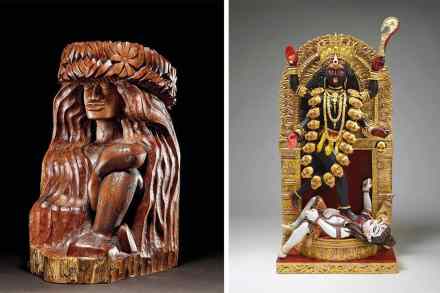
The point at which the heart sinks in this exhibition is, unfortunately, right at the outset. That’s where we meet the five commentators that the British Museum has invited to respond to the objects and ideas in the exhibition. But only Mary Beard knows her subject. There’s Bonnie Greer, playwright and critic; Elizabeth Day, podcaster and novelist; Rabia Siddique, humanitarian (that’s a calling, it seems) and barrister; and Deborah Frances-White, podcaster and stand-up comedian. Each presides over part of the exhibition, which is ordered by categories such as Passion and Desire and Magic and Malice. It’s an odd exercise.

A brief introduction to Scottish art

Exhibitions

When Nikolaus Pevsner dedicated his 1955 Reith Lectures to ‘The Englishness of English Art’, he left out the Scots. The English art establishment has never bothered with what was going on north of the border, which explains, though doesn’t excuse, the underrepresentation of Scottish art in the Tate’s so-called national collection. This leaves a gap in the story of British art that the Fleming Collection has set out to fill. Since its reinvention as a ‘museum without walls’ by director James Knox – a former publisher of this magazine – the best collection of Scottish art outside a public gallery has gone on the road.

The jewel-bright, mesmerisingly detailed pictures by Raqib Shaw are a revelation

Exhibitions

Describing the Venice Biennale, like pinning down the city itself, is a practical impossibility. There is just too much of it, tucked away, scattered throughout the maze of alleyways and canals. And the art is no longer confined to the Biennale’s national pavilions in the gardens. It has spread, via dozens of tagalong shows cashing in on the presence of the global art world, to a motley array of disused palaces, warehouses, churches, at least one shop and a hidden garden loggia. A good way to sample it is just to follow your fancy: step through an ancient doorway and find out what is on the other side. That’s how I came across a little show by the Swiss artist Ugo Rondinone in the venerable Scuola Grande di San Giovanni Evangelista.

Fascinating exhibitions – clunky editorialising: Breaking the News at the British Library reviewed

Exhibitions

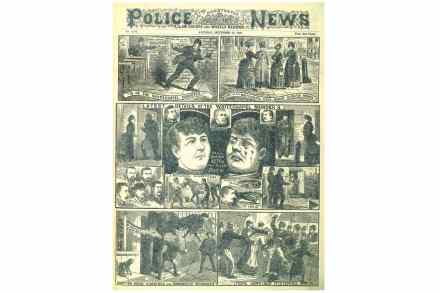
In The Spectator office’s toilets there are framed front covers of the events that didn’t happen: Corbyn beats Boris; ‘Here’s Hillary’; Jeremy Hunt wins the Tory leadership contest. The British Library has something similar at its Breaking the News exhibition. The difference is that these ones actually made it to the newsstand. It’s enough to make any passing journalist break into a sweat. ‘Titanic sinks, no lives lost’, reported the Westminster Gazette in April 1912; ‘King Louis XVI dodges the guillotine’, we are told in the 1793 issue of the London Packet. The Sunday Times’s 1983 Hitler diaries hoax appears in this hall of infamy.

Evocative tribute to the orphaned caped crusader: Superheroes, Orphans & Origins at the Foundling Museum reviewed

Exhibitions

Instead of wasting money, like other museums, on extravagant architectural statements, the Foundling Museum in Brunswick Square has sensibly chosen to welcome visitors with a written statement. In 2014 it commissioned the poet Lemn Sissay, who spent his teenage years in a children’s home, to create a memorial in its entrance hall to the many parentless heroes and heroines in fiction. ‘Heathcliff was a foundling… Harry Potter was fostered… Dorothy Gale was adopted… James Bond was fostered…’ The list goes on, running to more than 100 names. Sissay’s mural will trigger a lightbulb moment for any dimwit like me who has failed to notice this narrative trope – and there are further revelations in the show downstairs.

The exquisite pottery of Richard Batterham

Exhibitions

Richard Batterham died last September at the age of 85. He had worked in his pottery in the village of Durweston near Blandford Forum in Dorset for 60 years continuously. It was, in its own way, an heroic life. Batterham took an astonishingly pure, austere approach to his work. Quite simply, he undertook every part of the process of making himself. He made his own stoneware clay bodies, arguing that those who used bought-in clay missed out on the beginning of the whole process and were mistaken to think that they could just inject their artistry at a later stage. He threw his pots on an archaic kick-wheel. He did not decorate them, save by working the clay itself by incision, flutings and chatterings, to shape the piece and catch and display the glaze.

Exquisite and deranged: two glass exhibitions reviewed

Exhibitions

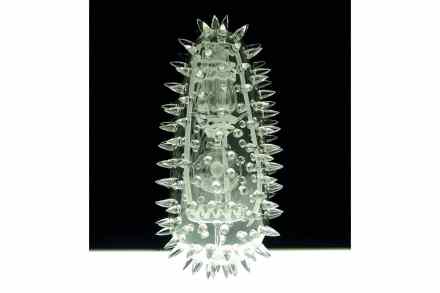
A ‘Ghost Shop’ has appeared between Domino’s Pizza and Shoe Zone on Sunderland High Street. Look through the laminated window glass and you’ll see more glass: glass shop fittings, a glass cheese plant, a glass pedal bin spilling disposable glass cups, glass chocolate wrappers and glass betting slips littering the floor. Ryan Gander likes the fact that there’s no explanation of his see-through betting shop: ‘If you tell everyone it’s a contemporary art project, they’d run away.’ Gander is one of four artists commissioned by Sunderland’s National Glass Centre to make works inspired by the history of the north-east.

It’s a miracle this exhibition even exists: Audubon’s Birds of America reviewed

Exhibitions

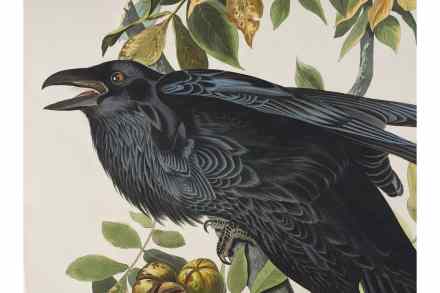
In 2014, an exhibition of watercolours by the renowned avian artist, John James Audubon, opened in New York. The reviews, from the New York Times to the Guardian, were unambiguously enthusiastic, celebrating the painter as a legendary genius who ‘exceeded the limits of his era’. Fast forward eight years, and a rather different vibe hangs over the latest outing of his bird portraits, one that reflects both the limits of that era and the limits of the man. Visitors to the National Museum of Scotland’s Audubon’s Birds of America are welcomed with an acknowledgment that the artist was ‘full of contradiction and controversy’. His charge sheet is substantial.

Fails to dispel the biggest myth of all: Whitechapel Gallery’s A Century of the Artist’s Studio reviewed

Exhibitions

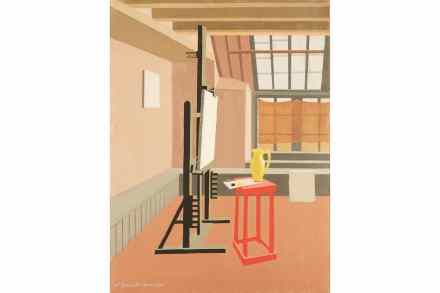
Picture the artist’s studio: if what comes to mind is the romantic image of a male painter at his easel in a grand interior with an admiring audience and a nude model at his elbow, you’re in the wrong century for the Whitechapel Gallery. Its new exhibition, A Century of the Artist’s Studio, runs from 1920 to 2020, and there’s precious little romance about it. To be honest, the studio was never that romantic; Gustave Courbet’s ‘The Artist’s Studio’ (1855), the main source of the stereotype, was itself a send-up. The Whitechapel’s show sets out to complete Courbet’s work, dismantling the myth cliché by cliché.

Valuable reassessment of British art: Barbican’s Postwar Modern reviewed

Exhibitions

Notoriously, the past is another country: what’s more, it’s a terrain for which the guidebooks need constantly to be rewritten. That’s one attraction of the new exhibition Postwar Modern at the Barbican. It’s a survey of what might seem all-too-familiar territory: British art in the two decades that followed VE day. Yet it succeeds in revealing numerous half-forgotten or undervalued movements and people, the good, the bad and – most intriguingly – candidates for reassessment. The decades that followed the second world war were marked by dreary austerity, perhaps explaining the tendency for the art to be coloured oatmeal, beige, grey and brown. But this was also a time of dawning hope, increasing prosperity and growing optimism.

Renaissance radical: Carlo Crivelli – Shadows on the Sky at Ikon Gallery reviewed

Exhibitions

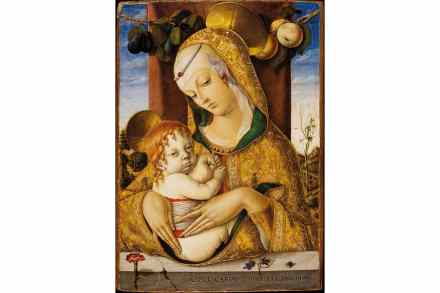
‘Camp,’ wrote Susan Sontag, ‘is the paintings of Carlo Crivelli, with their real jewels and trompe-l’oeil insects and cracks in the masonry.’ She didn’t even mention the renaissance painter’s curious cucumber fetish. Nor the unwittingly comedic homoeroticism of his portrait of Saint Roch, one stocking rolled down coquettishly to reveal a decorous inner-thigh wound. Nor the extraordinarily ugly baby Jesus clutching an apple as big as his head while his mother, understandably, averts her eyes. ‘Camp is playful, anti-serious,’ argued Sontag. Sontag wasn’t alone in not taking Crivelli (c.1430–95) seriously.

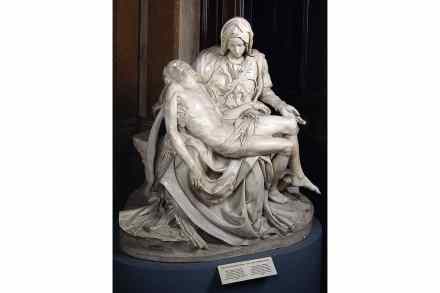
Beautiful and revealing: The Three Pietàs of Michelangelo, at the Museo dell’Opera del Duomo, Florence, reviewed

Exhibitions

The room is immersed in semi-darkness. Light filters down from above, glistening on polished marble as if it were flesh. This is the installation for Le Tre Pietà, a remarkable micro-exhibition that has just opened at the Museo dell’Opera del Duomo in Florence. It is low in quantity, containing just three works. But stratospherically high in quality, since it comprises Michelangelo’s three versions of the Pietà – that is, the Madonna mourning the dead Christ. He carved these over almost 70 years: one in his early twenties, the next in his seventies, the last in his eighties. Admittedly, the first and the last are present only in a rather old-fashioned virtual form: high-quality plaster casts.

How good is he? Pissarro: Father of Impressionism, at the Ashmolean Museum, reviewed

Exhibitions

Two markers: ‘Cottages at Auvers-sur-Oise’ (c.1873) is a sweet especial rural scene of faintly slovenly thatched cottages with, at its centre, an outside privy, its door modestly shut. A discreet little detail. Second, early in the exhibition, Corot’s ‘Duck-Pond’ (1855–60), an indicator of the tradition to which Pissarro belongs — a world of unconsidered trifles, granted a quiet importance. Linda Whiteley’s excellent, informative catalogue essay quotes Pissarro on Corot: ‘Happy are those who see beauty in modest places where others see nothing. Everything is beautiful, the whole secret lies in knowing how to interpret.’ He is writing this credo to his son Lucien in 1893.

Part-gothic horror, part-Acorn Antiques: Louise Bourgeois, at the Hayward Gallery, reviewed

Exhibitions

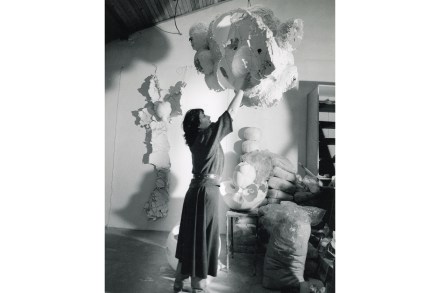
Louise Bourgeois was 62 and recently widowed when she first used soft materials in her installation ‘The Destruction of the Father’ (1974). The father in question was not her American late husband Robert Goldwater, the father of her children, but her own French father Louis Bourgeois, long deceased. Set in a space evoking the interior of a digestive tract, the installation’s centrepiece was a table bearing the remains of an imagined feast at which Louise and her brother had eaten their dominating father after dismembering him and cutting off his penis. You have been warned. There is nothing soft about Bourgeois’s soft sculptures, though — on the evidence of the Hayward’s new exhibition of her late textile works —they did soften with age.

Astonishing and gripping: Van Gogh’s Self Portraits at the Courtauld reviewed

Exhibitions

In September 1889, Vincent van Gogh sent his brother Theo a new self-portrait from the mental hospital at Saint-Rémy-de-Provence. ‘You must look at it for some time,’ he instructed, then ‘you’ll see, I hope, that my physiognomy has grown much calmer, although the gaze may be vaguer than before, so it appears to me.’ Vincent was severely ill and was in the hospital to recover from his affliction, the nature of which remains controversial. Yet he carried on creating marvellous pictures, including several of himself. One of the questions raised by Van Gogh. Self-Portraits, the wonderful exhibition at the Courtauld Gallery, is simple but fundamental: why? We take it as a given that artists depict themselves; but some never do, and others only rarely.

The fascination of house fronts: Where We Live at Millennium Gallery reviewed

Exhibitions

Paintings of houses go back a long way in British art: the earliest landscape in Tate Britain is a late 17th-century view of an estate in Belsize Park by the inventor of the country-house portrait, Jan Siberechts. The genre quickly became déclassé. By the 18th century Thomas Gainsborough was painting peasant cottages; by the 20th, Algernon Newton had turned his attention to middle-class villas on London’s canals. Not made for the owners of the houses they depicted, these paintings were destined to decorate the walls of strangers: the householders might not even know the pictures had been ‘taken’. A commissioned house portrait has legitimacy; a non-commissioned one feels like an invasion of privacy.

An ouroboros of vacuity that is immune to its own failure: Kaws online at the Serpentine Gallery

Exhibitions

The second most interesting thing about this digital exhibition is that it is not for art critics like me. I first had to download Fortnite, before bumbling through the introductions and menus for roughly half an hour, accidentally playing a match for a few minutes before figuring out how to access the ‘island’ in the game where one sees the exhibition. Once inside, Kaws’s usual character statues and cartoonish abstractions looked much worse than the photos online because my utilitarian laptop doesn’t have the processing power to run the game at high resolution. Needless to say, the recreation of the gallery space in the game is nothing like being in a gallery.

Ethereal and allusive, all nuance and no schmaltz: Helen Frankenthaler, at Dulwich Gallery, reviewed

Exhibitions

In 1950 the 21-year-old painter Helen Frankenthaler, fresh out of college, went to an exhibition at New York’s Betty Parson’s Gallery that changed her whole perspective on art. ‘It was as if I suddenly went to a foreign country,’ she later recalled. ‘I wanted to live in this land; I had to live there, and master the language.’ The language was in fact American and the discoverer of the new land was Jackson Pollock. After seeing his drip paintings Frankenthaler ditched her easel and, too impatient to bother with primer, applied oil paint straight on to canvas on the floor. The oil sank into the canvas, isolating the pigment on the surface; when thinned with turps, the paint acquired the transparency of watercolour.

A show of ample and eerie majesty: British Museum’s Peru: A Journey in Time reviewed

Exhibitions

Growing up on a farm outside Lima, I was aware that indigenous Peruvians did not understand time in the same way that their white countrymen did. On our visits to the highlands, we would encounter a very different mode of thinking. Ask an Andean villager where the next settlement was and you’d be told, ‘aquisito no más’ — just over here. Whether ‘aquisito’ meant around the next bend or four days’ schlep across the mountains was, for aboriginal people, a meaningless question. They were not ruled, as their European-descended neighbours were, by clocks. You’d sometimes see Quechua-speaking herdsmen sitting motionless for so long that they seemed to have switched off and become part of the landscape.

Ignore the wall text and focus on the magnificent paintings: Tate Britain’s Hogarth and Europe reviewed

Exhibitions

There are, perhaps, two types of exhibition visitor. Those who read the texts on the walls and those who don’t. Personally, I instinctively tend towards the latter group, which is no doubt often my loss. In the case of Hogarth and Europe at Tate Britain, however, ignoring all the verbiage would be a huge advantage. This concentrates with anxious obsessiveness on the topics of empire and slavery (with a little condemnation of sexism on the side) and has infuriated several of my colleagues: ‘wokeish drivel’ (Sunday Times), ‘non-aperçus — which range from the crass to the asinine’ (New Statesman), ‘some quite drastic misreadings’ (Observer). Well, I’m not going to dissent from any of those judgments.

His final paintings are like Jackson Pollocks: RA’s Late Constable reviewed

Exhibitions

On 13 July 1815, John Constable wrote to his fiancée, Maria Bicknell, about this and that. Interspersed with a discussion of the fine weather and the lack of village gossip, he added a disclaimer on the subject posterity would most like to hear about: his art. ‘You know that I do not like to talk of what I am about in painting (I am such a conjuror).’ Perhaps by that he meant he did not like to give away how he did his tricks. As Late Constable, the magnificent exhibition currently at the Royal Academy, makes clear, he was a true magician with paintbrush and palette. Before your eye he performs astonishing transformations. Take, for example, the little oil sketch ‘Rainstorm over the Sea’, c.1824–8. It’s a picture of a sudden squall.

Small but perfectly formed: the Royal College of Music Museum reopening reviewed

Exhibitions

Haydn is looking well — in fact, he’s positively glowing. The dignified pose; the modest, intelligent smile: it’s only when you squint closely at the portrait that Thomas Hardy painted in London in 1791 that you clock the full peachy-pink smoothness of his complexion. It’s curious, because Haydn suffered disfiguring smallpox as a child, and a contemporary waxwork bust in Vienna is cratered like a moon in a periwig. Hardy’s portrait is a promotional image, commissioned by the music publisher John Bland. This is the Georgian equivalent of a celebrity headshot: a photoshopped, endlessly-reproduceable selling tool, so potent that it’s still being used to shift recordings 230 years later. Well, of course it is.

Paintings dominate – the good, the bad and the very ugly: Frieze London 2021 reviewed

Exhibitions

There’s a faint scent of desperation wafting through the Frieze tent this year. Pre--pandemic, this was where you came to see gallerists and artists at the top of their game, knocking back the Moët with collectors to toast another big-ticket sale. But it’s been a tough few years. No art fairs, paltry sales and now there’s a limit on visitor numbers to the fair and travel restrictions are keeping international buyers at bay. So, wandering around the gleaming alleys of the fair, you feel like prime meat being eyed by starving lions. Sadly for them, my bank account is more spam than filet mignon. The first visual thing that hits you about Frieze London 2021 is the near overwhelming amount of painting.

The frisky side of a classical master: National Gallery’s Poussin and the Dance reviewed

Exhibitions

In the winter of 1861, visitors to the Louvre might have seen a young artist painstakingly copying one of the museum’s 39 paintings by Poussin. The subject was ‘The Abduction of the Sabine Women’ and the artist was the 27-year-old Edgar Degas, then at work on his own classical battle of the sexes, ‘Young Spartans’. Although lumped with the impressionists, Degas was a classicist at heart. ‘The masters must be copied over and over again,’ he believed, ‘and it is only after proving yourself a good copyist that you should reasonably be permitted to draw a radish from nature.’ A dedicated copyist himself, Poussin would have approved.

The genius of Frans Hals

Exhibitions

Since art auctions were invented, they have served to hype artists’ prices. It can happen during an artist’s lifetime — Jeff Koons’s ‘Balloon Dog’ — or half a millennium after their death — Leonardo’s ‘Salvator Mundi’. And it can sometimes restore a lost reputation, as happened with Frans Hals. When the picture now famous as ‘The Laughing Cavalier’ came up for auction in Paris in 1865, Hals was all but forgotten. A successful portraitist in his lifetime, he never made much money — with a wife and at least ten children, he remained a renter throughout his career — and after his death his reputation, overshadowed by Rembrandt’s, was tarnished by claims that he was a piss artist.

Fortifying snapshot of the gardener’s year: Saatchi Gallery’s RHS Botanical Art show reviewed

Exhibitions

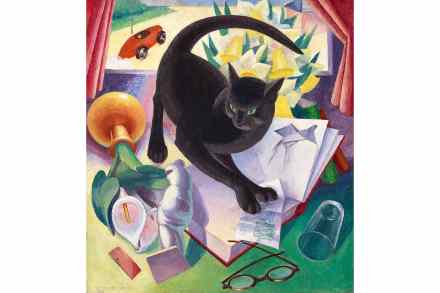
Elizabeth Blackadder, who died last month at the age of 89, was probably the most distinctive botanical artist of our time. Her paintings of lilies and irises, of cats poking their heads imperiously between poppies and freesias, are more alive than any such chocolate-box description could convey. The first woman to be elected to both the Royal and the Royal Scottish academies, Blackadder showed that botanical painting did not need to be twee and parochial. It could be as vibrant and interesting as narrative. The 15 artists and 19 photographers participating in this year’s Royal Horticultural Society exhibition at the Saatchi Gallery follow in Blackadder’s tradition.