Culture

Culture

The good, the bad and the ugly in books, exhibitions, cinema, TV, dance, music, podcasts and theatre.

The yumminess of paint

Exhibitions

‘Painting has always been dead,’ Willem de Kooning once mused. ‘But I was never worried about it.’ The exhibition Mixing It Up: Painting Today at the Hayward Gallery is crammed with work by 31 artists who likewise don’t allow the allegedly moribund state of their medium to keep them away from pigments and palette. This is well worth a visit, not only to see such good things as ‘Hold the Right Rail’ by the 87-year-old Rose Wylie, containing a patch of yellow curtain that somehow holds the eye and stays in the memory; the kind of magic that paint can work like nothing else. Elsewhere there is plenty of evidence on show of ebullient pleasure in the material itself, whether thick or thin, loose and free or applied with a delicate touch.

Deserves to be much better known: Sophie Taeuber-Arp at Tate Modern reviewed

Exhibitions

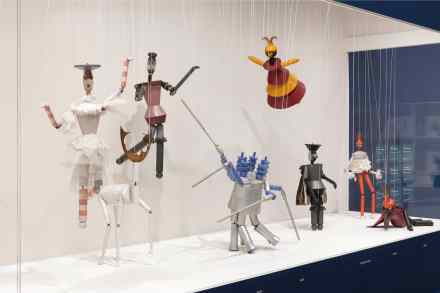
Great Swiss artists, like famous Belgians, might seem to be an amusingly underpopulated category. Actually, as with celebrated Flemings and Walloons, when you start counting you discover there are more of them than you thought. Paul Klee, for example, and Alberto Giacometti. A third, whose work is reassessed in a large exhibition at Tate Modern, was Sophie Taeuber-Arp. Clearly, unlike the other two, hers is far from being a household name even in fairly artistic homes. There are several reasons for this, one perhaps being the unwieldiness of that cognomen itself. She was born Sophie Henriette Gertrud Taeuber in 1889 at Davos, and as was then the custom, hyphenated her surname with her husband’s when she married Hans (or Jean) Arp in 1922.

Glorious: Bernardo Bellotto at the National Gallery reviewed

Exhibitions

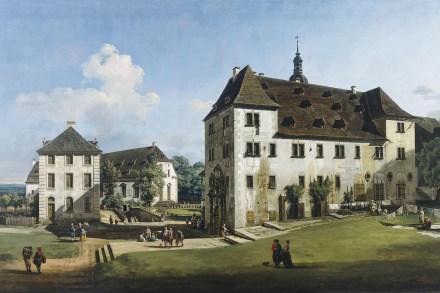
What is the National Gallery playing at? Why, in this summer of stop-start tropical storms, is the NG making visitors — visitors with prebooked, time-slotted tickets, mind — queue outside and in the rain? Why are its cloakrooms still closed and umbrellas forbidden? My husband had to stash his behind a balustrade on Orange Street. Why, with a 1:45 ticket, were we not through the doors until 2:05? Why make your harassed marshals, doing the best they can, shout ticket times and field questions from furious picture-fanciers? Lousy sort of freedom this. The V&A, by the way, is just as bad.

Hugely pleasurable – a vision of summer: Jennifer Packer at the Serpentine Gallery reviewed

Exhibitions

We need to talk about Eric. In Jennifer Packer’s portrait of her friend and fellow artist, Eric N. Mack sits on a yellow chair that might have been borrowed from Van Gogh’s bedroom. He’s wearing excellent odd socks, one pink to rhyme with his shoes, the other yellow matching his trousers and chair. But it’s Eric’s face that’s most compelling. Like the ‘Mona Lisa’, Eric’s expression is inscrutable. He might be thinking about what’s for tea, the crisis in pictorial representation or, quite likely, nodding off. This enigmatic quality is intentional. ‘When I painted Eric, I wanted accuracy, but I also wanted to privilege his subjectivity and privacy,’ says Packer.

Rich and strange: Eileen Agar at Whitechapel Gallery reviewed

Exhibitions

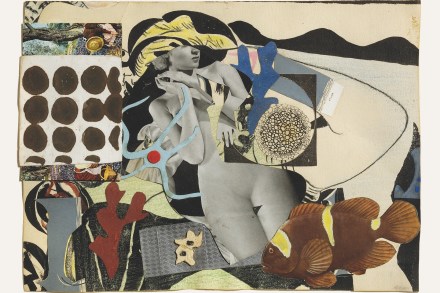
Heads turn, strangers gawp, matrons tut or look in envy. A man doffs his bowler hat knowing when he is outdone. The model walking imperturbably along a London street is Eileen Agar, her headwear the ‘Ceremonial Hat for Eating Bouillabaisse’, encrusted with crustaceans, spangled with starfish. If the Little Mermaid,in her leggy period, had been invited to Ascot, she might have worn something like this. A British Pathé newsreel of Agar wearing the same hat plays on a loop in the Eileen Agar: Angel of Anarchy exhibition at the Whitechapel Gallery. (You can also see it on YouTube.) About 50 seconds in you catch her trying not to smile. ‘Life’s meaning is lost without the spirit of play,’ Agar wrote in one of her notebooks.

Full of masterpieces: Paula Rego at Tate Britain reviewed

Exhibitions

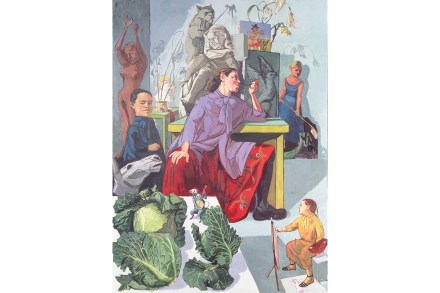
The Victorian dictum ‘every picture tells a story’ is true of Paula Rego’s works, but it’s only part of the truth. Rego has said that she hopes and expects that when people look at her pictures, ‘Things will come out that I’m not even aware of.’ And that’s right too: every marvellous picture tells so many stories, and is so charged with under- and overtones, that no one, including its creator, can be aware of everything that’s going on. That’s certainly true of many works in the Rego retrospective at Tate Britain. All notable painters and sculptors are, of course, sui generis. They don’t follow established rules; instead they make up a new set to suit their own creative personalities.

The magical art of boxer, labourer & sometime gravedigger Eric Tucker

Exhibitions

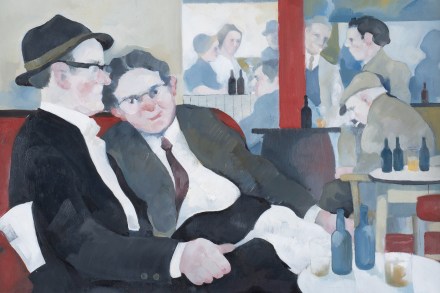
Artists’ estates can be a curse on a family. The painter dies, leaving the house stuffed with unsold canvases. What to do? If he or she has a dealer, they will drip-feed work on to the market with varying degrees of success. If the artist is famous there’s no problem; any unsold work will be fought over. If middlingly successful, shifting it can be a slog. But if unsuccessful — better still, completely unknown — the equation changes. When the art market discovers a ‘secret artist’, their estate acquires the cachet of a hoard. Such a hoard came to light three years ago in the Warrington home of former boxer, unskilled labourer and sometime gravedigger Eric Tucker.

Covid has been great for drawing

Exhibitions

Amid the greatly exaggerated reports of the death of painting issued and reissued over the course of the past century, nobody thought to check on the health of drawing, perhaps because what artists did in the privacy of their own studios was considered to be no one else’s business. Drawing wasn’t a saleable commodity. Yes, Hockney’s portrait drawings attracted admiration, but most artists kept their scribbles to themselves. Then about 20 years ago, just after Saatchi’s 1997 Sensation exhibition seemed to have consigned all traditional art forms to the bin of history, it was noticed that drawing was alive and, if not kicking, showing unmistakable signs of continued health.

An immensely rich show – though it consists of only two paintings: Rubens at the Wallace Collection reviewed

Exhibitions

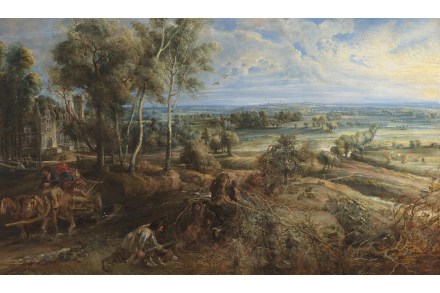
‘When pictures painted as companions are separated,’ John Constable wisely observed, ‘the purchaser of one, without being aware of it, is sometimes buying only half a picture.’ When he said those words at a lecture in Hampstead delivered on 9 June 1833, he had two great paintings by Rubens in mind: ‘A View of Het Steen in the Early Morning’ and ‘The Rainbow Landscape’. At that date they had already been split up, the first going to the National Gallery, the second eventually to be bought by the Marquis of Hertford. Because of the will of Lady Wallace, the eventual heir of the Marquis, or rather the way it was interpreted, the two have not been reunited since — until, that is, the current, marvellous display at the Wallace Collection.

Rodin was as modern as Magritte and Dali, but more touching and troubling than either

Exhibitions

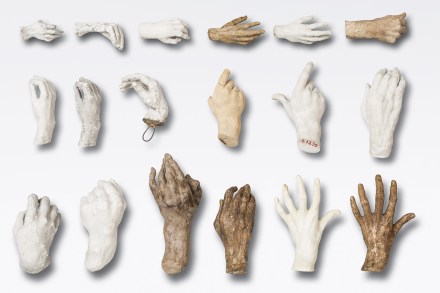
Rodin’s studio at Meudon in the suburbs of Paris is huge and filled with light — a sort of combined warehouse, factory and conservatory. It’s crammed with white plaster figures: battered, writhing and fragmentary. This strange, almost surreal effect has been recreated in The Making of Rodin at Tate Modern. The result is more interesting than beautiful. Few exhibits would normally be classified as finished pieces. Most are plaster casts of clay studies, ranging in scale from miniature to gigantic. Quite a lot aren’t even works in progress, more ingredients for art, bits and pieces he could play around with. Rodin called these ‘giblets’ (‘abats’).

How has this complete original been sidelined?

Exhibitions

A party of disorderly couples has gatecrashed the Picture Gallery at Bath’s Holburne Museum, climbing on to the antique furniture, hanging off the track lighting and sprawling on the floor, putting the noses of the resident Gainsboroughs, Constables and Zoffanys out of joint. Lawks-a-mercy! What has come over the Holburne? A passel of Mrs & Mrs Popes, that’s what: 36 years’ worth, to be precise. Nicholas Pope carved his first married couple from sliver-thin Forest of Dean stone in 1978 in homage to Van Eyck’s ‘Arnolfini Portrait’. At the time, this young minimalist contemporary of Antony Gormley, Richard Deacon and Tony Cragg was on the up and up: in 1980, aged 31, he would represent Britain at the Venice Biennale.

The politics of handbags

Exhibitions

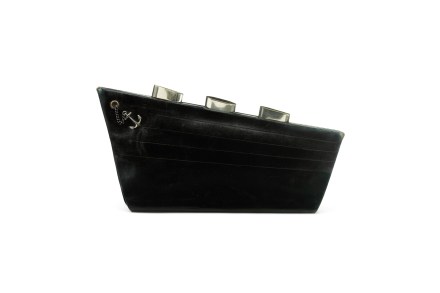
‘Of course, I am obstinate in defending our liberties and our law — that is why I carry a big handbag,’ Margaret Thatcher once told an interviewer. That handbag was part of the Iron Lady’s suit of armour; a fashion accoutrement turned into a political prop. But an accessory that became instantly recognisable on the outside held secrets on the inside. Thatcher referred to it as the only ‘leak-proof’ place in Downing Street, and it was a bag of tricks from which she might conjure pertinent quotes from Abraham Lincoln or Friedrich Hayek, or a crumpled brief from a mysterious source.

One of the greatest of all outsider artists: Alfred Wallis at Kettle’s Yard reviewed

Exhibitions

Alfred Wallis (1855-1942) should be an inspiration to all late starters. It was not until he had passed the age of 70 that, after his wife of many years had died and having previously worked as a sailor, fisherman and rag and bone merchant, he decided to take up art. ‘Aw! I dono how to pass away time,’ he explained to a shopkeeper in his native town of St Ives. ‘I think I’ll do a bit a paintin’ — think I’ll draw a bit.’ Three years later, his work was spotted by the leading British modernists Ben Nicholson and Christopher Wood. By and by, Wallis’s pictures were being exhibited in London, and Nicholson presented one to the Museum of Modern Art, New York.

Entertaining – but there’s one abomination: National Gallery’s Sin reviewed

Exhibitions

Obviously, we’re living through an era of censorious puritanism. Granted, the contemporary creeds are different from those of the 16th century. But the imperious self--righteousness is much the same — which gives the entertaining little exhibition at the National Gallery entitled Sin an unexpectedly contemporary edge. Personally, I’ve always thought that the doctrine of original sin has a great deal of explanatory power (it explains why history can’t ‘end’ and plenty of things will always go wrong — because that’s the way people are). Arguably, the medieval list of deadly failings — anger, pride, sloth, etc — provides a better summary of human nature than many later attempts.

A high-end car-boot sale of the unconscious: Colnaghi’s Dreamsongs reviewed

Exhibitions

In 1772 the 15-year-old Mozart wrote a one-act opera set, like The Magic Flute, in a dream world. Il sogno di Scipione was based on an account in Cicero’s Republic of a dream experienced by the Roman general Scipio Aemilianus while serving in North Africa in 148 BC. In the dream the younger Scipio is visited by his adoptive grandfather Scipio Africanus, who foretells his destruction of Carthage, dishes out advice on dealing with populist politics and shows him ‘the stars such as we have never seen them from this earth’. Scipio’s is a recurring dream: it inspired Dante’s vision of Heaven and Hell and it returns to haunt us in Colnaghi’s latest exhibition Dreamsongs.

Spectacular and mind-expanding: Tantra at the British Museum reviewed

Exhibitions

A great temple of the goddess Tara can be found at Tarapith in West Bengal. But her true abode, in the view of many devotees, is not this sacred structure itself but the adjacent, eerily smoking cremation ground. There she can be glimpsed in the shadows at midnight, it is believed, drinking the blood of the goats sacrificed to her during the day. Many holy men and women live in that grisly spot too, adorned with dreadlocks, smeared with ash, and dwelling in huts decorated with lines of skulls painted crimson. As a domestic setting this wouldn’t suit everybody. But the varieties of religious experience (to borrow the title of a celebrated work by William James) are many and extremely diverse.

The mediums who pioneered abstract art

Exhibitions

In the 1850s Britain was hit by an epidemic likened by The Illustrated London News to a ‘grippe or the cholera morbus’. It came from America rather than China and afflicted the mind rather than the body. The craze for table-turning was sparked in Hydesville, New York, in 1848 after two young sisters, Maggie and Kate Fox, claimed to hear mysterious rappings in the floor of the family home and attributed them to a spirit called Mr Splitfoot. Epidemics are by nature democratic, respecting neither education nor class. Eminent naturalists, scientists, novelists and social reformers were gripped by the grippe. When unseen forces such as electromagnetic waves were being discovered, who was to say they might not include channels for communication with the dead?

As immersive art goes, nothing can compete with Berghain

Exhibitions

In Geoff Dyer’s Jeff in Venice, the protagonist, at the Venice Biennale, muses on installations. ‘Ideally, the perfect art installation would be a nightclub, full of people, pumping music, lights, smoke machine and maybe drugs thrown in. You could call it Nightclub, and if you kept it going 24 hours a day it would be the big hit of the Biennale.’ How right he was. For what else is Berghain — the world’s most famous techno club — if not a wild work of immersive art? Berghain is housed in the ruin of a Soviet thermal power station in Berlin. Conceived on a grand scale, it’s a fathomless black box you enter into for 12 or so hours to be pummelled by every sort of sensation, before stumbling out again, not quite sure what happened.

The beautiful upside-down world of Georg Baselitz

Exhibitions

The hand is one of the first images to appear in art. There are handprints on the walls of caves in southern France, Indonesia and Argentina, made up to 50,000 years ago, which, although no doubt an illusion, seem to be waving at us across a vast gulf of time. The gigantic paintings of golden hands by Georg Baselitz at White Cube Mason’s Yard don’t quite do that, but the effect is still solemn and primeval. They dangle in front of you, fingers extended downwards, cut off at the wrist, each one the size of a whole body and glittering on a background of brownish black. There are also some drawings and sculptures of hands on view, but the star turns are the big canvases. They look like altarpieces dedicated to a cult of the hand and what it can do.

Imagine being married to Stanley Spencer

Exhibitions

It sometimes rains in Cookham. It rained all day when I visited the Stanley Spencer Gallery to see the exhibition Love, Art, Loss: The Wives of Stanley Spencer. But it rarely rained for Spencer, or at least never in his pictures of his hallowed birthplace, where even when skies are grey the red brick of the houses is warmed by the eternal summer sun of childhood. Not in the winter of 1937, though. That winter saw the 46-year-old artist rattling around his seven-bed family home, divorced from first wife Hilda Carline and separated from second wife Patricia Preece, painting pictures of grotesquely ill-matched couples who seemed unaccountably happier than him.

We’re wrong to think the impressionists were chocolate boxy

Exhibitions

One Sunday evening in the autumn of 1888 Vincent van Gogh and Paul Gauguin went for a walk. They headed out of Arles into the countryside and when they looked back towards town they saw a sunset so splendid that each was inspired to paint a masterpiece. One of these, Gauguin’s painting bearing the timely title ‘Human Misery’, is among the star exhibits in a new exhibition at the Royal Academy. All the works in this show come from a delightful small museum in the northern suburbs of Copenhagen, housed in the early 20th-century mansion from which it takes its name, Ordrupgaard. This was the dwelling of Wilhelm Hansen (1868–1936), a mover-and-shaker in the Danish life insurance business and an avid collector of what was then modern art.

Looking at Barnett Freedman makes me weep at the government’s dismal graphics

Exhibitions

Among the spoils of a lockdown clear-out was a box of my grandmother’s books: Woolf, Austen, Mitford and The Complete Nonsense of Edward Lear with a jacket by Barnett Freedman. You only need to see a corner of the cover — a stippled trompe-l’oeil scroll — to recognise the artist. Freedman, a Stepney Cockney born to Jewish-Russian parents in 1901, delighted in paper games. Maps unfurl, book leaves fly, cut-outs and cartouches abound. His designs are a miscellany of silhouettes, decoupage, concertinas, peek-a-boos, lift-the-flaps and grubby thumbprints. Edges are ragged, endpapers torn.

Figurative painting is back – but how good is any of it?

Exhibitions

An oxymoron is a clever gambit in an exhibition title. The Whitechapel Gallery’s Radical Figures: Painting in the New Millennium is designed to trigger the reaction: ‘Radical? Figures?’ before revealing quite how radical the figure can be. But like all good marketing, it is deceptive. Figurative art may have been consigned to history by Clement Greenberg 80 years ago, but history since — neo-romanticism, school of London, neo-expressionism — has repeatedly proved him wrong. The ten painters in this exhibition aren’t a school: the only thing their work has in common is its statement-making scale.

The artistic response to the pandemic has so far been mind-numbingly banal

Exhibitions

Travelling around Latin America three years ago, Stephen Chambers was attracted by pharmacy signs with pictograms advertising treatments to illiterate customers, and on his return he painted a series of serio-comic pictures of fatal diseases from the plague to bird flu. Could he get a gallery to show them? Could he hell. They all complained that they weren’t ‘cheery’ enough. Art is particular: loves death, hates sickness. Look at the first world war: an inspiration to cubism, futurism, vorticism, expressionism and dada. And the Spanish flu? Forgotten. In the face of death from disease, the avant-garde that sharpened its cutting-edge on conflict retreated.

The guileful, soulful art of Khadija Saye

Exhibitions

Gwyneth Paltrow has a new neighbour. On the same block in Notting Hill as Gwynie’s Goop store, with its This Smells Like My Vagina scented candles and must-have child-calming essential oil sprays, a shopfront has been taken over to display a poignant series of self-portraits by a rather different woman. Khadija Saye died three summers ago with her mother in the Grenfell Tower fire. Much of the 24-year-old artist’s work was destroyed in the blaze, including three tintype images from a series of nine called ‘in this space we breathe’. The other six were displayed that summer in the Diaspora Pavilion at the Venice Biennale in Saye’s first major international exhibition.

The joy of socially distanced gallery-going

Exhibitions

Not long after the pubs, big galleries have all started to reopen, like flowers unfolding, one by one. The timing reminded me of an anecdote that Lucian Freud used to tell about a Soho painter friend he took into the National Gallery after it had shut (as some senior artists are entitled to do). They arrived after closing time in the drinking holes of Soho, and the painter friend was staggering and swaying so much that Lucian — who was not easily rattled — became alarmed that he was going to put one of his flailing arms through a Rembrandt. I wonder how those art-lovers of yesteryear would have coped with socially distanced visits. I think they may be an improvement, at least in some respects.

I wish John Chamberlain was still around to crush this hideous toothpaste-blue Ferrari

Exhibitions

For three months art lovers have had nothing but screens to look at. As one New York dealer complained to the Art Newspaper in May, ‘Everything is so flat — except for the curve,’ referring to the infection rate. Flatness isn’t such a problem for paintings, which are flat anyway, or for digital media obviously. The art form that has suffered most from the lockdown is sculpture, since no 360˚navigation technology yet invented can replicate the experience of walking around a 3-D object. So it’s fortuitous that Gagosian is unlocking its three London spaces to a trio of new exhibitions of 3-D works, under wraps since March.

I didn’t expect to be so moved – galleries reopen

Exhibitions

I’m in Mayfair and I’m boarding an airplane. Or rather, I’m boarding an approximation of an airplane. In the centre of Hauser & Wirth, there are airplane seats, organised into a formation that resembles a section of economy, and dislocated windows, hung on the walls where paintings might normally be. The seatbacks are stuffed, and a spring/summer 2012 edition of Sky Shop magazine is splayed across one of the seats. We are frozen in time and space. Like most of us in recent months, this plane — an installation by German artist Isa Genzken — isn’t going anywhere. It remains perpetually rooted. Its windows open on to white walls.

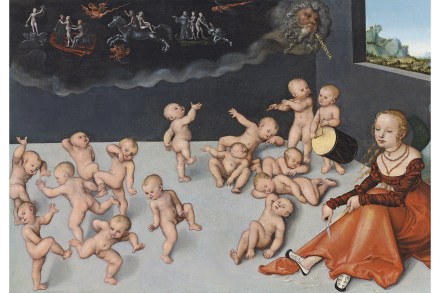
Sumptuous and saucy: Compton Verney’s Cranach show reviewed

Exhibitions

‘Naughty little nudes,’ my history of art teacher used to say of Cranach’s Eves and Venuses. Aren’t they just? Coquettish and compact. Kenneth Clark thought they had ‘chic’. Cranach’s nudes are rarely truly naked. They wear Ascot hats, golden chokers, filmy wisps of gossamer girdle. Take the goddess in the National Gallery’s ‘Cupid Complaining to Venus’ (c.1526–7). Don’t you long for her to take off her ostrich feather hat and tickle you with it? ‘Hallo, Jungs.’ See how she plays footsie with a branch of the tree. How she brushes the back of her hand against its trunk. Note the double necklace. Always accessorise.