Culture

Culture

The good, the bad and the ugly in books, exhibitions, cinema, TV, dance, music, podcasts and theatre.

Emma Dent Coad’s ‘love letter to Kensington’ is nothing of the sort

More from Books

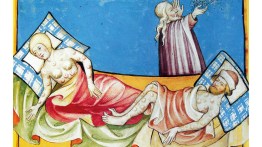
Few places can rival the London borough of Kensington in diversity. In the 19th century, new mansions sat alongside the cholera-ridden slums around the piggeries and brick claypits. A speculative racecourse came and went. More recently, postwar slum clearance created new housing divides and Portobello Road became a key London destination. Racial tensions erupted in the 1958 Notting Hill race riots, and in the 1970s the Westway motorway sliced through the north of the borough, reinforcing its landlocked character and poor transport links to the rest of London. In 1965, following a major reorganisation of London’s government, Kensington was combined with Chelsea to create a new borough. In 2013, I became the leader of Kensington and Chelsea Council.

The secrets of a master art forger

More from Books

Tony Tetro’s memoir starts with a bang – or, rather, a bust. On 18 April 1989, 25 policemen spilled into his condo in Claremont, California, confiscated the $8,000 he had just been paid in cash and proceeded to search the place, slicing through wallpaper, pulling up carpets and emptying drawers. The scene is pacy, thrilling, a bit silly. It reads like a Hollywood film script; which, if I’m being cynical, is probably the point. The pièce de résistance: If you pressed #* on the cordless phone, a full-length mirror would pop open and reveal my secret stash of special papers, pigments, collector stamps, light tables, vintage typewriters, certificates of authenticity, notebooks with signatures – everything a professional art forger might need.

Tales of old Hollywood are always entertaining – even when they’re apocryphal

Lead book review

Despite being known as a visually driven town, Hollywood has a rich oral history. This may be due to the fact that it is (like most literary communities) a small, gossipy village in which everybody knows everybody else and what everybody is saying about them. It also testifies to the fact that while Hollywood’s ‘players’ may often produce stupid films, they aren’t actually stupid themselves. Most of the time they know exactly what they’re doing – which is what makes them so perplexing. According to this hefty book, which assembles more than half a century’s worth of interviews conducted by the American Film Institute, Hollywood’s early days weren’t as glamorous as the later ones, but they certainly seemed a lot more fun.

Shirley Hazzard – so in love with Italy she spoke in arias

More from Books

Shirley Hazzard’s ‘untimeliness’ is a recurrent aspect in most descriptions of her, both the writing and the person. She came to represent ‘a vanished age of civility’: there is something Victorian about her novels, despite the last of them, The Great Fire, being published in 2003, by which time she was starting to resemble ‘an exotic bird blown off course’.

The world’s best wrecks and ruins

More from Books

Ruins, shipwrecks and lost cities are endlessly intriguing. I once went to Kolmanskop in Namibia and found myself wondering quite what it was that was so alluring. At one level it’s just a rather dowdy German town out in the desert, abandoned in 1956. But what’s special there is the sand and the way it has sifted through halls and kitchens and up the stairs. It’s as if a little bit of our history had somehow ground to halt and got left behind. Fordlandia, built in the heart of Amazonia in 1928, is now quietly crumbling away as the forest returns The travel writer Oliver Smith has a neat phrase for these places: ‘enclaves of the past’. In his Atlas of Abandoned Places, he offers us 50 wrecks and ruins, all exquisitely photographed and mapped.

Neo-gothic horror: Strega, by Johanne Lykke Holm

More from Books

In Johanne Lykke Holm’s neo-gothic novel Strega, Rafaela, claustrophobic in her parents’ ‘yellow’ and ‘dusty’ flat, dreams of working as a maid at the mountain-nestled Olympic Hotel. She luxuriates in a bath with a brochure, mesmerised by photographs of ‘girls in pearl-white aprons, girls eating ruby-red apples straight from the tree’. It’s a foreshadowing of the post-lapsarian limbo she is about to enter. Rafaela arrives with eight other girls at the remote and unheimlich alpine hotel: the proportions seem ‘off’ and there’s a ‘smell of dust and water and burned hair’. Even the lake feels carnivorous, claiming lives every year.

The courage of the Red Devils

More from Books

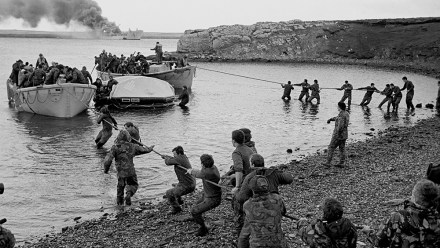
At Goose Green during the Falklands campaign, the 2nd Battalion the Parachute Regiment forced the surrender of more than 1,000 Argentinian soldiers. It was an extraordinary feat of arms. The battalion numbered 650 men, far fewer than the accepted ratio of 3:1 when attacking a defensive position. The Parachute Regiment had upheld the old tradition: ‘fast, far and without question.’ In June 1940 Churchill ordered the formation of a parachute force. He had been taken aback and quietly impressed by the success of the German parachute forces, the Fallschirmjäger, in the Battle of the Hague the previous month. Their success in seizing crucial bridges in coup de main operations had opened up the heart of the Netherlands to the Panzer divisions.

A dangerous gift: The Weather Woman, by Sally Gardner, reviewed

More from Books

The Weather Woman is the children’s writer Sally Gardner’s first novel for adults under her own name (previously, she used the pseudonym Wray Delaney). Spanning the end of the 18th and the beginning of the 19th centuries, the story describes an England trembling at the French Revolution and haunted by the threat of Napoleon while aristocrats gamble and roister. Gardner’s sense of atmosphere is acute. The frost fairs, the grand ballrooms, the stinking alleyways all come alive. The novel’s major theme is the subjugation of women; its secondary, the border between rationality and intuition. Our thoughtful, unconventional heroine is Neva Tarshin. Her mother, a genius chess player, was forced to hide her talents, only playing as a wayside attraction, disguised as an automated bear.

Celebrity photographer and conservationist: Peter Beard’s life of extremes

More from Books

In 2005 the photographer Peter Beard invited me to his Thunderbolt Ranch in Montauk on the tip of Long Island. I was writing a biography of Denys Finch Hatton, Karen Blixen’s lover, and Beard had known Blixen at the end of her life. When Graham Boynton began this biography he telephoned me, and I told him about that weekend I spent alone with Beard. At the end of my story, there was silence. Then Boynton said: ‘You’re the only woman I’ve ever heard of he didn’t make a pass at.’ Born in New York in 1938, Beard was a trust-fund Wasp, Yale-educated. Having started as a fashion photographer, he became famous for collages which sold for hundreds of thousands of dollars at Christie’s in London and New York.

Friedrich Hayek: a great political thinker rather than a great economist

Lead book review

Despite being awarded a Nobel in economics in 1974, Friedrich Hayek was a great thinker rather than a great economist. He called himself a ‘muddler’. His own attempt to build an economic theory floundered. His major contribution was to emphasise the limitations  of economic knowledge, and thus the inevitable frustration of efforts to build economic utopias. His theorising was abstract, but his purpose was practical: to make the case for a liberal economic order which would be proof against the political and economic wickedness and madness through which he lived: the two world wars, the Great Depression and the rise and fall of fascism and communism. Hayek’s was a slow-burning flame.

The story of architecture in 100 buildings

More from Books

One recent estimate claims there are 4.732 billion buildings on Earth, but it’s difficult to establish a credible methodology to count them. Is Manhattan’s Rockefeller Center, created out of swaggering pride and ambition, in the same category as a shanty hut in an Algerian bidonville? Unless you live in a desert, buildings are unavoidable, making architecture not just a necessity for survival but the art form most pregnant with meaning. When I was a boy I wanted to be an architect. Not because I was interested in drain schedules, load paths, wrangling with local authorities or designing kitchen extensions but because architecture seemed the most powerful expression of style. We know and judge cultures by their monuments, not their facility for credit default swaps.

The Bible exists in some 700 languages – so it still has a long way to go

More from Books

I’ve never met John Barton. But reading his books on the Bible I keep thinking of him as an early church father, perhaps St Jerome. Barton has the obligatory beard, he’s an ordained minister in the Church of England, and his writing is sage and measured, scholarly but accessible. Jerome was of course the translator of the Bible into Latin. In the fourth century his Latin Vulgate caused a riot in Tripoli, then part of the Roman empire, because Jonah was portrayed sheltering in the shade of a fast-growing ivy rather than under a gourd, as in the traditional rendering. (This accounts for the ugly spherical fruit dangling from the rafters, like one of those constant memories you’d rather forget, in Albrecht Dürer’s famous depiction of the saint in his study.

The rich complexity of Britain’s Jewish population

More from Books

Of all the European countries that Jews have lived in, none has been so welcoming as Britain. There is a caveat: the first blood libel was in Norwich, of all places, in 1144, and after Edward I expelled us in 1290 we had to wait almost 400 years for Oliver Cromwell to ask us back. Jewish immigration to Britain was severely limited in the 1930s, as was immigration to British-controlled Palestine. Even so, Anglo-Jewry was – a handful of casualties from the occupied Channel Islands aside – the only community in Europe not ravaged by the Shoah, and Anglo-Jews are both peculiarly fortunate and haunted. My grandfather, a highly rational man, bought poison in 1940. He was going to kill his family if the Nazis reached them.

Magic and medicine: The Barefoot Doctor, by Can Xue, reviewed

More from Books

It must be exhausting to live as a barefoot doctor in a Chinese village if Can Xue’s latest novel is anything to go by. Not because of your work as curer-in-chief, but because all your patients are either nauseatingly happy or prone to near-constant weeping. Barefoot doctors emerged in the 1930s, but really hit their stride under Mao, when they spread throughout rural China. They were folk healers with basic medical training who provided healthcare in places where urban trained medics wouldn’t settle. Now one of China’s most feted novelists, Xue is better known for her avant-garde dreamscapes than her acupuncture, but she was a barefoot doctor in her youth.

Meditations on the sea by ten British artists

More from Books

It is our ability to see a single thing in various ways that Lily Le Brun celebrates in Looking to Sea: Britain Through the Eyes of its Artists. Over the course of ten chapters dedicated to individual artworks, one for each decade of the past century, she explores our shifting relationship with the shoreline through a carefully considered and enjoy-able mix of biography, art criticism and personal reflection. Up first is ‘Studland Beach’ (c. 1912) by Vanessa Bell, a melancholy painting that paved the way for modernism: ‘It is her attempt to distil an experience of sitting on the beach, looking out to sea, down to its visual essentials.

This sceptred isle: the fantasy realm of Redonda

More from Books

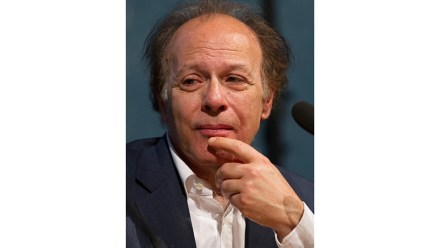
There is an island in the Caribbean so small that it doesn’t appear on many world maps. Its name is Redonda; one of its kings, the Spanish writer Javier Marías, died two months ago. It’s an unforgiving place, uninhabited and windswept, basically a large rock a mile long and about a third of a mile wide. But birds like it, particularly a species called the booby, whose calls sound like a person crying out: ‘Oh no! Oh no! Oh no!’ The fantasy kingdom even had a national anthem – and a flag designed by the Duke of Guano The island is the subject of the Canadian writer Michael Hingston’s often excellent Try Not to Be Strange. I can see booksellers scratching their heads over where to shelve it.

England in infra-red: the beauty of the country at night

More from Books

John Lewis-Stempel is nearly as prolific as the natural world about which he writes so well. His voice is distinctive – that of a traditional agriculturist of lyrical articulacy, an observant ecologist who finds mythopoeic magic in everyday animals, who honours his Herefordshire origins but addresses all England. Cattle in a frosty field are transfigured into witnesses of the Nativity As with his monographs on meadows and ponds, Nightwalking looks at under-appreciated aspects of the rural scene – this time, the most enigmatic of all. Like Robert Frost, poets often aspire to be ‘acquainted with the night’, and many are cited here.

Anne Glenconner: ‘I took my courage from Princess Margaret’  

Lead book review

Craig Brown is responsible for the astonishing late flowering of Anne Glenconner. It was his biography Ma’am Darling: 99 Glimpses of Princess Margaret that so enraged her that, in an effort to stick up for her friend, whom she served as a lady-in-waiting for 30 years, Lady Glenconner started writing in her mid-eighties. She hasn’t stopped since. First came an internationally best-selling memoir, Lady in Waiting, then two pacy novels. And now, coinciding with her 90th birthday, as well as (no flies on her) the new season of The Crown, Christmas etc, she publishes this volume of ‘life lessons’ – a catch-all, really, for any other top toff reflections from this most likeable of survivors.

A choice of this year’s cook books

More from Books

The revolving doors of the 1990s’ restaurant scene saw a cast of great characters, sadly now on the wane. One of the so-called ‘modern British’ movement’s greatest champions, Terence Conran, has departed; we have lost Alastair Little and Andrew Edmunds, and only last month Joyce Molyneux, of Carved Angel fame. Who? What? If you never ate in Little’s Frith Street restaurant, lapped Simon Hopkinson’s deliciousness at Bibendum or indeed revolved through the doors into Rowley Leigh’s Kensington Place, you will wonder what I am on about.

The trauma of war reportage: nightmare stories from the front line

More from Books

One day during the Rwandan genocide in 1994, Evariste Maherane heard about a Tutsi boy whose parents had been killed in a massacre at a church. The boy had escaped. He was about ten, the same age as Evariste’s son. A family of Hutus, instead of joining the slaughter of Tutsis that many of their ethnicity were perpetrating, had taken him in. They had tended to his wounds but he was still weak. Evariste went to their house. Hand him over, he told them. There was a banana plantation nearby. Evariste took the boy there. He gripped his neck and began to beat him. With help from another man, he dug a hole. When it was deep enough, they threw the boy in. His arms and legs flailed as they filled the hole in.

A family scandal straight out of a Hollywood film noir

More from Books

In 1973, in White Plains, New York, Donna Freed was told, in a ‘shroud of shame’ and without any soothing explanations, that she was adopted. The six-year-old’s life was plunged into a dark hinterland of anxiety. Freed spent the next 38 years fearful that the discovery of her birth mother would reveal ‘a terrible or seedy story, tragic circumstances, terror, violence, incest or rape’. In fact the truth awaiting her was a sensation straight out of a Hollywood film noir: a scandalous tale of dirty glamour, passion and pseudocide. Her parents were in fact embroiled in one of the juiciest death fraud cases of 1960s America. Duplicity is a Janus memoir, part adoption story, part true crime history.

The long arm of police corruption

More from Books

Are all institutions basically corrupt? If company directors snaffle pencils from the stationery cupboard for their own use, are they corrupt? Is there a sliding scale of corruption, from ‘whatever’, through to ‘well I wouldn’t do it myself’, all the way to ‘summon the rozzers’? And does it matter what the organisation is? Is it worse to steal from your employer if you work for Nestlé or for Oxfam? Are some small corruptions are basically all right? Of course if we accept the small corruptions, the bigger ones creep in at the edges. And once they’ve entered an organisation’s culture, it is well nigh impossible to root them out. In essence, Tom Harper’s book is a thoroughly depressing account of the Metropolitan Police’s corruptibility.

Planning a New Jerusalem: The Peckham Experiment, by Guy Ware, reviewed

More from Books

The Peckham Experiment was a radical, if earnest, initiative begun in 1926 in which working-class families were given access to physical activities, such as swimming, as well as workshops and a shot at cultural betterment. It’s into this rather worthy scheme that identical twins, the subjects of Guy Ware’s novel, are born: Charlie and JJ, the offspring of communist parents, who are later orphaned during the Blitz. Both go on to long careers in housing, and the book tracks their progress, alongside themes of ownership and exploitation, against the backdrop of key events in postwar British history. The novel begins on the eve of JJ’s funeral, with Charlie struggling to write a eulogy for his 85-year-old brother.

It’s time to stop sneering at metal detectorists

More from Books

As a teenager growing up in Cheshire I had a metal detector. Although I was slightly ashamed of it, I found all sorts of intriguing things: shrapnel, a French coin, a Khartoum Racing Club key ring, an adze and a silver brooch in the shape of a lobster. All went well until I found a second world war bomb in Tatton Park. They had to call out the army, and I got a Grade A bollocking. People hated metal detectors. Since then I haven’t given them much thought; but Nigel Richardson has. An acclaimed travel writer, he was grounded by the Covid pandemic and, like many of us, began to reflect on the course life had taken. It worried him that he was rootless: the northern kid who went to boarding school in Sussex, the ‘citizen of nowhere’, without tribe or peers.

A sunken wreck of a novel: Cormac McCarthy’s The Passenger reviewed

Lead book review

Is Cormac McCarthy among the last generation of novelists to possess a Style? Of course all writers have a characteristic style, however unassuming; but not many these days have a Style in the grand manner, the sort that Kingsley Amis (I think writing about Nabokov) described as a high level of flutter and wow. There are conversations about what I think of as ‘novelists’ science’, not really intended to be understood The great beasts of American literature have often aimed for prose that couldn’t be mistaken for anyone else’s – Hemingway, Faulkner, Bellow, Updike. Though there were always intensely mannered novelists in England, they had less of a heroically manly quality – Firbank, Wodehouse, Elizabeth Bowen, Henry Green.

The Queen Mother’s tipsy bons mots and other stocking fillers

More from Books

The standard complaint of anyone doing a Christmas gift books guide is that the books aren’t up to much. I myself may have moaned to this effect in the past. But either they are getting better or my critical faculties are beginning to fail. I think it’s the former, but if I’m wrong don’t be surprised if I’m sucking on milky rusks by this time next year. My daft picture book of the season – a vital category – is Ryan Herman’s Remarkable Football Grounds (Pavilion, £25), which is exactly what it seems to be: a collection of colour photographs of some of the most spectacular football grounds in the world. There are all the usual suspects, such as Anfield and Old Trafford, and others that resemble a crocodile, an armadillo or a chocolate box.