Culture

Culture

The good, the bad and the ugly in books, exhibitions, cinema, TV, dance, music, podcasts and theatre.

Beautiful, dandified detachment

More from Books

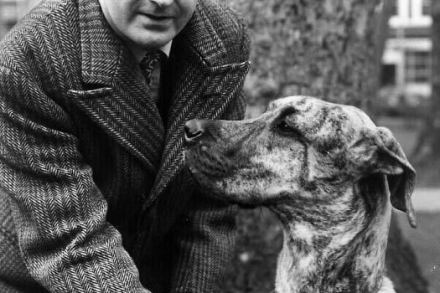
‘Christmas without Ian,’ wrote my mother, ‘was a bleak affair. He was always there at Christmas.’ My mother was Ann Fleming and Ian the man the centennial of whose birth we have so markedly been celebrating this past year. There was another man who was always there at Christmas: Peter Quennell, of whom Paul Johnson wrote in these pages, ‘There has never been another bruiser like Behan or writing toff like Quennell’ (‘And Another Thing’, 6 September 2008). Peter Quennell, or P. Q. as his fourth wife, Spider, called him, was not born a toff. (Spider was christened Sonia, but on account of the length of her elegant limbs Peter named her Spider Monkey; and so she remains.) P. Q.’s father had been an architect. His mother was an artist.

Christmas Short Story

More from Books

When you lie down with dogs, you get up with fleas by Justin Cartwright In 1920, at the age of 38, Franz Kafka wrote a letter to his father, Hermann, accusing him of ruining his life by his dictatorial and insensitive behaviour, which left him lacking in self-belief and unable to escape his father’s dominance. Kafka never sent this letter to his father, but instead showed it to friends. Justin Cartwright imagines the father’s reply. My dear Franz, Your letter to me, which I read with disgust and sorrow, is the product of your oversensitive imagination and your weak constitution, both of which are, alas, faults with which you were born.

Dark and creepy

More from Books

The Folio Book of Historical Mysteries, edited by Ian Pindar This book, which is a collection of 20 essays on events and people from history, first seriously caught my attention when I started reading the piece about Shakespeare. Of course, I’d always had the nagging sense, on the fringes of my mind, that some people questioned Shakespeare’s authorship. Eccentrics and attention-seekers, I’d always assumed. And here, I saw that they refer to themselves, rather grandly, as ‘anti-Stratfordians’. So, why do these people think that the man named William Shakespeare, who was born in Stratford-upon-Avon in 1516, and who died there in 1564, did not write the plays and the sonnets, then? Well, say the anti-Stratfordians, Brenda James and William D.

The devil’s work

More from Books

Timing is all. In 1969 Margaret Atwood’s An Edible Woman was published, and its iconic portrayal of women moulded into objects for male consumption caught the crest of the feminist wave and surfed into the shelves of required reading. Almost four decades on, Payback, her meditation on the nature of debt, appears just as the world is freefalling into an economic trough. Has she given voice to the zeitgeist again? If so, we are entering a world of stern reciprocity — as you sow so shall you reap — in place of the pickpocket exuberance of free-market economics. The debt on Atwood’s mind is always double-headed.

Memoirs of the Great War

More from Books

Survivors of a Kind, by Brian Bond In Survivors of a Kind, Brian Bond, one of our most distinguished modern military historians, has written an absorbing and affectionate study of the military memoirs of the first world war, bearing all the authority of a life- time’s work on the British Army. With some of the 20-odd names in this book the reader will be familiar: Siegfried Sassoon’s and Robert Graves’ sworks have stayed in print, and it is fair to say that most British people’s views of the Great War today are largely shaped by Goodbye to All That and, if not by Memoirs of a Fox-Hunting Man or Siegfried’s Journey, at least by poems like ‘Base Details’.

This battle has just begun

More from The Week

‘I was excited and delighted by it in that first Bombay minute,’ says the narrator in Gregory David Roberts’s great novel Shantaram. ‘I was excited and delighted by it in that first Bombay minute,’ says the narrator in Gregory David Roberts’s great novel Shantaram. ‘I know now that it’s the sweet, sweating smell of hope, which is the opposite of hate.’ It was hope that the terrorists in Mumbai came to attack and, though the appalling bloodshed in that great city is over, the battle to replace hope with hate is still raging, and has not yet been won or lost.

At Home in Turkey

More from Books

If you can’t afford the airfare you might take this delicious guided tour instead. Exploring some of the best contemporary Turkish houses (or caves), the photographer, Solvi dos Santos, divides her subjects by season, as if to emphasise the perpetual variety of Turkey’s terrain — and the successive civilisations that have held sway there. Berrin Torolsan’s informative text explores the inspiration behind such gems as a classical wooden yali on the Bosphorus; a rustic chalet in the mountains; a tea-planters mansion on the Black Sea; a Cappadocian cave-dwelling, with beautifully hewn piers and arches.

Differences and similarities

More from Books

West Workroom towards a new sobriety in architecture theory + practice, by Paolo Conrad-Bercah+w office (including contributions from Daniel Sherer, Pierluigi Panza and George Baird) ‘This is not a book….’ These are the opening words of this initially unfathomable paperback volume of architectural ramblings. It has been assembled as an account of the work of a Milan-based architecture practice, West Workroom. The firm designs commercial, residential and institutional buildings, with a special emphasis on functional offices and other workplaces.

The view from the middle lane

More from Books

The Hugo Young Papers: Thirty Years of British Politics — Off the Record, by Hugo Young, edited by Ion Trewin The late Hugo Young was the political columnist of the chattering classes. This book, rather more grandly, describes him as the ‘the Pope of the liberal left’. A lifelong Cath- olic, educated by Ampleforth monks and Balliol dons, in his twice weekly Guardian columns he combined moral authority with shrewd insights into the ways of political man. His mission was to promote liberal democracy and a united Europe. He quotes the left-wing Tony Benn in 1986 ‘chiding me for my centrist views, saying that my position was that of giving my Episcopal benediction to all shifts to the centre’.

But where is Colonel Blimp?

The Triumph of Music, by Tim Blanning This is an often entertaining, occasionally illuminating, but cur- iously unsatisfying book, written by a distinguished historian of early modern Europe. Subtitled ‘Composers, Musicians and their Audiences, 1700 to the Present’, it purports to be a study of the ways that the art of music has increasingly come to dominate western culture. ‘Triumph’ is not, I think, the mot juste here; something more like ‘increasing ubiquity’ would be more apt. Professor Blanning is never dull or dryasdust: he writes with lucidity, grace and wry wit, and he clearly has a passionate enthusiasm for music.

Saints and sinners

More from Books

With the publication of their Christmas cookery books, Nigella, Jamie, Delia and Gordon all have a brand image, or a halo, to polish. Nigella’s brand is greedy, kitsch, sexy and celebratory, and in Nigella Christmas (Chatto & Windus, £25) she has found her perfect subject. The book is fun, but it is also very thorough: it is the best book on cooking Christmas lunch, ever. Her ‘superjuicy’ turkey is exactly that, but there are good recipes for five other Christmas lunches and good innovative ‘trimmings’. Sadly the book is hideous to look at.

A rose-tinted view of the bay

More from Books

The Ancient Shore, by Shirley Hazzard and Francis Steegmuller Variety of impression, diversity of atmosphere and mood, incongruities of many kinds, these are only to be expected in books on travel, and perhaps particularly in one concerning Naples. But The Ancient Shore is by two hands, and there is a radical difference in style and method that makes it virtually impossible to discuss the book as if it were of a piece.

Humph swings

Last Chorus: An Autobiographical Medley, by Humphrey Lyttleton ‘Old Etonian ex-Guards Officer jazz trumpeter’. That was the way tabloid gossip columnists used to describe Humphrey Lyttelton (1921-2008) in the early years of his fame. Not long after he was released from the Grenadiers at the end of the second world war, he hyphenated his identity to become Old Etonian ex-Guards Officer jazz trumpeter-bandleader-broadcaster-cartoonist-calligrapher-birdwatcher-gastronome-paterfamilias. In this amiable hotch-potch of a book, he reviews every aspect of his multifaceted life with bonhomous éclat. Now, as ever, Humph swings. His father, C. W.

Surprising literary ventures | 3 December 2008

More from Books

‘It looks to me like Boris the Blue Whale,’ said Rightwayup Bird. ‘I have read all about him. He is one hundred feet long and weighs 150 tons.’ Astonishing prescience for 1981? Willy and the Killer Kipper — like the first of Jeffrey Archer’s two ‘Willy’ books, Willy Visits the Square World (1980) — is full of delights. A submarine has stalled on the ocean floor, and Willy and his teddy bear, Randolph, set out on the back of the Rightwayup Bird to save it from Konrad the Killer Kipper. On the way they are helped by Sybil the Seagull, an aspiring author and correspondent for the Bird Times who talks loftily about how humans are always plagiarising her articles.

Global warning | 29 November 2008

Any other business

Because of the economic crisis, I was waiting at the bus station: £2.80 for a bus instead of £28 for a taxi home. I had 50 minutes to wait and was reading a book by Richard Yates. I was wondering why the literature of so optimistic a country as America was so deeply pessimistic (awareness of death is the answer, of the bust after the boom of life from which there is no upturn), when a lady in her eighties sat down beside me. She was tired. Her cheeks puffed and her lips pouted as one with chronic obstructive pulmonary disease. ‘I prefer to take taxis,’ she said to me, ‘but I took one yesterday and I can’t do it all the time. I’ve got a little in the bank, but you never know how long you’ll last.

How to write a wrong

More from Books

‘When young lips have drunk deep of the bitter waters of Hate, Suspicion and Despair, all the Love in the world will not wholly take away that knowledge.’ ‘When young lips have drunk deep of the bitter waters of Hate, Suspicion and Despair, all the Love in the world will not wholly take away that knowledge.’ This is the conclusion of Kipling’s harrowing story of child abuse, ‘Baa-Baa Black Sheep’, and it reminds us that the Victorians knew all that one can know, or need to know, about the misery that may be inflicted on children. They also knew where best to deploy that knowledge: in a fictional narrative. No biographer has ever doubted that this story came from Kipling’s own painful experience as a child.

Stars bright and dim

More from Books

Much great American writing is regional in a way that British or French writing never has been. Most of the best writing coming from the States inhabits a place which apparently feels no pressure from the great metropolitan centres — Annie Proulx on the Texas panhandle, Cormac McCarthy on the Mexican border territories, Jane Smiley on the Midwest. Even when a great city is in the vicinity, as in Anne Tyler’s or David Simon’s very different considerations of Baltimore, we feel a specific regional flavour emerging; John Cheever’s fictions of elegant suburban life have a distinctly north-eastern flavour which evidently still weighs heavily with writers of that particular region.

The spice of danger

More from Books

From the Front Line: Family Letters & Diaries, 1900 to the Falklands & Afghanistan, by Hew Pike ‘Every man thinks meanly of himself for not having been a soldier,’ reckoned Dr Johnson, and certainly every soldier thinks the less of himself for not having seen action. For four generations the extended Pike family has written movingly of the miseries of partings and of the ‘noise, violence indignity and death’ of the battlefield, but give any of them the choice between a cushy command at Catterick and the Normandy beaches and it is no contest. ‘Peace,’ writes the wonderful Reggie Tompson, back in England recovering from a bad wound on 24 December — ‘Peace Sunday’ — 1916, ‘Peace be blowed!

Gruff Justice

More from Books

James Robertson Justice: What’s the Bleeding Time? by James Hogg, with Robert Sellers and Howard Watson ‘You — what’s the bleeding time?’ Sir Lancelot Spratt, consultant surgeon at St Swithin’s, barks at Dirk Bogarde’s trainee doctor. ‘Ten past ten, sir’ is the sheepish answer. Another cherishable exchange in the long-running series of medical comedies sees a patient complaining about shrapnel up the — ‘rectum?’ offers Spratt. ‘Well,’ comes the plaintive reply, ‘it didn’t do ’em any good.’ Gruff and domineering, Spratt and the actor who indelibly played him were interchangeable — except that James Robertson Justice wasn’t really an actor.

Chalk and cheese

More from Books

The British in France: Visitors and Residents since the Revolution, by Peter Thorold Peter Thorold has not written an orthodox history of French and British political cultural and social relations. He sees them through the eyes of Britons who settled in France or tourists who trod its soil for a brief holiday. French aristocrats who had seen their friends’ and relations’ heads stuck on poles and paraded through the streets of Paris sped to Britain. When the Terror passed, they returned to France and showed little propensity to settle in or revisit a cold climate. Most Britons came to stay. Why did they come? Some were successful economic migrants. Charles Worth, ‘a native of bucolic Lancashire’, came from a ruined middle-class family.

Not just Hitler

More from Books

The Third Reich at War, 1939-1945, by Richard L. Evans Any historian attempting a survey of Nazi Germany during the second world war confronts formidable challenges. First, the available literature is so huge that it almost defies synthesis in a single volume, however substantial. Second, the author needs to avoid writing yet another Hitler biography. Third, the most appalling and dispiriting material must be studied. As Richard J. Evans writes in his preface, the subject is ‘sometimes shocking and depressing almost beyond belief’. Nevertheless, in this book, the third of his trilogy on Nazism, Evans achieves a remarkable degree of success in meeting the demands of this most intractable subject.

Deadlier than the male

More from Books

When does a novel stop being a novel and become a crime story? It’s often assumed that there is an unbridgeable gap between them, but that’s not necessarily so. When does a novel stop being a novel and become a crime story? It’s often assumed that there is an unbridgeable gap between them, but that’s not necessarily so. When Will There Be Good News? (Doubleday, £17.99) is a case in point. It is the third of Kate Atkinson’s novels about Jackson Brodie, a former policeman who is crime-prone in the way that other people are accident-prone. Here he is involved in a train crash in Edinburgh, which brings him again to the notice of Louise Monroe, a hard-bitten Scottish CID officer.

The power of the evasive word

More from Books

The Economist Book of Obituaries, by Keith Colquhoun and Ann Wroe De mortuis nil nisi bonum, or so it used to be said. That was then. Now, since the late Hugh Montgomery- Massingbird became obituaries editor of the Telegraph, James Fergusson of the Independent, and Keith Colquhoun and Ann Wroe of the Economist, all has changed, changed utterly. Now obituaries are light entertainment. The great and the good can no longer console themselves for mortality with the expectation of unctuous posthumous tributes: the first paragraph of the Economist’s treatment of Edward Heath warns them what to expect: The tributes spoke of his integrity, his long service and the strength of his convictions. Many of his fellow conservatives were especially keen to emphasise his love of music and sailing.

Should We Be More Like Bonobos?

I dunno. But perhaps we should try and ignore our warrior-chimp ancestry and learn from the blessed, peaceful bonobos. At least that seems to be the idea behind Sex & War: How Biology Explains War and Terrorism and Offers a Path to a Safer World. Yes, I know what you're thinking: another trendy but implausibly sweeping sub-title. Nonetheless, I heartily* recommend this book and suggest it may make an ideal christmas present for more people than you might think. Wired interview with the authors and book extract here. *Have you read the book, Massie? No. So why the recommendation? Because one of the authors, Thomas Hayden, is a friend, silly.