Anita Brookner

A seamless whole

From our UK edition

This short memoir deserves a longer review than this, encompassing, as it does, migration, intellectual excellence, a successful professional life, two marriages, children and an honesty and contentment not usually found in close proximity. Miriam Gross (née May), with a Jewish legal background (both her parents, who left Nazi Germany in 1933, were lawyers), was brought up in Palestine, then under the British Mandate, where she stayed until 1947. In Jerusalem she felt little affinity with other exiles, only with the landscape. From the start, she seems to have been clear-sighted to an unusual degree. Unfazed by her unmaternal mother, she drew close to her father, from whom she derived an understanding of men which was to be useful in both her public and emotional future lives.

Last Friends, by Jane Gardam – review

From our UK edition

Any writer who embarks on a trilogy is either extremely confident or taking something of a risk. The danger is that the reader will have forgotten the first two volumes and will have lost any memory of the story and the characters who now occupy the foreground of what might be a fairly mystifying account. So it is with Jane Gardam’s present novel which forms the conclusion to her foregoing Old Filth and The Man with the Wooden Hat, which featured Terence Veneering and Edward Feathers, lawyers and rivals not only in their professional lives but in most other matters, both trivial and significant. They’re not sympathetic characters, and time and distance have not improved them.

Shy of the crowd

From our UK edition

Elizabeth Taylor, the best-kept secret in English fiction, wrote novels and short stories in the 1950s and 1960s and thus contributed to the nostalgia for that modest period so keenly felt today by those who lived through it. She is an honourable writer; no publicity, no interviews, no mission statements — merely an unwavering production of impeccable work. Writing before feminism became encoded in dogma, she nevertheless had an unfailing and unmistakable female intelligence: wry, observant and discreet. She herself, whatever secrets she may have harboured, is invisible behind the screen of her impeccable style.

Anita Brookner’s books of the year

From our UK edition

My reading this year has been retrospective, dominated by Stefan Zweig, the most gentlemanly of writers. Beware of Pity, translated by the estimable Anthea Bell, remains powerfully shocking, yet classically restrained, while The Post Office Girl, in a less memorable translation, is queasily convincing. Both are published by Pushkin Press. Zweig seems unfazed by the horrors he implies, and indeed his understated worldliness is a corrective to contemporary fashions. I make exception for two of those contemporaries: Julian Barnes (The Sense of an Ending)  and Colin Thubron (A Mountain in Tibet), both of whom do an excellent job of dealing with fears all the more potent for being largely concealed.

A mystery unsolved

From our UK edition

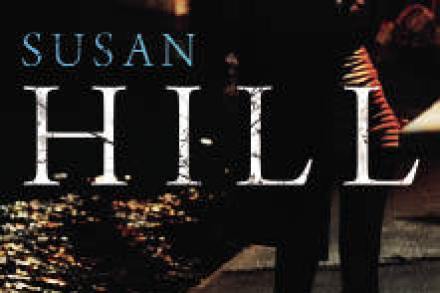
This is a compelling and somewhat disturbing novel, conducted with Susan Hill’s customary fluency. This is a compelling and somewhat disturbing novel, conducted with Susan Hill’s customary fluency. It features Simon Serailler, the author’s usual protagonist, investigating a cold case of a missing teenager who was last seen waiting at a bus stop some 16 years previously, and whose skeleton was found when heavy rain washed down sludge and rubble from a neighbouring hillside. But it also has a secondary theme — rather more serious than its ostensible subject — that of assisted suicide. Hypochondriacs are warned. What is examined, in admirable detail, somewhat overshadows the police procedural which is intricate and convincing.

A singular voice

From our UK edition

Barbara Pym, now thought of as a reliable and popular novelist of the 1950s and 1960s, has almost disappeared from sight, overshadowed by the more explicit and confessional writers we are accustomed to reading today. Indeed her eclipse was sudden and unforeseen: her mature novels were rejected by three major publishers when she was only midway through her career, and it was only through the generous comments of two of her admirers, Philip Larkin and Lord David Cecil in the Times Literary Supplement in 1977, that she was brought again to public attention.

The people and the place

From our UK edition

Where to begin? Graham Robb, like all dedicated Francophiles, begins early, when his enlightened parents made him a present of a trip to Paris and sent him off with a map and a voucher for a free gift at the Galeries Lafayette. For a week, and then two weeks, and then six months, he did what all visitors do: he walked the length of the city, he bought books, he sat in cafés and listened to the conversations of strangers. This apprenticeship made him the historian and biographer he is today, and this book is a form of homage to Paris and to those who choose to see it as their home. To adapt Simone de Beauvoir’s dictum, one is not born a Parisian, one becomes one.

Missing link

From our UK edition

In times of anxiety or confusion the most effective palliative is a good detective story. The requirement is that a sense of justice be restored, and, paradoxically, given the fictional events portrayed, a much desired sense of order. The effect is transitory but reliable. It is also necessary that the protagonist be a man of principle. Such a one is the unassailably virtuous Simon Serrailler, Susan Hill’s detective hero, now making his fifth appearance in this agreeable series. He is, of course, no stranger to melancholy, largely in connection with his equally high-minded girlfriend from whom he is momentarily estranged. And he lives in Lafferton, a small fictional town which nevertheless boasts a cathedral, a college of further education and a hospice.

Prize-winning novels from France | 2 January 2010

From our UK edition

After an unremarkable year for fiction the Prix Goncourt was awarded to Marie Ndiaye for a novel — actually three novellas — which must have beguiled the judges by the sheer unfamiliarity of its contents. After an unremarkable year for fiction the Prix Goncourt was awarded to Marie Ndiaye for a novel — actually three novellas — which must have beguiled the judges by the sheer unfamiliarity of its contents. Trois femmes puissantes (Gallimard) was already established as a favourite with the reading public. One suspects that the majority of those readers are women, for we are in feminist territory here, and it feels a little old-fashioned.

Nightmare in Dublin

From our UK edition

Caroline Wallace, a journalist specialising in book reviews and the occasional travel piece, is asked, or rather told, to go to Dublin to interview Desmond FitzMaurice, a once famous playwright and foreign correspondent, in order to revive interest in his now forgotten work. Fitzmaurice is nearly 90, and so there is no time to be lost. She will listen to his reminiscences and with luck fashion a major article. There is no reason why she should not do this. All she leaves in London is a house in Notting Hill which she shares with her partner of ten years who has never suggested marriage. She is over 40, so time here is also of the essence. One day she will give up her job and write a proper book. This assignment, she thinks, will be her last.

Agreeable alliance

From our UK edition

Noah’s Compass, by Anne Tyler This is Anne Tyler’s seventeenth novel and will be welcomed by her many fans. It will also be familiar, even a little too familiar, to be judged on its own. There is the same Baltimore setting, the same domestic reassurance, the same blameless clueless protagonist, and the same invasive presence of over-zealous women. All these people are essentially virtuous, even at their most tiresome. One might say that Tyler’s style is virtuous: sunny, uninflected, and at ease with what she has to tell. Even the reader feels virtuous, perhaps beguiled by her characters into an assumption that nothing will shock or disturb. Thus a most agreeable alliance is once more sealed between writer and reader.

Familiar and unfamiliar

From our UK edition

Gillian Tindall has had the ingenious and sympathetic idea of combining biography and topography in an overview of British visitors to Paris from 1814 to the present day — an enterprise of formidable research and enviable lightness of touch. Selecting various members of her own extended family, she traces their temporary residence in Paris and the reasons for their displacement. In so doing, she maps the various quartiers, along with deft reconstructions of the forces that drove these characters to seek enlightenment or advancement in the city that promised them both.

Pure, but never simple

From our UK edition

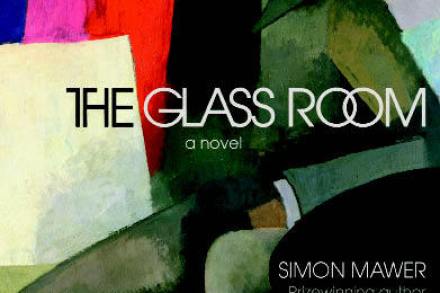
Here at last is a novel informed by exceptional intelligence. The blurb states that the author, Simon Mawer, was born in England, but it seems likely that his ancestry was Czech, since he is acquainted with the language and the customs of pre-war Czechoslovakia and has learned of its travails during the German and Russian occupations. And it is clear from his narrative that the country was both sophisticated and cultivated in its manifestations, influenced perhaps by its position at the heart of Europe and subject to both the best and the worst of its fashions. This alone would mark it as unusual: the clarity with which it is written is almost unfamiliar and certainly to be admired.

A grand overview

From our UK edition

This unassuming book is in fact a valuable addition to the Proust bibliography. The author, himself a painter, has had the apparently simple idea of extracting all references to works of art in the great novel in an attempt to demonstrate Proust’s knowledge of, and reliance on, paintings to give resonance to his characters and to present them to his readers in an indelible physical form. The exercise proves both seductive and enlightening. Proust was a translator of Ruskin, yet he rejected Ruskin’s message that art has a moral foundation. For Proust art was a self-explanatory and self-sustaining exercise which excluded praise and condemnation. His work is filled with characters who are undoubtedly venal.

A crisis of confidence

From our UK edition

The Believers, by Zoë Heller Zoë Heller’s Notes on a Scandal won wide publicity and was deservedly praised for its depiction of female malice and the unhappiness that fosters it. Her present novel is so markedly different that it might have been written by another hand. This is no mean feat, but the effect is disconcerting. To begin with, it is completely Americanised, not only in its setting but in its locution, so that the reader must constantly adjust to different idioms, different references. This too is no mean feat, but somewhat alienating, as are the characters, who are universally charmless. The title is only one indication of their unreliability: they have beliefs which turn out to be misplaced and which have little connection with their behaviour.

A far cry from Paradise

From our UK edition

This strange novel is described as a ghost story, although it reads like a nervous breakdown in which both writer and reader are embedded. So constricted is the narrative that the central figure, Jim Smith, delivers no opinion of his own, although his past life appears to have been full of incident: extensive travel, a business career, apparently successful, in London, a certain level of worldly experience which has vanished, leaving him without attachments or points of reference.

Not going to London to visit the Queen

From our UK edition

It is a pleasure to encounter a new writer, particularly if that writer is modest, competent, and above all unheralded. Frances Itani is Canadian and recognisably from the same background as Alice Munro, although lacking Munro’s wistfulness and emotional delicacy. She is unknown in this country, although the author of a previous novel. On the strength of Remembering the Bones she has it in her to reach a wider audience. Her story is simple. Her protagonist, Georgina Danforth Witley, has been invited to Buckingham Palace, one of a handful of Commonwealth citizens who share their birthday with that of the Queen.

Vagabonds in Paris

From our UK edition

Patrick Modiano is a nostalgic novelist who has consistently shown courage in investigating the boundaries between duty and loyalty. This ambiguity has featured in all his novels and seems to have had its roots in the character of his own father, whose activities in the troubled era of wartime and post-war Paris have left their mark on his writing. Conscious of his flawed moral inheritance, Modiano has applied himself to testing the limits of his own freedom and has found that shame is not so easily dispersed. It is a quality that inhabits all his elegantly written novels and is equally present in Dans le Café de la Jeunesse Perdue which reverts to the same troubled era as its predecessors and occupies a doubtful position on the periphery of the natural order.

Linked by an oblique sadness

From our UK edition

Connoisseurs of the short story will welcome this new collection by William Trevor, his first since 2004. Trevor has been compared with Chekhov, not without justification. He works by indirection, avoiding judgment, his sense of tragedy well concealed by a partiality for unfulfilled lives left free to exist on the page without the author’s intervention. Here destinies may be thwarted but the process will be a reflective one, mercifully free of irony. It is the absence of irony that gives these stories their pre- as opposed to post-modern stamp, and the scrupulous neutrality that refuses to pander to the reader’s expectations. Certainly his characters lack ardour, but that is the price one sometimes pays for dignity and even a sort of wisdom.

What Henry knew

From our UK edition

In October 1875 Henry James moved to Paris to advance his nascent career as a man of letters, specifically as a novelist. This was not his first visit: his enlightened family encouraged travel, but the desire to take up residence was intimately connected with his ambitions: Paris, after all, was the epi- centre of forward looking artistic endeavour. He was funded by his father and also by the reviews and articles he wrote for various American magazines, notably Tribune and the Atlantic Monthly.