Culture

Culture

The good, the bad and the ugly in books, exhibitions, cinema, TV, dance, music, podcasts and theatre.

Across the literary pages: when Tony met Ian McEwan

Guardian HQ visited the future this weekend. The newspaper group hosted its inaugural ‘Open Weekend’ — a ‘festival of debates, workshops, music, comedy, poetry, food and fun’, according to the blurb. There was live music (banjos and interpretative dance, naturally). A farmers’ market ran along the adjacent canal and a selection of seedlings for sale from the garden centre. There were also some talks about urgent issues, poetry readings and exclusive access to the editorial offices. The Guardian loses £1 million a week by some estimates: alternative income must be found. It’s the same story for most media organisations these days. Writers are good value at this sort of junket.

Who are the losers now?

More from Books

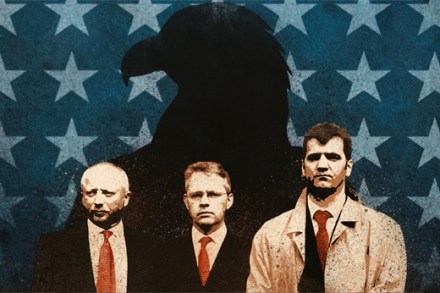
Keith Lowe’s horrifying book is a survey of the physical and moral breakdown of Europe in the closing months of the second world war and its immediate aftermath. It is a complex story and he tells it, on the whole, very well. Though the first world war took the lives of more uniformed young men, in the useless slaughter of the Flanders trenches, many more people, chiefly civilians, died in 1939-45. Soviet casualties were the greatest: 23 million killed, of whom two million came from Belarus and seven million from Ukraine. Next came the Poles, with losses of 6,028,000, the largest percentage of the population in any country. The Germans also lost six million, and the Yugoslavs over a million.

Architectural bonsai

More from Books

In the summer of 1961 I was in my second year at Magdalen College, Oxford with rooms in the 18th-century New Buildings. One of my neighbours there was a quiet man called Jonathan Green-Armytage. Sitting out on the steps of the building’s colonnade, in the sun, we became friends. He was already a distinguished photographer. He showed me photographs he had taken of Edith Sitwell, with her medieval face and gnarled, beringed fingers. They were at least as good as Cecil Beaton’s portraits of the old poet. One day, Jonathan said to me: ‘I think you’d enjoy to meet my god-mother, Vivien Greene; and I think she’d like to meet you.

Memory games

More from Books

I read this novel while convalescing from pneumonia. It proved admirably fit for purpose. A light diet, mildly entertaining and with enough twists and turns of plot to serve as a tonic. John O’Farrell is a man of many parts — comedy scriptwriter (Spitting Image, Alas Smith and Jones), political satirist (An Utterly Exasperating History of Modern Britain) and bestselling novelist. The Man Who Forgot his Wife is his fourth. The protaganist, Vaughan, hasn’t just forgotten his wife, he’s forgotten everything.

Siege mentality

More from Books

The mirrored sunglasses worn by Putin on the cover of Angus Roxburgh’s The Strongman give the Russian president the look of a crude mafia boss, while the half-face photo on the cover of Masha Gessen’s book makes him appear both more ordinary and more sinister. This hints at the difference of the authors’ approach. Gessen focuses on the trajectory of a postwar Soviet boy growing up in a shabby communal flat, fierce and vengeful in street fights, who dreams of joining the KGB. This dream was fulfilled: Putin got a boring job as an agent in East Germany, and ten years after returning home he surprisingly became the most powerful man in Russia — which, 12 years later, he remains. His years in the KGB taught him secrecy.

A choice of first novels | 24 March 2012

More from Books

Charlotte Rogan’s The Lifeboat (Virago, £12.99) comes garlanded with praise from the likes of J. M. Coetzee and Hilary Mantel. Rogan, who has only taken up writing after a career in architecture and engineering, tells the story of Grace Winter, a young woman on trial for murder as the novel opens. She and her husband Henry had been travelling on a transatlantic liner, the Empress Alexandra, in 1914. When the ship mysteriously sank, Grace managed to secure  a place on a crowded lifeboat, commanded by the enigmatic Hardie. But what happened to her husband? And why did the ship sink? Rogan does an excellent job of conveying the fear and claustrophobia of a lifeboat full of strangers, whose travails form a large part of the story.

Bookends: A matter of opinion

More from Books

In an age when the merely mildly curious believe they can get all they really need to know from Wikipedia for free, A. N. Wilson’s fellow literary professionals must take heart from his expectation that there is still possibl to charge for a work of such succinctness that it is essentially an extended Wikipedia entry enlivened by some opinions. Wilson’s Hitler: A Short Biography (Harper Press, £14.99)certainly trumps Wiki for stylistic brio and brims with the author’s customary zip and zing.

Interview: Colm Tóibín

Colm Tóibín began his writing career as a journalist. Although he wrote his first novel, The South, in 1986, it took him a further four years to find a publisher. Since that seminal moment, Tóibín has delivered five other novels; two books of short stories; two plays, as well as several works of non-fiction. He has been nominated for the Booker Prize three times, and won The Costa Novel Award, for Brooklyn. In his latest book of essays, New Ways to Kill Your Mother, Tóibín explores the odd relationships that various writers, including W.B Yeats, Samuel Beckett, John Cheever and Thomas Mann, had with their families, and asks how it informed their work.

The dishonour of the Second World War

On 13th March 1938, judgment was passed in the political show trial of Nikolai Bukharin, former head of the Soviet Politburo. He was sentenced to death. Bukharin was taken in silence from the dock to the exit to the cells. He paused at the door and cast his eyes up to the gallery that contained the free world’s press. Fitzroy Maclean was sitting there. As Bukharin stepped into the darkness, Maclean looked across the courtroom. Joseph Stalin had appeared in the gallery opposite. The dictator gazed impassively after the vanishing Bukharin, his paranoia quelled for the moment. That scene of terrifying injustice explains why Evelyn Waugh’s Sword of Honour, written of so brilliantly by Steven McGregor yesterday, descends into bitterness and despair.

Ending a war story

What, if any, are the similarities between the great novels of past wars, such as Somerset Maugham’s The Hero (the Boer War), Ford Madox Ford’s Parade’s End (WWI), and Evelyn Waugh’s The Sword of Honor Trilogy (WWII)? And is there a connection between these wartime experiences and our current conflicts in Iraq and Afghanistan? As a veteran of the recent Iraq War, I found myself haunted by these novels not because of how our response to war has changed, but because the experiences of troops returning from battlefields in the Cape and Verdun when compared to those of Baghdad and Helmand matches with a startling sameness. It would be a mistake to dismiss the novels by Waugh, Ford and Maugham as interchangeable. Each approaches war differently.

BOB will triumph

Every time I do a ‘CTRL F’ search, allowing my computer to achieve in milliseconds what it took the schoolboy me hours to do (find a particular word among pages and pages of text), I think of a small business centre in Sheffield, and imagine its occupants to be shaking in fear at the onward march of e-books. For it’s in this business centre that the Society of Indexers is to be found. (I know — you think they’d have a dusty garret somewhere in St James’s.) With Kindles and iPads able to instantly locate every occurrence in a book of whichever word or phrase you’re looking for, surely the days of the index are (please forgive this, it really isn’t deliberate) numbered?

Shelf Life: Sean Thomas Russell

A new world flavour to Shelf Life this week, as the novelist Sean Thomas Russell joins us from Vancouver. He has been getting to grips with Shakespeare — an attempt, perhaps, to escape the pervasive influence of Bill O'Reilly. His latest novel, A Ship of War, is published in Britain next week. 1) What are you reading at the moment?   Shakespeare After All by Marjorie Garber. I've been on a Shakespeare kick recently. I just finished Will in the World by Stephen Greenblatt and A Year in the Life of William Shakespeare: 1599 by James Shapiro. I recommend all three. 2) As a child, what did you read under the covers?  The Adventures of Tom Sawyer and Adventures of Huckleberry Finn.

Taxing books

There’s a cracking story in the Bookseller this morning. The Publisher’s Association is calling on the government to cut VAT on eBooks to the zero rate enjoyed by print books. eBooks currently attract 20 per cent VAT, whereas print books are exempt on the grounds that they promote education. The Publishers’ Association complains that eBooks provide the same social value as print books, and demand that the playing field be levelled. There is a further complication in that some digital companies, Amazon among them, are selling English eBooks from Luxembourg, which only levies 3 per cent VAT on eBooks. This puts British retailers at a competitive disadvantage at a time when the digital economy in books is booming.

Battling through Budget Day with WSC

Don’t be ashamed if you can’t understand the Budget. Economics is a notoriously tricky business. Even chancellors of the exchequer find themselves flailing about in the dark, dependent on the guidance of others. Winston Churchill explained his disastrous policy of returning sterling to the Gold Standard in 1925, by writing: ‘I had no special comprehension of the currency policy, and therefore fell into the hands of the experts.’ (That sentence appears in the unpublished draft of his History of the Second World War. It was excised from the final version, by whom and for what is unknown.) Churchill’s candour about his own limitations reveals something of his character, but his breezy contempt for the ‘experts’ is striking.

Brightening your commute

Attention all those who commute through King’s Cross. A new bookshop has opened on the concourse near platforms 9-11, next to the shrine for Platform 9¾ of Harry Potter fame.  This is the first Watermark store to open in Europe. Watermark is an Australian firm that specialises in filling small spaces in major travel hubs. It is a traditional bookseller in the sense that well educated, book-loving staff are on hand to offer customers the expertise that is usually unavailable in a travel terminal newsagent like WHSmith. (Smiths seem to be the only such retailer in Britain.) Staff sometimes have a foreign language — a useful bonus in an arena where tourists should be a major source of revenue.

Notes from the underground

‘Zines and self-publishing are a bone of contention in my house. “I don’t have much time for self-publishing,” says my flatmate who works for Bloomsbury, “if it was any good it would have been published properly.” I, however, am in love with the idea that if anybody wanted to make a book or zine themselves, they could, quite easily, and control every step of the publishing process. So on Saturday I left her reading ‘proper’ books and took myself to the Publish and be Damned ‘zine and self-publishing fair at the ICA.

Paxman’s rogues, villains and eccentrics

Isn’t Paxo’s series on the British Empire brilliant TV? Gone is the weary contempt that he wears on Newsnight. Instead, he is visibly enthused by talking to ordinary people in far flung lands. Paxman isn’t telling a new story, but he's a gifted spinner of old yarns. Pottering around a spice market in Calcutta, going to the races in Hong Kong, meeting the relatives of mill workers in Lancashire, beating sugar cane with the descendants of slaves in Jamaica, having tiffin with the great-grandson of the Mahdi in Khartoum  — there is an air of the sahib about Paxman, but he has the common touch. Empire is our book of the month. Its weakness is that it does not fully explain that the empire was an elite project.

Discovering poetry: George Herbert and the meaning of Easter

Easter - Rise heart: thy Lord is risen. Sing his praise     Without delayes, Who takes thee by the hand, that thou likewise     With him mayst rise: That, as his death calcined thee to dust, His life may make thee gold, and much more just. Awake, my lute, and struggle for thy part     With all thy art. The crosse taught all wood to resound his name,     Who bore the same. His stretched sinews taught all strings, what key Is best to celebrate this most high day.

Across the literary pages: language games

Noam Chomsky versus Daniel Everett, it is a literary spat with a difference: they specialise in language. Chomsky is the high priest of modern linguistics, progenitor of ‘universal grammar’. Everett has spent 30 years among remote Amazonian tribes and concludes that language is learned. He says that it is unique to a specific culture, which means that human cultures may be totally unknown to each other. There is a Wauvian flavour to Everett’s experience. He sailed up the Amazon both as an anthropologist in search of subjects and as a missionary in search of converts. He lived among the Pirahã and slowly learned their language. But he did not learn all of their customs, nor them his. Everett translated St.

Hero of his own drama

More from Books

Sam Leith is enthralled by the larger-than-life genius, August Strindberg — playwright, horticulturalist, painter, alchemist and father of modern literature When I’m reading a book for review, it’s my habit to jot an exclamation mark in the margin alongside anything that strikes me as particularly unexpected, funny or alarming. I embarked on Strindberg: A Life with — I’m ashamed to confess — the expectation of a weary plod through 400-odd pages of lowering Scandinavian neurosis, auguring a low exclamation-mark count and a high number of triple zeds. But by the end, there was an exclamation mark beside almost every paragraph.

Lest we forget | 17 March 2012

More from Books

It was not possible, as Primo Levi memorably wrote, to convey the full horror of the Nazi extermination camps because no one had survived to describe death in the gas chambers. There were no ‘sommersi’ (drowned) left alive to speak for the men, women and children driven in naked to die.  Apart from Levi himself, one of the very few people to have got close is Claude Lanzmann, whose nine-and-a-half-hour film on the deaths camps, Shoah, transformed the way successive postwar generations have come to remember and perceive the Nazi killings. In his autobiography, The Patagonian Hare, Lanzmann provides much interesting material on the 13 years spent filming and editing, and on the life that first led him to Israel in the 1950s.

Inflated dreams

More from Books

When almost every tale about the Arctic has been told, when the major explorers have been assessed and re-assessed, when even the most obscure bit-players have been drawn into the light, what is a polar-minded author to do? Publishers can be such tiresome sticklers for novelty, always hankering after books to fire off into some perceived gap in the market. Failing that, they often insist on reputational piggy-backing — the author following in the footsteps of a legendary explorer, urgently intuiting the past, like a cross between a hiking holiday and a séance. Alec Wilkinson ignores the fashionable justifications.

Deviation and double entendre

More from Books

If there’s anything full-time novelists hate more than a celebrity muscling in on their turf, it’s the celebrity doing such a good job that it seems as if anybody could write fiction. Happily for the pros, this isn’t a problem with Briefs Encountered. Not only is the book full of obvious flaws, but it also makes the whole business of novel-writing look unbelievably difficult. There is, it turns out, so much to do — what with plot, characters, dialogue and tone all to be created and, worse still, made coherent. And then there’s all those pesky sentences you have to string together… In fact, Clary’s set-up is quite promising.

Joy to the world

More from Books

Patrick Gale’s new novel could be read as a companion work to his hugely successful Notes from an Exhibition, and in fact, in a satisfying twist, some characters and even objects slip from the latter into this novel. Notes from an Exhibition centred around the character of Rachel Kelly, whose mental instability and solipsistic devotion to her art left a painful mark on her family. The ‘perfectly good man’ of this title is a vicar, Barnaby Johnson, as kind, gentle and balanced as Rachel Kelly was not, yet with the same sense of vocation — in this case, selfless service to the church — that moulds and in its own way scars his family. ‘Ah,’ says his daughter Carrie to another child of a ‘very good man’, ‘you have my deepest sympathy.

Agreeing to differ

More from Books

‘Frankie and Johnny were sweethearts; Lordie, how they could love.’ The ballad has many variant versions but the denouement is always the same; he was her man and he did her wrong. Rooty-toot-toot three times she shoot, and Johnny ended up in a coffin. Thatcher and Reagan were sweethearts; Lordie, how they could love. But Reagan did her wrong: over Grenada, over nuclear disarmament, as near as nothing over the Falklands. The relationship was to end in ostentatious affection, but if Mrs Thatcher had had a gun in that celebrated handbag, it might have been a case of rooty-toot-toot all over again.

Last of the swagmen

More from Books

I have hitherto resisted my wife’s frequent recommendations that I should read a daily blog about the life of the denizens of Spitalfields, but, now that they have been published in book form, I can see why she is such an enthusiast. The Gentle Author is deliberately anonymous and bases his style on a combination of John Gay and Henry Mayhew, a pseudo-18th-century faux naïf, who wanders round his local neighbourhood collecting the tales of ordinary folk, including the last of the so-called swagmen who has a market stall in Spitalfields, the waiter in an Indian restaurant just off Brick Lane, Fred, who sells chestnuts at the corner of Bell Lane and Wentworth Street, and Paul Gardner, the fourth generation in his family to sell paper bags.

Here be monsters | 17 March 2012

More from Books

The lovely title of this book comes from the philosopher David Hume. The question he posed was this: if a man grew up familiar with every shade of blue but one, would he be able to recognise the hue in a chart of blues, or would it register only as a blank? In other words, can the intellect supply information, or may we know things only through the senses? Dwelling too long on this sort of problem famously sends people mad. Hume himself suffered a breakdown, after which he sensibly made it his business to get out more. In this novel, two of the three people central to the story have experienced, or are experiencing, psychiatric problems, while another important but peripheral character spends the duration locked in a loony bin.