Robert Chandler

Witness for the prosecution | 17 April 2019

From our UK edition

Vasily Grossman’s novel Life and Fate (completed in 1960) has been hailed as a 20th-century War and Peace. It has been translated into most European languages and also into Chinese, Japanese, Korean, Turkish and Vietnamese. There have been stage productions, TV series and an eight-hour BBC radio dramatisation. And Grossman himself — like Leo Tolstoy, Osip Mandelstam, Alexander Solzhenitsyn and several other Russian poets and novelists — is now venerated not only as a writer but also as a moral exemplar. His life story is indeed remarkable.

Doctor Zhivago’s long, dark shadow

From our UK edition

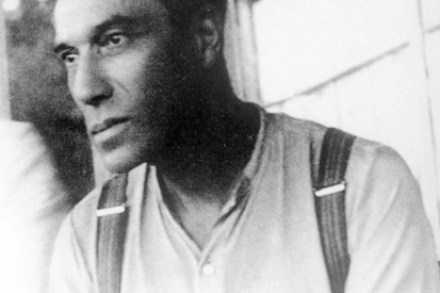
For most Russians, Boris Pasternak is one of their four greatest poets of the last century. For most Anglophone readers, he is the man who won the Nobel Prize for Doctor Zhivago. The first four chapters of The Zhivago Affair give a full picture of Pasternak’s life and the Soviet literary world up until the early 1950s, when Zhivago was nearing completion. Pasternak was born in Moscow in 1890, into an assimilated and highly cultured Jewish family. His father was a painter, his mother a concert pianist; among the family’s friends were Leo Tolstoy, Sergey Rachmaninov and Rainer Maria Rilke. Pasternak wanted first to be a composer, then a philosopher — but by the age of 22 he understood that his vocation was poetry.

The Enchanted Wanderer and Other Stories, by Nikolai Leskov – review

From our UK edition

Though underestimated in the English-speaking world, Nikolai Leskov is one of the greatest of 19th-century Russian writers. Donald Rayfield has described him as ‘Russia’s best-kept secret’. Richard Pevear’s excellent introduction to this selection includes Anton Chekhov’s account of how Leskov — ‘his favourite writer’ — said to him at the beginning of his career, after a night of carousing, ‘I shall anoint you with oil as Samuel did David.  Write.’ This little scene, which could be from one of Leskov’s own stories, perhaps offers a clue as to why he is not more widely recognised.

On the verge of extinction

From our UK edition

This book, by the architectural historian Richard Davies, is remarkable in many ways — for the importance of its subject matter, for the excellence and variety of the many photographs, and for the imaginative choice of the accompanying texts. The fruit of ten years of long and difficult journeys in the far north of European Russia, it is a labour of love. It is also extremely informative. Russian wooden churches are very varied; because it is difficult to travel over such often boggy terrain, each region tended to develop its own specific architectural features. All, however, are built from logs of hewn pine; the carpenters used neither saws nor hammers and nails — only axes.

Ultimate issues

From our UK edition

In his preface to this anthology of brief memoirs, Robert Silvers suggests that its ‘invisible, tragic core’ is to be found in an account by Isaiah Berlin of one of his several meetings with Boris Pasternak. Pasternak told Berlin how Stalin had once telephoned him to ask him two questions: had Pasternak been present when Mandelstam read out his notorious ‘Epigram’ about Stalin; and was Mandelstam a ‘master’? Pasternak sidestepped these questions by saying that it was essential that he and Stalin meet: they needed to ‘speak about ultimate issues, about life and death’. This was in 1934, not long before Mandelstam’s first arrest.

Searching for a saviour

From our UK edition

The central themes of Russian history have remained constant for over a millennium.  Russia’s vast spaces and lack of any natural borders have always made her inhabitants terrified of invasion. And to protect the country against invaders, and to preserve its unity, Russia’s rulers seem always to have felt it necessary to assert their authority with great brutality. All this is at least hinted at in the very first introduction to Russian history. The Primary Chronicle, compiled in Kiev around 1113, tells us that there was no law among [the Slavs], but tribe rose against tribe…  Accordingly they …  said to the people of Rus [who were probably Scandinavians]: ‘Our whole land is great and rich, but there is no order in it.

A kind of tenderness

From our UK edition

The son of a grocer, Anton Chekhov was born in 1860 in Taganrog, on the Sea of Azov. While studying medicine at Moscow university, he published hundreds of comic sketches in order to pay his way and support his parents and siblings. After becoming famous in the late 1880s, he practised as a doctor only intermittently; most of his medical work was on behalf of the peasants, and unpaid. In 1890 he made the difficult journey across Siberia to Sakhalin Island, where he investigated the living conditions of the convicts, around 10,000 of whom had been exiled there. During the 1890s Chekhov’s tuberculosis worsened and from 1897 he had to spend most of his time in the Crimean resort of Yalta.

Art of Translation

From our UK edition

David Bellos is a professor of comparative literature. He is the main English translator of George Perec and Ismail Kadare, and he has written biographies of Perec, Jacques Tati and the French writer and con man Romain Gary. His most recent book, for which he draws on all his wide range of interests, is a clear and lively survey of the world of interpreting and translating. He covers everything from subtitling films to translating poetry, from the genesis of simultaneous interpreting in the early days of the UN to the advances he predicts — somewhat to my surprise — in computer translation. This book fulfils a real need; there is nothing quite like it. Why Translation Matters, by Edith Grossman, is equally well written, but it is limited to the field of literary translation.

An open and shut case

From our UK edition

Harvey Pitcher has been translating Chekhov and writing about him for much of the last 40 years. His earlier publications include a book about Chekhov’s plays and a portrait of Chekhov’s wife. His Chekhov: The Comic Stories (Deutsch, 1998) is the best translation of the still undervalued early stories. The present volume is a discussion of Chekhov’s work and life as a whole, but with a particular focus on the later stories. Harvey Pitcher has been translating Chekhov and writing about him for much of the last 40 years. His earlier publications include a book about Chekhov’s plays and a portrait of Chekhov’s wife. His Chekhov: The Comic Stories (Deutsch, 1998) is the best translation of the still undervalued early stories.

Out of the woods

From our UK edition

These two memoirs by ladies born into the Russian elite in the 1880s have both had to wait many decades before publication in English. The Green Snake, however, has gone through eight editions in its original German, whereas The Russian Countess has never been published before. No one was in the least interested in a Russia that no longer existed. Margarita Woloschin was a painter and her husband was a well-known poet. She knew most of the key figures in the Russian Symbolist movement, and she became a disciple of Rudolf Steiner, the founder of anthroposophy. From 1924 to her death in 1973 she lived in Stuttgart and devoted herself to her art and her work as a teacher of Steiner’s doctrines.