Culture

Culture

The good, the bad and the ugly in books, exhibitions, cinema, TV, dance, music, podcasts and theatre.

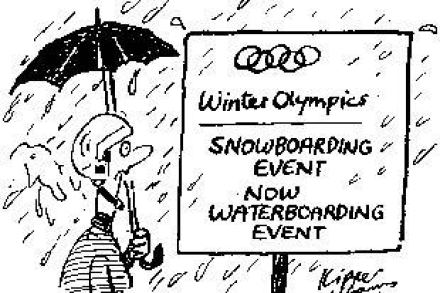
Does anyone like 3-D?

Arts feature

Roger Ebert believes not, and that its use in films is an annoyance and a distraction Has it really come to this? I read in Variety, the film industry journal, that ‘Mark Thomas of Elsinore Films is producing a 3-D musical Hamlet targeting the Harry Potter and High School Musical market’. I am not concerned for Hamlet, which has been kneaded into so many preposterous shapes and survived. What horrifies me is the prospect of seeing the film in 3-D. Variety helpfully explains: ‘Hamlet lends itself to a 3-D treatment. The producers hope to include a ghost that hovers in front of the audience’s eyes, cannon fire that flies into the auditorium and a sword fight that appears to happen all around viewers.

Take Two

More from Arts

A few weeks ago I was in Chichester, reviewing a fine revival of Terence Rattigan’s Separate Tables and suddenly experienced a great ache of nostalgia for the period immediately before my birth. A few weeks ago I was in Chichester, reviewing a fine revival of Terence Rattigan’s Separate Tables and suddenly experienced a great ache of nostalgia for the period immediately before my birth. Rattigan’s play, first staged in 1954, portrays a post-second-world-war England in which emotions are essentially private, polite small talk largely prevails, and upper lips are worn stiff — in public at least. Of course, the dramatist was in many ways critical of this.

Star quality | 10 October 2009

More from Arts

Scottish Ballet: 40th Anniversary Season Sadler’s Wells Theatre Scottish Ballet has been frequently praised for its stylistically impeccable and theatrically superb renditions of George Balanchine’s works. It is thus more than fitting that the company’s 40th-anniversary programme kicks off with Rubies, the sparkling central section of Jewels, his acclaimed 1967 triptych. Rubies, which is often performed on its own, highlights and encompasses the best of the Balanchinian choreographic aesthetic. Dazzling, jazzy ideas, representing the American culture that the Russian-born dance-maker wanted to embrace, develop rapidly from traces of the old classical tradition which encapsulate Balanchine’s reverence for his own past and for that balletic idiom he never refuted.

Moment of truth

More from Arts

I wonder how many people still listen to plays on radio now that there is so much competition for our attention from Twitter, YouTube and the hours taken up with Strictly Come Dancing. It’s not just that we’re being taken over by techie gadgetry so that there is less and less time to do anything else. (How many photos have you got trapped on your computer with no time to sort through their nameless numbers and download on to a memory stick, let alone buy the right paper to print them, etc., etc.?) It’s also very difficult to follow the action in a radio play and get involved in the drama if you’re tempted to text, flick on to Google or download those dratted photos midway through.

Art of darkness

More from Arts

The East Anglians; Subversive Spaces: Surrealism and Contemporary Art Sainsbury Centre for Visual Arts, Norwich, until 13 December Most exhibitions of photographs could be viewed just as satisfactorily from an armchair with a book of high-quality reproductions, but not The East Anglians. There are 58 colour photographs in this show, and they need to be seen in situ, partly because of their scale (some are very large), and partly because of their darkness, which would not transfer well to the printed page. The darkness is not helped by the slightly overweening black frames, which add a funereal air to the proceedings, but perhaps this is not inappropriate in a body of work that chronicles the decline of a way of life.

Gasping for entertainment

More from Arts

Breakfast at Tiffany’s Theatre Royal Haymarket Inherit the Wind Old Vic ‘What do you want?’ a film producer asks Holly Golightly about half an hour into Breakfast at Tiffany’s. ‘I don’t know,’ she says, ‘but if I find out I’ll tell you first.’ At this point my hopes for the evening collapsed. Rule one of the characterisation manual states that a character who wants nothing, or nothing much, isn’t a dramatic personality but a list of utterances enfolding an emptiness.

There will be blood

More from Arts

All right, I surrender. There’s just no way on earth I can deal in 600 words with all the great, or potentially great, TV that has been on lately. Emma; Alex: A Passion for Life (the sequel to that moving documentary about the brilliant Etonian musician with cystic fibrosis); Generation Kill. Truly, it has been what we classical scholars call a Weekus Mirabilis. I’m going to deal with just three offerings. First, Criminal Justice (BBC1, all week for a whole hour each night, which is a serious commitment, n’est-ce pas?). I’ve only seen episode one and I’m torn.

The Connoisseur’s Diary

Any other business

2nd October New York: Opera Verdi’s Aida opens at the Met, conducted by Daniele Gatti, former principal conductor of the Royal Philharmonic Orchestra. Lithuanian soprano Violeta Urmana sings the title role. 4th October Paris: Racing The Prix de l’Arc de Triomphe is a Group 1 flat race held at the Longchamp course and one of the most fashionable race meetings in the calendar. It is one of the four French Classics and has a prize of €4 million, the second biggest prize on the turf after the Japan Cup (on 29 November). 4th October Japanese Grand Prix This year’s race takes place at the Suzuka Circuit, the only figure-of-eight F1 track and one of the most challenging. The 2008 race was won by Spain’s Fernando Alonso for Renault.

Getting in on the act

Arts feature

Old operatic conventions will no longer do, says Igor Toronyi-Lalic: no more parking and barking Caricatures are often instructive. Those that acquire legs will offer a crystallised version of the truth. The hoary send-up of opera, for example — the lardy singers, the stilted poses, the outstretched arms — is representative of a historic reality. Opera singers did once park and bark. Character was once illustrated through stock gesture and semaphore. The presumed impossibility of mastering both the singing and the acting meant consigning half the art form to the dustbin. ‘How can you act if you have to hold a sustained note for six measures in the middle of an emotional climax, with your eyes glued on the conductor?

Rough with the smooth

More from Arts

The Damnation of Faust Barbican Rigoletto ENO Berlioz called La Damnation de Faust ‘an opera without decor or costumes’, which is what I quite often wish all operas were. But as David Cairns writes in his characteristically illuminating but tendentious programme notes, ‘It is an opera of the mind’s eye performed on an ideal stage of the imagination; we see it more vividly than any visual medium could depict it, except the cinema (which it at times anticipates).’ That last interesting thought apart, I wonder if my visual imagination is defective — I suspect that it is. Anyway, I don’t find, on the whole, that I do have vivid images during Damnation, and certainly not of a Hungarian plain, Auerbach’s cellar, and so forth.

Oasis of silence

More from Arts

Seconds after I filed last month’s column, Oasis broke up. Seconds after I filed last month’s column, Oasis broke up. As ever on such momentous occasions, I didn’t quite know how to respond. Would a street party be excessive? Might a night on the lash be considered lacking in respect? In the end I settled for opening a bottle of champagne and toasting the good sense of the Gallagher brothers, who should probably have done this years ago, ideally before forming the group in the first place. Why do Oasis generate such loathing? It’s not just me, although I accept I am a repeat offender.

The writing on the wall

More from Arts

Imagine the scene at some BBC committee meeting. The Chief Officer for Commissioning, Unit Programming is setting out the problem. ‘Gentlemen, recent controversies — the Ross/Brand phone calls, the ongoing problem of Ross’s £6 million annual salary, which is more than the entire budget for a year of the Today programme, our own excessive pay and expenses — have brought mistrust and contempt on our management, which not even the record number of Emmys for Little Dorrit has erased. We urgently need to reclaim the moral and cultural high ground. Any suggestions?’ Up pops an underling: ‘Why don’t we bring back Hole in the Wall?

Heartbeat of the past

More from Arts

‘Life consists not of a series of illustrious actions, or elegant enjoyments,’ wrote Dr Johnson (of whom you may think you have heard too much in the last few weeks, but he is often so pertinent). ‘Life consists not of a series of illustrious actions, or elegant enjoyments,’ wrote Dr Johnson (of whom you may think you have heard too much in the last few weeks, but he is often so pertinent). He was commenting upon the barbarity of Scottish houses in which it was impossible to open a window and get some ‘fresher air’. The greater part of our time, he reminds us, ‘passes in compliance with necessities in the performance of daily duties, in the removal of small inconveniences...

Spontaneous delight

More from Arts

Henry Moore Textiles The Sheep Field Barn, Hoglands, Perry Green, Hertfordshire, until 18 October Hoglands, the former home of Henry Moore (1898–1986) near Much Hadham in Hertfordshire, was looking radiant on the late-summer day I visited it. The Foundation that Moore set up to care for his estate and reputation acquired the house from his family in 2004 and began restoring it. It gleams today probably more than it ever did when lived in, but a marvellous array of furniture and fittings, art and artefacts (including the original bottles of drink offered by HM to his visitors) ensures that the place still seems more of a home and less of a museum. The ground floor is open to the public and may be viewed under careful supervision.

Ramshackle muddle

More from Arts

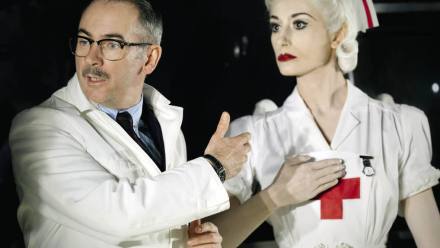
Mother Courage and Her Children Olivier Speaking in Tongues Duke of York’s Mother Courage, Brecht’s saga of conflict and suffering, is set during the Thirty Years’ War. The title character is a maternal archetype who ekes out a perilous existence selling provisions to the warring factions and chasing off the recruiting sergeants who want to lure her children into the army. Deborah Warner’s wrong-century production announces its intentions early. At curtain-up we know nothing of Courage except that she has ‘lost a son’. And here she comes, aboard her famous cart, wearing sunglasses, bawling into a microphone while cavorting to the sound of an on-stage rock band like the saddest groin-thrusting granny at Glastonbury.

Ride with the devil

More from Arts

If Milton had owned a Land Rover he’d never have vanquished Satan and his fallen angels to nether regions of rocks, caves, lakes, fens, bogs, dens and shades of death. If Milton had owned a Land Rover he’d never have vanquished Satan and his fallen angels to nether regions of rocks, caves, lakes, fens, bogs, dens and shades of death. He’d have known that they could have had too much fun with the right wheels, as I did recently among the rocks, lakes, fens etc. of the 54,000 acre Roxburgh estate. Along with, I should add, 679 other motoring hacks, between 60 to 80 Land Rover staff and 80 vehicles.

A propensity to meaning

Arts feature

Andrew Lambirth talks to the sculptor Anish Kapoor on the eve of his major new exhibition at the Royal Academy I interviewed the sculptor Anish Kapoor (born 1954) while preparations for his major new exhibition at the Royal Academy were nearing conclusion. The galleries were busy with technicians so we talked in the Members’ Room (Kapoor has been an RA since 1999). I last interviewed Kapoor 11 years ago, on the eve of his last big museum show in London, when he had the whole of the Hayward Gallery. Now he has been given the grand rooms which comprise the entire main floor of the Academy. Our talk was inevitably concerned with his new show. Was it a retrospective?

Worth the Price

More from Arts

A long drive mitigated by congenial and erudite company, through bosomy green hills under what felt like permanent soft mizzling rain, from one choice little festival on the Welsh borders, Presteigne, to another altogether more remote — Machynlleth, close to the coast, a tiny town (for all that a Welsh king once located his court there), where, in a converted nonconformist chapel, surprising and rewarding events take place. Not so the first I attended, a recital of poetry and song occasioned by the first world war, trudging through well-worn trenches and pastoral hankerings, the recitation shambling, the singing insensitive, the piano overweening. One left depressed by the subject, and without the compensation of catharsis.

False trails

More from Arts

The Shawshank Redemption Wyndham’s Othello Trafalgar Studios All change at Wyndham’s. The wayward sophistication and creative adventure of Michael Grandage’s first West End season has drawn to a close and been replaced by a karaoke version of The Shawshank Redemption. Smart move. Cameron Mackintosh, the theatre’s owner, must be hoping that this stale piece of air guitar will sharpen our appetite for Grandage’s return in 2010. The Shawshank copycat, directed by Peter Sheridan, has been cast with lookalikes in the Tim Robbins and Morgan Freeman roles, reinforcing the impression that the priority is to cook up a comfort-food replica and not upset the punters with unfamiliar tastes. It’s a maddeningly average concept.

Remains of the day

More from Arts

Back in 1924 when radio was still a young upstart technology, full of daring invention and brazen self-confidence, a nature-loving cellist, Beatrice Harrison, sat in her Surrey garden and played duets with a nightingale, which were broadcast ‘live’ on the BBC’s Home Service. Back in 1924 when radio was still a young upstart technology, full of daring invention and brazen self-confidence, a nature-loving cellist, Beatrice Harrison, sat in her Surrey garden and played duets with a nightingale, which were broadcast ‘live’ on the BBC’s Home Service. We heard a clip from one of them on Richard Mabey’s inspiring quintet of meditations for this week’s The Essay (Radio Three).

Techno deprivation

More from Arts

Every summer my wife and I conduct an extraordinary social experiment with our kids which, if the authorities got to hear about it, could land us in jail. We take them for a fortnight to a remote house in the Welsh borders, take the fuse out of the plug so they can’t watch TV, and force them to entertain themselves using nothing but books, board games and the outdoors. ‘The Noughties Kids are going back in time. How will they cope?’ you can imagine the voiceover to the accompanying fly-on-the-wall documentary asking in the manner of such previous retro-porn, home-makeover, history-light classics as The Viking House, The Victorian Farm, The Medieval Dungeon, The Eighties Crack Den, and The ’Nam Bunker Where Everyone’s On Acid But The Soundtrack’s Fab.

The Boss Turns 60

Somehow or other I missed the 60th anniversary of Bruce Springsteen's birth this week. The Boss turned 60 on Wednesday and if that seems oddly perturbing then, I suppose, at least it's not as cor-blimey a thought as realising that Martin Amis celebrated his 60th birthday last month. Aye, the times are racing on right enough. So, by way of belated thanks, here's the great man performing Mansion on the Hill, from his wondrous trip along the darker roads of Americana, Nebraska.

Ancient and modern

More from Arts

Rogier van der Weyden 1400–1464: Master of Passions Museum Leuven, until 6 December Musée Hergé Louvain-la-Neuve When I was a child in Belgium, architecture was a dirty word — angry drivers would wind down their windows and yell, ‘Architecte!’ The insult dated back to the 19th century, when the megalomaniac architect Joseph Poelaert imposed the enormity of the Palais de Justice on Brussels, forcing large numbers of residents from their homes. Times change and memory fades; architects are back in favour in Belgium.

On the move

More from Arts

Last weekend, as part of Open House London, the Government Art Collection flung open its doors to allcomers, probably some Spectator readers among them. Its energetic acquisitions and commissioning policy over past decades has made it one of our country’s most valuable cultural resources — yet those of us who don’t stalk the corridors of power may still be only vaguely aware of its existence, let alone the astonishing breadth of its collections. These span four centuries and now contain around 13,500 works of art in almost every medium you can think of.

Back to the sublime

More from Arts

Martin Greenland: Arrangements of Memory Art Space Gallery, 84 St Peter’s Street, London N1, until 10 October ‘In Painting there must be something Great and Extraordinary to surprise, please and instruct, which is what we call the grand Gusto. ’Tis by this that ordinary things are made beautiful and the beautiful sublime and wonderful,’ wrote Roger de Piles in his Art of Painting, translated into English in 1706, extending the notion of the sublime from literature to painting and opening the road to Romanticism. Martin Greenland’s large, skilful, traditionally painterly landscapes bring us smack back from what Reynolds called ‘the little elegancies of art’ to the sublime.