Culture

Culture

The good, the bad and the ugly in books, exhibitions, cinema, TV, dance, music, podcasts and theatre.

Love of queens and princes

More from Arts

Watercolour: only a medium but what a medium! It’s so versatile, and when painting the landscape it can respond with lightning speed to changes in the weather. Watercolour: only a medium but what a medium! It’s so versatile, and when painting the landscape it can respond with lightning speed to changes in the weather. The latter’s unpredictability has made it our most predictable national topic and the English have long taken watercolours to their hearts, both as practitioners and as collectors. Indeed, Queen Victoria (a watercolourist herself) presided over no fewer than two comparable organisations, the Royal Watercolour Society (RWS), founded in 1804, plus the Royal Institute of Painters in Water Colours (RI), which became Royal in 1885.

Anarchic spectacular

More from Arts

Le Grand Macabre English National Opera Don Carlo Royal Opera House Ligeti’s opera Le Grand Macabre has opened the season at ENO in a production of spectacular, amazing brilliance. Every aspect of the piece, visual, musical, dramatic, is dispatched with such panache that it seems a pity to enter any reservations at all, and for anyone in two minds about getting a ticket I’d unhesitatingly say ‘Go!’ The reservation is that the work itself is so feeble a piece, and by Ligeti’s standards shockingly thin, that one is forced to regret directorial and designer’s inventiveness amounting to genius for so unworthy a cause. Anarchy in art, as in life, is a wonderful concept but is a bitter disappointment when realised.

Hyperbole Corner: Beatles Edition

The New York Times actually paid someone to write this about a new video game: Luckily Paul McCartney and Ringo Starr, along with the widows of George Harrison and John Lennon, seem to understand that the Beatles are not a museum piece, that the band and its message ought never be encased in amber. The Beatles: Rock Band is nothing less than a cultural watershed, one that may prove only slightly less influential than the band’s famous appearance on “The Ed Sullivan  Show” in 1964. By reinterpreting an essential symbol of one generation in the medium and technology of another, The Beatles: Rock Band provides a transformative entertainment experience. In that sense it may be the most important video game yet made.

Saturday Morning Country: Lyle Lovett

The Church of Country is a broad brotherhood (and sisterhood) and it's fair to say that Lyle Lovett, like many others, has sometimes left it to worship elsewhere. But, again, like others that sometimes stray, he's always welcome back for the Church of Country is a forgiving house that espouses tolerance, an open mind and equally generous hearts. Anyway, Lovett is always interesting. And often charming too. Consider his Hymn to Having It All If I Had A Boat  with its splendid refrain: If I had a boat, I'd go out on the ocean/ And if I had a pony, I'd ride him on my boat/And we could all together go out on the ocean/Me upon my pony on my boat. And here he is singing an old Delmore Brothers tune called More Pretty Girls Than One (which is, frankly, reassuring).

Hole in the heart

More from Arts

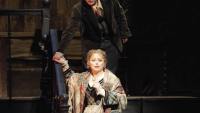
Linda di Chamounix Royal Opera Così fan tutte Opera North Four years ago the Royal Opera opened its season with concert performances of Donizetti’s Dom Sébastien, which came as a near-revelation to many of us, and subsequently appeared on Opera Rara. This year it opened with the scarcely better-known Linda di Chamounix, which was no revelation at all. In both cases Mark Elder conducted, and manifested his passionate devotion to the scores. While Dom Sébastien is a serious work, Linda is a melodramma semiserio, which means not only that it ends happily, but also that it conjoins, sometimes disconcertingly, serious and comic elements: not like Don Giovanni, say, but in a more clumsy way.

Writing matters

More from Arts

All my adult life I have wondered how people write about music, and how their efforts are received by the public. It has always struck me as being an uncertain business, more miss than hit, and more miss than writing about other artistic endeavours. It seems to be more difficult for a writer to find an individual voice, a convincing prose style, when talking about music than when discussing painting or architecture, or even when writing across the arts. By and large the public have responded to this sense of uncertainty by putting music on one side: not by giving up on the concerts themselves, but by not elevating music books to the status of compulsory reading of the standing of, say, Gombrich’s The Story of Art or Clark’s Civilisation.

Celebrating Dr Johnson

More from Arts

If Dr Johnson, who was born 300 years ago on Friday (at least according to the post-1752 Gregorian calendar, which overnight lost 11 days from British life), had been around today he would most probably have been a radio star, and been paid a fortune for it, unlike the pittance he earned as a writer. Conversation was for him the breath of life, not just as the antidote to the depression that never really left him but as the surest way to discover the truth. In talk (not chitchat), Johnson could flex his intellectual muscle, wrestle with ideas, and satisfy his hugely competitive desire for victory. But he was also full of fun, delighting in wordplay, making up rhymes, flashing his wit. He would have outdone Paul Merton on Just a Minute and yet also excelled on Round Britain Quiz.

Whipping up a storm

More from Arts

Mary Wakefield talks to Angus Jackson about directing David Hare’s latest play If I’m never quite content with a glass of water in an interview again, it’s Angus Jackson’s fault. There we were in a soundproofed meeting room on Friday evening, the National Theatre a whirl around us: jazz in the foyer, gossip in the restaurant, Bertolt Brecht in the Olivier. Jackson and I in our box of calm, a black-and-white still of John Gielgud and Ralph Richardson for company. PR enters stage right: ‘Anything to drink?’ I think: if I’m lucky, there might be tea. Jackson says, ‘A large glass of white? Perhaps...’ — he cocks his head — ‘a Sancerre?

Burnished bigotries

More from Arts

Punk Rock Lyric Hammersmith Judgment Day Almeida In rolls another bandwagon. And who’s that on board? It’s Simon Stephens, the playwright and panic profiteer, who likes to cadge a ride from any passing controversy. His latest play is about a teenage psycho who enacts a gory shoot-out at his local school. What a strange choice. Stephens frets vociferously in the programme notes about Britain’s ‘distrust’ and ‘marginalisation’ of its youngsters. With an episcopal air, and a peculiar turn of phrase, he asserts his ‘continuing faith’ in the young. ‘They get stuff. Sometimes they may lack the vocabulary always to articulate that which they understand but I have faith that they often understand it.’ (He used to be a teacher.

Joint account

More from Arts

Utmost Fidelity: The Painting Lives of Marianne and Adrian Stokes Penlee House, Penzance, 19 September– 28 November, and the Royal Cornwall Museum, Truro, 19 September–21 November The first thing that needs pointing out is that the artists reviewed here were a husband-and-wife team painting around the turn of the 20th century, with no connection to the art historian and painter Adrian Stokes (1902–72) who came on the scene later. Marianne Stokes was Austrian, her husband English, and they met in the artists’ colony of Pont-Aven in 1883. They married in Marianne’s home town of Graz and spent much of the rest of their lives together travelling and painting through Europe.

Sublime Stravinsky

More from Arts

The Rake’s Progress; Il signor Bruschino Peacock Theatre Just before the opera season gets under way each year, British Youth Opera puts on a couple of operas, or this year three, with three performances each, at the newly comfortable Peacock Theatre, off Kingsway. Few people go, since BYO treats the enterprise as a jealously guarded secret, and makes sure that you need detective skills to discover what and when, and never tells you, even if you’re as well disposed a critic as I am. This year the show which is really outstanding is their production of Stravinsky’s The Rake’s Progress, at least the equal of any that I have seen of this problematic work, and in some respects superior.

Chris de Burgh is an Angry, Misunderstood, Man. Apparently.

From the Department of Criticism: the Irish Times handed my old Dublin University Players contemporary Peter Crawley the unenviable task of reviewing Chris de Burgh in concert. It's fair to say that his notice was less than generous... Certain toes will never uncurl after this experience, but it is almost admirable how unaltered de Burgh has remained by the flow of time. You may have grown out of seeking epic significance in the portentous verses of Spanish Train, you may greet Patricia the Stripper with the same mortification as a faded photo of yourself. This is because you’ve changed. Chris de Burgh has not.

Behind the scenes at the Coliseum

More from Arts

I do wish English National Opera would remember what it’s called and, mindful of its status as the only English-language opera company we have, translate opera titles into English as well as singing them in that language. There was no reason for Kaija Saariaho’s L’amour de loin not to be given as Love from afar, nor for Donizetti’s Lucia to be ‘of’ rather than ‘di’ Lammermoor. Ligeti’s Le grand macabre is, admittedly, harder to render and may perhaps be allowed as an honourable exception, along with the untranslatable Così fan tutte.

Hidden treasure

More from Arts

Transfiguration Guildhall Art Gallery, until 4 October Transfiguration Guildhall Art Gallery, until 4 October Complaining the other day in these pages about the crowded nature of public exhibition spaces in London, I had momentarily forgotten the secret charms of the Guildhall Art Gallery. This museum, specialising in London subjects, receives scant attention in the press, and as a consequence it is less than mobbed by the public. Yet it has mounted a very creditable and popular-scholarly series of exhibitions, being particularly good on Victorian painters of the Frith and Watts type, while also dealing with modern and living artists.

The real thing | 9 September 2009

More from Arts

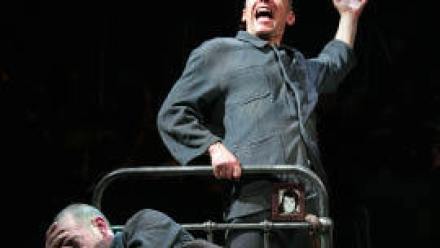
Fathers Inside Soho Too True to be Good Finborough Oh, great. It’s one of those. Fathers Inside is a workshop-based outreach project directed by an actor/facilitator. Those last nine words encircle my heart like the clammy fingers of death. But the play is a surprise and offers a big, warm, manly handshake. It starts quietly. Seven young convicts on a drama course are getting to know each other. The atmosphere is steeped in hostility and male aggression. The dialogue feels ragged, conversational, obvious, boring even. And it’s not so much under-rehearsed as unrehearsed. This is deliberate. Life is unrehearsed, and this play’s amazing air of naturalism gradually sidelines your doubts and beguiles you into believing the actors are real people.

No more heroes

More from Arts

You wouldn’t necessarily have guessed this from the quality of commemorative programming on TV this week. You wouldn’t necessarily have guessed this from the quality of commemorative programming on TV this week. But just recently, we’ve marked the 70th anniversary of the outbreak of an event that used to be considered quite important and interesting. It was called the second world war. Now that it has been superseded by issues of such seismic significance as climate change, the childhood obesity ‘epidemic’ and Jordan’s on-off marriage to Peter Andre, one can of course fully understand why TV feels unable to give WWII the thorough and respectful coverage it did in the past.

The Madness of Michael Moore

Not, I suppose, terribly surprising that Michael Moore's latest "documentary*" should receive an enthusiastic review from the Guardian, but even by Moore's lofty standards this new venture sounds exceptionally stupid: Capitalism: A Love Story is by turns crude and sentimental, impassioned and invigorating. It posits a simple moral universe inhabited by good little guys and evil big ones, yet the basic thrust of its argument proves hard to resist... Moore's conclusion? That capitalism is both un-Christian and un-American, an evil that deserves not regulation but elimination. No doubt he had concluded all this anyway, well in advance of making the film, but no matter. There is something energising – even moving – about the sight of him setting out to prove it all over again.

Saturday Afternoon Country: Iris DeMent

Iris DeMent has only made four albums. And since the latest, 2004's Lifeline, is a gospel record it's fair to say that she ain't on the trendy side of Nashville. In fact her style could harly be further removed from the country-pap that you hear on country radio stations and the teevee. DeMent is proper old-school you see. Her songs are often filled with wistful sentiment and sometimes with outright melancholy in the grand old country tradition. But they're always humane and heartfelt. Plus, of course, her voice has got that terrific Ozark twang to it. Here she is performing at a Transatlantic Session (with Emmylou on backing vocals and Aly Bain on the fiddle) and singing her lament to small town life: Our Town.

Discerning listeners

More from Arts

So which pop radio station do you listen to? It’s a question people who run pop radio stations often feel compelled to ask, without really wanting to hear the answer. So which pop radio station do you listen to? It’s a question people who run pop radio stations often feel compelled to ask, without really wanting to hear the answer. Most of their friends and contemporaries listen to Radio Four, and so do mine. But I need music to work to, and to wash up to, and Radio Two has come to occupy a significant place in my life. Ah, Radio Two. Once old, fuddy and duddy, more recently it has been home to Jonathan Ross and Russell Brand, and still it’s the most popular radio station in the country. Maybe the most hated, too.

TV dinners

More from Arts

There was, for a while, some debate in academic circles about whether there was such a thing as cannibalism. According to a handful of anthropologists, it was a Western invention — probably unwitting — to discredit ignorant savages. It now seems clear that this view was, to coin a phrase, political correctness gone mad. There are attested examples of people eating other people, and not only after plane crashes. But there’s no doubt that television eats itself. It nibbles at its past and chews away at its triumphs. In particular it likes to consume lovingly made programmes if only in the hope that this will enable the networks to create more lovingly made programmes, rather as some cannibals are thought to believe that eating an enemy’s heart will make them braver.

On the driving range

More from Arts

The Golf GTI was unveiled in Frankfurt 34 years ago this month. If the ordinary Golf saved VW — ailing because Beetle sales were in long-term decline — then the GTI was the icing that made millions more want the cake. Planned as a limited edition of 5,000, it has gone on to sell 1.7 million worldwide (217,214 in the UK). Its effects spread well beyond itself. It wasn’t only that there were numerous buyers for the fashionable sporty version of what might otherwise have been seen as a humdrum hatchback (unpromisingly called ‘Rabbit’ in the US), but that the existence of this fashionable extra cast a glow of desire across the entire range. Celebrities such as the late Douglas Adams were given them on extended loan so that they could be seen in them.

Great Dane

More from Arts

Per Kirkeby Tate Modern, until 6 September Last chance to see this intriguing exhibition of paintings and sculptures by one of Denmark’s most original artists. Per Kirkeby (born 1938) is little known in this country, though his work was included in the seminal 1981 survey A New Spirit in Painting, and there were shows at the Whitechapel in 1985 and the Tate in 1998. Back in the Eighties, I was fortunate to know someone who owned a Kirkeby painting, and that first sparked my interest. Now there’s an opportunity to see a large exhibition of his work, laying out the principal areas of his achievement. It’s an impressive experience.

Kids’ stuff

More from Arts

(500) Days of Summer 12A, Nationwide (500) Days of Summer is a Hollywood romantic comedy with (unnecessary and annoying brackets) in the title just so we know it’s quirky, which it rather is, but it’s so in love with its own quirkiness it gets tiresome after a while. It’s just not as clever as it thinks it is although, having said that, I should point out it’s been a huge commercial and critical hit in America so maybe I’m just getting too old for dating movies generally. Or, as my five-year-old niece recently put it to me: ‘Deb, why are you all cracked around the eyes?’ Kids, couldn’t eat a whole one and all that, but still, what a bitch! Alternatively, and just to prove I can also do quirky: ‘what a (bitch!

The full Brazilian

More from Arts

The Assault/The Last Days of Gilda Old Red Lion Eye/Balls Soho London in August. It’s the capital’s sabbatical. Theatre is all Edinburgh right now and the London-bound play-goer feels dislocated, irrelevant almost, alienated by accidents of chance and inclination, like a Hebrew at Christmas, a teetotaller on St Patrick’s day, an honest man in the Labour party. There’s still theatre to be had, though. The hunger remains, the unappeasable ache. A Brazilian double bill catches my eye. When it comes to Brazilian theatre — and I come to Brazilian theatre often — I’m more than an enthusiast, I’m a proto-fanatic. My expectations are vast. My sense of anticipation is beyond measure.

Grimeborn experience

More from Arts

Exactly ten years ago I visited Battersea Arts Centre to see eight short operas performed by Tête à Tête. Exactly ten years ago I visited Battersea Arts Centre to see eight short operas performed by Tête à Tête. It was a memorable evening, and showed what a good idea it is to encourage young composers to write quarter-hour-long pieces, instead of making a whole evening of their first attempt at opera. Inevitably, of course, there is a workshop aspect to these occasions, and anyone who feels understandably suspicious of workshops is likely to give them a wide berth — and thereby to miss a good deal of hit-and-miss pleasure.

Torture: You Know It When You See It

I watched Tunes of Glory again last night. It's one of my favourite films*. During it, Basil Barrow, the newly-arrived Colonel of the battalion, played by John Mills, mentions his experiences in a Japanese prisoner of war camp during the Second World War: Oh they gave me time, all right. Again and again. When I was in the prison camp, they nearly drowned me, then they brought me round. Then they put a wet cloth over my mouth and kept it wet until I nearly drowned again. And the only thing that pulled me through was the thought that one day I'd come back and sit in the middle of that table as colonel of this battalion, like my grandfather and his father before him. Only I was going to be the best of the lot. In other words, he was waterboarded.

Men of Harlech

It's a bank holiday weekend, so what better way to spend a Sunday afternoon than by watching Zulu one more time? Granted, the movie is riddled with historical inaccuracies but so what? 'Tis grand, stirring stuff. And the "sing-off" between the Zulus - "Well, they've got a very good bass section, mind, but no top tenors, that's for sure" - and our Welsh heroes is splendid, ranking behind only the superb rendition of the Marseillaise in Casablanca.