Culture

Culture

The good, the bad and the ugly in books, exhibitions, cinema, TV, dance, music, podcasts and theatre.

Exhibition review: Rory McEwen: the botanical artist who influenced Van Morrison; Paul Delvaux: a show to savour for its unusualness

Exhibitions

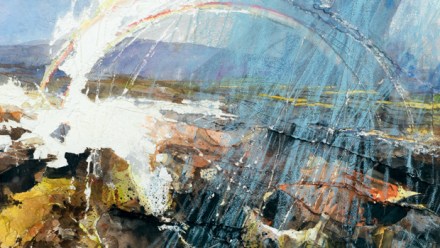
By all accounts, Rory McEwen (1932–82) was a remarkable man, hugely talented in several different disciplines (artist, musician, writer) and very much loved by his friends. Grey Gowrie calls him ‘a spectacular human being’ and writes: ‘Even now, 30 years after his death, he lights up the mind of everyone who knew him.’ Renowned as a botanical artist, McEwen was also an exceptional musician, specialising in blues and folk, whose mastery of the 12-string acoustic guitar rivalled the legendary Lead Belly. With his brother Alexander, Rory toured across the USA in 1956, becoming one of the first British acts to appear on the Ed Sullivan Show. Back in London, Rory became the resident singer on the Tonight programme, later hosting his own late-night TV show.

Barometer | 27 June 2013

Barometer

Field reports The Glastonbury Festival is once again being held at Michael Eavis’s dairy farm at Pilton, just outside the Somerset town. The venues of some other famous festivals: — Monterey: the festival most associated with the 1967 ‘Summer of Love’ was held at the Monterey County Fairgrounds, previously used for jazz festivals. — Woodstock: the 1969 festival was to have been held on an industrial park, but the local council placed a restriction limiting attendance to 5,000, so it moved to a dairy farm owned by Max Yasgur. He was paid $50,000 but was barred from the local shop. — Isle of Wight: the third Isle of Wight festival became the largest festival ever staged, with 600,000 attending.

War fiction

Poems

That ‘bullet hole’ in your bush hat, there should have been two holes — for the truth to pass through. I think you believed your own lies, liked how they altered the light on the bullet, as it passed through. Who fired the gun? Who died? Who prayed for the victim’s soul? So many questions, passing through.

Chronicle of a Summer: Reality TV decades before it had a name

More from Arts

Here’s a documentary called Chronicle of a Summer. Which summer? Why, the summer of 1960, in Paris, when fag-end colonial struggles were burning away in Algeria and other parts of Africa. And how is it chronicled? An anthropologist and a sociologist, Jean Rouch and Edgar Morin, put cameras on the streets and ask questions of the people they find. Who are you? Are you happy? The usual French existential stuff. The results are gripping, even from a distance of more than 50 years. Rouch and Morin focus on the personal; the everyday lives of factory workers, artists, immigrants, models and students. But when France’s present and recent past break into shot, it’s as dramatic as could be.

TV review: Russell Brand socks it to the gods and goddesses of daytime TV

Television

This week I witnessed the bloody, brutal death of mainstream television. It will, I think, go down in media history as one of those ‘Where were you when JFK was shot?’ moments. The victims were the presenters of a US breakfast television show called Morning Joe; the executioner was Russell Brand. Russell Brand? No, it’s OK, I’m quite with you: on a bad day he can be the most annoying person on earth, with his swarthy, beardie, slimy, wheedling faux-grandiloquence and even more faux-intellect and that little-puppy-dog-lost way he has of looking you straight in the eye and impudently demanding your forgiveness for having just shagged both your wife and your daughter ‘because, hey, it could have been worse — at least I didn’t do grandma too’.

Dance: William Forsythe’s new work is choreographic narcissism

More from Arts

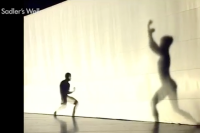
As someone who once raved about William Forsythe’s innovative approach to ballet and fondly admired his groundbreaking choreographic explorations, I felt let down by last week’s performance by his company at Sadler’s Wells. Things did not start badly, though. The way gestural solutions unfold and develop in a crescendo of movement variables, variants, similes and opposites in N.N.N.N. (2002) is rather engaging. The game of quick interaction between four male dancers moves rapidly from the simplest hand movement to demanding acts of powerful physicality; there are humorous moments and tense ones, as well affectionate references to the neoclassical oeuvre of George Balanchine — whom Forsythe has often referred to as a major source of inspiration.

Theatre review: Wonka will create enough kiddie glee to guarantee its survival. What a pity it isn’t good!; Four farces: two weak; two excellent

Theatre

Off to Wonka. With no preconceptions either. I’ve never seen this story on stage, page or screen and it strikes me as a dysfunctional hybrid of Oz and Twist. The show kicks off with a cartoon history of chocolate which — whoopsidaisy! — omits to mention sugar as an ingredient. We meet Charlie Bucket, an angelic drudge, who must win a prize in order to rescue his whining, crippled parents from impoverishment. He visits Willy Wonka’s candy emporium along with four surpassingly obnoxious child-rivals. There are two grotesque beauty queens (one is slaughtered early on in an industrial accident). There’s a Bavarian fatso who scoffs garbage non-stop and belches into the microphone.

Film review: I was right: a British thriller starring Jason Statham is to be avoided

Cinema

Hummingbird is a British thriller starring Jason Statham which may be all you need to know to keep away and if it is, can’t say I blame you. Statham is the actor who rose to fame as one of Guy Ritchie’s entourage and now plays bad-ass, hard-boiled action heroes of the kind who can take on whole armies and crack open all their heads and emerge breathless, admittedly, yet with only one small graze. I normally avoid his films and films of this type as they are just not my thing — you’d think anyone who could take on whole armies and emerge with just a single graze would be interesting, but not so much — yet I was seduced into giving it a shot. It looked promising.

Opera review: Britten’s Gloriana may be a failure but it still manages to shock

Opera

The most surprising thing about Benjamin Britten’s coronation opera Gloriana, for me, is that it merely fell rather flat at its first performance. The composer, we read, had insisted on its virtually official status as part of the coronation proceedings, and it seems to have been his major bid to be accepted as an establishment figure, and not merely as the most significant of the younger generation of composers. But to have chosen, at the suggestion of the Earl of Harewood, the nearest relation to the royal family with any serious pretensions to being artistically cultivated, Lytton Strachey’s Elizabeth and Essex, with its characteristically world-weary deflating view of human affairs and affaires, was surely a piece of ill-judged mischief at least.

The syphilitic sound of Schumann’s violin concerto is part of its genius

Music

Robert Schumann met a wretched end. He died in a lunatic asylum where he thought the nurses were feeding him human faeces. Meanwhile he drove his fellow residents mad by sitting at the piano and bashing out nonsense-music until he had to be dragged away — a grotesque indignity for the creator of the most bewitching quicksilver fantasies in the history of the instrument. After Schumann’s death in 1856, the violinist Joseph Joachim hid away the strange concerto that the composer had written for him in 1853 because it showed evidence of softening of the brain. Clara, Robert’s widow, agreed. That became the conventional wisdom.

Hotel Pool

More from Books

Twelve? Thirteen? She arrives in advance of her parents, fat as I was thin, wrapped in a towel, pattering to safety — a bench where she sits obscured before abandoning herself to the indecency of a walk towards water, (though who’s to see? To care? The retirees? Me with my puckered stomach?) My eyes meet hers, hers dart away like fish; this is not the place to say You’ll be all right, the body must become itself, nothing to do but swim out, follow.

Spectator Play: The highs and the lows of what’s going on in arts this week | 21 June 2013

In this week’s lead feature in the Arts section, Tom Rosenthal explains just why he thinks the Lowry retrospective at Tate Britain is so long overdue. Lowry is one of our most popular artists – and it is exactly this that has been his downfall. ‘Can one disapprove of someone merely because he popular? Clearly one can’, writes Rosenthal. The lack of Lowry in London only highlights ‘the fashionable dislike of Lowry’s art’. But, finally, Lowry has made it to the walls of Tate Britain. Should his work be there? Andrew Lambirth will be reviewing the exhibition in a future issue of The Spectator, but for now you can make your own minds up.

At last! The snobbish Tate has finally overcome its distaste for L.S. Lowry

Arts feature

One day in Berlin, I saw the rerun of the RA’s Young British Artists exhibition at the Hamburger Bahnhof, Berlin’s equivalent of Tate Modern. After that, I saw a superb retrospective of Lyonel Feininger at the Neue Deutsche Galerie. In the evening, I ran into the onlie begetter of the YBA show (which, with the exception of Ron Mueck’s amazing sculptures, had not given me much pleasure), my (unrelated) namesake Norman. I had no wish to discuss Norman’s pride and joy, the YBA, so turned the conversation to Feininger and asked whether Norman had seen it. ‘Ah,’ said Norman, ‘what a bore; I won’t waste my time on him.

One leaves the Patrick Caulfield exhibition longing to see more

Exhibitions

In the wake of the Roy Lichtenstein blockbuster at Tate Modern comes Patrick Caulfield at Tate Britain, and what a contrast! Where Lichtenstein looks increasingly like a one-trick pony, an assessment driven home by the excessively large show, Caulfield emerges as fresh, witty and visually inventive. Undoubtedly this impression is fostered by the size of the exhibition: Tate Britain’s Linbury Galleries have been divided between Caulfield and Gary Hume, allowing each enough space for a highly focused solo exhibition. There are thus only 35 paintings by Caulfield spanning his entire career, and one leaves his show wanting to see more, not suffering from the usual museum overkill.

Exhibition review: The charm and dexterity of Sir Hugh Casson

Exhibitions

It is nothing short of a miracle that this aptly titled exhibition could be shoehorned into just two rooms at the Royal Academy, such was the range of the irrepressible Hugh Casson’s work and influence during his lifetime. Architect, artist, designer and writer, he was a fireball of energy and a fount of ideas. He was described by one friend as ‘the golfball on an IBM typewriter’. Not the least of his multifarious talents was, indeed, making friends with anyone, from the casual visitor queuing for the RA’s latest exhibition to the Queen and Duke of Edinburgh, for whom he worked discreetly but tirelessly for many decades on a series of royal apartments, unaltered to this day.

Nocturne

Poems

Midnight for the squirrels and the drunks, midnight for you dear and your chest hair too, put your pen down pet and rest here. Midnight swallowing the mirror whole, swallowing my mother in her pale blue slippers, and my brother, my big brother in his too small bed. Bed, the longed for stopped short sound delivering us at last from sense-making. The trains are empty, the magnolia trees are still, the tower block has lost another dozen yellow squares but they’ll fill up and we’ll fill too, and in tomorrow’s morning we’ll awake, washed up again among the bills.  Meanwhile, the stars are queuing up to get behind your lids.  Come, give me your hand.

Film review: Before Midnight is a perfectly crafted movie

Cinema

To quote the watch adverts, here’s a timepiece that will last a lifetime: the Doomsday Clock. And the reason it will last that long? Because when it stops, so will your life. This is the figurative clock that has been maintained by a bunch of Chicagoan atomic scientists since 1947. The closer its hands are to midnight, the closer we are to nuclear annihilation. It started off at seven minutes to midnight. But now, as any paranoiac will tell you, it is two minutes further on. We are, in this one specific sense, five minutes away from The End. Did Richard Linklater have this in mind when he named his new film Before Midnight? Probably not. This isn’t, in truth, a film about death by fission and fusion, but a simple middle-aged love story.

Opera review: Deborah Warner’s production of Death in Venice is everything that a production should be, Lohengrin

Opera

Thomas Mann, Gustav von Aschenbach, Benjamin Britten, united in a common interest, one the expression of which is still taboo, yet which Mann succeeded in writing a bestseller about, and Britten his last testament. Mann surmounted the interest, just, by fantasising and remaining amazed that people actually ‘do it’, if his reaction to Gore Vidal’s The City and the Pillar is anything to go by. Aschenbach is so enthralled that he dies rather than separating from his pubescent beloved, and never has the courage to speak to him. About Britten things are still a bit unclear, and are likely to remain so.

Theatre: James Baldwin’s The Amen Corner is dazzlingly funny. Kim Cattrall is a revelation in a monstrous role

Theatre

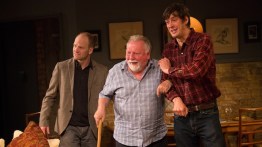
Good and bad at the National. The Amen Corner by James Baldwin is a wryly observed comedy drama written for a studio theatre. It’s an excellent small play. The director Rufus Norris pumps it full of steroids and tries to turn it into a great American epic like Streetcar or The Crucible. His staging suggests the finale of a country-house opera festival. Costly baggage impedes the script’s sprightly flow. On-stage jazzmen snivel through trombones and hack at double basses. Preening choirs warble and sway. Spare actors hang out of windows trying to look cool and indolent. The running time reaches a Napoleonic 155 minutes. Megalomania infects the furniture too. Baldwin asked for two cheap sets, a ramshackle kitchen and a dingy meeting-room.

Laura Marling at Secret Music: a concert without croquet is a concert not worth attending

More from Arts

The word ‘concert’ means different things to different people. For some it evokes dinner jackets and not clapping between movements; for others, jumping up and down in a stadium, desperately trying to spot the band through a sea of blinking smartphones. But Secret Cinema’s latest brainchild, dubbed Secret Music, is something else entirely: its inaugural production brings Laura Marling’s new album to life and places you right at its core. Stepping into the grounds of a grand Victorian hospital in East London, transformed for the night into a 1920s hotel, you’re left to explore its various rooms, with their eclectic and unfailingly interesting occupants, at your leisure.

Which television chef would you most like to see throttled in a restaurant?

Columns

Which television chef would you most like to see throttled in a restaurant? I have to say, Nigella Lawson would be well down the list for me, as I’ve always rather liked her. It’s true that some of her recipes are a little precious, especially all that fairy cake stuff, but surely not to the point that one would wish to strangle her, or witness her being strangled? Gregg Wallace, perhaps? He’s the one from Masterchef who looks like a badly boiled egg which is permanently on the cusp of ejaculation. Obviously Gordon Ramsay — that’s a given, as they say — but I’d also like to make a case for Hugh Fearnley-Whittingstall, who once served guests a pate made of placenta.

Nocturne

Midnight for the squirrels and the drunks, midnight for you dear and your chest hair too, put your pen down pet and rest here. Midnight swallowing the mirror whole, swallowing my mother in her pale blue slippers, and my brother, my big brother in his too small bed. Bed, the longed for stopped short sound delivering us at last from sense-making. The trains are empty, the magnolia trees are still, the tower block has lost another dozen yellow squares but they’ll fill up and we’ll fill too, and in tomorrow’s morning we’ll awake, washed up again among the bills.  Meanwhile, the stars are queuing up to get behind your lids.  Come, give me your hand.

Spectator Play: The highs and the lows of what’s going on in arts this week | 14 June 2013

Sir Alfred Munnings lived his life in true bohemian style, ‘carousing with gypsies and horse-trainers, living rough and constantly on the road’. Summer in February is based on his early life living in Cornwall, with Munnings played by Dominic Cooper: ‘Irrepressible as an electric eel, and twice as dangerous’. But does the film live up to Munnings’ art – and, of course, to the hype? The problem with films about artists is, says Andrew Lambirth, the art. But Summer in February is ‘as vivid and visually complex as a Munnings masterpiece’ – in fact, almost as good as the book.

Hollywood and oligarchs descend on Art Basel

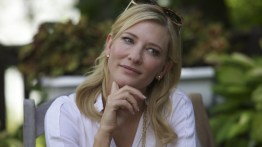
The art world has descended on the almost attractive city of Basel in Switzerland this week, for the annual art fair. And where the art world goes, glamorous collectors follow. Leonardo di Caprio appeared to be in the mood for some serious shopping when I glimpsed him, casting his eye over a Warhol or two. He may have looked at the Alexander Calder, or perhaps he saw the Edmund de Waal or the exquisite pair of Peter Doig etchings. And there’s this chap called Picasso; mark my words, dear readers, he’s going to be big. Di Caprio had competition from one Roman Abramovitch, who sloped by a few Edvard Munchs, as one does. Cate Blanchett was a radiant study in concentration as she perused the stalls of the finest galleries in the world.

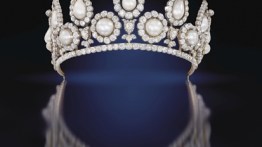
Royal bling with the Tudors at the Queen’s Gallery and the V&A

Arts feature

As soon as the battle of Bosworth was won, Henry VII’s politically astute mother sent him appropriate clothing for his state entry into London. A king was expected to look like a king, having ‘a prerogative is his array above all others’. Sumptuary laws policed the system under the Tudors, with everyone — in theory — wearing only as much glitter and flash as their rank permitted. You really were what you wore. The Great Wardrobe Accounts of Henry VII and Henry VIII offer numerous unexpected insights into contemporary events. One sinister detail I spotted during my research on the period is a warrant issued in November 1498 for black damask to be made into doublet for the pretender Perkin Warbeck, then a prisoner in the Tower.

To survive the Royal Academy Summer Exhibition, don’t linger — just scan and pounce

Exhibitions

The Royal Academy’s biggest annual prize is the Charles Wollaston Award, worth £25,000, for the most distinguished work in the Summer Exhibition, this year won by the Ghanaian sculptor El Anatsui (born 1944). Although his preferred media are clay and wood, El Anatsui has taken to making installations from found materials woven together like cloth, and has done rather well with them around the world. He was invited to make a hanging for the façade of Burlington House for the duration of the Summer Exhibition, and this junk curtain (composed inter alia of aluminium bottle tops, printing plates, copper wire and roofing sheets) now obscures or ornaments — depending on your taste — the Academy’s noble brow.

Television review: The Returned is the finest, purest heroin

Television

With the possible exception of Game of Thrones, The Returned (Channel 4, Sunday) is the best series you will see on TV all year. I caught some early previews about a month ago when I was on The Review Show (BBC4). Normally the reviewers don’t agree on much but on this we were unanimous: we all felt like newly made addicts who’d been introduced to the finest, purest heroin — only to be suddenly denied our next fix. When was the rest of the series going to be broadcast? When? WHEN? Well, now, finally it has made it on to Channel 4 and I hope you’ll all be as hooked as I am. It has been variously billed as a zombie thriller and a successor to Twin Peaks, but neither does justice to its intelligence, subtlety and eerie beauty.