Culture

Culture

The good, the bad and the ugly in books, exhibitions, cinema, TV, dance, music, podcasts and theatre.

Waiting for the Train

More from Books

Early spring cherry blossom by the tracks — so prim and so dirty, all at once. The bees must be dropping to their knees. For me, it’s after the harvest, only just but even so, a different season. There are elderly women on the platform in beautifully cut coats and expensive shoes. I know that’s where I’m heading, but not yet. I can feel the sap humming in my hips and legs; my hair taken by the wind is still a good thing. You surprise me with coffee and wait with me. It’s unexpected and lovely, your regard. Window box platonic but definitely that spark. Like standing in the sun on a bitter cold day, tasting the froth brim over the top of my cup. The station master recites where the train is going; no one cares where it has been.

What has happened to the deluge of Romanians?

Snoring in the sunshine down Park Lane, in London, last week was the latest gift to Britain from the Great God of Multicultural Diversity, sixty-odd snaggle toothed Romanian gypsies. I went to speak to them for a film I was doing for the Sunday Times. The only English the vast majority knew was ‘grwnka’, which they barked at me while pointing at their mouths. This is apparently their approximation of: ‘Do you possibly have a cigarette to spare, my good man?’ Some didn’t even say Grwnka, they just pointed at their mouths and looked at my cigarette. There are very serious fears that these new arrivals will unfairly compete with honest British pickpockets and beggars, being more adept and with lower overheads.

Spectator Play: Spectator Play: The highs and the lows of what’s going on in arts this week

Wadjda is the first feature-length film to come out of Saudi Arabia, and was shot by the country’s first female director - but those aren't the only things that are great about it, says Deborah Ross. It's also ‘fascinating, involving, moving, and an entirely excellent film in its own right’. The story might be simple, but it’s the glimpses of how life might be for a woman living in Saudi Arabia make it ‘wonderful’. Deborah’s second film this week is the The World’s End, an attempt to be humorous that despite its cast (which includes Martin Freeman, Rosamund Pike and Simon Pegg) is completely unfunny, and ‘just boring’. Even the zombies fail to make it more exciting...

Bear hunting on Shaftesbury Avenue

More from Arts

Shaftesbury Avenue might not be traditional bear-hunting territory, but young adventure-seekers would be well advised to beat a path this summer holidays to the Lyric Theatre where Michael Rosen’s much-loved classic We’re Going on a Bear Hunt has been imaginatively translated to the stage by Sally Cookson (until 8 September). The story follows an intrepid family who surmount various obstacles — long grass, oozy mud, a deep, cold river, a swirling snowstorm and a big dark forest — in their quest to find a bear. When they finally track him down in a gloomy cave, they take one look at his shiny wet nose and goggly eyes and scarper, hotfooting it back the way they came to take refuge at home under a large pink eiderdown.

If you’re craving some Kiwi bush angst, Top of the Lake fits the bill

Television

I sincerely hope you’re not watching television. With the glorious summer sun we’re having, you should be having picnics and swims, not sitting in front of a screen. So this is my recommended viewing for the week: nothing. Get out. Still, if you must look for something, why not look for shows about looking? There are quite a few of them about. In the new sitcom Family Tree (Tuesdays, BBC2), Eeyore-faced Chris O’Dowd plays Tom Chadwick, a recently cuckolded, jobless single who’s inherited an old photo of someone he believes to be his great-grandfather. Tom embarks on a search to know more about his ancestors, discovering ever more exotic and esoteric branches of his genealogy.

Wadjda is Saudi Arabia’s first feature-length film and is shot by a woman

Cinema

Wadjda is the first feature-length film to come out of Saudi Arabia, and was shot by the country’s first female director, and although people will talk about how it breaks boundaries and how pioneering it is, that’s not what you most need to know. What you most need to know is that it’s fascinating, involving, moving, an entirely excellent film in its own right and, therefore, rather unlike The World’s End, which isn’t. It also has a few good jokes in it, which is rather unlike The World’s End, too. And it treats women as worth more than a quick shag in a toilet, which The World’s End doesn’t, just so you know.

Opera review: Longborough’s tiny stage takes on the Ring – and wins

Opera

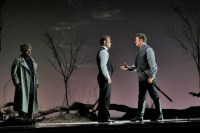
There are no two ways about it: Wagner’s Ring cycle, the biggest challenge that any opera company can face, has been mounted with triumphant success in Longborough, and now presumably has been laid to rest. Nine years ago, at the Cambridge Arts Theatre, I saw the first attempt to stage it, in Jonathan Dove’s drastically cut version, and with skeletonic orchestration, and though there was some decent singing, on the whole I was unimpressed.

A cast of celebs fails to bring any oomph to The Ladykillers

Theatre

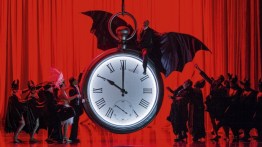
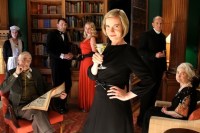
The Ladykillers is back. Sean Foley’s adaptation of the classic Ealing comedy introduces us to a crew of villains who stage a train heist while lodging in the house of a sweet old lady. She discovers their crime and when they try to bump her off she proves indestructible. The 1955 movie makes a huge effort to manage the plot’s credibility. The audience is never quite sure if this is a criminal gang in a comic predicament or comic gang in a criminal one. Sean Foley abjures such nuances and gives us a bunch of clowns in a two-hour slapstick routine. This approach deprives the tale of all its subtlety and shadowy strangeness. Michael Taylor’s complex, expressionist design adds to the sense of artifice. A cast of celebs compete to get the most laughs.

When a smartphone gallery is better than the real thing

Arts feature

The best way to view some of the world’s greatest works of art is to go nowhere near them. Like other celebrities, the most famous paintings are hard to get close to and there are few less spiritual experiences than being cattle-prodded as part of a crowd through an overpacked exhibition. You may visit in the hope of communing with legendary art but, as often as not, gallery-going is anti-contemplative. While there is no way of replicating the experience of standing in front of a masterpiece, technology can at least allow you your personal space. Take Google Art Project, for example, a collaboration between the omnivorous internet search company and 151 museums, galleries and collections in 40 different countries.

Outplacements

Poems

He said, it’s a structural workforce imbalance and I thought where’s the scope for a man of your talents? He said, it’s retargeting personal goals and I thought yet all human resources have souls. He said, it’s a preplanned executive cull and I thought you’ve a horrible shape to your skull. He said, it’s a labour pool surplus reduction and I thought I could pop out your eyeballs by suction. He said, it’s transitioned vocational severance and I thought that’s my cods in the mincer, your reverence. He said, it’s downsizing, dehiring, decruiting and I thought also strangling and stabbing and shooting. He said, you’re redundant, you’re done for, you’re dead and I thought same to you, squire, and cut off his head.

Radio review: At last! A proper Book at Bedtime

Radio

It had begun to look as if Radio 4’s Book at Bedtime had been taken over by the zealous publicity-hungry PRs of publishing. For the past few months we’ve had nothing but the latest John le Carré, Neil Gaiman, Mohsin Hamid and Jami Attenberg. Books that would sit better in the morning Radio 4 slot as Book of the Week have been foisted upon us at 10.45 p.m., just when we want to start winding down from the hectic day, to escape from the traffic and fumes of the internet-bound life into which most of us have sunk. What we need post washing-up, dog walk, news, last texts, tweets and blogs is not bracing new writing, stuffed full of our worst imaginings and post-9/11 fear and loathing.

Siempre

More from Books

After Neruda Facing you I am not jealous. If you arrived with a man on your back, or a hundred men hanging in the rigging of your hair, or a thousand men sleeping on the soft mound of your belly, if you were a river filled with drowned men met by the furious sea foaming at its mouth, by eternal weather — if you arrived with them all where I wait for you, I would not be jealous. We will always be alone. We will always be, you and I, alone on this earth to begin life.

The View from 22 debate special: too much immigration, too little integration?

This May, David Goodhart’s latest book, The British Dream: Successes and Failures of Post-war Immigration, earned him the title of ‘too hot for Hay’ when he was ‘shunned’ by the literary festival. The festival director, Peter Florence, went on to describe the book as ‘sensationalist’ and ‘not very good’. But all was not lost. As event chair Andrew Neil put it: ‘What the Hay festival missed, The Spectator brought to you’, with a special panel on immigration last Tuesday, 9 July. Goodhart was joined on the panel by the Mail on Sunday’s Peter Hitchens, former Mayor of London Ken Livingstone, the former chair of the Equality and Human Rights Commission Trevor Phillips and The Huffington Post’s Mehdi Hassan.

Spectator Play: The highs and the lows of what’s going on in arts this week | 13 July 2013

Deborah Ross reviews two films for us this week. The first is Pacific Rim, a ‘giant monsters v. giant robots’ film, and to be perfectly honest, that’s about all she has to say on the matter. If you do want to find out more, here’s the trailer: Her second film this week is ‘The Moo Man’, which is almost the opposite of Pacific Rim. ‘Instead of being a big, noisy film with nothing to say, it’s a small, quiet film with quite a lot to say’. A documentary following a dairy farmer around his East Sussex farm, it is ‘beautifully and lovingly and discreetly filmed’, it says everything it has to say about British agriculture, in its own quiet way. The inside of our British palaces used to be almost a state secret, .

Are rugs becoming the new must-have art objects?

More from Arts

Tapestries once had a place of honour in fine art, but that was during the Middle Ages and the Renaissance. Oil paintings, for a time, were viewed as the poor man’s tapestry. Now, that equation may be turning round. ‘Tapestries serve a lot of purposes,’ said Donald Farnsworth, president of Magnolia Editions, which has produced tapestries for artists such as Chuck Close, April Gornik, Alex Katz, Ed Moses, Gerhard Richter, Kiki Smith, William Wiley and others. ‘They absorb sound and add warmth to a room.’ But can they also be taken seriously as works of art? They are certainly priced like them.

Radio review: Malcolm Gladwell’s masterclass on listening

Radio

Out and about in Surrey on Sunday I happened upon a scene that could have been played out 77 years ago. It was mid-afternoon on that glorious sunshiny day. Lunch just about over. The pub had a large garden with tables neatly shaded by leafy pergolas. A family group had finished their meal but were still huddled round the table, on which in pride of place, amid the empty plates and half-filled glasses, sat a green-and-cream Roberts, aerial aloft. They’d taken the chance (the village pub had no TV) that from words and sound alone they’d not miss a forehand slice or backhand volley.

Brainwashed from birth: the cult of the BBC

Television

Last week I was on holiday with my family on the Algarve. The good news was that, thanks to the BBC’s widespread availability in Portugal, we didn’t miss out on Murray at Wimbledon. The bad news was that, for the same reason, we couldn’t escape The Apprentice. But this isn’t an anti-Apprentice column. It’s an anti-BBC column prompted in part by something annoying somebody said to me on Twitter the other day. I’d written, not for the first time, that I considered the BBC ‘a total waste of money’. And the tweeter replied primly, ‘The BBC is a total waste of money or actually you quite like Today, Proms, Glasto, wildlife docs. Can’t have it both ways.’ No, actually, you can.

Private Lives at the Gielgud: Spot the sexual tension between Anna Chancellor and Toby Stephens

Theatre

It’s always a problem with Macbeth: what accents to use? The Globe is applying the traditional remedy. Lord and Lady Macbeth come from Epsom. Everyone else comes from Glasgow. This is a highly entertaining production — one of the best at the Globe in recent years — but it’s not entirely perfect. Joseph Millson has pretty much everything you need to play Macbeth, good looks, physical stature, a soldierly bearing and a dash of melancholy. But he has something you don’t need at all. A gift for laughter. He’s such an instinctive comedian that he sends the audience into fits, without noticing it, by accident almost. And in the oddest places, too. Macduff and Lennox arrive at the castle where Duncan lies murdered.

Exhibitions: Why can’t the critical fraternity make up its mind?

Exhibitions

As more time elapses since the regrettable fracas over Kitaj’s 1994 Tate exhibition and his tragic suicide in 2007, he comes more and more into his own as a great but still underrated artist. When I last wrote about him in this column, back in April, I had not yet seen the portion of his Berlin-originated retrospective which was shown at Pallant House in Chichester. Happily I managed to get there before it closed and was once again deeply impressed by the range and painterly intelligence of this extraordinary artist. Now another couple of shows pay justified tribute to his genius, this time as manifested through his printed work.

Yes, ‘The Moo Man’ is a film about cows. But it is absolutely amazing

Cinema

Pacific Rim is a giant monsters v. giant robots film and although written and directed by Guillermo del Toro, who made Pan’s Labyrinth, which was sublime, it’s still just a giant monsters v. giant robots film, and now we have dealt with that, we can move on to The Moo Man. The Moo Man is not like Pacific Rim. There are no giant monsters seeking to destroy the world, and no giant robots seeking to protect it. There is no CGI, no 3D, no battle scenes, no violently thumping soundtrack, no action — bar a day trip to Eastbourne — and no token woman who is feisty, as is the way with token women when the alternative might mean having to actually give them a fair crack of the whip.

Opera review: Verdi should be as controversial as Wagner

Opera

I’m not the first person to remark that Verdi is getting oddly little attention in this his bicentenary year, especially when compared with his contemporary Wagner who, despite the usually much greater demands his works make in almost all respects, is not only receiving plenty of performances, but is also the subject of even more books than usual, not all of them about his alleged faults of character. Yet Verdi shouldn’t be less controversial a figure than Wagner; it’s just that Wagner stimulates people to react in such intense ways, while they placidly accept Verdi as an energising tunesmith and a decent patriot, ardent for the unification of Italy in contrast to Wagner’s shameful nationalism.

The last taboo in pop: fat old men

Music

Don’t worry, I’m not going to go on about Glastonbury. I wasn’t there, I never have been and, unless forced at gunpoint, I never will be. It has been a source of great comfort to discover that rock critics far more professional than I detest festivals as much as I do. My friend Andrew Mueller tells the story of his appearance on Sky News as a token anti-Glastonbury grouch, doing a two-way with some idiot in a stupid hat standing in knee-deep mud (these are his words). The festival-goer went first, and talked of community and spirit and laughter in the face of adversity. The presenter turned to Andrew and said, ‘Well, Andrew, what do you say to that?’ Andrew said, ‘I’m indoors.

Wanted: a producer for Peter Nichols’s four new plays

Arts feature

Gosh. I wouldn’t mind being Peter Nichols. Eighty-six this month and still enjoying the easy domesticity and professional stimulation he’s benefited from since the 1960s when he was propelled to stardom by his play about raising a disabled daughter, A Day in the Death of Joe Egg. He lives in a penthouse flat in north Oxford on the verge of cow-dappled meadows, tufty footpaths and a low grey canal full of quacky coots and ducklings. He’s fit, sharp-witted and fun to be around. (After our interview he and his wife called a cab and went off to Corpus Christi to knock back champagne at a summer party.) He dismisses his age with a paragraph of jokey self-evaluation.

Gusto galore from Boston Ballet

More from Arts

Those who lament sluggishness in contemporary stagings of Balanchine’s ballets — and those who are responsible for it — should have seen and learnt from Boston Ballet last week. Forget the funereal tempi we, in the old world, are forced to accept because of the killjoy aesthetics favoured by artistically challenged ballet directors and teachers. Boston Ballet’s Serenade had all one would wish for: quick, sparkling tempi, a splendid use of the space, majestic flow and gusto galore. It’s true that precision might have gone astray now and then, but never in a major way; besides, real artistry has always had little to do with precision.

Nicolas Roeg interview: ‘I hate the term “sex scene”’

Features

‘Oh, some of my films have been attacked with absolute vitriol!’ said Nicolas Roeg, 85, and still one of the darkest and most innovative of post-war British directors. We were sitting in his study in Notting Hill; nearby in Powis Square is the house Roeg used for his 1968 debut, Performance, starring Mick Jagger as the rock star who entices a gangster (James Fox) into a drug-induced identity crisis. The film was shelved for a year before Warner Brothers dared to release it. ‘The critics didn’t always get it then — but they do seem to now,’ said Roeg. Roeg was born in 1928 in St John’s Wood into a vaguely bohemian background.

how to get a life

More from Books

just to tell you there is nothing better almost nothing better than getting into bed in the middle of the afternoon when the sun shines down outside and you are perfectly well shedding your clothes one arm under pillow having no sense of ambition beyond this experiment with quiet having learned something from the cat herself curled up under a garden bush.