Culture

Culture

The good, the bad and the ugly in books, exhibitions, cinema, TV, dance, music, podcasts and theatre.

The Spectator’s original review of The Graduate, directed by Mike Nichols

This review first appeared in The Spectator on 15 August 1968. In the United States The Graduate is already as much a phenomenon as a film. Critics have been treating it as an essential communiqué from the war between the generations; box- office takings are climbing towards the ultimate heights occupied by Julie Andrews and The Sound of Music; across the campuses they seem to have stopped identifying with Clyde Barrow and to be claiming as their own Benjamin Braddock, little Yankee brother of the Morgan who was a suitable case for treatment.

The Imagined Day

Poems

The imagined day includes sunshine and shopping And people saying Yes and being on my side. There’ll also be traffic and occasional drizzle So I know I haven’t died.

Why radio is a surprisingly good medium for talking about art

Radio

You might think it a fool’s errand to attempt programmes about art on the wireless. How can you talk about pictures or sculptures or any other visual form without being able to see them? But features on artists and their work can have a surprising resonance on radio precisely because without any images the programme-makers and their listeners are forced to work harder, and to look beyond the canvas to the back story, the purpose of a self-portrait, a seascape, a domestic interior. You could say that’s why the great film Mr Turner lacks a certain meaning. The visuals are stunning but the dialogue disappoints.

Just because The Homesman has a few women in it doesn’t make it a ‘feminist western’

Cinema

The Homesman, which stars Hilary Swank and Tommy Lee Jones and is set in the Nebraska territory in the 1850s, is being sold as ‘a feminist Western’, which is a bit rich. This is not a bad film. It’s modestly entertaining, in its way. And it does portray the harshness of life for the early women settlers. But feminist? When, at around the midway mark, it goes all John Wayne on us? ‘Oh please, don’t go all John Wayne on us,’ I begged the film. ‘Please be more interesting than that.’ But it was determined. And I suppose the clue was in the title all along. This is not, ultimately, a story told through a woman’s eyes. It is told through a man’s eyes. And it’s not a story in which any woman’s character takes a journey.

Jaw-dropping confessions of a very un-PC Plod

Television

There can’t have been many people who watched Confessions of a Copper (Channel 4, Wednesday) with a growing sense of pride. Among those who did, though, will presumably have been the creators of Life on Mars and Ashes to Ashes — because, in its frequently hair-raising way, the programme confirmed how well they did their research into old-school policing. Of the seven ex-officers interviewed, the most old-school of the lot was probably Ken German (sample quote: ‘We all have a view on political correctness: it’s bollocks’), who began by explaining in full the admission procedure that he’d gone through to join the force — he was told to bend over and asked if he was homosexual. And with that, said Ken, ‘I found myself at training school.

Why are students of curation being taught to ignore the public and be suspicious of enterprise?

More from Arts

The world exists and then it disappears, piece by piece, the gaps widening until one age is replaced by another, leaving only fragments of the past. With luck, these pass through the hands of curious collectors dedicated to bridging the gaps formed by the desecrations of time, before reaching a terminus point in a museum as votive offerings on the altar of culture. And that’s where it so often goes wrong. Charged with the care and conservation of these precious fragments, curators can all too easily become anxious hoarders of knowledge instead of agile communicators serving a synaptic function between object and audience.

The reopened V&A Cast Courts are a fabulous spectacle of Victorian theft and reverence

More from Arts

The great municipal museums are products of the 19th-century imagination, evidence of lofty ambitions and cringe-making limitations. They are exact contemporaries of department stores: the whole world acquired, catalogued, labelled, displayed and inspected. Only at the moment of consumer interaction do they differ. In a department store, everything is for sale. In a museum, everything is for edification. The V&A is the most complete example. From the beginning it had populist and didactic intentions: collecting photographs began in the 1850s. There was a campaigning instinct: its exhibitions worked as Victorian social media, encouraging the public and rebuking manufacturers on questions of ‘taste’.

English National Ballet’s star ballerina infuriates fans

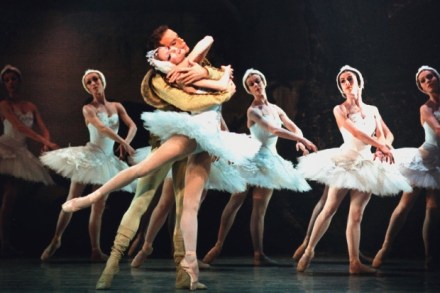
Which would you rather dance in: Milton Keynes or Moscow’s Bolshoi? It’s that age-old dilemma for a star ballerina like Alina Cojocaru, who last week decided not to fulfil a matinee performance with English National Ballet in Bucks in order to fly to Russia to save a Bolshoi show. It left fans fuming. The Bolshoi are presently fielding La Dame aux camélias by the distinguished American choreographer John Neumeier, from which their ballerina Olga Smirnova had to withdraw because of injury. No other dancer, it is said, were available in Moscow to cover. The tiny, sweet-faced Cojocaru is one of Neumeier’s favourites. ENB’s star freed herself from her scheduled Swan Lake on Saturday 16 November in Milton Keynes and dashed off to Russia.

Why Paddington is anti-Ukip propaganda

Well, I’ve just been to see the new Paddington film – the one Colin Firth bowed out of on account of not feeling up to being the voice of the most famous bear in literature, not including Winnie the Pooh. And yep, there were marmalade sandwiches at the launch. Two things. One, it’s nothing like the book, apart from a couple of episodes. In the original, Mr Brown spots Paddington among the bicycles and both he and Mrs B are willing to take him on. In this version, Mr Brown, as played by Hugh Bonneville, is an ol’ curmudgeon, a risk assessor who regards bears as trouble and this one in particular as a threat to the children’s health and safety.

Like everyone else, I want to think Bob Geldof’s awful – but I can’t

Band Aid 30 is officially the fastest selling single of 2014. Yet this attempt by successful musicians to heal Africa through song has not met with universal cheer. Instead, a fickle and febrile debate has raged over whether this is something to be approved of. Unless you subscribe to the 'primacy of celebrity-hating' school of foreign policy, approval should be bestowed. As soon as news broke that Band Aid was reforming to raise funds for ebola victims, the instinct was to deride. The Guardian posted a comment piece slamming it as a condescending and reductive portrayal of Africa. Nick Dearden, director of the World Development movement, feared that Band Aid would neglect the more complex and deep-seated problems of the ebola-stricken regions of the continent.

Yes, Bob Geldof, Africans know it’s Christmas. Do you know it’s time to pack Band Aid in?

In this week's Spectator, out tomorrow, our leading article looks at the Band Aid 30 single and why it's time for Bob Geldof to pack Band Aid in. Pickup a copy tomorrow or subscribe from just £1 here.  Anyone listening to the BBC this week could be forgiven for thinking that the musician Bob ­Geldof had just emerged from Africa, like a ­latter-day Dr Livingstone, the first westerner with news of a deadly new virus. He and his makeshift band of celebrities have adopted Ebola, their song blazing from the radio while Geldof himself has been in every studio exhorting people, with his usual stream of expletives, to buy it.

Damon Albarn at the Royal Albert Hall: I’m sorry to say he killed it

You can’t help but want to hate Damon Albarn. While he may not be the most irritating of the Britpop survivors, (as long as fellow Blur-ite Alex James is still droning on about cheese, there’s no competition) he’s a convincing candidate for second place. He spent the 90s as a pop idol, singing chirpy Small Faces rip-offs and gnomic industrial rock. There were some great songs, but most of it sounds dated, lost to a cutesy strain of that most meaningless catchall – quintessential Englishness. Then around the turn of the century he decided to become a sort of proto-hipster renaissance man, a Jonathan Miller figure for fortysomething men who think it’s OK to go to work on a skateboard.

Newsnight’s arts coverage has descended into a string of fawning advertorials

Newsnight's decision to interview misogynist comedian Daniel 'Dapper Laughs' O’Reilly has been slammed as a cynical ratings grab, a descent even from the depths plumbed by devoting 15 minutes to Russell Brand’s latest booky-wook. The criticism is misplaced, however. In both interviews, the respective hosts, Emily Maitlis and Evan Davis, dissected their subjects’ work and challenged their arguments. It’s in Newsnight's coverage of high culture, not popular culture, where the rot has set in, with a proliferation of glossy advertorials that have no journalistic purpose.

When Arnie met Ross

Arnie mania struck the capital last night. A thousand fans crowded into the Lancaster London Hotel to see Schwarzenegger in conversation with Jonathan Ross. He came bounding on stage, in a Club Class business suit, and peered out at us with a glazed, lipless smile. He has dark tufty hair, an ochre tan, and a hint of cruelty about the anvil jawline and the small unflickering eyes. A deferential Ross gave him an effusive welcome. They sat opposite each other, like bores in a Pall Mall club, in matching armchairs upholstered in blood-red velvet. Arnie compels our attention because his career is unparalleled. He began as a bodybuilder which is technically a sport even though it looks like narcissism communicated to the muscles via steroids and dumb-bells.

Sylvie Guillem interview: ‘A lot of people hate me. Bon. You can’t please everybody’

Arts feature

If you follow dance or music closely, make them part of your life, you look on certain performers as your daemon. These are the artists who become part of your inner landscape. They act as a tuning fork for your emotions and imagination. And you mark their progress with particular hope that you won’t be disappointed. When the 25-year-old Sylvie Guillem arrived in London in 1989 from Paris Opera Ballet, with a flaming reputation as Rudolf Nureyev’s prodigal daughter, one’s first reaction was wariness. She seemed so flashy in her incredible bodily gifts.

Without a model, Moroni could be stunningly dull. With one, he was peerless…

Exhibitions

Giovanni Battista Moroni, wrote Bernard Berenson, was ‘the only mere portrait painter that Italy has ever produced’. Indeed, Berenson continued, warming to his theme, ‘even in later times, and in periods of miserable decline, that country, Mother of the arts, never had a son so uninventive, nay, so palsied, directly the model failed him’. It was a harsh judgment, but the great connoisseur inadvertently managed to put his finger on exactly what was so marvellous about his victim. A splendid exhibition at the Royal Academy triumphantly demonstrates that when Moroni actually did have a model in front of him, he was one of the most remarkable painters of later 16th-century Europe. He was, however, one who does not seem to fit easily into his time and place.

Thomas Ades’s Polaris at Sadler’s Wells: the dance premiere of the year

More from Arts

This has been an extraordinarily exciting fortnight, on and off stage. Premieres in anything from ice-skating to classical ballet, charismatic soloists in flamenco and Indian kathak, the front-page news of Sylvie Guillem’s retirement, and, even more astonishingly, English National Ballet’s announcement of its new Giselle next year by Akram Khan. Consequently I have to short-change some of the highlights (note for next year’s diaries, folks — October is invariably the dance month of the year), including the liberation of ice-skating by the Canadians of Le Patin Libre, who made Alexandra Palace rink feel like a frozen field with their casual pyrotechnics (ice-o-technics?).

Yanks buy stacks of tickets in the West End. Why is Made in Dagenham so rude to them?

Theatre

Go slow at Dagenham. The musical based on the film about a pay dispute in the 1960s starts as a sluggish mire of twee simplicities. We’re in Essex. Grumbling Cockney wage slaves inhabit cramped but spick-and-span council flats. Russet-cheeked kiddiwinkies are scolded and cosseted by blousy matriarchs married to emotionally reticent beer guts. The doll’s-house infantilism of Rupert Goold’s production is challenged by designer Bunny Christie whose set is an essay in conceptualism. She uses a vast plastic grid, like an unmade Airfix kit, to suggest the Dagenham car plant. It’s ingenious and intricate but irritating too. Trouble brews at the factory when the executives downgrade the leather workers, who stitch the car seats, to the level of unskilled labour.

The genius of Cecil Beaton’s interiors

More from Arts

The odds were a hundred to one against him. Brought up in bourgeois Bayswater by genteel parents, Cecil Beaton was effete, pink-and-white pretty, theatrical and mother-adored, with a stodgy brother (but a couple of compliant sisters) —a cliché of post-Edwardian sniffiness, a leer through raised lorgnettes. A humdrum early education followed by Harrow might have formed him into a pliant carbon of his timber-merchant father, but Cecil escaped this. His personality, energy and burgeoning bravery led him far and wide, and often delightfully astray. It took just a few years for him to trample those early 20th-century taboos under his winged heel, and forge his curiosity-fuelled career.

Royal Opera’s Idomeneo: get seats but make sure they’re facing away from the stage

Opera

Mozart’s first great opera, Idomeneo, is not often performed, and perhaps it’s better that way. It should be seen as a festival work, celebrating qualities that we rarely reflect on, but are of the utmost importance. In his fine essay on the opera, David Cairns writes that it encompasses ‘love, joy, physical and spiritual contentment, stoicism, heroic resolution; the ecstasy of self-sacrifice, the horrors of schizophrenia, the agonising dilemma of a ruler trapped in the consequences of his actions; mass hysteria, panic in the face of an unknown scourge, turning to awe before the yet more terrible reality; the strange peace that can follow intense grief.

The voices of Indian PoWs captured in the first world war

Radio

At six o’clock on 31 May 1916, an Indian soldier who had been captured on the Western Front alongside British troops and held in a German PoW camp stepped up to the microphone and began to speak. Not in Hindi or Urdu, Telugu or Marathi but in perfectly clipped English. He tells his audience, a group of German ethnologists, the biblical story of the Prodigal Son. That his voice still survives for us to listen to, clear and crisp through the creak and crackle of time, is an extraordinarily emotive link not just back to the Great War but to the days of Empire.

We know that war is hell. But it doesn’t ever make us stop doing it

Television

There’s a plausible theory — recently rehearsed in the BBC’s excellent two-part documentary The Lion’s Last Roar? — that our war in Afghanistan was largely the creation of the Army, which sorely needed a renewed sense of military purpose after the debacle in Iraq. As a taxpayer, this appals me. As the parent of a boy approaching conscription age it horrifies me. But as an Englishman, it doesn’t half make me proud that we’ll still do anything — up to and including embroiling ourselves in a futile conflict — rather than admit we’re finished as a fighting nation.

Goodman’s Garden

More from Books

Where did they all go? Thickets of love and pain rustle in a dry light and skeins of corvidae traipse to a dusk roost. Time is a flip book. Lift your dear hand and feel the pages purr as years fan by in their lost variegations of green, gold, brown, and an old cat, white as a child’s Christmas, trots a careful way through his once kingdom.

Pink Floyd’s new album: it’s not hip – but it is good

Yesterday, I popped into Rough Trade West record store to purchase the new Pink Floyd album. That isn’t something I expected to say in my lifetime, but 20 years after their 14th album The Division Bell, one final album has been added to the band’s canon: The Endless River. Although this laddie does not think of himself as a professional music critic, I like to think I know my Floyd so here is a quick take on their new release. The Endless River is not on a par, and nor should it be, with the following albums: Dark Side of the Moon, Wish You Were Here, The Wall, The Division Bell or anything else Pink Floyd have released.

A reverend at war

This evening – Armistice Eve – Ben Fleetwood Smyth (no relation) and Hugh Brunt will be putting on their annual British Art Music Series concert: this year, in aid of St Paul’s, Knightsbridge. Narrated by Judith Paris, and interspersed with Victorian and Edwardian music from the BAM Consort and the BAM Ensemble, the event will tell the story of one London community’s life, both at home and abroad, across the full span of the First World War, focussing on extracts from the parish magazines of the time, read by the current vicar, Fr Alan Gyle, and by yours truly.

Our verdict on the North Korean embassy’s art exhibition: ‘I’ve seen worse’

What’s your favourite of Kim Jong Un’s photo opportunities? I like the pictures of the cuddly psychopath inspecting a lubricant factory. One of them has Kim rubbing his hands with glee as pipes squeeze lube into an oil drum. Classic stuff. As one who keeps a close eye on the Dear Leader’s state visits, I was a bit put out when the Dear Leader of the very, very Democratic Peoples Republic of Korea disappeared for six weeks. There were reports of regime change, gout and epic cheese binges. It was a relief, then, when business returned to usual. This week, Kim appeared in his most impressive propaganda shots to date, walking round an orphanage smoking a fag. The Mail’s coverage identified a Thick of It-style balls up in the official images.

How Londoners can reclaim the River Thames

Arts feature

Last week, 539 apartments designed by Frank Gehry and Norman Foster were made available for off-plan purchase. This was heralded by simultaneous launches in London and Kuala Lumpur and a press release announcing Sting and Trudie Styler as early buyers. Battersea Power Station has stood unused for more than 30 years but after multiple failed attempts at redevelopment progress is now well under way towards its transformation into one of London’s most desirable addresses. Ultimately due to house 3,400 homes — only 15 per cent of which are set to be affordable — the project is emblematic of a far larger reclamation of London’s waterfront as a site for luxury housing.