Culture

Culture

The good, the bad and the ugly in books, exhibitions, cinema, TV, dance, music, podcasts and theatre.

Kate Chisholm’s radio top five from 2014

1. My top gong would be shared by June Spencer and Patricia Greene for their brilliant character acting on Radio 4’s The Archers, creating in Peggy and Jill two resilient women of their time yet also strong-minded, decisive, fiercely independent and in Jill’s case always game for a laugh. 2. Not far behind is Neil MacGregor for creating another superb series for Radio 4, Germany: Memories of a Nation, encouraging us to think about what the world might look like from a German point of view in 25 bite-sized insights. 3. Radio 3's most heart-stopping moment on air was Zoe Norridge visiting the technical school in Murambi where thousands of Tutsi took refuge during the bloody civil war of 1994. ‘The smell is biting,’ she told us. 4.

Lloyd Evans’s top five plays and musicals of 2014

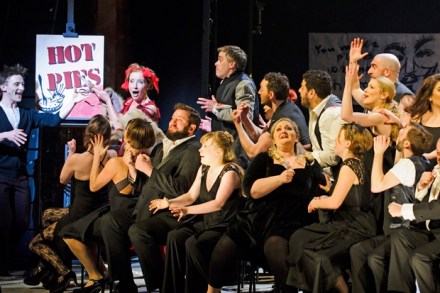
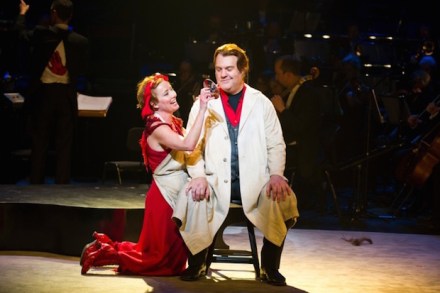
1. The play of the year, by a mile, was Fathers and Sons at the Donmar adapted from Turgenev’s novel. Lindsey Turner directed Brian Friel’s harrowing and exhilarating script with immense visual aplomb. 2. Fings Ain’t Wot They Used T’Be Lionel Bart’s first musical was a sublimely witty look at the Cockney underworld starring Gary Kemp. 3. The Realness A new song-and-dance comedy at Hackney Downs Studio, approached the same material as Fings but with a punchier and more contemporary style. 4. I Can't Sing! The exhilarating title melody of this musical set my nape tingling with static electricity and I was convinced that Harry Hill’s X-Factor spoof would stick around for years. It lasted a matter of weeks. 5.

Deborah Ross’s top five films of 2014

1. Mr Turner Mike Leigh’s infinitely superior biopic starring a sublime, if grunty, Timothy Spall. 2. 12 Years A Slave Harrowing - you’ll be harrowed to within an inch of your life - but it’s unflinching look at American slavery will stay powerfully with you unlike, for example, Django Unchained or The Butler 3. Boyhood Richard Linklater’s epic, heart-warming observational chronicle explores  the banality of everyday life without ever being boring; a rare achievement in cinema. 4. Twenty Feet From Stardom A host of extraordinary women and a sensational soundtrack take this documentary about backing singers to another level, and will take you with it. 5.

Why Joe Cocker was the only singer to improve a Beatles song

Joe Cocker died yesterday, just 70 years old, from lung cancer. He was one of a handful of rock singers whose voice was instantly recognisable, adding a new dimension to any song he sang. And perhaps this is why his cover versions worked so well – they did sound completely different, and yet still thrilling and authentic. He could take a well-loved song, and transform it in a way that was loved by those who loved the original. To me, Cocker was the only person to improve a Beatles song. His 1968 With A Little Help From My Friends is unforgettable, right off from the intro. It sounds like a completely different song, shooting off in a direction that even the Beatles couldn’t quite manage.

A stunner of an exhibition at Paris’s flashiest new gallery

You can tell a lot about an art gallery from its attached eatery. The Tate has the grand but gratuitously naff Rex Whistler restaurant. The Serpentine its globular Zaha Hadid nouvelle cuisine joint. Then there’s the Mess Restaurant at the Saatchi Gallery’s newish space in the old Chelsea Barracks. To be charitable, the name is a bad but unfortunately appropriate pun. Anyway, I report from a children’s park in BCBG west Paris, where Louis Vuitton have just opened a new art gallery. Obviously, a luxury (and erstwhile collaborationist) megabrand were never going to settle for an ordinary white cube. Oh no. Instead they hired virtuoso architect Frank Gehry to build something that would piss off the local nimbys. And piss them off it did, but it still got built.

The best (and worst) of ballet and dance over Christmas

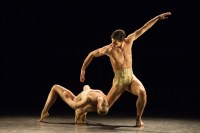
The Nutcracker, English National Ballet, until 4 Jan *** The Little Match Girl, Lilian Baylis Studio, until 4 Jan ***** Edward Scissorhands, Sadler’s Wells, until 11 Jan *** Alice’s Adventures in Wonderland, Royal Ballet, until 16 Jan ** The Mad Hatter’s Tea Party, Linbury Studio Theatre, until 17 Jan ** Amazing, the change in the dance weather this Christmas. Where usually there is snow, fairies, tinkly celestas, a glut of Nutcrackers, traditions have turned topsy-turvy. At the Royal Ballet the sun has broken out (if mildly) in its Don Quixote, as I reported last week, and only the dependable English National Ballet is serving up a trad Nutcracker over Christmas, at the Coliseum.

Does Hollywood need bullies?

There have always been bullies in Hollywood; it's institutionalised, like a form of hazing, but the key difference between the film business and the Marine Corps is that bullying in Hollywood is not meant to inculcate esprit de corps; its purpose, for the bully, anyway, is to provide confirmation that the hierarchy is working in his favour.  I was one of the last generation of studio executives at Universal that reported to the old mogul, Lew Wasserman.  Wasserman was a physically imposing screamer who had parlayed with gangsters, bootleggers and union enforcers as a supplier of dance bands to illicit nightclubs during Prohibition, so he could terrorise white-collar employees without breaking a sweat.

Why Frozen is a fabulously irritating film

For a film I’ve never seen, I really, really hate Frozen. For those who don’t have children and don’t look into shop windows and don’t buy toys and are oblivious to merchandise, it’s the blockbuster, Academy award-winning Disney film, the most successful animation of all time and apparently the source of unending annoyance in car journeys, on account of children’s habit of singing the songs out loud. (The director, Jennifer Lee, has just issued an apology to parents everywhere.) My own children loathe it without any encouragement from me but they can’t get away from it either.

Climate change, Bruegel-style

Arts feature

It is cold, but not in a cheery, robin-redbreast kind of way. The sky is slate blue; the sun, a red ball, is slipping below the horizon, figures carrying heavy burdens trudge across the frozen water. Yet this far- from-festive painting, ‘The Census at Bethlehem’ by Pieter Bruegel the Elder, is one of the earliest — perhaps the very first — to set the Christmas story in a northern winter landscape. There is no attempt to pretend that this is the Holy Land. The setting is a village in the southern Netherlands. The houses are brick-built, one with a northern European crow-stepped gable. In the foreground, a pig is being slaughtered, an improbable sight in Palestine. In his poem ‘Musée des Beaux Arts’ W.H.

The Nazi origins of the Vienna Phil’s New Year’s Day concert

Arts feature

It may be the last water-cooler moment in world television. On the first morning of the year, at 11.15 Central European Time, in a place that considers itself the epicentre of Europe, a group of men in formal dress mount the Musikvereinssaal stage in Vienna to perform a ritual that passes for culture and tradition. It is, of course, neither. The music is strictly bar-room, written by members of the Strauss family as social foreplay for the soldiery and serving classes in low taverns. Like most forms of dirty dancing, the music rose vertically from barroom to ballroom and was soon performed as encores by symphonic orchestras to dowager purrs of wie schön. The New Year’s Day concert is an annual jellybox of waltzes, polkas, galops, marches and any old tritsch-trash.

Snow – art’s biggest challenge

Arts feature

In owning a flock of artificial sheep, Joseph Farquharson must have been unusual among Highland lairds a century ago. His Aberdeenshire estate covered 20,000 acres — surely enough to support the modest local ovine needs. But Farquharson was a painter, the fake sheep artist’s models. For cleanliness and biddability, few grazing ewes can match a woolly dummy. Joseph Farquharson was 27 when he scored his first hit at the Royal Academy in 1873. ‘Day’s Dying Glow’ depicts a handful of sheep negotiating a snowy incline alongside an icy burn. Leafless trees crown a mound. Behind them a sickly sun is sinking or possibly rising.

Le French bashing has spread to France. Are things really that bad?

Arts feature

The French for French-bashing is le French bashing. This verbally costive nation is at it once again, torpidly borrowing an approximately English expression rather than coining its own. Such bashing is not an exclusively Anglo-Saxon practice. There is indigenous bashing. At least there is Éric Zemmour, whose salutary Le Suicide français was published a couple of months ago. Its very first sentence declares that France is the sick man of Europe — which prompted Manuel Valls, little Hollande’s prime minister this week and a man who is not growing into that poisoned office, to take the bait, exhibit a preposterously thin skin and denounce the book twice in a few days. This is not to suggest that M.

From the archive: Sound of the season

Features

Some songs are hits — No. 1 for a couple of weeks. Some songs are standards — they endure decade after decade. And a few very rare songs reach way beyond either category, to embed themselves so deeply in the collective consciousness they become part of the soundtrack of society. They start off the same as all the other numbers, written for a show or a movie, a singer or an event, but they float free of the writer, they outlast the singer, transcend the movie, change the event. And Irving Berlin’s ‘White Christmas’ is perhaps the song that transformed American Christmas.

David Hare’s notebook: The National Theatre belongs to taxpayers, not corporate sponsors

Notebook

The nicest day of the year was spent at Charleston in May. The Sussex farmhouse shared by Duncan Grant and Vanessa Bell looked splendid in the streaming sunshine. As a dramatist, I’ve idly disparaged bald and white-haired audiences. But as soon as I started speaking at the literary festival, I realised that everyone in panama hats and cardigans was way to the left of me. The first question was about my local childhood, and I said that growing up so close to the Channel meant that stories of people like Bernard Shaw and Virginia Woolf sitting on English lawns and hearing the sound of battle in the first world war from across the water had always moved me.

How to win MasterChef – and why salmon is the fish of the devil

Television

If ever my near-neighbour William Sitwell is killed in a bizarre shooting accident and I end up taking his place as one of the guest critics on MasterChef: the Professionals (not likely, I admit, but you never know), here are some tips for competitors who wish to avoid a stinking review. 1. Don’t serve me salmon. Salmon is the fish of the devil, which is why Satan coloured it that particularly vile shade of pink. It is evil because it is almost certainly farmed and therefore pumped full of antibiotics to destroy all the parasites with which it would otherwise be pullulating. If it’s not farmed, well, it still tastes of salmon, doesn’t it? 2. Don’t serve me anything cooked sous-vide. Yeah, maybe to you chefs it looks all cutting-edge and technical.

Royal Ballet’s Don Quixote: Carlos Acosta is too brainy with this no-brain ballet

More from Arts

One feels the pang of impending failure whenever the Royal Ballet ventures like a deluded Don Quixote into a periodic quest to stage that delightful old ballet named after him. Twice in recent years has it tilted at the windmill and flopped back, dazed and bruised. It never remembers, though, and here it goes a third time. A Spanish romp in the sun, with brilliant dancing, silly comedy and a happy ending, makes a perfect change from the usual Christmas Nutcracker, does it not? And nowadays, with such a substantial cohort of Cuban, Argentinian, Brazilian and Spanish dancers the Royal should be able to scorch the floor in required style, shouldn’t it?

Children’s radio was once at the core of the BBC – now it’s all but disappeared

Radio

It was a bit of a surprise to hear Jarvis Cocker, the embodiment of cool and former frontman of Pulp, confessing to a love of Singing Together, a BBC programme straight out of the 1940s, with its clipped pronunciation and uptight pronouncements. But in his edition of Archive on 4, broadcast just as the Advent season began (and produced by Ruth Evans), Cocker took us on a musical journey back into his past and to his memories of singing in the classroom, ‘which certainly left its mark’ on him and millions of others. He reminded us that children were once at the heart of BBC programming and Singing Together was thought to be a great way to ‘improve young minds’.

If you like bland films full of blondes, you’ll love Kon-Tiki

Cinema

Kon-Tiki is a dramatisation of Thor Heyerdahl’s 4,300-mile, 101-day journey across the Pacific by balsa-wood raft, which took place in 1947, and was a remarkable achievement, unlike this film, which so isn’t. True, it does what it says on the tin. There’s an ocean, and it’s traversed. There is jeopardy, most notably in the form of a big plasticky shark. But it’s played as such a straight-up-and-down, old-fashioned, formulaic adventure that it lacks any intimacy or feeling and almost can’t be bothered with its own characters. Consequently, it’s as bland as it is blond, and it is exceptionally blond. As styled by Th’Oreal, I guess you could even say.

Panto season has arrived – and even the kids are turning their nose up at it

Theatre

‘What is a panto?’ I asked my companion at the Hackney Empire’s Saturday matinee. ‘It’s basically a really bad play,’ said Coco, aged five and three quarters. She was there with her older brother and my son to help me appreciate the Christmas frolics. Half an hour in, I feigned confusion over the storyline. ‘People are trying to steal the duck,’ she said. Mother Goose is a parable of wealth and greed set in Hackney-topia where an impoverished family become rich when their champion egg-layer starts to produce bullion instead of breakfast. Menaced by an assortment of harpies and malefactors, they move into a spangly new palace and try to protect their asset from thieving hands.

In the Emergency School

More from Books

We were registered as a form, and for the first day Left unsupervised alone in a distant room With empty desks to organise our own war. Using books and inkwells was the easy way Of creating bombardments — conkers and apple-cores came In useful also, and in the master’s drawer There were sheets of exercise-paper which would acquire, When neatly folded, the speed of darts to fly Sharply across to send warnings of attack. All the heads on the side of the classroom under fire Dipped for cover under desk-lids when this weaponry Rained down on them — to be picked up and fired back — Though I don’t recall any sort of hurt or harm Resulting from this conflict, which was allowed To go on uninterrupted, lasting throughout Our entire first day of secondary term.

Sunset Hails a Rising

More from Books

O lente, lente currite noctis equi! — Marlowe, after Ovid.   La mer, la mer, toujours recommencée. —Valéry.   Dying by inches, I can hear the sound Of all the fine words for the flow of things The poets and philosophers have used To mark the path into the killing ground. Perhaps their one aim was to give words wings, Or even just to keep themselves amused, With no thought that they might not be around To see the rising sun: But still they found a measure for our plight As we prepare to leave the world of men. Run slowly, slowly, horses of the night. The sea, the sea, always begun again.   In English of due tact, the great lines gain More than they lose.

Don’t criticise Janet Suzman for saying theatre’s ‘a white invention’, thank her

Janet Suzman’s throwaway comment about the theatre being 'a white invention' has attracted a storm of opportunistic derision. What Dame Janet may have meant was this. Theatre is gossip ceremonially presented. And the dramatic structures devised by the Athenians in the 5th century BC raised the form to such a pitch of excellence that the offspring cultures of Ancient Greece acquired a head start that has never been relinquished. A harmless footnote. But her timing was unlucky. A day earlier the head of Arts Council England, Peter Bazalgette, ordered the 670 arts bodies he supports to get their skates on and make a bigger push for ‘diversity’.

Sex, lies and El Sistema

Arts feature

The two trendiest words in classical music are ‘El Sistema’. That’s the name for the high-intensity programme of instrumental coaching that turned kids from the slums of Venezuela into the thrilling Simon Bolivar Youth Orchestra (SBYO), conducted by hot young maestro Gustavo Dudamel before he was poached by the Los Angeles Philharmonic. Or so the legend goes. When the SBYO was booked for the Proms in 2011, the concert sold out in three hours. Sir Simon Rattle, no less, declared El Sistema to be ‘the most important thing happening to classical music anywhere in the world’. Audiences wept at the sight of former street urchins producing a tumultuous, triumphant — and virtually note-perfect — performance of Beethoven’s Fifth.

We must never again let this 19th century Norwegian master slip into oblivion

Exhibitions

You won’t have heard of Peder Balke. Yet this long-neglected painter from 19th-century Norway is now the subject of a solo show at the National Gallery. And it’s an absolute revelation. Walking around, I marvelled at the intensity of a man obsessed with revealing the frozen grandeur and elemental drama dominating his country’s northernmost shores. Like Turner, he was driven by a restless urge to travel, discovering landscapes that enlarged and transformed his vision of the world. In 1832 he took an arduous sea journey to the far north of Norway, ceaselessly sketching the rugged coast and mountains along the way. His excitement grew as he passed the primal North Cape, and the onset of a hurricane only increased Balke’s avid involvement.

Into the Night

Poems

You fling yourself out the door into the wind and start to row yourself down the steep hill with your standard issue steel stick, working it along the dark path, clickety-click, clickety-click. It’s a path you would know with your eyes closed, the old Richmond Hill you cycled up and down as a boy, in all weathers, coming and going from the house perched on top. You shuttle along at first, Taking full advantage of your exit velocity, clickety- click, clickety-flop against the rail, breathe heavily, rattle on. At the bottom, you tilt into Patrick Street and fluorescent lighting, poke at the white rounds winking on the ground, checking for coins, finding gum. You have forgotten your glasses, and so your vision is that of a small subterranean animal, tunnelling with its forepaws.

The recruitment company to go to if you’ve got no arms or legs

Theatre

When to launch? For impresarios, this is the eternal dilemma. Autumn is so crowded with press nights that producers are heard to sigh, ‘The market’s full. There’s no room.’ When the glut abates in late November, the same producers sob, ‘The market’s empty. There’s no point.’ But national rags have to report on something, even a fringey foxhole like the Southwark Playhouse, and a bold investor can exploit this opportunity. Most of the dailies sent their top sniffer dogs to check out Saxon Court by Daniel Andersen, which is set in the feverish, sharp-suited world of Square Mile recruitment.