Culture

Culture

The good, the bad and the ugly in books, exhibitions, cinema, TV, dance, music, podcasts and theatre.

Forget the Germans. It’s the French who made classical music what it is

Opera

The poor French. When we think of classical music, we always think of the Germans. It’s understandable. Instinctive. Ingrained. But unfair. We forget that most of the heavy lifting — most of the intrepid leaps forward in harmony, colour, rhythm and form — was done by the likes of Berlioz, Debussy and Boulez. The most completely forgotten of these Gallic explorers is Jean-Philippe Rameau (1683–1764), who died 250 years ago this year. His operatic output, begun when he was 50 and comprising 30 works, is an acquired taste. I remember the exact moment I fell for him. The exact notes in fact. It was the opening aria of his one-acter Pigmalion. Three flutes, comforted by strings, sob in a corner.

Sacred Monsters, Sadler’s Wells: Sylvie Guillem and Akram Kham’s captivating final boogie

More from Arts

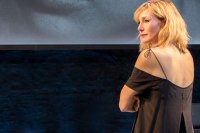
I’m dashing between dance theatres at the moment and there’s just so much to tell you about. I could linger on Sacred Monsters, the captivating conversation-piece at Sadler’s Wells for Sylvie Guillem and Akram Khan — conversational being the word, for these genius dancers also talk to us, which is rather like Garbo laughing. Guillem’s voice is a delightful discovery: it’s a soprano timbre, bubbling Frenchly with dropped aitches and baroque flexibility. She tells us cute stories about Charlie Brown’s sister ‘Sall-ee’ and her wish always to be ‘émerveillée’in life, while Khan confides his anxiety about balding.

Why you have to listen to this year’s Reith Lectures

Radio

Each year the Reith Lectures come round as Radio 4’s annual assertion of intellectual authority, fulfilling the BBC’s original aspiration to inform and educate (although not always to also entertain). Each year, though, it’s hard not to feel a certain resistance to Lord Reith’s lofty legacy. Radio might be the perfect format for delivering a talk. Perfect for the lecturer because there is just an audience of one to focus on. Perfect for the listener because there’s nothing else to distract you. No intrusive soundscape. No other voices to confuse. But not all intellectual giants have the ability to communicate, nor an understanding of radio’s particular qualities.

The perils of being a posh boy on the telly

Features

The first time it happened was at the cinema. I was queuing for my ticket-for-one when the woman behind me exploded. ‘Omigod I saw you on television!’ ‘Oh, er, yes,’ I mumbled. The next time was in the cinema, as I squeezed down the row: ‘Sorry, but I have to say, I saw you on that show,’ grinned the young man. I suppose we were on the King’s Road, so it wasn’t surprising everyone had been watching Posh People: Inside Tatler. It was only when I was stopped by a blonde in Shoreditch the next day that I began to worry for my ego. I joined Tatler last year — ten years after I started my career as a receptionist at The Spectator. On my first day, filming began for the BBC’s fly-on-the-wall documentary.

Why Church music is back in vogue – and squeaky-gate music has had its day

Music

One of the growth areas of contemporary music is in setting sacred texts. It might be thought that I had a special interest in claiming this, but in fact what I am about to describe represents a sea change in recent practice. Where there was once ‘squeaky gate’ (or ‘dripping tap’) music — as very dissonant writing used to be called — many leading composers are now writing in a style that is at least tonal and can occasionally seem almost naïve. There was a time when the first performance of a recent commission struck fear into the most broad-minded listener. We used to brace ourselves for horror and were rarely disappointed. In those days, the struggle to write more atonally than the next man was palpable.

As No Art Is

More from Books

The weekend’s on us, and no means of soothing it or kissing it away. The flat facades of mansion blocks curve towards silence. The sun gets everywhere in this canyon, but property holds its desperations in: the same flying ant is all that moves along the same trouser folds. I go to the park for late afternoon to arrive among the memorials in their set-back space, their immortality in the last century, their short life-spans. What settles on this time is not a haze or mist, but a half-visible moderation of the light among the trees in which appear the hour-long married with their picture-takers, from the distance down the long paths hurrying, where sunlight falls on patches between fallen leaves spread flat by sudden July showers.

An art award that actually rewards talent

Before I was asked to go out and cover it, I’d never heard of the Vincent Award for contemporary art. It’s a big deal in the Dutch art world, apparently, a sort of pan-European answer to the Turner Prize. It was set up by a charitable foundation with some deeply serious intent or other, and takes place around Holland every other year. The deal is that 50,000€ is awarded to – and I’m more or less directly quoting the literature here – a stimulating mid-career artist building a discussion platform. It is also, we are told, ‘Europe’s most prestigious art prize’. Are your bullshit detectors sounding off yet? Sure enough, mine were. ‘Prestigious’ is one of those adjectival free-for alls, isn’t it?

Does Allen Jones deserve a retrospective at the Royal Academy?

Exhibitions

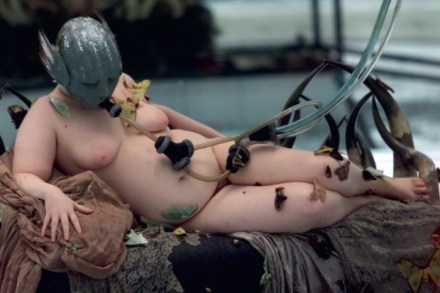
It has been a vintage season for mannequins. At the Fitzwilliam Museum in Cambridge, an exhibition called Silent Partners looks at the relationship between artist and mannequin, from function to fetish. In London, the Royal Academy is hosting a retrospective of the work of British artist and Academician Allen Jones. Jones, who is now 77, became obsessed with mass-produced imagery of eroticised women. As the show makes clear, he never really got over it. During the 1960s, Jones emerged as a leading pop artist. His contemporaries at the Royal College of Art included Patrick Caulfield and David Hockney, but he was expelled after a year. His big break came in 1969 with his trio of fibreglass sculptures that portrayed women as pieces of furniture.

How Hollywood is killing the art of screenwriting

Arts feature

Writing is dead. Long live writing. What do I mean when I say writing is dead? That’s a whole other article, but in brief: cinema killed the novel, email killed the letter, CGI killed cinema and Twitter killed email. The good news is that, despite this bloodbath, writing is actually alive and well and living in Texas. And the reason I know that is that I was there at the end of last month. The Austin Film Festival, where I had a script in the competition, is the only major film festival in the US that focuses primarily on the writers (as opposed to directors or actors). The result is that, for those few days while the festival takes place, you can’t stir an elbow in Austin without knocking over a writer’s pint. The place is crawling with them, seething with them.

The Turner Prize shortlist is the worst in its history. Who should have won the award? Nobody

What were you thinking? What? What? What? This is the question I'd ask the people who selected the artists for this year’s Turner Prize. The first time I visited, I thought I must have missed something – perhaps I just wasn’t in the right mood. Surely no arbiter in their right mind could’ve let such hectoring, cultural studies-sanctioned guff slip through the net? So I went again. And nope. I was right the first time – and then some. My first Turner Prize was in 1999, and hyperbolic though it sounds, what I saw there changed the way I thought about nearly everything. Yes, it was showy, sensationalist, in-yer-face. But it was pretty clear that the excitement it stirred up was far from empty.

Is theatre more left wing than other art forms? Yes – and so it should be

A couple of nights ago a question arose in our post-show discussion. It is a question I am familiar with. I run Theatre Uncut. We commission writers to create short plays that explore social or political issues. We then release these plays, rights free, to be performed by anyone anywhere for a limited period and stage them in leading theatres across the country. So far this year 328 groups in 25 countries have downloaded the plays. While we don’t advertise our own political persuasion it is pretty obvious to which side we lean: we were set up in response to the cuts. We use the word ‘social’ believing that society very much exists. We give plays to other makers rights free. So the question that arose is what we often get asked: what about right-wing voices?

Paddington review: put your mind at rest – no one gets marmalade up the bum

Cinema

‘Please look after this bear,’ reads the famous label hanging round Paddington’s neck, and this film does that, admirably, handsomely, endearingly, lovingly and not at all sexily. Such a furore, when the film was awarded a PG instead of a U certificate for ‘sexual references’ — oh no! What have they done to the bear? — but it was just the BBFC being somewhat over-enthusiastic, as it would later admit, when it downgraded it to ‘innuendo’. Still, I wanted to put your mind at rest, wanted you to know the bear is safe and this isn’t Paddington: the Sex Pest or anything, even though that’s a film I’d probably quite like to see.

The National’s latest attempt to cheer us up: three hours of poverty porn

Theatre

Bombay is now called Mumbai by everyone bar its residents, whose historic name (from the Portuguese for ‘beautiful cove’) has been discarded for them by their betters. Near the airport a huge advertising board bearing the slogan ‘Beautiful Forever’ overlooks an alp of discarded junk where homeless paupers crouching in tin shacks toil and slave around the clock to earn a meagre bowl of grey, rat-licked gruel. Welcome to the National’s latest attempt to cheer us all up. The verminous scrapheap teems with cocky adolescents, witty thieves, evil moneylenders and struggling mums.

ENO’s Gospel According to the Other Mary: great music weighed down by a worthy staging

Opera

Terrorism; East-West diplomacy; nuclear war: John Adams’s operas have poured music into the faultlines of 21st-century global politics, and the tremors have been significant. Simply staging The Death of Klinghoffer recently was enough to see the Met picketed on charges of anti-Semitism. While The Gospel According to the Other Mary isn’t going to start any riots, Adams’s latest work marks a turning point, both in the composer’s music and his social mission. No longer content to comment and observe, Adams turns his gaze to the story of the Passion — reclaiming and rewriting the originary narrative of the Christian West.

Is this 65-year-old British pianist the next big thing in classical music?

Music

Earlier this month the Wigmore Hall was sold out for a Schubert recital by a concert pianist whose only solo recordings consist of two volumes of the Mozart piano sonatas. That would be understandable if he were 23 years old and the next big thing. But he’s 65. Though he may indeed be the next big thing. Christian Blackshaw started big, faded into obscurity, then burst back at around the time he qualified for Boris’s Freedom Pass. Whether he owns one I can’t say. I wouldn’t dare ask, since he can be a bit prickly. In fact, he’ll probably take offence at that, so let’s note immediately that he doesn’t look his age. He has the features of a matinee idol and the swept-back silver hairstyle that Beethoven would have sported if he’d owned a comb.

Don’t sneer at I’m a Celebrity. The show is teaching us to become model citizens

Television

One of the great benefits of having teenage children is that they force you out of your fuddy-duddy comfort zone. There was no way, for example, that the Fawn and I were ever going voluntarily to watch I’m a Celebrity... Get Me Out of Here! because we’re snobby old farts who only like history documentaries and University Challenge. But Girl decreed otherwise. That’s why, unlike many of you, but like most of the nation, I am now able to comment knowledgably on how well Michael Buerk is doing, who Tinchy Stryder is, why it was a sensible idea to choose world superbike champion Carl Fogarty to undertake the first bushtucker trial, and why Melanie Sykes is currently Britain’s favourite Milf. You think you don’t need to know this trivia?

Was this Christian pioneer of radio evangelism a fraud?

Radio

She was the sequinned star of the airwaves back in the 1920s, the first preacher to realise the potential of the wireless, long before Billy Graham and co. But who now has heard of Aimee Semple McPherson, the radio evangelist? Born in 1890 and raised on a farm in Canada, she was converted as a teenager by a Pentecostal preacher whom she married and joined on his missionary travels. When he died she took up preaching herself, moving to Hollywood and becoming enormously popular as a great healer of the sick and saviour of souls, dressed up for the part in a long white figure-hugging gown adorned with a huge glittering cross. Naomi Grimley told her story for the World Service’s The Documentary.

Language

More from Books

And when I landed in America, aged ten, I knew the language was the same. And yet At once the alien words confronted me Like tests I must perform before I passed: Gotten and cootie and the way they said ’erb, and the different gas, and turning on The faucet. That first Christmas, presents wrapped In something called excelsior, just bits Of wood-shavings.       I learned fast, but still baulked Later at sniggerings over those secret words Too bad to be explained: jamrag — a pad Of cotton-wool I saw, stained, on the road; And, inexplicably worse, the taunt Thrown at a boy just down the way from me — ‘He’s just a ferry — keep away from him.’ How could a kind of boat be a boy too, And one to be avoided?

First Day of Spring in Bath

More from Books

Quick-flowing creamy light and all cohering: Faux fanes in gardens, Nash and Wesley’s shades, Gold, gaily weighty houses, rocketing sky, And open hillside turning as I turn, All witnessed through ancestral engineering, Small canny bones and inward fine parades We had no part in, choiceless ear and eye Meting out pleasure I could never earn.

Apollo Awards 2014: Digital Innovation of the Year

This article first appeared in Apollo magazine Apollo’s new Digital Innovation of the Year award commends organisations harnessing digital technology to advance access to, or knowledge of art. The winner will be chosen from the shortlist below and announced in the December issue of Apollo. Find out more about the Apollo Awards. After Dark Tate Britain, London For five nights in August, four robots equipped with cameras roamed the galleries of Tate Britain and live-streamed their journeys to a microsite. A few of the robots’ online observers were also allowed to log in and manoeuvre them by remote control.

What is the truth about Cardinal Murphy-O’Connor and ‘Team Bergoglio’?

A couple of days ago John Bingham, the excellent religious affairs editor of the Telegraph, broke a story that is only now filtering out. I hope he'll forgive me if I wonder whether he realised just what a big story it was. Bingham wrote: Cardinal Cormac Murphy-O’Connor, the former leader of the Roman Catholic Church in England and Wales, helped to orchestrate a behind-the-scenes lobbying campaign which led to the election of Pope Francis, a new biography claims ... [The book] to be published next month, discloses that there had been a discreet, but highly organised, campaign by a small group of European cardinals in support of Cardinal Bergoglio.

Actually, Bob, they do know it’s Christmas (we checked)

Barometer

Yeah, Bob, they know The answer to the rhetorical question posed by the Band Aid single, ‘Do they know it’s Christmas?’, is broadly yes. Christmas Day is a public holiday everywhere in Africa except Mauritania, Western Sahara, Morocco, Algeria, Tunisia, Libya and Somalia, although countries have widely differing customs associated with the event. — In Liberia, one of the Ebola-affected countries, it more resembles Halloween, where children go from door to door dressed as demons and begging for presents. — The two countries where Bob Geldof’s line might be appropriate are Ethiopia, the target of the first record in 1984, and Egypt.

Are the British too polite to be any good at surrealism?

Exhibitions

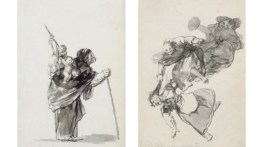
The Paris World’s Fair of 1937 was more than a testing ground for artistic innovation; it was a battleground for political ideologies. The Imperial eagle spread its wings over the German Pavilion; the Soviet hammer swung above the Russian Pavilion; and the Spanish Pavilion unveiled Picasso’s shocking monument to the civilian dead of the bombed city of Guernica, raising the clenched fist of the Spanish Republic in the capital of non-interventionist France. Not everyone was convinced by ‘Guernica’ as art. Anthony Blunt in The Spectator commended Picasso’s political gesture but dismissed the painting as ‘the expression of a private brainstorm’.

The story of the first painting to sell for over a million pounds

Arts feature

Nothing could have prepared the art world for the astounding moment in 1970 when, at a Christie’s sale on 27 November, the world auction record for a painting smashed through the million-pound barrier for the very first time. It was Velázquez’s portrait of his assistant Juan de Pareja, and in the week leading up to its sale the international press became excited about the possibility that it would beat the previous record of £821,482, paid in 1961. I had recently become the art critic of the Evening Standard, and its enlightened editor, Charles Wintour, asked me to write a special article about this Velázquez portrait. Propped up on a chair in a secluded top-floor room at Christie’s headquarters, this painting impressed me profoundly.

No one in the Bible has been as elaborately misrepresented as Mary Magdalene

Arts feature

How would the real Mary Magdalene have reacted to her posthumous reputation? Not very kindly, one suspects. Our only historical source, the New Testament, does not even hint that she was a prostitute, and she’s unlikely to have been placated by Christians telling her: ‘It’s OK, we think you were a reformed whore.’ No one in the Bible has been so elaborately misrepresented. In addition to not being an ex-prostitute, Mary of Magdala was not Mary of Bethany, the sister of Martha and Lazarus, who anoints the feet of Jesus with ‘about a pint of pure nard, an expensive perfume’ and then wipes it up with her hair. Nor was she the ‘woman taken in adultery’, the one told to go and sin no more. Nor was she the wife of Jesus.

Spare us a Bob?

Leading article

Anyone listening to the BBC this week could be forgiven for thinking that the musician Bob Geldof had just emerged from Africa, like a latter-day Dr Livingstone, the first westerner with news of a deadly new virus. He and his makeshift band of celebrities have adopted Ebola, their song blazing from the radio while Geldof himself has been in every studio exhorting people, with his usual stream of expletives, to buy it. Unless you have been in isolation for the past six months, the Band Aid single will not have raised your awareness of the disease one bit. Since the outbreak was first confirmed in Guinea on 22 March, many hours of news coverage had been broadcast and many millions raised to help the aid effort.