Culture

Culture

The good, the bad and the ugly in books, exhibitions, cinema, TV, dance, music, podcasts and theatre.

The Met’s Tannhäuser is outstanding – despite a vast and expressionless leading man

This was a superb, thrilling performance, chiefly thanks to James Levine and his amazing orchestra - he got a tremendous reception before the opera started, an expression of the admiration and affection of the audience; but he and we in the cinema should be spared the sight of his conducting, now a matter of limited gestures and unlimited facial expressions. He timed the whole work more sensitively than I have ever heard it before, so that there were almost no longueurs, which is a remarkable feat. Choosing the, or more accurately a Paris version, even Levine couldn't prevent the opening scene between Venus and Tannhäuser being tedious.

Of gods and men

Arts feature

Over the stupefyingly long course of Egyptian history, gods have been born and they have died. Some 4,000 years ago, amid the chaos that marked the fragmentation of the original pharaonic state, an incantation was inscribed on the side of a coffin. It imagined a time when there had been nothing in existence save a single divine Creator. ‘I was alone in the emptiness,’ the god proclaimed, ‘and could find no place to stand.’ Nevertheless, beside him, he could feel the gods that were yet to exist. ‘They were with me, these deities waiting to be born. I came into being and Becoming became.’ The gods emerged, to reign first on earth and then in the heavens, and history began.

Hanging offence

Exhibitions

Modern Scottish Men, a new exhibition celebrating the achievements of male artists in the 20th century, opens next month in Edinburgh. Men only; no women. Bold! Only joking. That show would never happen today. How could it? Where would an exclusive, specifically male-only exhibition be tolerated these days? A women-only show, on the other hand, would be fair enough; we need to point out that the wee dears can paint too. And so we have Modern Scottish Women: Painters and Sculptors 1885–1965. Should we perhaps be feeling patronised, ladies? The recent death of Brian Sewell has again thrown up his old allegations regarding the inferiority of women artists.

Intelligent design | 29 October 2015

Exhibitions

Peter Mandelson, in his moment of pomp, had his portrait taken by Lord Snowdon. He is sitting on a fine modern chair. Mandy would no doubt have been aware of the ancient historic associations, through bishoprics and universities, that chairs have with power. Since it is a chair much admired by architects, Mandy also looks quite cool, although these things are relative. The chair and its footstool are known as Eames Lounge 670 and Eames Ottoman 671, and they were first manufactured in 1956 by Herman Miller of Zeeland, Michigan. Curved plywood shells are veneered with Brazilian rosewood, upholstered with shallow black leather-studded cushions and supported, at a meaningful tilt (suggestive of relaxed authority), on a stellar metal support.

Unreliable evidence

Exhibitions

I hadn’t really thought much about pixels before, despite spending a large portion of my day looking at them. After all, a pixel is just a tiny unit in a digital image, and we all tend to look at the bigger picture. But how about this: this humble unit has now become a key feature of drone warfare. Drone-fired missiles have reportedly been developed that can burrow through targeted buildings, and leave a hole that appears smaller than a pixel on publicly available satellite images. This means that drone strikes are often invisible to groups who try to monitor attacks, such as NGOs or the UN.

Maximum Bob

Music

We were like four hapless contestants on University Challenge. None of us knew the answer. But just like they do on the telly, I leaned learnedly across towards my 28-year-old son, who in turn looked despairingly towards one of my stepsons, before my other stepson made his contribution with a shrug of the shoulders. So, it was up to me as captain of the team to take a guess as the first few bars wafted through the Royal Albert Hall. ‘“Tangled Up in Blue”?’ I proffered with as much enthusiasm as Jeremy Corbyn at a white-tie dinner. But, fingers on the buzzer, there were far bigger questions to be answered.

Wherefore art thou Romeo?

More from Arts

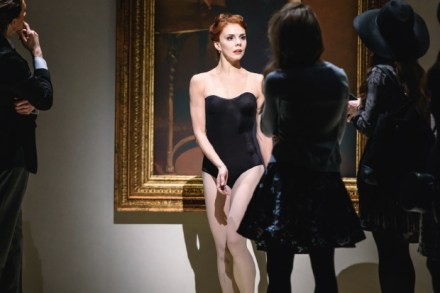
You always remember your first time, don’t you? And in ballet one imagines that Juliet wants to remember her first Romeo as a thunderclap. So the Royal Ballet’s director Kevin O’Hare, for reasons best known to himself, gives the most exciting new young star the Royal Ballet has seen for years the role of Juliet and...Matthew Golding as Romeo. And so it was that Francesca Hayward’s mesmerising debut in this most prized of all Royal ballerina roles will be remembered as a bomb exploding in a vacuum. This Juliet will have to hunt for a new Romeo to find her match; she will have better nights to remember than that first one, which should have been so precious. While we, the public, can only grind our teeth in frustration at such a casting cock-up.

Irish ayes

Opera

It’s Halloween, and right on lightning-flash cue enters an operatic ghost story exhumed from the grave of long-since-buried works. You couldn’t hope for more discerning grave-robbers than Wexford Festival Opera, however, who have long made it their mission to bring forgotten operas back to life. Mascagni’s Guglielmo Ratcliff is a proper blood-on-the-tartan gothic thriller, all duels, doomed lovers, fainting heroines and family curses, with a score as fleshy with tunes as the composer’s more famous Cavalleria rusticana — think Lucia di Lammermoor without the fey bel canto warblings. So why so long neglected? There are no musical mad wives lurking in Guglielmo Ratcliff’s attic, but there are more than a few technical demons.

Shaken, not stirred

Cinema

Spectre is the 24th film in the Bond franchise, the fourth starring Daniel Craig, the second directed by Sam Mendes, and the first at not much of anything. Nothing new to report, in other words. It probably delivers what the die-hard fans want, but it is not like Casino Royale or Skyfall (no one talks about Quantum of Solace, by the way, because it’s assumed everyone involved was drunk) as it doesn’t deliver to those of us who never liked Bond, but then discovered that we did. Where has Bond’s interior landscape gone? Where is his woundedness? Where is the emotional heft? Who might we actually care about here? At least we open quietly, with Bond lying back in a meadow, simply watching the clouds float by... I’m kidding, of course.

DVF worship

Television

Girl is back for half-term so I’ve been able to watch nothing but crap on TV this week. Some of you will say, ‘Oh come on! You pay the bills, so you get to control the remote.’ But that’s not how things work when you’ve got a teenage girl at home. Especially not one whose ankle you have been responsible for breaking. So crap, I’m afraid, is what I’m going to have to review. Not, it must be said, that the crap has all been crap. House of DVF (E! Online), for example. I’ve mentioned it before and the reason I’m mentioning it again is the matchless insights it offers into the strange and terrifying world of womankind.

Battle fatigue

Radio

Can anyone explain this sudden enthusiasm for Agincourt, that unexpected victory over the French, now being celebrated, or rather commemorated, on radio, on digital, online? It was so weird to switch on Radio 4 on Sunday morning (which just happened to be St Crispin’s Day, the day on which the battle was fought) to discover that even Sunday Worship was being devoted to commemorating one of the bloodiest battles in that most bloodthirsty period.

In Other Eyes

More from Books

Someone to trust with parcels, because he’s ‘always in’; the character who locks the gate at night and lingers to make that one-too-many joke; who isn’t sure sometimes what has issued from the opening of his mouth; whose wet shoe lets out a squeal as he fills the kettle with a rising note; one of those lonely bigots, perhaps — remnant of a lost or withered habitat — part of the daylight burial of the living old.

Spectator competition: the novel that John Lennon might have written (plus: martian poetry)

The latest challenge was to submit an extract from a novel written by a rock star of your choosing. I was pleased that Adrian Fry went for that genius storyteller Tom Waits although, as Morrissey’s recent stinker demonstrates, being able to write decent song lyrics is no guarantee of literary success (the Guardian’s Michael Hann spoke for many when he described the pope of mope’s novel as ‘an unpolished turd of a book, the stale excrement of Morrissey’s imagination’.

Repetitive but compelling: Giacometti at the National Portrait Gallery reviewed

Exhibitions

One day in 1938 Alberto Giacometti saw a marvellous sight on his bedroom ceiling. It was ‘a thread like a spider’s web, but made of dust’, an object that was both ‘very, very fine’ and in constant motion, like a snake except that ‘no animal’, he thought, had ever made such movements: ‘light and sweeping and always different’. This was, you might say, a revelation of the beauty that lay in extreme thinness and fragility. In Giacometti: Pure Presence at the National Portrait Gallery you see that process of attenuation occurring, in different ways, again and again in his art.

Spectre: less coherent, less fun, and with a swiz of a Bond girl

Quite the oddest sensation last night at the first public screening at the Odeon, Leicester Square, of the new James Bond movie, Spectre, was being at the heart of a really big gathering where no one had a mobile phone. All the smartphones were confiscated at the door for fear of piracy and the spectacle of London’s finest not knowing what to do with their hands was quite something; some people positively talked to each other. The downside was the scrum at the end to retrieve them. The other odd thing was the feeling of being a bit out of sync with the rest of the gathering. At the same press event for Skyfall, the atmosphere at the end was exhilarated because the audience had had a good time together.

What’s the point of the Met’s new Otello?

The new production of Verdi's Otello at the Met, with set designs by Ed Devlin, did make me wonder, as I watched it in the Cambridge Picture House, why they had bothered, since in no respect does it improve on many traditional productions. The sets are kind of sumptuous, but then what looked like a solid wooden or stone building turns out to be perspex, with neon lighting, and liable to slide around for no obvious reason. The costumes are suitably period, lavish, spotless. From the cinema-goer's point of view, the most irritating thing is that the camera remains almost always on the person singing.

Cut funding to sport (which we’re no good at) and give it to the arts (which we are)

This morning Art Review announced its ‘Power 100’, a list of movers and shakers of the international art world. Last year the list was topped by Sir Nicholas Serota who beat off the likes of Larry Gagosian, Ai Weiwei and Jeff Koons. The reason behind Serota’s position was Tate’s considerable international influence across Europe, Asia, Latin America and the Middle East. Art Review’s editor Mark Rappolt says, 'it operates an institution as a network of patrons and interests that spread far beyond the limits of its physical building.

The Last Kingdom is BBC2’s solemnly cheesy answer to Game of Thrones

Television

The opening caption for The Last Kingdom (BBC2, Thursday) read ‘Kingdom of Northumbria, North of England, 866 AD’. In fact, though, an equally accurate piece of scene-setting might have been ‘Britain, Saturday teatime, the 1970s’. The series, based on the novels by Bernard Cornwell, has been described in advance as the BBC’s answer to Game of Thrones — and, as various thesps in furs and long beards began to attack each other with swords, it wasn’t hard to see why. Yet, apart perhaps from the level of the violence, the programme’s real roots seem to belong to less sophisticated (and less expensive) shows than that: the kind set firmly in the period known as ‘yore’ and that many of us will dimly remember from our childhoods.

What’s it like to talk at length to a serial killer?

Radio

‘I’ve never met a human being who doesn’t appreciate being listened to, being taken seriously,’ said Asbjorn Rachlew, the Norwegian homicide detective who one afternoon in the summer of 2011 found himself listening to Anders Breivik, who had just killed 77 people in a shoot-out on an island near Oslo. His job, Rachlew explained, was to get Breivik to talk, but not ‘by faking it, through manipulation etc.’. You have to show real concern, he said, to get the information you need, because you have to remember that suspects, too, like Breivik, are also traumatised. ‘Banging the table and screaming etc. doesn’t help communication...

Self-pitying, despairing, often delusional: the real Marlon Brando

Cinema

Listen to Me Marlon is a documentary portrait of Marlon Brando that has him burbling into your ear for 102 minutes, but if you have to have someone burbling in your ear for 102 minutes — and there is no law saying it’s obligatory — you could do a lot worse. This isn’t one of your regular documentaries. There are no talking heads, and it’s not blah-blah-blah and then he did this and then he did that and then his BMI got ridiculous, and so on. Instead, it is based on the hundreds of hours of personal audio tapes Brando made in his lifetime, which haven’t been heard until now, and which were uncovered by film-maker Stevan Riley, who wrote, directed and edited.

Shakespeare at his freest and most exuberant: The Wars of the Roses reviewed

Theatre

The RSC’s The Wars of the Roses solves a peculiar literary problem. Shakespeare’s earliest history plays are entitled Henry VI parts (I), (II) and (III), which is thought to put people off. If you see one why not see all? If you miss the opener will the sequels confuse you? The solution is to condense the material and to reconfigure it as a single theatrical event. The result is a revelation. Here we have Shakespeare at his freest and most exuberant cramming the stage with every blockbusting trick he can contrive. Sex, battles, conspiracies, sword fights, gorings, cuckoldings, lynchings, beheadings. And there’s a constant stream of jibes aimed at the faithless French. The action opens with the death of Henry V.

I doubt Goethe intended Werther’s sorrows to be as unremitting as this

Opera

There are some things the French do better than everyone else. Cheese, military defeats and extra-marital affairs are a given, but what about opera? English Touring Opera’s autumn tour sets out a tasting plate of the nation’s Romantic finest, hoping to persuade audiences that there’s more to France than just Carmen. Debussy’s delicate tragedy Pelléas et Mélisande sits between the fragrant melodies of Offenbach’s The Tales of Hoffmann and the Armagnac-soaked passions of Massenet’s Werther. It’s a typically wide-ranging programme from this small company, but one whose compromises inevitably equal its ambitions.

With this Tate Britain exhibition, Frank Auerbach joins the masters

Exhibitions

No sooner had I stepped into the private view of Frank Auerbach’s exhibition at Tate Britain than I bumped into the painter himself. Auerbach was standing, surrounded by his pictures of 60 years ago, but he immediately started talking instead about Michelangelo. Of course, it is generally safe to assume that when artists talk about other artists they are also reflecting, at second hand, on their own work. And so it was in this case. Michelangelo, Auerbach pointed out, had stingingly described someone else’s architectural design as looking like ‘a cage for crickets’. So, he argued, Michelangelo was clearly striving to make his own work the opposite of that: to give it grandeur.

Dementia Love

Poems

You lie so quiet on your bed, You hear the sound and turn your head. I wait and hope, perhaps a chance, The faintest smile – I hold your glance But no – no hint of recognition. I press your lips and take your hand And move aside a greying strand – You seem surprised – there’s no embrace. The smallest incline of your head I close, my tears upon your face. ‘Who are you?’ ‘A friend’ I said. You lie so quiet on your bed, I enter soft, you turn your head. Your arms reach up and clasp and hold And in a trice the years unfold A tenderness of memory. A union of heart and mind The rapture when our bodies bind – You slump and break – the thoughts are gone Back with the demons in your head.

Ariadne shows what a wonderful operetta composer Richard Strauss could have been

Opera

‘Oh, those Greeks! They knew how to live. What is required for that is to stop courageously at the surface, the fold, the skin, to adore appearance... Those Greeks were superficial — out of profundity [Nietzsche’s own italics].’ Thus said Nietzsche in the preface to The Gay Science. I expect Richard Strauss knew the passage. At any rate, many of his works give the impression of being composed by someone who wasn’t sure how profound he could be, or wanted to be, or indeed what profundity was. This is most evident in Ariadne auf Naxos, which deals explicitly with these issues. To add to his perplexities at this time, Strauss had Hugo von Hofmannsthal lecturing him in letters.

Why I’m glad my piano teacher spent more time chatting than teaching

Music

At the entrance to Marylebone railway station is an old piano that anyone can play. Unfortunately, whoever had this sweet idea can’t be bothered to fix the broken notes. Even so, about once a fortnight, on my way back from visiting my mother in Gerrards Cross, I put down my shopping bag and bash out Chopin’s Waltz in C-sharp minor. As I do, I invariably think about Mrs Irene Oates, the first proper eccentric I met. She was my only piano teacher and I’m grateful to her. On the other hand I’m not very good, even by amateur standards, and she’s partly to blame. When I was 11, my mother told me that she’d spoken on the telephone to a lady who was going to teach my sister and me the piano.