Culture

Culture

The good, the bad and the ugly in books, exhibitions, cinema, TV, dance, music, podcasts and theatre.

Byron in Venice

Notes on...

‘I want to see Venice, and the Alps, and Parmesan cheeses.’ So wrote Lord Byron in 1814, some two years before he settled — if that is the word — in the lagoon city. Even after his arrival in the winter of 1816, Venice retained its fantastical allure: he identified with its decay (which he would still find today) and savoured its lack of tourists (which he would not). The city was, he wrote, ‘the greenest island of my imagination’, a place that had soon established itself as his ‘head, or rather my heart, quarters.’ It certainly had his blood pumping: for Byron, Venice became a playground for all manner of physical exertion.

Année érotique

Arts feature

By 1930, Pablo Picasso, nearing 50, was as rich as Croesus. He was the occupant of a flat and studio in rue La Boétie, in the ritzy 8th arrondissement, owner of a country mansion in the north-west, towards Normandy, and was chauffeured around in an adored Hispano-Suiza. He stored the thousands of French francs from the sale of his work in sacks deep inside a Banque de France vault, like a ‘country bumpkin who keeps his savings sewn into his mattress’, someone once said. Married since 1918 to one of Sergei Diaghilev’s ballerinas, Olga Khokhlova, Picasso was coming to dominate the art world in a manner no painter has before or since — including, increasingly and importantly, New York. But by mid-1931, he had worries.

Faulty connections

Exhibitions

In the mid-1940s, Frank Auerbach remarked, the arbiters of taste had decided what was going to happen in British art: Graham Sutherland was going to be the leading painter. ‘Then downstage left, picking his nose, Francis Bacon sauntered on. And the whole scene was changed.’ But how did it alter? What happened to figurative painting in London in the decades after Bacon exploded on to the scene? This is a question with which All Too Human at Tate Britain grapples. It is an old problem. When in 1976 R.B. Kitaj proposed that there was an important group of figurative artists at work here, a ‘School of London’, he defined them as ‘a herd of loners’.

Hammer horror

Cinema

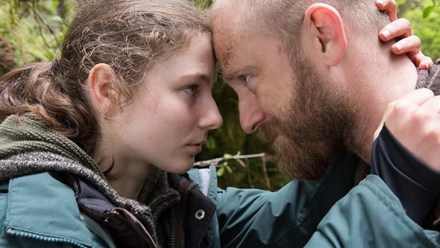
You Were Never Really Here is a fourth feature from Lynne Ramsay (Ratcatcher, Morvern Callar, We Need to Talk About Kevin) and the first thing to say is that it is exceptionally violent. I don’t say this disapprovingly but if your threshold for violence is as low as mine — I incurred a paper cut the other day and passed clean out — it will prove an 89-minute ordeal. Still, it has been described as ‘the Taxi Driver for the 21st century’, if that is of help while you’re bracing yourself for the next hammer blow. Personally, I found it of no help at all. Also, it’s untrue. The film stars a bulked-up Joaquin Phoenix as Joe, a tortured hit man, and it opens as it means to go on. That is, not prettily.

Fashion victim

Television

By common consent, including Bafta’s, The People v. O.J. Simpson: American Crime Story was one of the best TV dramas of 2016. Produced by Ryan Murphy, it laid out the story in a beautifully clear, largely chronological way that made us appreciate, all over again, just how strange the whole O.J. business was — not least thanks to the wider social forces at work. Now, we’ve got The Assassination of Gianni Versace: American Crime Story (BBC2, Wednesday), also produced by Ryan Murphy and also tackling an event from the 1990s that manages to seem both shockingly particular and neatly revealing of more general trends. At which point, all similarities end, because here Murphy (who also directed the first episode) takes a far more fragmented and less viewer-friendly approach.

Gallic pieties

Music

My two attempts to see Poulenc’s Dialogues des Carmélites at the Guildhall School were frustrated by the weather. Forced back on to my DVDs and CDs — vinyl, even — I took the opportunity to survey some of the manifestations and investigations of religious feeling in 20th-century French music. I began with Vincent d’Indy’s Fervaal, an opera he composed in 1895 which used to be referred to as ‘the French Parsifal’. Refreshing my memory of the plot by looking it up in The New Grove Dictionary of Opera, I was struck by the writer’s insistence that, while the work is heavily influenced by Wagner, ‘[d’Indy] had a better sense of dramatic pacing than Wagner, and more essential humanity’.

Save the children

Theatre

Fanny & Alexander opens like a Chekhov comedy and turns into an Ibsen tragedy. Ingmar Bergman’s movie script, adapted by Stephen Beresford, has been directed for the stage by Max Webster. The children, Fanny and Alexander, belong to the famous Ekdahl acting dynasty who live in Bohemian chaos. Their home is full of jokes and pranks and sophisticated merriment, and the family business is overseen by their grandmother (Penelope Wilton), who runs their theatrical affairs with a benignly imperious eye. Then disaster strikes. The kids’ father dies of a brain haemorrhage while rehearsing the Ghost in Hamlet. Their mother, Emilie, is comforted by the sinister Bishop Edvard who marries her and moves the children into his chilly episcopal palace.

Ladies first | 8 March 2018

Radio

You can’t move for women’s voices on the airwaves at the moment — Julie Walters on Classic FM leading off its new big series on turning points in music. Kate Molleson and Georgia Mann joining Sarah Walker and Fiona Talkington on Radio 3 (which this week also gave a big nod to female composers such as Amy Beach, Florence Price and Sofia Gubaidulina). Emma Barnett spicing up the political interview on Radio Five Live. It feels a bit like tokenism, too much too late. As if it’s going to make up for all those centuries of men in the driving seat of life. But the effect of hearing women’s voices almost whenever you switch on is like drinking fresh lemonade on a hot day, slightly acidic but invigorating. Take Carla Bruni on Radio 2. Not exactly a feminist icon.

Nils Frahm: All Melody

More from Arts

Grade: A Here we are in that twilit zone where post-techno and post-ambient meets modern classical, a terrain that has its fair share of tuneless charlatans and chancers. Frahm is not one of those. There are of course the repetitive synthesiser arpeggios familiar to anyone who has had the misfortune to sit in some achingly hip Dalston café: slightly too many for my liking on ‘#2’, which Frahm may consider the centrepiece of this album. But the German is obsessively attuned to nuance. Beneath those Glass-like riffs there is plenty going on: descant melodies, counterpoints burbling up out of the ether.

Spectator competition winners: Sonnets as the Beatles (or Abba) might have written them

The invitation to take a song by Abba or the Beatles and rewrite the lyrics as a sonnet went down a storm and drew a large, clever and funny entry. John Lennon once said, in an interview with Rolling Stone magazine: ‘…that’s been my hang-up, you know— continually trying to be Shakespeare…’. So perhaps it’s not surprising that the overwhelming majority of you plumped for Beatles tunes as your starting point. Having said that, Paul McCartney’s raucous ‘Why Don’t We Do It In The Road?’ — in which he pretty much repeats the same line (the title) over and over again — wasn’t the most obvious choice, so props to Edward Graham, who managed to tease a creditable sonnet out of it. We needn’t be ashamed.

Notes on a scandal | 1 March 2018

Exhibitions

Leonard Rosoman is not a well-known artist these days. Many of us will, however, be subliminally familiar with his mural ‘Upstairs and Downstairs’ in the Grand Café at the Royal Academy, painted in 1986 when the artist was in his early seventies. Two worlds are portrayed with a degree of satire — dressy guests arriving for the private view of the Summer Exhibition and below, in sober grisaille, Royal Academy Schools students engaged on life drawing. ‘Upstairs and Downstairs’s wit and perspectival acuity notwithstanding, its status as a mural makes it easy to overlook, an extended splash of colour behind the Café’s lunch counter. Leonard Rosoman is worth rediscovering. He was a fine war artist and a brilliant illustrator.

Barometer | 1 March 2018

Barometer

Ageing rockers The Rolling Stones announced their first live shows for five years. Mick Jagger, Keith Richards (both 74), Charlie Watts (76) and Ronnie Wood (70) are not alone rocking on into their eighth decades. Other septuagenarians you can hear live in 2018: — Elton John (70) unveiled a farewell tour. Paul Simon (76) says that four concerts in the US this year will be his last. — Bob Dylan (76) announced 15 European concerts. — Rod Stewart (73) has six live shows booked for Las Vegas. — The Who’s surviving members Roger Daltrey (73) and Pete Townshend (72) will be playing 18 dates in 2018, quite possibly belting out Townshend’s famous line: ‘Hope I die before I get old.

Killer instinct

Theatre

Frozen starts with a shrink having a panic attack. She hyperventilates into her hand-bag and then gets drunk on an aeroplane where she yells out, ‘We’re all going to die.’ She’s a bit loopy, clearly, which is how lazy playwrights make psychologists interesting. The shrink’s task is to examine Ralph, a serial murderer of children, and to deliver a lecture on the cause of his malignity. We hear bits from the lecture, bits of confession from Ralph, and weepy bits from the mother of one of Ralph’s victims. The subject is punishingly gruesome but its dramatic power is non-existent because the writer Bryony Lavery hasn’t learned how to stimulate the viewer’s imagination.

In from the cold | 1 March 2018

Cinema

Films about the Winter Olympics don’t grow on conifers. Twenty-five years ago there was Cool Runnings about the Jamaican bobsleigh team. It took many years for Eddie the Eagle to reach the screen. Both were cockle-warming comedies about implausible Olympians who embody the ideal that participation is all. Only last week Elise Christie, the British speed skater who kept tumbling in Pyeongchang (and Sochi), hoped that ‘Reese Witherspoon’ would play her in the movie. In the mean time, the latest Olympiad has flushed out two more biopics on ice. I, Tonya tells of Tonya Harding’s catastrophic career. Like Monica Lewinsky, Harding is a public figure whose epitaph, thanks to a single headline, has already been carved.

Tapestry of war

Radio

It feels like a long time since the launch of Home Front on Radio 4 back in June 2014, retracing day-by-day events of 100 years ago as Britain went to war. It is a long time. Yet still the violence in Europe rages on while back home the families of the men and boys in trenches carry on as normal, putting on plays at the local theatre, selling toys, running art classes, working the trams. A new season (number 13, with two more to go before the series ends on 9 November) starts up again on Monday. It may be an everyday story, says its editor, Jessica Dromgoole, but it’s most definitely not a soap. Every episode has been recorded for broadcast in the same studio in Birmingham where The Archers is made.

O tempora! O mores!

Television

Most of the history I know and remember comes from my inspirational prep school teacher Mr Bradshaw. History was taught so much better in those days. It was all kings and queens, battles and dates, with no room for any of that nonsense like,‘Imagine you are a suffragette going to protest the oppressive male hegemony at the races. Describe how it feels to be crushed by the king’s horse.’ Nor was there any question that you were participating in some kind of collaborative learning experience. Your ‘master’ taught; you listened and learned — and occasionally made distracting jokes and got bits of chalk chucked at you. That was the deal and it worked very well.

Queen of flamenco

More from Arts

A frail old woman sits alone on a chair on a darkened stage. There are flowers in her hair. She closes her eyes and the small, wrinkled hands begin to clap. The rhythm seems simple at first but her feet take up the beat, deconstructing it, multiplying it, embroidering it into fresh miracles of speed and precision. The packed house holds its breath until the rattling feet gradually dwindle to the gentlest percussive purr then stamp to a halt. A fresh explosion of sound — from the other side of the footlights this time — as Sadler’s Wells rises to its feet to welcome back La Chana (‘the wise one’), queen of flamenco, after an absence of 30 years. The smiling woman I meet the next morning is neither as old (a mere 71) nor as grand as her stage persona suggests.

Hollywood stars have lost their shine

Reading the lip-smacking reports of the latest troubled celebrity relationships  (Jennifer Aniston and Justin Theroux definitely high and dry, Cheryl Cole and Liam Payne allegedly on the rocks) I couldn’t help musing that stars - and more specifically, the place they occupy in our mass psychological landscape - have very much changed since the first mass-market celebrities emerged. The film stars of the fledgling Hollywood truly were worshipped as higher beings; a tribe of Pathan Indians opened fire on a cinema when they were denied entry to a Greta Garbo film while women committed suicide when Valentino died. Their marriages were regarded as heavenly unions; their romantic sunderings as tragedies.

Keeping up with the Joneses

Exhibitions

To bleak, boarded-up Margate — and a salt-and-vinegar wind that leaves my face looking like Andy Warhol’s botched 1958 nose-peel — to see Journeys with ‘The Waste Land’ at Turner Contemporary. The exhibition has been organised by a group of local residents, who selected the exhibits, designed the layout, and wrote the exhibition texts. In ‘The Waste Land’, some of it written in the Nayland Rock seafront shelter, Eliot writes: ‘On Margate Sands./ I can connect/ Nothing with nothing.’ The local research group have connected Eliot’s text with everything — some duds, some successes.

Hair-raising

Exhibitions

One of the best things about Beehives, Bobs and Blow-dries — yep, an exhibition about hairdressing — is the reaction of visitors. Some are getting on a bit and their pangs of recognition as they pass 1970s straightening tongs or Carmen heated rollers are evident. One woman exclaimed, as she passed a Ronson hairdryer with its shower-cap hood, ‘Ooh, they were good, they were. We’ve only just got rid of my mum’s.’ A hairdresser called Keith from Wakefield observed of the Beatles era that it was a worrying time to begin with: ‘Nothing happened for about two or three months. Nobody came. We thought we’d lost our business. But it turned out that the men were just growing their hair. They came back when it was shoulder length.

Sound investment

Exhibitions

Listen closely, among the shelves of the last remaining music shops, in student dorm rooms and amid the flat whites and reclaimed wood of certain coffee shops, and you’ll hear a sound that many thought long banished. Check out the steadily rising sales figures of the past few years and there’s little doubt: the vinyl record is making a comeback. With it comes the return of another sound, like some po-faced, bearded handmaiden: the whine of the vinyl bore. It is three decades since 12-inch PVC discs were the dominant means of access to music, but for some the format never died and analogue will always offer a purer, more true-to-life audio reproduction.

Franz Ferdinand: Always Ascending

More from Arts

Grade: A Yay, people with a modicum of wit. They come along so very rarely these days. A decade on and that punky, guitar-driven power-pop funk has long since been expunged. Singer Alex Kapranos expressed a wish for Franz Ferdinand to reinvent themselves — and has turned to the same source inspiration as did their recent collaborators Sparks when they, too, needed a swift reboot at the end of the 1970s: Giorgio Moroder. But Kapranos and co. have laced those metronomic German beats with camp glamour and swirling, unpredictable melodies — and, of course, the frequent touch of Bowie. This is a disco-pop album.

Heavy-going

Cinema

Dark River is the much-anticipated third feature from British writer/director Clio Barnard and it is one of those bleak, rural- England dramas featuring cement-coloured skies, wind, rain, mud, rusted old farm machinery and dead animals — do people who move out from the city know what they are letting themselves in for? — as well as the aftermath of childhood sexual abuse. (Should we pull them aside and have a word?) Apologies for sounding glib about such a heavy subject but this is, ultimately, so heavy-handed about that heavy subject it left me cold. I should point out, however, that other critics are available, and some are saying it is ‘powerful’ and ‘affecting’. So you pays your money and takes your pick.

Losing the plot | 22 February 2018

Television

ITV’s Marcella (Monday) represents another triumphant breakthrough in the portrayal of female cops on television. Of course, thanks to more or less every other crime show around, we already know that women in their forties can be senior police officers. But what Marcella makes even clearer than, say, Vera or No Offence is that so can women in their forties who are entirely unsuited to being senior police officers. For a start, the eponymous heroine suffers from regular mental collapses during which she often turns violent before handily forgetting — and forgiving herself for — anything bad she may have done. She also seems to specialise in cases where she hasa deep personal involvement that might cause a lesser woman to worry about a conflict of interests.