Culture

Culture

The good, the bad and the ugly in books, exhibitions, cinema, TV, dance, music, podcasts and theatre.

Speech impediment | 19 April 2018

Radio

It was a provocative decision by the producers of Archive on 4, 50 Years On: Rivers of Blood (Nathan Gower and David Prest) to base their programme around a full exposition of Enoch Powell’s infamous 1968 speech on immigration, all 3,183 words of it, spoken by an actor (Ian McDiarmid) as if he were giving the speech in front of an audience. Why give further publicity to a speech that gave such offence at the time, and so dangerously expressed such inflammatory opinions? But the explosive reaction to the Radio 4 programme on social media, even before it went out on air, explains and justifies their decision.

Question time | 19 April 2018

Theatre

Quiz by James Graham looks at the failed attempt in 2001 to swindle a million quid from an ITV game show. Jackpot winner Major Charles Ingram was thought to have been helped by strategic coughs emanating from Tecwen Whittock, a fellow contestant on Who Wants to Be a Millionaire? Graham, best known for his gripping political dramas, can’t muster any passion for this story or his characters. Ingram is a posh, weepy lummox. His wife, Diana, comes across as a blur of aloofness, cunning and banality. Whittock, who claimed to suffer from a persistent throat condition, is a clueless hobbit with a wonky Welsh accent. And Diana’s brother, tangentially involvedin the drama, is an amiably bumbling spendthrift. The material has a built-in problem. Whose side are we on?

Peake performance

Cinema

Two films about women this week. One, Funny Cow, is about a woman who daringly takes on men at their own game while the other, Let the Sunshine In, is dressed up in French art-house garb but basically has Juliette Binoche tirelessly running round Paris in thrall to every fella she encounters. I certainly know which I preferred. However, if you look at review aggregate sites, like Rotten Tomatoes, you’ll see Sunshine achieves the far higher score. But then most film critics are male and probably wouldn’t mind Juliette Binoche tirelessly chasing them round Paris, or anywhere else. (I have just asked a man if this is so and he has confirmed: ‘I wouldn’t mind at all. And it could be Bournemouth.

The great pretenders | 19 April 2018

Television

For a while now, the Korowai people of Western Papua have been the go-to primitive tribe for documentary-makers. The Korowai were unknown to the outside world until the 1970s — but they’ve certainly made up for it since, with their Stone Age tools, jungle treehouses and penis gourds becoming almost as familiar to TV viewers as Brian Cox on top of a mountain. No wonder, then, that Will Millard’s introduction to My Year with the Tribe (BBC2, Sunday) smacked of mild desperation as he sought to distinguish his new series from its many predecessors. (No fixers laying on anything in advance! Not just one snapshot of Korowai life, but four over 12 months!) In the event, however, he needn’t have worried.

Bringing in the trash

Music

Imagine the National inviting RuPaul to play Hamlet. Or Tate giving Beryl Cook a retrospective. The London Sinfonietta offered a similar cocktail of mischief and insanity in devoting the opening concert of its return to the Queen Elizabeth Hall, after a three-year refurbishment, to the nihilistic drag act David Hoyle. It had me grinning from ear to ear. Mostly from watching the other critics squirm. The woman next to me, an off-duty member of the Sinfonietta, was spitting words into her hand: ‘Patronising bollocks’. It was one of those nights. Half the audience stony-faced and tensed with anger. The other half creased double and whooping.

The nonconformist

Arts feature

Viv Albertine, by her own admission, hurls stuff at misbehaving audiences. Specifically, when the rage descends, any nearby full cup or glass is likely to be decanted over the object of her ire. She’s remembering an incident a few years back, at a gig she played in York, when she felt compelled to introduce some persistent talkers to the contents of their pint glasses. ‘There’s such a fine balance there, because you don’t want to sound like a schoolmarm. Johnny Rotten used to walk offstage if there was spitting. The Slits [the groundbreaking punk band for whom Albertine was the guitarist] couldn’t do that because we would have looked like Violet Elizabeth Bott: “We’re not going to play until you thtop thpitting”.

The evanescence of everything

Exhibitions

Think of the work of Claude Monet and water lilies come to mind, so do reflections in rippling rivers, and sparkling seas — but not buildings. He was scarcely a topographical artist — an impressionist Canaletto, even if Venice was among his themes. Nonetheless, Monet & Architecture at the National Gallery is an intriguing experience. Before I saw it, the suspicion crossed my mind that this was the solution to a conundrum that must puzzle many galleries. Namely, how to put together another Monet exhibition without it being the same as all the others? An institution such as the National Gallery could not just borrow a lorry-load of Monets and shove them up on the walls — although quite a lot of visitors might be happy enough with that.

Home is where the heartbreak is

Cinema

Custody is both social realism and a thriller and it’s terrific. It is smart, beautifully acted, never crass about the subject in hand (domestic abuse), and is one of those films that will have you totally gripped while you’ll also be longing for it to end, as it’s so unbearably tense. I swear my heart as good as stopped several times. It’s written and directed by Xavier Legrand, who handles both genres with supreme elegance. Or, to put it another way, it’s like a Ken Loach film that’s been hijacked by Stephen King, but seamlessly. (‘Mind if I have a go, Ken?’, ‘Be my guest, Steve’.) This is Legrand’s second film after Just Before Losing Everything (2013), which was only 30 minutes long, but earned him an Oscar nomination.

Mozart’s diminuendo?

Music

Glenn Gould used to say that Mozart died too late rather than too early. The remark was intended to get up the nose of Mozart-lovers and it succeeded. What a nerve, coming from a pianist whose own reputation peaked in his early 20s, with his first Goldbergs, and was especially tarnished by his Mozart piano sonatas, which he butchered in order to demonstrate their supposed faults. But still... Gould wasn’t the first person to wonder if there was a slight diminuendo in Mozart’s creativity in the couple of years before he died in 1791 at the age of 35. The last concerto, for clarinet, has a wistful, naive perfection that doesn’t fire up the neural pathways to the same extent as say, the C minor Piano Concerto of 1786.

Good morning, Martha

Radio

Like a breath of fresh air Martha Kearney has arrived on Radio 4’s Today programme, taking over from Sarah Montague (who will now host the lunchtime news programme formerly presided over by Kearney). Her presenting style is just so different, less confrontational, more investigative, perhaps developed by her because at lunchtime the mood is different, less rushed, more ambulant. The tone on the World At One was always much more reflective than reactive, Kearney pondering events rather than racing through to the next interview, butting in, hustling, flustering her guests. On Monday morning’s Today, she interviewed the author of a book on ‘elastic thinking’.

A Manon to remember

More from Arts

The Shaolin monks are no strangers to the stage. Their home in Dengfeng is a major stop on the Chinese tourist trail and their lives of quiet contemplation (and shouty martial arts practice) are regularly punctuated by spells on the international circuit with Kung Fu extravaganzas like Wheel of Life and Shaolin Warriors. Quite how they square this six-shows-a-week-plus-matinees life with the whole monk ethic is a question for their Abbot or, just possibly, their agent (Shaolin Intangible Assets Management Co. Ltd. Yes, really). But they put on a very good show, the best of which is Sutra, devised by Belgo-Moroccan dancemaker Sidi Larbi Cherkaoui and performed in an installation by Turner-winning sculptor Antony Gormley.

It’s a cult thing

Television

I have decided to set up a cult, which you are all welcome to join, especially those of you who are young and very attractive or stupendously rich. The former will get exclusive membership of my JiggyJiggy Fun Club™, while the latter will be essential in financing all the cool shit I need on my 500-square-mile estate, viz: hunt stables and kennels, helipad, private games room with huge comfy chair, water slides, grouse moor, airstrip, barracks for my cuirassiers, volcano with battery of rockets inside, and so on. What gave me the idea was this new Netflix documentary series everyone is talking about called Wild Wild Country.

Composers should be incensed that their music is taking a back seat to their race or gender

The slow but certain conquest of all public life by those promulgating the politics of identity has achieved a new victory in the realm of classical music. Cloaked in claims of benevolence and good intent, it arrives as a divisive force, screaming equality but in reality delivering nothing of the sort. Much of our public discourse is focused on identity politics. Our news cycle is replete with tales of gender pay-gaps, unmet inclusivity quotas and the great struggle for the elusive goal that is equality, so perhaps it should come as no surprise that we now find these issues played out in the classical music industry. The dark heart of all this is to be found in the (sadly) niche area of contemporary classical music.

The highs and hellish lows of superstructuralism

Arts feature

Amid the thick of the Crimean war, Florence Nightingale dispatched a plea to the Times deploring the lethal conditions of British military field hospitals. Ten times more soldiers were dying from diseases like cholera and dysentery than from battle wounds. Shocked, the War Office commissioned 49-year-old Isambard Kingdom Brunel to design the world’s first prefabricated hospital. Components were manufactured to Brunel’s specifications in Gloucestershire then rushed to Turkey for erection. He took the commission on 16 February 1855 and fewer than five months later, the new Renkioi Hospital could accept 300 patients (2,200 by March 1856). Infection rates collapsed. Nightingale called it ‘magnificent’. The new architecture of prefab had triumphed.

Greek idyll

Exhibitions

In late April 1992, I was in Crete, interviewing the painter John Craxton. It was the week that Francis Bacon died. We heard the news on the BBC World service, and afterwards Craxton reminisced about his old friend. Craxton himself at that stage had almost disappeared into obscurity. He was living in a elegantly crumbly building overlooking the harbour at Chania. It wasn’t grand, but there was a small Matisse cut-out hanging on his sitting-room wall. In recent years Craxton has been undergoing a minor revival. There has been a book, a show at the Fitzwilliam; now this sizable exhibition — Charmed lives in Greece — devoted to him, together with the Greek painter Niko Ghika (Nikos Hadjikyriakos-Ghikas, 1906–1994), and the writer Patrick Leigh Fermor.

Plenty to wonder at

Cinema

Wonderstruck is a film by Todd Haynes and you will certainly be struck by wonder, often. You will wonder at its painful slowness. You will wonder at the way it strains credulity until it snaps. You will wonder if the violins will ever give it a rest. You will wonder if it will ever end. And you will wonder at the ending, when it does finally come, as it is so stupid. So it does not short-change on the wonder front. Whatever the price of your cinema ticket, you will be getting limitless wonder in return. Haynes is usually such an immaculate, thoughtful, winning filmmaker (Carol, Far From Heaven, Velvet Goldmine, that Karen Carpenter short told with Barbie dolls — Superstar) that you will also wonder: how could he have helmed such an unholy mess? ‘Is it for children?

The sound of Iceland

Music

The lur is a horn, modelled in bronze after a number of 3,000-year-old instruments discovered at various archaeological sites across Scandinavia. Its unrefined yet distinctive sound — penetrating, direct and rough-edged — seems to rise up through the body rather than enter through the ears, like the stirring of a long-forgotten memory. The instrument, whose long neck reaches high above the heads of its players, is the first thing one hears in Jon Leifs’s second Edda oratorio. Two of them intone bare, open fifths, resonating against sustained low notes in the woodwind, rising up through the orchestral texture as it fills out. When the choir enters, they too sing in fifths, lurching from one bare harmony to another, incanting the coming of the Aesir, the Norse Gods.

Kid’s play

Opera

It’s been a good couple of weeks for cuddly toys in opera. A big floppy Eeyore is the only comfort for 11-year-old Coraline at the darkest moment of Mark-Anthony Turnage and Rory Mullarkey’s new opera. The teenage Composer in Antony McDonald’s production of Ariadne auf Naxos has a Beanie Baby panda as a sort of mascot: a tiny, limp emotional defence against a world that’s about to spin deliriously off kilter. Hansel and Gretel don’t have any toys, but the brattish siblings of Stephen Medcalf’s staging at the Royal Northern College of Music can at least cling to each other as the night closes in. Interestingly, the opera that came across as the most harmless was the only one that wasn’t created for children. Ariadne auf Naxos, then.

The killer instinct

Theatre

Ruthless! The Musical is a camp extravaganza about ambitious actors stranded in small-town America. Sylvia St Croix, a pushy agent, visits a super-talented 10-year-old, Tina, and persuades her to audition for Pippi Longstocking in a school play. Tina’s mother fears that stardom may spoil her little girl but Tina is finished with childhood. ‘Time to move on.’ The production feels like a zany Spike Milligan sketch with a garish set and over-the-top costumes. Sylvia is played by Justin Gardiner who swaggers about like a cross-dressing cowboy in a clingy frock and false breasts. The dialogue, which takes cheap shots at bourgeois morality, may not suit all tastes. Try this. Tina complains to Sylvia that she never sees her father.

Communal listening | 5 April 2018

Radio

To Herne Bay in Kent for the UK International Radio Drama Festival: 50 plays from 17 countries in 15 languages broadcast over five days to the festival audience. It’s an opportunity to find out what radio plays sound like in other countries, but also to experience a different kind of listening. About 25 of us were invited into a suite of rooms furnished with flock wallpaper, floral sofas and armchairs to take us back to the great age of radio listening in the 1950s. A kettle boils in the background; buttered scones on a tiered rack are sitting ready for us to pounce on at the next pause between plays.

Hobbit houses and 3-D homes

More from Arts

Since 2006, someone called Kirsten Dirksen has been posting weekly videos on YouTube about ‘simple living, self-sufficiency, small (and tiny) homes, backyard gardens (and livestock), alternative transport, DIY, craftsmanship and philosophies of life’. But don’t let that put you off. Basically, Dirksen makes short films about people’s quirky homes: ‘Tiny Parisian rooftop terrace transforms for work and leisure’, ‘Extreme transformer home in Hong Kong’, etc. Fear not: this not some shoestring Grand Designs. There is little or no enthusing, there are no vacuous summings-up, there is no false jeopardy. The videos vary in length: some of them last for less than ten minutes, others for close to an hour. Many are in Spanish (with subtitles).

Isle of Dogs is a sexist disgrace

Over the rainy bank holiday weekend, I decided I would go to see what I assumed was a 'feel good' film, Isle of Dogs, a stop-motion animated comedy. I love dogs so much that it looked like my ideal film, despite being aimed at kids. I get to see a story with a serious slant being told by cuddly canines, translated into human language. Instead, from the first five minutes, I was raging with anger about the blatant sexism at the heart of the film. I have long been irritated with the default position many people have to refer to dogs as male and cats as female. I am always a bit bemused by people stopping me in the park when walking my dog Maisie, asking, "How old is he?” and the like.

Civilisations isn’t ‘dumbed down’ – it’s too intellectual

I have been faithfully watching Civilisations. It is not at all dumbed down. Indeed, the series suffers from the opposite fault. It is too intellectual — pressed into the service of its presenters’ theories rather than telling a story which the common viewer can follow and enjoy. One finds oneself excited by a particular idea — Mary Beard on the ‘lack of light’ which is often a feature of religious art, David Olusoga on the way that Vermeer never opens windows on the wider world, yet contains symptoms of empire — globes, rugs, a beaver hat — in his interiors. But then one doesn’t learn where it is all tending.

Water, water, everywhere | 28 March 2018

Exhibitions

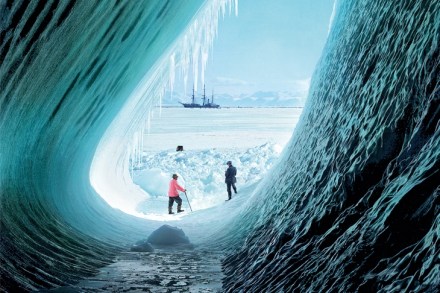
‘Ding, Clash, Dong, BANG, Boom, Rattle, Clash, BANG, Clink, BANG, Dong, BANG, Clatter, BANG BANG BANG!’ is how Charles Dickens transcribes the sound of 1,200 men building the first iron-clad frigate Achilles at the Royal Dockyard, Chatham, in the 1860s. A Chatham boy, Dickens lived to see — and hear — the age of sail turn into the age of steam, when the creak of ropes, the flap of canvas and the ding of bells gave way to the hiss of steam, the chug of motors and the shriek of whistles. As soundscapes go, both strike the modern imagination as more musical than the roar of road traffic.

Monet in London

Notes on...

The Savoy was too sumptuous, complained Claude Monet, returning to the hotel in 1904. His rooms — one for sleeping, one for easels, canvases, palettes, with a balcony over the Thames — were too distractingly plush. He had been happier painting with his knees up to his chin in his ‘bateau atelier’ (a rowboat studio) on the Seine at Argenteuil. Or hidden behind a screen in the ladies’ changing room on the first floor of Monsieur Levy’s dress shop opposite Rouen Cathedral. Or in the little room for storing bottles in a nightclub with a view of Leicester Square. The place was a sale boîte — ‘dirty dive’ —according to Monet. But what a wonderful, smudgy, night-on-the-tiles, street-lamps-and-sudden-downpour picture he produced.