Culture

Culture

The good, the bad and the ugly in books, exhibitions, cinema, TV, dance, music, podcasts and theatre.

Lend me your ears | 22 February 2018

More from Arts

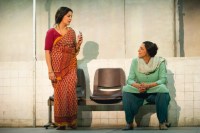
Audio description, or AD, as it is fondly called, is coming of age. Once consigned to the utility room of grey voices reading boring cues to inform blind people what was going on on stage or screen, AD is now a dynamic narrative form that is findinga presence in almost all the arts (from opera, theatre and film to art galleries and museums). It is so widespread and well done that many consider it an art form in itself. For the uninitiated, audio description simply provides a listener, through headphones or a TV speaker, with the essential details of the action and events in a film or play during a convenient pause. When done well, it does not intrude on an audience’s experience of the play, the acting or the director’s intention, but instead shapes and enhances it.

When content-creators fight

More from Arts

None of us is above YouTube, and nothing is beneath it. We have of course all long since submitted to a universal medium whose sole purpose appears to be the promotion of the universal below-average, but this doesn’t mean that there isn’t pleasure to be had from watching content created by so-called ‘content-creators’ whose created content is often pretty much content-free. Indeed,a large part of the obvious appeal of user-generated content is that it is generated by people who are just like you and me and who therefore make stuff that isn’t actually very good. We no longer marvel at skill. What we admire is chutzpah.

House rules | 22 February 2018

Theatre

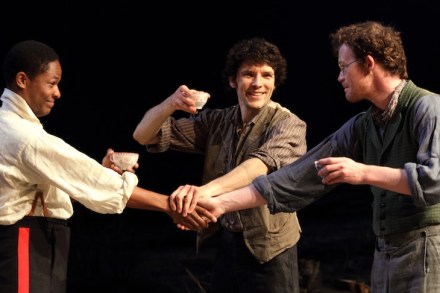
The Donmar’s new show, The York Realist, dates from 2001. The programme notes tell us that the playwright, Peter Gill, ‘is one of the most important and influential writers and directors of the past 30 years’. Who wrote that? Not Peter Gill, I hope. The play, directed by Robert Hastie, follows a gay affair between a strapping Yorkshire cowherd and a sensitive London artiste. They meet while rehearsing an am-dram production of a mystery play set in a ruined abbey. Gay men will enjoy this charmingly acted production but it’s apt to bore the general audience because the characters are trite, the gay theme feels antiquated and the storyline is as light as a Post-It note. It doesn’t help that Peter Gill writes like a newcomer at a creative writing weekend.

It’s the music, stupid

Opera

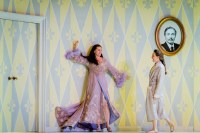
‘Welcome to our hearts again, Iolanthe!’ sings the fairy chorus in Gilbert and Sullivan’s fantasy-satire, and during this exuberant new production by Cal McCrystal you could almost hear the assembled G&S fans sighing in agreement. Iolanthe is our trump card against the sceptics, and not merely because Gilbert’s digs at parliamentary politics are still so startlingly acute. No, we insist, it’s the music, stupid: just listen to it! Sullivan’s score gleefully assimilates Handel, Mendelssohn and Wagner (Tannhäuser, Rheingold; even Tristan und Isolde), and to fly that close to the magic flame of Bayreuth without getting frazzled is something that very few composers have achieved with such freshness and melodic grace.

Seeing the light | 22 February 2018

More from Arts

The impermanence of works of art is a worry for curators though not usually for artists, especially not at the start of their careers. But Anthony McCall was only in his mid-thirties when his creations vanished before his eyes. It was in New York in the early 1970s that McCall came up with the idea of ‘solid light works’, animated projections of simple abstract shapes in which the beams of projected light assumed a physical presence. Not being taken seriously by commercial galleries — ‘It did occur to me that I hadn’t made a terribly wise career decision’ — McCall’s solid light works were initially shown in the sorts of dusty, smoky downtown lofts where devotees of ‘expanded cinema’ gathered.

For one night only: Rod Liddle at the London Palladium

If Rod Liddle is one of your guilty (or not so guilty) pleasures and you’ve been toying with the idea of subscribing to The Spectator, then we have the perfect excuse. We do reader events every so often, the most popular of which have been with Rod Liddle. They have both sold out in a flash. The last one, a thousand-seater venue, was filled within four days – we barely had time to put an advert in the magazine. This time, we’ve booked Rod again – but this time in the 2,300-seater London Palladium on Tuesday 15 May at 7pm. It will be the biggest event ever held by The Spectator. Tickets will go on sale soon, priced at £35 (or £22.50 for our subscribers). But if you’re not (yet) a subscriber, we’d like to make you an offer.

Close of play | 15 February 2018

Arts feature

‘Mad, wearying and inconsequential gabble,’ sighed the Financial Times in 1958. ‘One quails in slack-jawed dismay.’ Here’s the FT at the same play last month: ‘The best I have seen on-stage.’ How about the Evening Standard? Then: ‘Like trying to solve a crossword puzzle where every vertical clue is designed to put you off the horizontal.’ Now: ‘Pinter’s cruel dialogue has rarely sounded sharper.’ ‘What all this means only Mr Pinter knows,’ mused the Manchester Guardian. On its return to the West End, the playwright’s biographer Michael Billington, writing in the Guardian, judged that ‘The Birthday Party has lost none of its capacity to intrigue’.

I’m allergic to all this constant outrage

No sacred cows

I’m often surprised by what people are offended by. Like the makers of Peter Rabbit, the new animated feature from Sony Pictures, I could not have predicted that a scene in which Peter and his friends pelt another character with blackberries in the hope of triggering an allergic reaction would provoke a storm of protest. Yet that is what has happened. A petition demanding an apology has attracted thousands of signatures, a charity called Kids with Food Allergies has condemned the film as ‘harmful to our community’ and #boycottpeterrabbit started trending on Twitter shortly after the film was released in America. I wonder how many people objecting to this scene have actually seen the film?

Torture in the stalls

Theatre

It’s considered the great masterpiece of 20th-century American drama. Oh, come off it. Long Day’s Journey into Night is a waffle-festival that descends into a torture session. Who would choose to spend time with the Tyrone family? Dad is a skinflint millionaire. Mum is a wittering smack addict. They’ve produced two layabout sons. One is a dipsomaniac with a moustache; the other has TB and a cough. These doomed narcissists chase each other around the family mansion in a spiral of vicious, self-regarding gossip. It’s like being trapped in a broken cable-car with four prattling drunks who hate each other. And I’m not convinced they drink that much. A bottle and a half of whisky, or a little over, is consumed in the course of a day.

‘I was really, really scared’

More from Arts

‘Hi, it’s Jonas.’ When the great tenor rings from Vienna, I ask if there are any topics he wants me to avoid, such are his minders’ anxieties. ‘Ask anything,’ laughs Jonas. ‘I’m not shy.’ He is heading in from the airport to see a physio — ‘these concerts, you have to stand there all the time’ — before taking Hugo Wolf’s Italian Songbook on a seven-city Baedeker tour: Vienna, Paris, London, Essen, Luxemburg, Budapest, Barcelona. I wonder if he is aware that Wolf is a hard sell to English audiences. ‘Not just the English,’ he replies. ‘Even in Germany promoters say to me, please don’t do a Wolf-only recital, no one will buy tickets.

The spying game

Radio

Some of us grew up worrying about reds under the bed, which was perhaps not as foolish as all that if a report on Saturday morning’s Today programme on Radio 4 is to be believed. Amid a cacophony of weird-sounding bleeps and disembodied voices, Gordon Corera, the BBC’s security correspondent (always clear, calm and collected, no matter the brief), told us about the ‘number stations’ that proliferated in the Cold War and are now being brought back to life. Anyone can tune in to them, but only those in the know can understand what they mean, and although the source of the transmissions can be traced it’s impossible to pick up those who are listening in to them, which is why they have come back into use.

MGMT: Little Dark Age

More from Arts

Grade: B Horrific memory, flooding back, halfway through the track ‘TSLAMP’ (Time Spent Looking at My Phone). It was the nastily burbling bass guitar that did it. I had been wondering what I was listening to and then it dawned — a Level 42 tribute band. Naffer than T’Pau. Whitey does bland, tuneless funk. And this from a duo who were once so effortlessly cool. But then the rest of the album similarly pillages that godawful decade: ‘One Thing Left To Try’, which is at least tuneful, brings to mind Tears for Fears. Elsewhere it’s Japan, the Human League and A Flock of Seagulls. Why do you like the 1980s so much, you sweet and tender young lefties? It was eight years of Reagan and one of Bush Snr. Really you should hate them.

No sense of direction

Music

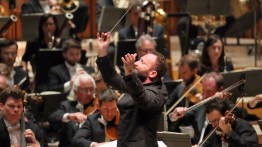
The new production of Bizet’s Carmen at the Royal Opera has received mixed reviews. It shouldn’t have done. They should have been unmitigatedly hostile, indignant, outraged — except that all those reactions would almost certainly have delighted the director, Barrie Kosky. What might please him less is the accusation of tedium, of making what often seems an unsinkable work into a colossal bore. This Carmen lasts for three-and-a-half hours and feels as long as that after the first 20 minutes. The whole and only set is a stage-wide flight of 16 steep stairs, up and down which the cast has to run at frightening speeds. As Jakub Hrusa, the conductor, dashed into the opening bars, hectic rather than brilliant, one wondered what might be added on-stage.

Hare-brained

Television

Shortly after my rave review of McMafia eight weeks ago, I got a long message from an old friend chastising me for being so horribly wrong. Could I not see that the series was boring, convoluted and badly acted? Was I aware of how many better series there had been on Amazon and Netflix recently because, if I wasn’t, she could give me a few recommendations… Several other people wrote to me in a similar vein and I felt terrible. Life is short and TV production is so voluminous these days that now more than ever we need critics to sift the bullion from the dross. Sure, reviews are a snap judgment, usually based on just one episode and written under pressure. Even so, if you can’t be trusted to get it right, say, 90 per cent of the time, that makes you a critical fail.

Sea fever

Arts feature

Looking at the sketchbook of William Whitelock Lloyd, a soldier-artist who joined a P&O liner after surviving the Anglo-Zulu War, I’m reminded why I avoid cruises. On board this India-bound ship were: a ‘man who talks a great deal of yachting shop and collapses at the first breeze of wind’, ‘a successful Colonist’, and ‘the victim of mal de mer who lives on smelling salts’. It would be just my luck to be stuck in the cabin between ‘One of our Flirts’, the busty lady with pretty eyes, and what Lloyd affectionately called ‘Our Foghorns (automatic)’ — two bawling babies. By the late 19th century, ocean liners attracted all sorts, from emigrants seeking a new life in the US to curious poseurs.

Home is where the art is | 8 February 2018

Exhibitions

When I first visited Kettle’s Yard, Cambridge, I was shown around by Jim Ede, its founder and creator. This wasn’t an unusual event in the 1970s. I was an undergraduate, and in those days Ede — elderly, elegant and almost translucently ascetic — showed round anyone who rang his doorbell. It was rather as if Henry Clay Frick had given you a tour of his pied-à-terre on Fifth Avenue, or Sir Richard Wallace walked you through his collection. Except, of course, that they wouldn’t have done that — and Kettle’s Yard, as Ede (1895–1990) mused in a conversation with the artist John Goto, isn’t really a collection, ‘it’s a number of things perhaps’. In fact, it is much more than just a collection.

Justin Timberlake: Man of the Woods

More from Arts

Grade: B– Hey, here comes Justin, the ‘President of Pop’ and ‘one of the greatest all-around entertainers in the history of show business’, according to the Hollywood Reporter. Sheesh, shows how far a white man can go by pretending — pretending very, very hard — to be black. Maybe there’s a market in the States for the black and white minstrels after all. ‘Off to Alabamy with a banjo on ma knee’, etc. It’s at times like these I’m with the SJW kids on the subject of cultural appropriation — but only because I can’t stand this tripe. This is Timberlake’s first album in almost five years and it’s awful, of course, but not quite as gut-wrenchingly awful as I had expected.

From Russia with no love

Cinema

Andrey Zvyagintsev’s Loveless is, indeed, devastatingly loveless, as well as devastatingly pitiless, which does not sound hopeful. Yet it is also devastatingly haunting, absorbing and transfixing. It’s a domestic drama about a missing boy that’s been widely taken as a state-of-the-nation drama about Russia today — a From Russia With No Love Whatsoever, if you like. But it may well be about the state of us all, which is the most devastating of all the devastatings. Generally, it’s just so much nicer to point the finger at others than at ourselves. (I have always found it to be much less devastating this way.) Set in the environs of Moscow, the film opens with a shot of a school and the children pouring out at the end of the day.

Changing the bard

Theatre

Nicholas Hytner’s new show is a modern-dress Julius Caesar, heavily cut and played in the round. It runs for two hours, no interval. The action opens with the audience grouped around a central stage where a ramshackle rock gig descends into a riot. The play unfolds like an illegal rave at a warehouse. It’s bold, in its way, and some of it works. A couple of the Roman senators are played by actresses and the text has been bodged to suit the cult of gender neutrality. ‘Romans’ is substituted for ‘men’ in Mark Antony’s famous line, ‘so are they all, all honourable men’. This small change is curiously painful to hear. It turns the ominous finality of Shakespeare’s original into a tuneless clatter.

Accentuate the negative

Opera

A chaste act of adultery and a silent conversation: these are the encounters at the heart of Un ballo in maschera. On paper Verdi’s opera is a hot-blooded political thriller climaxing in a regicide, but in the watching it’s something entirely other. Just like the buoyant score, whose ‘aura of gaiety’ seems so at odds with the dark subject matter, the drama of Ballo is a sustained act of misdirection. The focus in this unusual piece is not on action and event but on absences, unspokens — the negative and not the photograph is what absorbs Verdi so compellingly here.

Girls on film

Television

To mark the 100th anniversary of women’s suffrage — if a little oddly — Channel 4 on Tuesday brought us a special girls-only edition of The Secret Life of Five-Year-Olds. The cast were a mix of new faces and old hands from previous series: among them Jet who, like a primary-school version of a traditional Hollywood actress, has been playing a five-year-old on the show since 2016. Still, you can see why the producers keep calling — because, by now, Jet has got the tomboy role required of her down pat. ‘It’s hard to make friends with just girls,’ she declared early on, hitting the word ‘girls’ with exactly the right degree of scornful emphasis.

The right stuff | 1 February 2018

Arts feature

Geoff Norcott is lean, talkative, lightly bearded and intense. Britain’s first ‘openly Conservative’ comedian has benefited enormously from the Brexit vote and he’s popular with television producers who need a right-wing voice to balance out the left-leaning bias of most TV output. ‘It’s funny meeting TV types,’ he tells me. ‘They say, “We really want to hear alternative viewpoints.” And I’m thinking, “By alternative you mean majority,”’ Norcott, 41, was raised on a south London estate. ‘Both my parents were quite political. My dad was a trade unionist who got quite high up in the NEC [Labour’s national executive committee] and my mum ran as a Lib Dem councillor.

The bigger picture | 1 February 2018

Exhibitions

Walking around the Andreas Gursky exhibition at the Hayward Gallery, I struggled to recall what these huge photographs reminded me of. Gursky has built a career on colossal, panoramic pictures of subjects that are extremely ordinary — the view from a departure lounge of the empty runway at Schiphol airport, for example. Or, yet more exquisitely uninteresting, a wall-sized image of a section of beige carpet in an art gallery. Then I got the connection that had eluded me. These pictures were much like Martin Parr’s little books of Boring Postcards. These are collections of real cards made over the years by the British photographer, with separate volumes devoted to items from the USA and Germany (the latter entitled Langweilige Postkarten).