Culture

Culture

The good, the bad and the ugly in books, exhibitions, cinema, TV, dance, music, podcasts and theatre.

Power dressing

Cinema

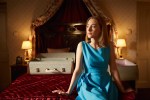
Paul Thomas Anderson’s Phantom Thread is a lush psychosexual drama starring Daniel Day-Lewis as a pampered, tyrannical, pernickety 1950s couturier whose life is disrupted when he falls for a waitress who, in the most unexpected way, proves his match. It is a wonderfully fixating film in every respect, and wholly non-formulaic. And it miraculously transforms an addition to a breakfast order — ‘…and sausages’ — into one of the sexiest things ever said. Ultimately, its meaning will be open to interpretation. I saw it as the rather timely story of a man who is finally forced to cut out his misogynist heart and see women as real people, but your interpretation may differ, which is fine, even though I’m bound to be right.

Friends reunited | 1 February 2018

Television

Perhaps you missed the fuss because there has been so little publicity about it. But last week, at Davos, the President of the United States was granted the extraordinary privilege of an audience with Britain’s leading interviewer, media communicator and cultural icon, the David Frost de nos jours Piers Morgan. On Sunday night we finally saw the result and what an unbelievable masterpiece of a scoop it was. We knew this because every few minutes the show’s star kept popping up in voiceover form to tell us. ‘I knew the first international televised interview with President Trump was going to be special. But I hadn’t expected the commander-in-chief to be quite so candid,’ Piers congratulated himself at one point.

Get Carter | 1 February 2018

Music

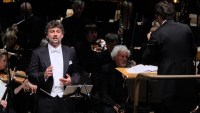
Das Rheingold at the Royal Festival Hall was, all told, a disappointment, but it might not have been had there been one or two more rehearsals, and a replacement of one of the singers. Vladimir Jurowski plans to perform the whole Ring cycle in due course with the LPO, but he needs to remember that memories are still very fresh indeed of Opera North’s transcendently wonderful performance at the same venue in 2016. That showed, among other things, that you can semi-stage the Ring cycle with some imaginative lighting, a minimum of meaningful movement and no props.

Self discovery

Radio

It’s a pity Will Self didn’t embark on his bus tour round Britain before the Brexit vote. If he had, we might have all had a better understanding of what’s going on in the shires. In his series of ten short programmes on Radio 4, Great British Bus Journey (produced by Laurence Grissell), Self sets out to emulate Daniel Defoe, William Cobbett and J.B. Priestley by taking the bus not to the big centres of life in the UK but those smaller towns and cities we often rush past on the motorway or have no reason to add to our bucket list. Places like Plymouth, Preston, East Kilbride, Wolverhampton and Swansea. His big question is to find out what it means to be British today (the intention behind those earlier cross-country trips by horse and chauffeur-driven car).

Crown jewels | 25 January 2018

Arts feature

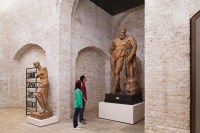
Peter Paul Rubens thought highly of Charles I’s art collection. ‘When it comes to fine pictures by the hands of first-class masters,’ he wrote from London in 1629, ‘I have never seen such a large number in one place.’ In Charles I: King and Collector the Royal Academy has reassembled only a fraction of what the king once owned, yet even so this is a sumptuous feast of an exhibition. Some of what’s on show will be familiar to an assiduous British art-lover, since it comes from the Royal Collection and the National Gallery. But the sheer concentration of visual splendour is overwhelming and the installation spectacular. The Renaissance, like spring, came late to northern Europe — and last of all to distant Britain.

The Pinter conundrum

Theatre

The Birthday Party is among Pinter’s earliest and strangest works. It deconstructs the conventions of a repertory thriller but doesn’t bother to reassemble them. The setting is a derelict seaside town on the south coast. Petey, a thick deckchair attendant, runs a guest-house with his ageing wife, Meg. She’s a zero-IQ cook whose signature dish is a slice of white toast charred in fat. They have one resident, Stanley, a former pianist whom Meg cossets and mothers like a substitute son. Enter two London thugs, Goldberg and McCann, who invite Stanley to a party as a pretext to punish him for unknown misdemeanours. The whisky-soaked celebrations involve a game of blind man’s bluff during which Stanley’s glasses are smashed, rendering him sightless.

Craig David: The Time Is Now

More from Arts

Grade: D– You’re in a minicab, on the way home from some bash that was considerably less pleasing than you had anticipated. The driver has the radio on and this limp, witless, landfill R&B crap is hammering into your sinuses. You want to tell him to turn it off right now but don’t because you are too polite, too aware of sensitivities. You want your driver to like you. I don’t know why. You sort that out with yourself. But anyway, that stuff on the radio — it’s actually Portsmouth’s gift to the world of music, digging like a maniac into the enamel of your teeth. Craig David, recently reinvented (as being slightly more boring than he was originally) and back with a new album: The Time Is Now.

Question time | 25 January 2018

More from Arts

Last year was a bit of a year for Radio 4 anniversaries; maybe most notably, Desert Island Discs celebrated 70 years on air. But oddly enough, so did another show. Round Britain Quiz, which you may remember vaguely from your childhood, or possibly your parents’ childhood, also reached 70 in 2017. There have been one or two breaks, but this abstruse and, let’s face it, unashamedly smart show has survived the slings and arrows of outrageous Radio 4 controllers. Every year we fret and worry, hoping beyond hope that it will be recommissioned. Every year, I’m glad to say, it is. I say ‘we’ because, for the past few years, I have been part of the merry crew that makes the programme. It’s one of the very best jobs in the world.

Small talk | 25 January 2018

Cinema

Downsizing is a film with the most brilliant premise. What if, to save the planet, we were all made tiny? What if we only took up a tiny amount of space and flew in tiny planes and produced tiny amounts of rubbish? And what if we could live in the sort of mansions that would cost millions if they were regular-sized? What if, what if, what if, what if… but most crucially: what if this film had run with the premise rather than throwing it away? Could it have avoided becoming just another dumb ‘white saviour’ movie? And this, alas, is the ‘what if’ that must preoccupy us today. This is a film by Alexander Payne, otherwise known for Sideways and Nebraska and About Schmidt, so there may just be no explaining it.

As time goes by | 25 January 2018

Radio

If you were to ask me by the end of the week what I had written about in this column at the beginning I would probably look blank, fumble desperately through a foggy recollection of plays, news items, snatches of interviews and then reply, ‘I’ve no idea.’ This business of forgetting so soon what was once so clear in the mind is, says Francis O’Gorman in this week’s The Essay on Radio 3 (produced by Lisa Needham), very much part of our modern world. Too much information to take in, too little time to process it. The result, too much forgetting. It’s virtually impossible to remember what you once put down as ‘your favourite meal’ on an online shopping site.

Old hat | 25 January 2018

Television

These days, when it comes to people who used to be on the telly, the answer to the classic newspaper question ‘Where are they now?’ tends to be a fairly predictable one: they’re still on the telly — if, that is, you look carefully enough. They’re also quite likely to be travelling abroad with a few of their peers while wearing a large hat. The BBC started the trend — possibly even the genre — with The Real Marigold Hotel. ITV has provided the weirdest example so far, with Gone to Pot, in which the likes of Christopher Biggins and Pat Butcher from EastEnders investigated the legalisation of marijuana in California by smoking bongs and giggling a lot.

Body language | 25 January 2018

Opera

One of the Royal Opera’s greatest virtues is the care it takes with its revivals, even those that are virtually annuals, such as Jonathan Kent’s Tosca, the unnecessary replacement for Zeffirelli’s classic production. Kent’s version, with elaborate sets by the much-missed Paul Brown, was unveiled in 2006 and now has its ninth revival. It is a sloppy affair — three stars thrown together on the stage and told to get on with it. Since there is plenty of furniture around, and two precipitous flights of stairs, that isn’t as easy as it would be in any other UK production.

Sex, lies and conductors

Arts feature

I once knew a great conductor who claimed that he never boarded a plane to a new orchestra without a tube of lube in his pocket. Just in case he got lucky (which he often did). Conductors are migratory birds who fly where their agents point them, hopping from one hotel bed to the next. There is no shortage of bright young things on an orchestra’s staff and besotted fans backstage who are open to a wink and the whisper of a room number. A maestro is never alone for very long. Sex is one of the perks of conducting. Mostly, it’s consensual. My middle-aged maestro would sit up half the night reading poetry to a young woman before he made anything so crass as a lunge. Down the years, there have been few complaints about maestro sex. Seduction techniques vary.

A woman of substance | 18 January 2018

Cinema

Steven Spielberg’s The Post, which dramatizes the Washington Post’s publication of the Pentagon Papers in 1971, doesn’t exactly push at the frontiers of storytelling. It’s told straight and in a familiar way. Here are the journalists furtively working through top-secret government papers in a smoke-choked room for the public good. (There were no empty pizza boxes in this instance, but there could have been, if you get my drift.) Here’s the government trying to stop them. Here’s the newspaper rolling off the press, and everyone clapping. And so on. But it does star Tom Hanks and Meryl Streep, engaged in a kind of dance as the paper’s editor and proprietor, and you just can’t argue against Tom Hanks and Meryl Streep.

Up the revolution

Opera

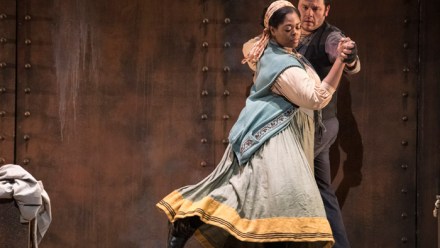
Spoiler alert: the final image of John Fulljames’s production of Monteverdi’s The Return of Ulysses at the Roundhouse is haunting. Ulysses (Roderick Williams) and Penelope (Christine Rice) stand facing each other at last, arms outstretched. But Penelope is on terra firma. Ulysses stands on the revolving walkway that has served as the stage throughout most of the evening. And though Monteverdi’s music has found stillness, the stage continues to revolve, carrying him away from his beloved — boats against the current, borne back ceaselessly into the past. Or something. Like many of this production’s most striking ideas, it’s poetic in the moment, but doesn’t really work once you step back. A metaphor for the alienating effect of war and exile?

The price of success

Theatre

A pattern emerges. A hot American playwright, dripping with prestigious awards, is honoured in London with a transfer of their best-known work. And it turns out to be all right. Not bad. Nothing special. The latest wunderkind to wow London is Amy Herzog (five plays performed, six awards received), whose marital bust-up drama Belleville is set in a glamorously derelict corner of Paris. Abby and Zack, both 28, are newlywed Americans trying to shore up the wreckage of their European gap year. Abby wanted to learn French but has stopped attending classes. Instead, she’s studying yoga although the lessons are regularly cancelled. And her acting career seems to have stalled.

Women’s pay could bankrupt the BBC

Columns

I hope you are enjoying the BBC drama series Hard Sun. It is described as pre-apocalyptic science fiction, set in the present day UK. The head of MI5 is a Nigerian woman and everybody else in it lives in a mixed-race family — so, if you are a racist, you might well query that aforementioned description pre-apocalyptic: it’s upon us! The rest of us will simply think it’s ludicrous and bears no relation to the country in which we live, and might become irritated by the BBC forcing this PC social engineering down our throats at every possible opportunity. Although we may already have filled up our beakers of irritation on the leaden, portentous dialogue, the sadistic revelling in violence, the grim and annoying characters and the imbecilic plot.

Prick up your ears

Radio

On paper and on air, there’s nothing to suggest that the Radio 4 series Across the Red Line will have sufficient listening power to draw you in so that once you’ve reached home and need to get out of the car you’ll rush straight in to switch on the radio. The billing in Radio Times describes it simply as a 45-minute show in which the journalist Anne McElvoy ‘invites figures on opposing sides of a political issue to listen to each other’. And that’s exactly what it is. A pair of talking heads tossing about a topical football, guided by McElvoy, who has as her sidekick a conflict resolution expert, Gabrielle Rifkind, brought in to moderate the session if things get lively.

Ferrari – heavy, expensive, wasteful, dangerous and addictive

More from Arts

Has a more beautiful machine in all of mankind’s fretful material endeavours ever been made than a ’60 Ferrari 250 Granturismo? Go to the Design Museum and decide. I have driven many Ferraris and the experience is always unique. They are alive, demanding, feral, sometimes even violent or truculent. Addictive, too. Once, in Haverfordwest, I arrived sweating and puffing after seven hours in traffic. I parked the 246 GT at the hotel for a moment but then, unable to ignore the hot, seductive car, I got back in and drove up and down the coast road; up and down, up and down. Just because it was there. Kierkegaard thought that ‘the best demonstration of the wretchedness of life is obtained through a consideration of its glory’. Thus, the motor car.

A tough act to follow

Arts feature

Gary Oldman has joined a long list of actors who have portrayed Winston Churchill — no fewer than 35 of them in movies and 28 on television. He is one of the best three. ‘I knew I didn’t look like him,’ Oldman has said. ‘I thought that with some work I could approximate the voice. The challenge in part was the physicality, because you’re playing someone whose silhouette is so iconic.’ We all have our own mind’s-eye view of what Churchill should look and sound like, and his personality was so strong and sui generis that it is almost impossible for an actor to impose himself on the role. He is therefore almost always left with either mere impersonation or caricature. Oldman avoided this in Darkest Hour through research.

Lost in space | 11 January 2018

Theatre

The Twilight Zone, an American TV show from the early 1960s, reinvented the ghost story for the age of space exploration. Director Richard Jones has collaborated with Anne Washburn to turn several TV episodes into a single play. Eight episodes in all. Way too many. The structure is designed to bamboozle us from the start. Some of the storylines have been broken up and are placed episodically throughout the piece, while others are preserved as units and delivered whole. Even the most keen-eyed viewer gets flummoxed by this mystery.

Thinking outside the box

Television

These days a genuinely controversial TV drama series would surely be one with an all-white, male-led cast that examined the problems of a bunch of middle-class people. (Just imagine the Twitter outrage!) But while we await that — possibly for a while yet — we’ve now got two highly promising new shows of the more approved ‘controversial’ kind: where racial issues are tackled in a thoughtful and scrupulously responsible way. Kiri (Channel 4, Wednesday) has the distinct advantage of starring Sarah Lancashire, whose character Miriam proves that TV mavericks needn’t always be doctors, lawyers or cops. They can, it seems, also be social workers. So it was that Miriam was first seen adding something a little stronger to her breakfast coffee.