Culture

Culture

The good, the bad and the ugly in books, exhibitions, cinema, TV, dance, music, podcasts and theatre.

Village voice

Television

Sometimes — really not often but sometimes — a programme that’s good and honest and true slips under the wire of the BBC’s jealously guarded PC agenda and makes a home run. The latest to do so is a deadpan comedy series called This Country (BBC3). It’s so deadpan that it’s easy to see why an earlier pilot episode for ITV crashed and burned. If you were channel-hopping and lingered on it for five minutes, you might easily mistake it for an earnest, worthy, achingly tedious fly-on-the-wall documentary series about the poverty and despair of left-behind rural England. This impression is enhanced by screeds that occasionally appear on screen giving you, say, statistics illustrative of the funding crisis in healthcare outside the big cities.

Judas Priest: Firepower

More from Arts

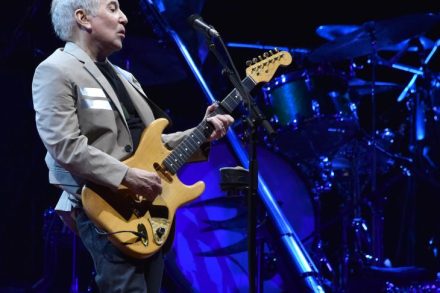
They’re still alive, then. Chuggedy-chug, grawk, screech screech, chuggedy-chug. First mention of demons — line one, song two. Song one is about blowing people to bits with firepower, cos they’re really EVIL. There are spurts of lead guitar that sound like knives slashing at an empty plate and those strange, pompous, strangulated vocals — operatic diva meets Freddy Krueger — common to most UK heavy metal. Anything to hide the Brummie accent, I suppose. Thank you, the West Midlands, for foisting on the world the blind alley of HM, blues with the rhythm, wit and soul replaced by volume and bellowing and posturing and almost continual references to the poor fucking devil (who clearly didn’t get all the best songs).

Rising star

Theatre

The Plough and the Stars by Sean O’Casey looks at the Irish nationalist movement during the events of Easter 1916. The setting is a Dublin tenement where the residents exchange gossip and insults and sometimes punches. What begins as an elevated soap opera develops into a tragedy of vast and harrowing proportions. Sean Holmes’s production was first seen at Dublin’s Abbey Theatre and it tells the historic tale with contemporary costumes and furnishings. These chronological confusions rarely work but the performers here have so much spirit, energy and truthfulness that the narrative feels immediate and topical. The set is spare, unlovely, brutal.

The lady vanquishes

Opera

At last, a great time at the Royal Opera: a magnificent performance, in every way, of Verdi’s Macbeth, curiously but pleasantly beginning at 3 p.m. This is the fourth outing of Phyllida Lloyd’s 2002 production, and the finest by a long way, though each of the previous series had its merits. If my memory serves me rightly, and it very likely doesn’t, Daniel Dooner, the revival director, has made significant changes to the production. What previously struck me as tolerable seemed, in this revival, thoughtful, imaginative and genuinely helpful to the drama, qualities that I had given up hope of experiencing in a major opera house. Oddly, that meant that the striking unevenness of this opera became more evident, with the blame to be laid firmly at the composer’s door.

All bark and no bite | 28 March 2018

Cinema

The latest film from Wes Anderson is a doggy animation set in a fantasy Japan and as there was a screening in London earlier this week for owners and their dogs I took my own dog, Monty. He said he liked it. It was ‘good’, he said. I did not especially trust his opinion so investigated further. As good as, say, drinking from the toilet? ‘No,’ he said, ‘not as good as that, obvs.’ As good as this tennis ball here? ‘No’, he said, ‘because a tennis ball is always AMAZING!’ As good as cheese? ‘Nothing is as good as cheese. Fair play, you caught me out there.

The last radical

Music

A spectre haunted the first weekend of the City of Birmingham Symphony Orchestra’s Debussy Festival: the spectre of Richard Wagner. Debussy’s relationship with Wagner began with infatuation, and ended (as so often) in open rebellion. The young decadent who declared Parsifal ‘one of the loveliest monuments of sound ever raised to the serene glory of music’ later ranted that ‘30 million Boches cannot destroy French thought’ even while, tormented by cancer, he laboured to complete three late sonatas of near-infinite subtlety and grace. But there’s always the sense, as Debussy put it as early as 1890, that ‘I don’t see what can be done beyond Tristan’.

Heaven and earth | 28 March 2018

More from Arts

In Nicolas Poussin’s ‘Noli Me Tangere’ (1653) Christ stands with his heel on a spade. He appears, in his rough allotment smock and sandals, to be digging up carrots. In Abraham Janssens oil painting (c.1620), Christ strides among parsnips and pumpkins, cauliflowers and marrows. Mary Magdalene kneels in an artichoke bed. In Fra Angelico’s fresco version — or, rather, vision — for San Marco in Florence (c.1438–50), Christ shoulders a hoe as he hovers above a millefiore carpet of wildflowers. His pristine robes give him away. No gardener would wear white to turn the compost. The Noli Me Tangere scene is the loveliest in the cycle of Christian paintings that tell the story of Easter.

The simulation game

Arts feature

Digital art is a crowded field. It’s also now older than I am. Yet despite a 50-year courtship, art galleries have been reluctant to allow it more than a toehold in their collections. Things are changing. Take MoMA’s visit to Paris last year. Alongside the Picassos and Pollocks was a very popular final room, made up of a single, beautiful computer-generated animation, in which a huddle of humans tramp across a constantly disintegrating landscape. ‘Emissaries’ (2015–17) is the work of the 33-year-old artist Ian Cheng, who two weeks ago opened his first show in the UK at the Serpentine Gallery. Cheng’s first inspirations were video games like The Sims, and working in special effects on Pirates of the Caribbean.

Time and motion

Exhibitions

Andy Warhol would probably have been surprised to learn that his 1964 film ‘Empire’ had given rise to an entire genre. This work comprises eight hours and five minutes of slow-motion footage of the Empire State Building during which nothing much happens. Warhol remarked that it was a way of watching time pass or, you might say, the Zen of boredom. Much the same could be said of the films in Tacita Dean’s two exhibitions, Portrait and Still Life at the National Portrait Gallery and National Gallery respectively.

Evensong

Notes on...

When Palestrina wrote his Mass settings and motets, or J.S. Bach his cantatas and passions, they could not have imagined the ways in which their music would be heard today. We can now access sacred music in our living rooms, at work and on the commute: an hour-long compilation of the choir of New College, Oxford performing the Agnus Dei has four-and-a-half million views on YouTube. Spotify and smartphones may eliminate the need to visit a church or chapel to hear these works, but visit we still do. While overall church attendance has fallen by two-thirds since the 1960s, attendance at traditional choral worship in the UK is on the rise, and has been for the past two decades.

Vince Staples

More from Arts

Grade: B+ Another ex-Long Beach crip replanted in pleasant Orange County via the conduit of very large amounts of record company money and thus now able to draw on his time as a gangsta, while telling us all it was a very naughty thing to have done. The difference between Staples and much of the similarly uprooted West Coast hip-hop crew is twofold. First, off-stage the man is thoughtful, articulate and refuses to hunker down beneath the comfort blanket of black victimhood. Further, he eschews all drugs and alcohol and loathes the glorification of gang culture — something he calls coonery — and is a Christian. (Although it is hard to imagine Jesus Christ cheerfully singing along with this little number.) And second, he has words.

Sunday best

Television

For as long as I can remember, Sunday nights have been the home of the kind of TV drama cunningly designed to warm the sternest of heart cockles. Think, for example, of Robert Hardy cheerfully bellowing his way through almost every scene of All Creatures Great and Small (‘PASS THE SALT, JAMES!’). Or of Pop Larkin’s impressive commitment to chuckling indulgently in The Darling Buds of May. Or of Heartbeat somehow racking up 372 episodes. Even so, ITV has now taken this tendency to surprising new lengths, with not one but two Sunday-night dramas that run consecutively and contain such traditional elements as gorgeous sun-dappled scenery, cute animals, gruff old-timers with hearts of gold and any number of lovable eccentrics. First up, at 8 p.m.

Love Handel

Opera

Handel’s Rinaldo has not been highly regarded even by his most ardent admirers. I have never understood why — even less so after the recent performance at the Barbican, with stunning forces, including the English Concert, under the inspiring direction of Harry Bicket. Certainly the plot is absurd, with a last-minute mass conversion of Muslims to Christianity in order to bring things to a happy conclusion. But there are only six main characters in complicated relationships with one another, turning on their love and hatred like a switch, and going through the usual hoops; that is what Handel operas are. The penny has dropped with me, almost too late, that it is a complete mistake to look for characterisation in Handel.

The making of the Moody Blues

Music

Rarely has one irate punter so affected a band’s trajectory. Without the anger of the man who went to see the Moody Blues at the Fiesta Club in Stockton in 1966, the band would never have reinvented themselves, never have transformed into psychedelic pioneers, and next month they would not be travelling to America to be inducted into the Rock and Roll Hall of Fame, the honour bestowed annually upon those the US music business deems the most significant artists of all. The Moody Blues had been a moderately successful group — everyone who has ever listened to an oldies radio station knows their version of ‘Go Now’, a No. 1 single in 1964 — but by 1966 they were on the skids.

Mad about Claire Foy

Cinema

Steven Soderbergh’s latest film, Unsane, is a psychological thriller about a woman who is incarcerated in a psychiatric hospital even though she claims to be perfectly sane. But is she? It was filmed fast, on an iPhone 7, and some aspects are worryingly thoughtless — its treatment of mental-health patients, for example, is remarkably Unsensitive. And it does descend into a plainly ridiculous, sub-par farce. But it is also, in parts, deliciously schlocky and it stars the wonderful Claire Foy, whom one hopes was paid decently. So shocking that she earned less than Matt Smith for The Crown, but as a positive person who likes to look on the bright side might I suggest that we celebrate the fact men are still doing so well? And throw a party or something?

What’s the big idea?

Theatre

Summer and Smoke by Tennessee Williams dates from the late 1940s. He hadn’t quite reached the peaks of sentimental delicacy he found in his golden period but he was getting there. As a lesser-known curiosity, the script deserves a production that explains itself openly and plainly. Rebecca Frecknall has directed a beautiful and sometimes bizarre-looking show which is beset by ‘great ideas’. What a great idea to encircle the stage with upright pianos that the actors can cavort on, and whose exposed innards can twinkle with atmospheric lights at poignant moments. The pianos are an ingenious and handsome solo effort but they serve the designer’s ends and not the play’s. Another great idea was to include a booming soundtrack, often irrelevant, sometimes intrusive.

Wild at heart | 15 March 2018

Arts feature

There is a culty YouTube video shot three years ago on the laptop camera of Ruben Ostlund. It shows the film director listening live as the nominations for the Academy Awards are announced from Los Angeles. The tension mounts as they approach the foreign film category. Alas, Force Majeure from Sweden isn’t nominated. Ostlund disappears off screen to sob and mewl. This year, there was a sequel to the video, but with a happier ending: the director’s latest film The Square was nominated for an Oscar. These mini-movies, like the rest of Ostlund’s oeuvre, are funny but subtly savage. He is a provocateur who trades in discomfort. You watch with your toes knotted.

Being and nothingness | 15 March 2018

Exhibitions

René Magritte was fond of jokes. There are several in René Magritte (Or: The Rule of Metaphor), a small but choice exhibition at Luxembourg & Dayan, 2 Savile Row W1 (until 12 May), that includes numerous variations, accomplished and disturbing, on similar ideas to his famous ‘Ceci n’est pas une pipe’ painting. ‘L’usage de la parole VI’ (1928) contains two amorphous brown patches resembling mud or merde or molten chocolate. They are labelled as if in a scientific diagram, one with the word ‘miroir’, the other ‘corps de femme’. It’s true that Magritte could be repetitive, but his early paintings are beautiful, and the humour had a serious point.

Original sin | 15 March 2018

Cinema

This biopic of Mary Magdalene is a feminist retelling that may well be deserved but it’s so dreary and unremarkable that the fact it is well intentioned and even, perhaps, necessary can’t come through and win the day. Or even part of the day. Just the morning, say. Directed by Garth Davis (Lion), and written by Helen Edmundson and Philippa Goslett, this is, according to the bumf, the Mary of the original gospels rather than the repentant sinner and ‘prostitute’, which is what, in truth, I always had her down as, but then I did get most of my learning from Jesus Christ Superstar.

Seeing stars

Theatre

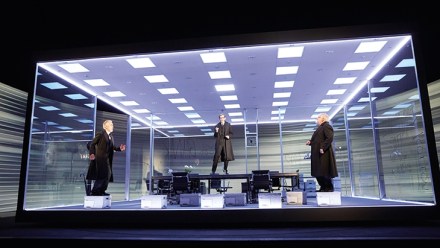
The Best Man by Gore Vidal is set during a fictional American election in 1960. Two gifted candidates seek their party’s nomination. Secretary Russell is a chilly but experienced political hack whose marriage is a sham. Senator Cantwell, a more attractive character, is an impulsive charmer married to a blonde bombshell who adores him. The show feels dated but the acting, the costumes and the set designs capture the period nicely. The plot is perhaps short of pace and density. Each character has an embarrassing secret to hide. Secretary Russell suffered a mental breakdown a few years ago. Senator Cantwell enjoyed a bisexual fling in the army. The action turns on their ability to keep these details hush-hush.

The lady vanishes | 15 March 2018

Radio

‘Close your eyes and be absorbed by the storytelling,’ urged Jon Manel (the new head of podcasting at BBC World Service) as we settled into our chairs. We were just about to hear the ‘world première’ of the latest podcast from the BBC World Service, launched dramatically in the Radio Theatre at Broadcasting House in front of a packed, expectant audience, with full surround sound, every raindrop magnified (and there was a lot of it). It was odd to realise quite how far podcasting has already transformed radio.

Poet of the century

Features

The first book that Tomas Venclova read in English was Nineteen Eighty-Four. Not a bad start in the language, given his future career. Venclova is less well-known in the West than his late friends Joseph Brodsky and Czesław Miłosz, but he’s something like their Baltic equivalent: a dissident poet of international standing, who spent many of the years of his home country’s Soviet occupation in exile in the US. He describes Nineteen Eighty-Four as ‘a very important book in my life, and the one that taught me the most about the Soviet system’. A passage he says made ‘a very strong impression on me’ comes in an exchange between Winston Smith and his interrogator O’Brien. Winston asks O’Brien: ‘Does Big Brother exist?

What’s in a name

Opera

Janacek is the master of the operatic title. Think of the slippery, sleight-of-hand emphasis of Jenufa in its original Czech —Her Stepdaughter — or the elegant misdirection of The Beginning of a Romance. It encourages the suspicion that when Janacek christened his final opera, deliberately truncating the title of Dostoyevsky’s Siberian prison camp-inspired novel Notes From the House of the Dead, there was good reason. It’s a title that opens out a description into an implied question: From the House of the Dead to, where or what exactly? Where can you go, who can you cry out to, once you have crossed over into the underworld and witnessed its horrors? Where indeed.

The beautiful and the damned

Television

Babylon Berlin (Sky Atlantic), the epic German-made Euro noir detective drama set during Weimar, is so addictively brilliant that I’d almost advise you not to start watching it. After the two seasons to date you’ll be left feeling like the morphine-addicted hero Gereon Rath (Volker Bruch) when deprived of his fix.