Culture

Culture

The good, the bad and the ugly in books, exhibitions, cinema, TV, dance, music, podcasts and theatre.

The diversity agenda is killing cinema

The film world is atoning for its crimes against diversity. On screen, strong women are supplanting Disney princesses. Superheroes, once uniformly white and male, are turning multicultural. Gay intrigue is edging out heterosexual romance. Away from the camera, bankable stars force studios to employ minority personnel by adding 'inclusion riders' to their contracts. Film-makers must repent ancient mis-speaks, beg forgiveness and denounce peers accused of transgressions. Abuse allegations against Woody Allen may be unproven, but actors who have taken his shilling disown him and donate their tarnished earnings to #TimesUp. Unsurprisingly, the current awards season reflects these rectifications. Of the eight nominations for best picture Oscar, six boast diversity credentials.

Home truths | 21 February 2019

Arts feature

The creation of a commission to examine beauty in new building created a stir in the media, with the chairman subjected to a hate storm of unusual turbulence even by the standards that he regularly has to endure. Hate storms arise when powerful interests are threatened, and this was no exception. There is hardly a person in this country who is not aware of what Milan Kundera has called the ongoing ‘uglification of our world’ and who does not hope that something might be done about it. No one I talk to denies the need for a large number of new houses. But they all hope that this need can be reconciled with our deep-seated desire for beauty. Kant wrote that in judgments of beauty we are ‘suitors for agreement’.

Small wonders | 21 February 2019

Exhibitions

When Henry VIII died in 1547, he left a religiously divided country to a young iconoclast who erased a large part of its visual culture. In a brief six years the government of Edward VI effectively whitewashed over England’s native heritage of sacred art, leaving a country already reliant on foreign painters for its royal portraits bereft of an artistic identity. Artistically speaking, Tudor England was the sick man of Europe — and the signs of recovery, when they first appeared, were tiny. Nicholas Hilliard, born in the year of Henry VIII’s death, paradoxically owed his art education to his family’s Protestantism.

Art and life

Exhibitions

Diane Arbus saw mid-20th century New York as if she was in a waking dream. Or at least that is the impression you get from the exhibition of her early photographs at the Hayward Gallery. She was attracted to people on the margins of society — or, as she roundly called them, ‘freaks’: fairground performers, assorted human oddities and individuals with non-standard bodies such as ‘Miss Makrina, a Russian Midget, in her Kitchen NYC’ (1959). Arbus famously observed of such individuals: ‘They’ve already passed their test in life. They’re aristocrats.’ However, Arbus could make just about anybody — or thing — appear unaccountably strange.

Lines of enquiry

Exhibitions

A cataclysmic storm is unfolding. Dense, thunderous lines of black chalk sweep rapidly around the paper in frantic curls of awesome energy. Rocks tumble beneath the irresistible force of an engulfing flood. Cloud and rain, vapour and water, both churned by the same punishing vortexes, become almost indistinguishable. The scale is hard to judge until you glimpse, in the foreground, a hilltop fortress, dwarfed and ruined by the relentless inundation. Man and his monument, both powerless in the face of almighty nature. It’s a terrifying scene of chaos and one that Leonardo da Vinci revisited numerous times in his final years. Facing his own mortality, he produced a series of these intense, obscure drawings in which he imagined an apocalyptic storm obliterating the landscape.

‘Scallop’

Notes on...

Benjamin Britten was adamant that he did not want any memorial sculpture of himself in Aldeburgh, the Suffolk coastal town where he lived for 30 years. He died in 1976 and he is remembered there by the Britten-Pears music school and Snape Maltings concert hall, by John Piper’s magnificent window in the church, and at the Red House, where Britten lived, which contains his entire library, art collection and musical archive. A bronze bust standing on the seafront was neither needed nor wanted. But the Suffolk artist Maggi Hambling was greatly inspired by Britten’s music, and especially his opera Peter Grimes, and in 2002 she had the idea of designing a tribute. Its form — that of a scallop shell divided into two parts and standing upright, came to her immediately.

Blurred vision

Theatre

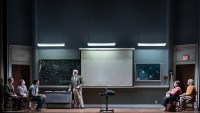
All About Eve is Cinderella steeped in acid rather than sugar. Eve, or Cinders, is a wannabe star who uses a powerful theatre critic (the Buttons character) to help her win fame by overcoming two Ugly Sisters represented by a movie goddess, Margo Channing, and her film-director boyfriend. This fairytale was filmed in 1950 with Bette Davis as Margo and it remains a widely loved classic. Ivo van Hove’s version is torn between the 1950s and the present day. Result: a mystery. Margo is clearly being stalked by Eve but instead of referring the poor girl to a psychiatrist, she hires her as an understudy. Somewhat rash! Margo seems oddly dependent on her looks for work. She never considers directing or producing her own scripts, and she regards television as a loser’s graveyard.

Friendly fire | 21 February 2019

Radio

With the upsurge of listeners to Classic FM (now boasted to be 5.6 million listeners each week) and the imminent launch of a new commercial station, Scala Radio, dedicated to classical music and fronted by the former Radio 2 DJ Simon Mayo (who has said about his new home: ‘Some of it will be familiar, some new and exciting but all timeless, beautiful and all absolutely relevant to today’), Radio 3 badly needs to regain our attention. Last weekend’s focus on Berlioz, ‘The Ultimate Romantic’, could have been such an opportunity, but either because of funding cuts or a confusion about its purpose (to find new audiences, to teach or just to entertain) there was little buzz about the weekend.

The real RBG

Cinema

Ruth Bader Ginsburg is too ill to sit on the Supreme Court. When she saw On the Basis of Sex, a hagiography written by her nephew, she must have thought she had already gone to heaven. Directed by Mimi Leder to the highest TV-movie standards, this prequel to the obsequious 2018 documentary RBG will appeal to all purchasers of the grovelling 2015 biography, Notorious RBG. The real RBG totters across the last frames of this movie like the laminated ghost of American liberalism. Such idolatry diminishes Bader Ginsburg’s achievement, the unpicking in 1971 of the first of 178 laws discriminating against you-know-who on the basis of you-know-what. But this film crackles with nylon, self-regard, and unearned privilege. It’s the 1950s.

Dancing up a La Mancha storm

More from Arts

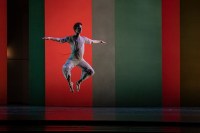
The trouble with Don Quixote is Don Quixote. Whenever the doddering, delusional Don is onstage, tilting at windmills, riding his straw-and-sawdust nag on wheels, jousting with bedposts, our spirits and sympathies suffer. Quixote’s quest only really works as an excuse for Kitri, Basilio, Espada the Matador and Mercedes the street minx to dance up a La Mancha storm. This they do, with bells on. In toreador waistcoat, tight taleguilla and pink stockings to match his cape, Ryoichi Hirano is the Mata-phwoar. The corps de ballet swoon and flutter. He is sexy, even caddish. I was a Hirano doubter, but this was a magnificent performance: athletic power matched by classical control. A bullfighter one moment, ballerino the next. Laura Morera as his firebrand lover Mercedes is underpowered.

Outsider art | 21 February 2019

More from Arts

If you’re tired of hygge then you’ll like Harald Sohlberg. The Norwegian painter  eschewed the cosy fireside for the great outdoors, eager to see what view might greet him as he wandered the woods and country roads of Norway in the failing light. While his contemporary Nikolai Astrup filled his landscapes with people, Sohlberg preferred to bring nature to the fore, at once unnerved and mesmerised by its power. He excelled at depicting the scene just stumbled upon or left behind. In ‘Summer Night’ (1899), a table is set for two on a veranda overlooking the Kristiania Fjord off what is now Oslo. The glasses are half full, the fruit sliced but abandoned, the door of the house ajar. Have the diners slipped inside? Then look at the sunset they are missing.

The Berlioz problem

Music

Hector Berlioz was born on 11 December 1803 in rural Isère. ‘During the months which preceded my birth my mother never dreamed, as Virgil’s did, that she was about to bring forth a laurel branch,’ he writes in his Memoirs. ‘This is extraordinary, I agree, but it is true… Can it be that our age is lacking in poetry?’ And so on, for nearly 600 candid, facetious, outspoken pages. Berlioz’s Memoirs are the inner voice of the Romantic generation as you’ve always imagined it, and everyone who’s interested in music in the 19th century — no, scrub that, everyone who’s interested in European culture — should read them.

Miracle of Mumbai

Arts feature

It’s a 31ºC Mumbai morning, and on Marine Drive the Russian winter is closing in. The Symphony Orchestra of India (SOI) is rehearsing Rachmaninov’s Second Symphony ahead of its first ever UK tour, and even on the campus of the National Centre for the Performing Arts (NCPA) — a palm-shaded tropical Barbican next to the Arabian Sea — this is still music to raise a shiver. Strings sigh; horns call across frozen steppes. Then the guest conductor Martyn Brabbins gives the signal for a break and players spill into the foyer, chatting and gulping tea. If the sky were more grey and the tea less sweet, it could be a general rehearsal anywhere in the UK.

Maps of the mind

Exhibitions

MacDonald ‘Max’ Gill (1884–1947) is less well known than his notorious brother, Eric. But was he less of a designer, less of an artist? The son of a Brighton clergyman, his career was built on a sequence of remarkable connections. The architect Halsey Ricardo, a descendant of the economist, was his tutor. While working for church builders Nicholson and Corlette, Gill very likely met Edwin Lutyens at the Art Workers’ Guild. And for Nashdom, the neo-Georgian house Lutyens built in 1909 for Prince Dolgorouki at Burnham in Buckinghamshire, Gill drew an imaginative ‘Wind Map’. Somewhere between illustration and cartography, this was a pointer of what was soon to come from his pen and brush.

My diversity targets for the BBC

Columns

Terrible news for gay broadcasters —  the BBC has only one year to meet a diversity target which says that 8 per cent of roles on TV and radio must be occupied by homosexuals. This means a reduction in gay TV weathermen by at least three quarters, and they’ll also have to sack a good half of the gay chat-show hosts. This seems to me unfair, but that’s diversity targets for you. The 8 per cent figure has been appropriated by the BBC from the gay lobby, although there are activists who will tell you that a still greater proportion of our country is homosexual. This does not match with my inquiries, however. As most people know, there are only a few hundred male homosexuals in the country, and they all work for the BBC already.

Putting the Boot in | 14 February 2019

Television

‘I know, let’s repaint the Sistine Chapel. But this time we’ll get it done by Banksy.’ Perhaps this wasn’t the exact phrase used in the early production meetings for the Sky Atlantic reboot (ho ho) of Das Boot (Wednesdays). It does describe pretty well the net result, though. Yes, I know James Walton covered it last week but I’m going to have to strongly disagree with him: Das Boot — Wolfgang Peterson’s 1980s miniseries about life on a U-boat during the Battle of the Atlantic — is my favourite wartime TV drama ever. And I’m damned if I’m going to let this travesty of a new version through the net.

A river runs through it

Radio

It sounds like something out of Dickens or a novel by Thackeray, a classic case of high-minded Victorian philanthropy, but the Glasgow Humane Society was actually set up much earlier, in 1790 (just after the revolutionary fervour in France demanded liberty, fraternity, equality), to protect human life in the city and especially on the river Clyde. It still exists and Glasgow claims to be the only city in the world to have a full-time officer dedicated to rescuing people from drowning. Back when it began the river and its banks were hectic with shipbuilding, trade and manufacturing. Now the city is almost ashamed of its river; no big ships, hardly any industry, little trade, and no longer a source of wealth and jobs. It has ‘turned its back on the Clyde’.

Age concern | 14 February 2019

Theatre

The Dumb Waiter is a one-act play from 1957 that retains an extraordinary hold over the minds of theatre-goers. It’s set in the basement of a Birmingham restaurant where two Cockney hitmen are preparing to execute an unknown victim. A dumb waiter, or shelf on pulleys, descends from above containing requests for two-course meals. Liver and onions are on the menu. Demands for cups of tea and sago pudding are sent down. The nervous thugs start to panic as they struggle to fulfil the instructions arriving from on high. It’s an absurd situation underpinned by an authentic sense of menace and violence. These are not just clownish villains but real criminals trained to kill. The play is usually done for laughs but it can be performed as a macabre thriller.

Licensed to trill

Music

Broadly speaking, there are two kinds of approach to performing Schubert’s Winterreise, though sometimes there’s doubt or dispute about which one a given performer has taken. According to Jonas Kaufmann, Hans Hotter, for me the greatest of all performers of the cycle, as of so much else, insisted that the performer should be a narrator, not the Wanderer himself. But Kaufmann rightly insisted that Hotter’s various recordings are dramatic, with Hotter enacting, not narrating the monodrama. So it’s not always easy to tell. There was no doubt, though, in Christian Gerhaher’s recent performance of the cycle at the Wigmore Hall, with his long-time accompanist Gerold Huber, that we were witnessing the journey and sufferings presented directly.

There’s something about Marie

Cinema

A Private War is a biopic of the celebrated Sunday Times war correspondent Marie Colvin who was, judging from this, brave, humane and utterly fearless as well as a drunk, lonely, traumatised and annoying. A complicated human being, in other words. And why did she do it? Why did she risk her life to get the truth out there? No easy answers are offered, thankfully. It may just be that she had to face death to feel properly alive. I can only say, with confidence, that the film features a magnificently fierce, alert and impassioned performance from Rosamund Pike, whose usual English rose delicacy is nowhere to be seen. It is top work, properly.

The hypocrisy of the Eurovision boycott

The Guardian last week published a ‘we, the undersigned’ letter from 50 ‘artists of conscience’ urging the BBC to boycott this year’s Eurovision Song Contest because it’s taking place in Israel. ‘Eurovision may be light entertainment,’ they wrote, ‘but it is not exempt from human rights considerations — and we cannot ignore Israel’s systematic violations of Palestinian human rights.’ The signatories included such luminaries as Julie Christie, Peter Gabriel, Roger Waters, Vivienne Westwood and Ken Loach. Ken’s inclusion will have come as a surprise to those Israelis who saw his film I, Daniel Blake in Tel Aviv a couple of years ago.

The waist land

Arts feature

Strange to think when you visit the Christian Dior show at the V&A that his time as designer was so very short. From the first show in 1947 when he brought the war to an end — at least in terms of clothes — with the New Look, to his sudden death at the age of 52 was just a decade. But in that brief time he brought about a revolution in fashion, creating some of the most beautiful dresses ever made for women, with a line that was wholly his own. It was both architectural and natural: the skirt of his celebrated Bar suit was based on the corolla of a flower. He was a creative genius, but also brilliant at PR and commercially astute, as you would be if you’d lived through the interesting times he had.

Brightness falls

Exhibitions

The little-known painter Cyril Mann (1911-80) saw a lot from his council-flat window. Beyond the parks and trees and red-brick houses was St Paul’s, rising triumphantly through the haze. Mann, who grew up in Nottingham and trained at the Royal Academy in the 1930s, had painted the bombsites around Spitalfields and the streets of postwar London when he finally turned his hand in 1961 to the view from his Finsbury tenement block. The resulting painting was exceptional. He captured the cathedral in the distance with such a swift brush that it seems almost to dance on the horizon. The optimism Mann clearly found in the city skyline reflected his own change in circumstances as much as those of Britain.

The Dandy Warhols: Why You So Crazy

More from Arts

Grade: A– I’m here to make you feel old. It’s now nearly 20 years since the pleasing, laconic, Stones pastiche of ‘Bohemian Like You’ hit the charts, the breakthrough song of these faux-indie Portland slackers. They were ever a little despised, even then, partly for their pop sensibilities and partly because there is indeed something supremely irritating about them. Courtney Taylor-Taylor’s confected, ironic vocals, for a start. Courtney Taylor-Taylor’s name, for a second. Everything was a knowing pastiche, the catchy slabs of krautrock, the electronic noodling, the interminable hippy mantras. But they could write songs, at least — and they were cutely inventive with noise. Not much has changed — neither the format nor the derision.