
Culture
The good, the bad and the ugly in books, exhibitions, cinema, TV, dance, music, podcasts and theatre.
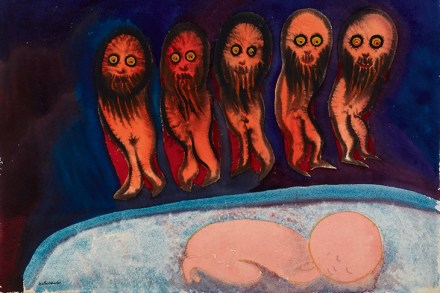
Gerald Scarfe meets Dr Seuss
More from ArtsHolding the International Surrealist Exhibition in London in 1936 was a coup for the British avant-garde, putting newbie surrealists such as Paul Nash and Roland Penrose on an equal footing with founding members of the European movement. But André Breton, who opened the show, was unimpressed by Nash, Penrose and co. Instead, he singled out two complete unknowns, Grace Pailthorpe and Reuben Mednikoff, as ‘the best and most truly surrealist’ of the British contingent. Pailthorpe and Mednikoff came out of nowhere. He was the artist son of a Russian-Jewish tinplate maker from the East End; she was the daughter of a Sussex stockbroker and had served as a surgeon during the first world war before training as a psychoanalyst.
23 May 2019
Up Pompeii!
Arts featureOne afternoon in AD 79 an unusual cloud appeared above Vesuvius in the Bay of Naples. ‘It was raised high on a kind of very tall trunk,’ recalled Pliny the Younger, likening it to an umbrella pine tree, ‘and spread out into branches.’ When, finally, the cloud collapsed and the sky grew dark, some people raised their hands to the gods. Others reasoned that ‘there were now no gods anywhere and that the night would last for ever and ever across the universe’. There are corners of the ancient cities that have not seen daylight since they were buried in volcanic debris. While excavations officially began in Pompeii and Herculaneum in the mid 18th century, there remains much to uncover, and still more to restore.

Memories, dreams, reflections | 23 May 2019
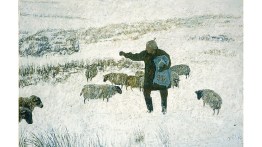
ExhibitionsThis mesmerising retrospective takes up three floors of the City Art Centre, moving in distinct stages from the reedy flanks of the Pentland Hills through fractured half-views of Venice and Scotland and into fresh, twilit forests. Mirrors and windows reflect and refract, rigid faces stare from the shadows, animals flit and bare branches twist. It’s 50 years of painting, and half a century of observing, finding, losing and remembering. Victoria Crowe, born in England but long since adopted by Scotland, is one of our more distinguished painters. She is a respected portraitist but it is her other work that dominates this show, and rightly so. We see the trajectories of an inner life expressed through these paintings.
Cheesy feat | 23 May 2019
CinemaThere have been claims that Rocketman, the biopic of Elton John, is ‘cheesy’ and ‘clichéd’, but, in truth, you do want these films to be a bit cheesy and clichéd. (In Bohemian Rhapsody if a record executive had never cried: ‘Nobody wants to listen to a six-minute opera song with words like “Galileo” in it!’ I’d have walked away in a huff.) So I’m fine with that — would you want a musical biopic without a montage of concert dates and newspaper headlines whirling past? — plus this is more than just that, as it’s also a fun, visually dazzling, extravagantly camp romp. And while the script is, generally, platitudinous, it still has its moments.

Oh, I do like to be beside the seaside
OperaIt was bucketing it down in Venice, yet the beach was heaving. Families, lovebirds, warring kids, a yappy mutt, all strewn across a sandy expanse, basking on beach towels. Balls were bounced, crosswords filled, timelines scrolled. Out of this idleness, songs would bubble up, light billowy airs — speaking now to suncream mundanities, now to geological anxieties — whisked up to our ears as if on a cooling breeze. We were in the Lithuanian Pavilion inside a dilapidated former military storehouse in a corner of north Venice, being given a god’s-eye view on an extraordinary new opera, Sun & Sea (Marina), by a Lithuanian trio: composer Lina Lapelyte, director Rugile Barzdziukaite, and writer Vaiva Grainyte.
Life’s a Beach
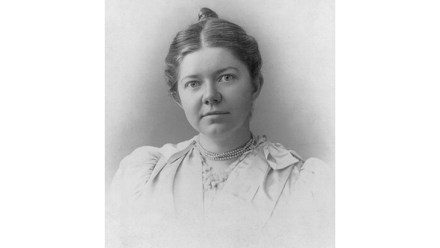
MusicAt the Wigmore Hall last Friday, the Takacs String Quartet and Garrick Ohlsson played a piano quintet that was once revered as a masterpiece but then fell out of fashion and wasn’t heard for decades. It’s by Amy Beach, a name which always makes me smile because it looks so incongruous underneath her photograph. ‘Amy Beach’ sounds like an old hippie who sells ethnic tapestries and hogs the limelight at her women-only Seattle book club. But the photos show a Bostonian society hostess straight out of Henry James: unsmiling, with eyes peeled for a social climber who picks up the wrong knife at dinner. The 21st-century musical establishment portrays Beach (1867–1944) as a prisoner of social convention.

Blond ambition | 23 May 2019
TheatreThe opening of Jonathan Maitland’s new play about Boris purports to be based on real events. Just before the referendum, the Tory maverick invited some chums over to help him decide whether to opt for Leave or Remain. Mrs Johnson was present along with Michael and Sarah Gove and the Evening Standard’s owner, Evgeny Lebedev. For a bit of fun, the writer adds spectral appearances from three ex-prime ministers, Blair, Thatcher and Churchill. This is amusing at first but it slows the play down because the fantasy figures can’t affect the real-life action. There are dazzling performances here. Tim Wallers plays Evgeny as a name-dropping simpleton with naked ankles and an ultra-camp gait. Wonderful.

The odd couple | 23 May 2019
MusicMany is the pop star who has craved gravitas. Only Sting, however, has pursued it by covering John Dowland on an album on which he played the lute. Only Sting has released an album of winter-themed madrigals. Only Sting has written a musical about the closing of the shipyards in Wallsend. He’s the rare pop star who could, should he wish, have a pop at Slavoj Zizek for being just a bit too populist and crowdpleasing. All of which makes his current activities — an album and a tour with Shaggy, the reggae star who’s the reduced-for-quick-sale ready meal of the genre, and a man who is to gravitas as Chris Grayling is to competence — rather astonishing.

By George
Radio and podcastsAt last a podcast that takes the medium to its limit, created by someone who loves listening, understands how it can take the imagination to places visual images alone cannot, and wants to make use of this, not just for fun but with real intent. Have You Heard George’s Podcast? was last week awarded UK Podcast of the Year, and rightly so. I’ve never heard anything quite like it. At times George’s playfulness and gift for exploring the full meaning of the words he uses reminded me of early Tom Stoppard; other episodes were more like a Radio 1Xtra documentary about life on the street or the rise of drill. Each of the eight episodes tackles different themes, from the riots of 2011 to the Grenfell fire via an ideas war inside George’s head.

Get your kit off
TelevisionAfter its new costume drama You Go, Girl! (Sundays) about how amazing, empowered and better-than-men women are, especially if they are lesbians, the BBC ran its first ever Nike ad. At least that’s what I thought initially: rap music, moody shots of athletes, very high production values. Then I saw they were all grim-faced women and the word ‘RISE’ in flames and I thought: ‘Big new drama series? About girls who’ve been sucked into this very strict Christian cult, a bit like the Handmaid’s Tale, maybe?’ Then I noticed they were all wearing football kit and kicking balls around, and went back to my original Nike idea. Finally came the big reveal. It said: ‘#CHANGE THE GAME. FIFA WOMEN’S WORLD CUP 2019.
16 May 2019
Double vision | 16 May 2019
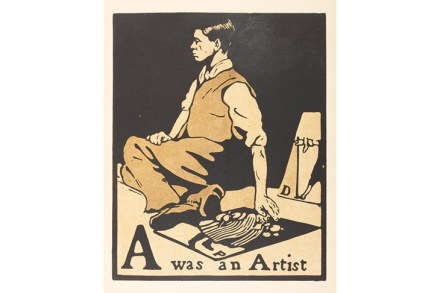
ExhibitionsThe best double acts — Laurel and Hardy, Gilbert & George, Rodgers and Hart — are often made up of two quite different personalities. So it was with the painters William Nicholson and James Pryde, who worked together under the names of J. & W. Beggarstaff. Their similarities and dissimilarities are the subject of a highly entertaining exhibition at the Fitzwilliam Museum, Cambridge. Nicholson (1872–1949) and Pryde (1866–1941) are sometimes dubbed the ‘Beggarstaff brothers’. They weren’t really siblings, but they were brothers-in-law. At the age of 21, in 1893, Nicholson eloped to Ruislip with Pryde’s sister Mabel.
Ghost writer
Arts featureEast Anglia, the rump of the British Isles, has inspired a disproportionate number of writers: Robert Macfarlane, Daisy Johnson, Mark Cocker, Sarah Perry, to name but a few. Towering over them all is the ghost of a soft-spoken man with a shoe-brush moustache and sardonic eyes. Eighteen years after his death, W.G. Sebald’s reputation only grows. Few writers have inspired the commemoration industry Sebald has given life to while still so recently claimed by the past tense.
Books and Arts – 16 May 2019
Weed thriller
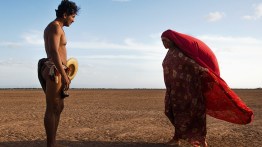
CinemaYou don’t come across too many films from Colombia, but every few years one wriggles its way through the festival circuit and on to an arthouse screen, fingers crossed near you. Any film that survives that Darwinian journey will be robustly fit for purpose. Such is Birds of Passage (original title: Pajaros de verano), which with startling freshness tells a tale of gruelling familiarity. There tend to be two Colombian subjects that work for distributors: the international drugs trade or, for more rarefied tastes, indigenous tribes. What are the chances of encountering a film that fuses both? Slim, you’d suppose. And yet this narco-ethnographic thriller is inspired, we are advised, by events that took place between 1960 and 1980 in the Guajira region of northern Colombia.
Yesterday once more
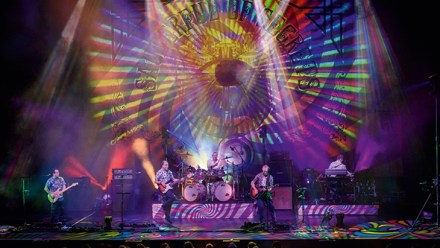
MusicBeing old is big business in live music nowadays, in a way it wasn’t even 25 years ago. When Take That were still a boy band in the early 1990s, as opposed to a man band, the idea that in middle age they would be one of the most successful live groups in Britain would have been laughable. Yet here they are, playing eight nights at the O2 Arena, making it a total of 34 shows they have played there since it opened, more than any other act. Just as fanciful would have been the idea that Pink Floyd’s drummer could put together a group featuring Gary Kemp of Spandau Ballet, and tour the world performing only songs Pink Floyd recorded before 1973’s The Dark Side of the Moon, the ones his former bandmates David Gilmour and Roger Waters don’t play. Yet here they are, too.
Thinking inside the box | 16 May 2019
TelevisionThese days, a common way of introducing radio news items is with the words ‘How worried should we be about…?’ The trouble with this formula is not just the strange notion that anxiety has apparently become some sort of moral duty — even a badge of honour. It’s also that we generally know what the answer will be: we should be very worried indeed. Now, in Russell T. Davies’s Years and Years (BBC1, Tuesday), the same formula serves as the premise for a television drama. The first episode began by introducing us to three adult siblings, scrupulously chosen to represent modern Britain — at least as seen on TV. (The publicity material duly calls them ‘an ordinary British family’.

All about that bass
MusicAre Beethoven’s 'Diabelli' Variations really ‘the greatest of all piano works’, as Alfred Brendel claims? It’s hardly what you would call received wisdom. Even Stephen Kovacevich, who has given us two visionary recordings of the Diabellis, thinks some of the 33 variations are ‘boring’. I don’t agree, but I can understand why Brendel’s judgment seems odd. When the minor composer-cum-publisher Anton Diabelli sent his jaunty ‘waltz’ — really more of a country dance — to dozens of composers, he was hoping they’d each write one variation.

Labour pains | 16 May 2019
TheatreColour-blind casting is a denial of history. The Young Vic’s all-black version of Death of a Salesman asks us to believe that an ordinary African-American chap living in Brooklyn in 1928 might have owned a Chevrolet, and that a black businessman in the 1940s would consider asking a friend for ten grand to purchase a ranch in Texas. Younger viewers may assume that US society has been racially integrated for nearly a century. Is that the right message? Willy Loman, the duffer at the play’s core, is one of American drama’s least attractive heroes. A preachy, devious, boastful, fawning, angry, narcissistic misery guts, he’s professionally incompetent and morally bankrupt.

Women on top | 16 May 2019
Radio and podcastsOn returning from a brief trip to Istanbul, where inside the mosques women are still very much kept to one side, only allowed to look on from an angle, unable to contemplate the full mystery of the space created within those extraordinary domes, I was intrigued on Sunday to happen upon Heart and Soul (produced by Lindsay Leonard) and to hear a Muslim woman leading the prayers to Allah. She sounded so natural, so intent, her voice modulated and firm, uplifting and authoritative. But how, I wondered, is this possible? Where is this female imam allowed to practise?
#MeToo Medusa
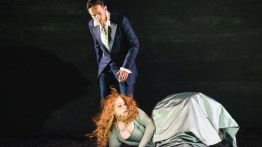
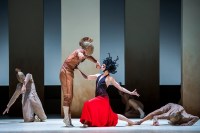
More from ArtsMedusa is the bad hair day from Hades. Sidi Larbi Cherkaoui’s retelling of the Greek myth is frizzy, tangled and splitting at the ends. The premise is promising. This Medusa story is a Perseus prequel: the girl who became a gorgon. The young Medusa (Natalia Osipova) is a priestess at the temple of Athena (Olivia Cowley). Her beauty is legend and the sea god Poseidon (Ryoichi Hirano) is keen to get his webs on her. Poseidon rapes Medusa and angers the virgin goddess Athena. But it is Medusa, not Poseidon, who is punished. Athena makes Medusa a monster. Then along comes Perseus (Matthew Ball), no hero he, to cut Medusa a savage short back and sides.
14 May 2019
The Times has a bad Day
The Times prides itself as being the newspaper of record, but today it made an uncharacteristic blunder in its obituary of American actress and singer Doris Day. In the obituary, it featured a reference to the actress’ role in the 1965 film How to Murder Your Wife, saying: 'She starred in a couple of dreadful films, with titles such as How to Murder Your Wife.' Unfortunately, it seems that something went awry in the Times’ research, as Day in fact never appeared in the American satire, which instead features Virna Lisi. Mr Steerpike notes that as well featuring in ‘a couple of dreadful films’, the late Mrs Day can now add to her resumé starring in a couple of dreadful obituaries as well – a glimmering posthumous career.

9 May 2019
The write stuff | 9 May 2019
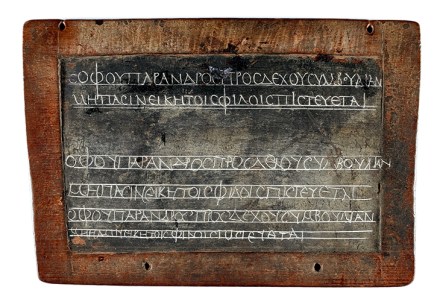
ExhibitionsThe Mesopotamians wrote on clay and the ancient Chinese on ox bones and turtle shells. In Egypt, in about 1,800 BC, someone even found the space to scrawl on a portable sandstone sphinx. Look closely towards the base of the sculpture and you will find a delicate line drawing of an ox head. Remarkably, this picture reveals the origins of the letter ‘A’. At the first stage in its development, the ox was simplified, so that an engraver could express it with just a couple of lines. An Egyptian seal stone shows the animal’s head in abstract form. Next, the shape was flipped 90º, so that by the time the Greeks had adopted the Phoenician system of writing, in the 8th century BC, it was recognisably an ‘A’.

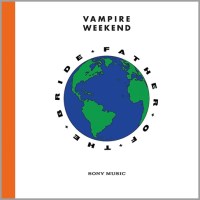
Vampire Weekend: Father of the Bride
More from ArtsGrade: B– One of the things not to like about Vampire Weekend, other than their cloying preppiness, Ezra Koenig’s ingratiating voice, the bizarre cultural appropriation that never gets called out and the Upper West Side archness of the lyrics, is the fact they rarely put more than two decent songs on an album. That’s true right back to their very first: does anyone remember any song other than ‘Oxford Comma’ (their best by a mile) and ‘A-Punk’? This latest is a double album, so, faithfully sticking to the template, you get four decent songs. Much of it, actually, is pleasant in a slightly insipid Paul Simon kinda way. Very little offends, the hideous clunker ‘Sunflower’ aside.

All in the worst possible taste
Television‘Unfunny, boring and utterly unrelenting,’ says the Guardian’s one-star review of Chris Lilley’s new sketch series Lunatics (Netflix). And if that’s not incentive enough, our woke critical chum goes on to declare the series ‘problematic’. That’s a weaselly way of saying ‘this triggered all my snowflake sensitivities’ but in such a way as to make it sound like a loftily objective judgment. In truth, Lunatics is only problematic if a) you have no sense of humour and b) you’d prefer all comedy to be politically correct, inoffensive and utterly devoid of satirical edge. Sometimes, Lunatics is so cruel that it’s almost too painful to watch.
Body and soul | 9 May 2019
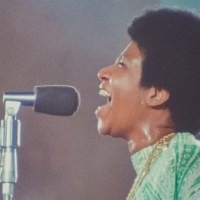
CinemaEach December in Washington DC, the Kennedy Center Honors anoints five performing artists who have contributed to American life. In 2015 one of the inductees was Carole King, to whom Janelle Monáe and James Taylor sang nicely in tribute. Then on came Aretha Franklin in a floor-dragging fur coat. She placed her handbag on the piano and broke into ‘(You Make Me Feel Like) A Natural Woman’. As the Queen of Soul hollered, howled and damn near put a hole in the roof, King went forgivably nuts and Barack Obama wiped away a tear. More than 30 million hits on YouTube confirmed that here, still, was a singer who could reach parts off limits to all others in rock and R&B’s halls of fame. The other time Franklin had that effect was in 1972 with her album Amazing Grace.

Afghanistan’s got talent
Radio and podcastsThe cheering fans, the dramatic Hollywood-style drum rolls, the excitable host all sound just like The X Factor or The Voice. It’s hard to believe that beyond the lights and cameras there’s a huge security operation keeping the singers, TV staff and audience safe. But the Afghan version of the talent show is still under attack from the Taleban. In The Art of Now: Afghan Stars on Radio 4 (produced by Roger Short) we heard from Massood Sanjar, who set up the TV company that produces the programme, and Zahra Elham, this year’s winner, voted to the top spot by the audience, the first woman to win the show in its 14-year history.
Vocal heroes | 9 May 2019
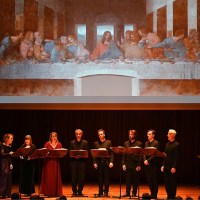
MusicWe’ve all read the article. It does the rounds with the dispiriting regularity of an unwanted dish on a sushi train. Classical concerts are dying and if they are to survive they need to evolve, to innovate, to banish (variously) seating, silence, dress codes (for musicians), dress codes (for audience), programme notes, formal venues… But among so much institutional hand-wringing and professional self-loathing I’d like to take a moment to celebrate one classical tribe getting innovation exactly right: period music groups.