Culture

Culture

The good, the bad and the ugly in books, exhibitions, cinema, TV, dance, music, podcasts and theatre.

Call of duty

Opera

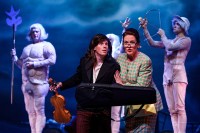
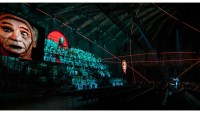
Is it possible to write a feminist opera about Jack the Ripper? Composer Iain Bell thinks it is, and his Jack the Ripper: The Women of Whitechapel tries very, very hard to prove it. But while the result is respectful, topical and agonisingly, paralysingly sincere, it’s also a sheep in wolf’s clothing. You can’t have your victims and kill them too. You have only to look at the opera’s title, bent awkwardly round its central colon, to see the conflict. Front and centre you have Jack the Ripper — a marketing department’s darling, promising Gothic horror and lashings of gore. Following behind (in slightly smaller type) you have his victims, the drab, downtrodden women whose lives and voices the piece hopes, laudably, to restore.

Seeing things

Radio

At its best audio can be a much more visual medium than the screen. Making Art with Frances Morris (produced by Kate Bland), which I caught by chance on Radio 4 last week, gave us insights into the work of the French conceptual artist Sophie Calle that were so vivid it was almost as if we had been to an exhibition of her work. Calle, now 65, is known for her unconventional approach to what art can be. In 1980 she was invited to show one of her first works, The Sleepers, a collection of photographs, in New York. ‘I asked people to give me a few hours of their sleep. To come and sleep in my bed. To let themselves be looked at and photographed,’ is her explanation of the project.

The unpopular populism of the National Portrait Gallery

Nicholas Cullinan, the director of the National Portrait Gallery, says that the success of a gallery should not be judged by its number of visitors. He is defensive because the visitor figures at the NPG have fallen (by nearly 120,000 from 2016-17). Dr Cullinan is right. Anyone who likes going to galleries would always say, ‘The smaller the visitor numbers, the merrier for those who want to see the pictures.’ But what he says now would seem to go against his vision for the gallery’s future. It is currently trying to raise £35.5 million for its new ‘Inspiring People’ project. Launching the appeal in January, Dr Cullinan enthused about how the NPG wants to be ‘the nation’s family album’.

England, their England | 28 March 2019

Exhibitions

All good narrative painting contains an element of allegory, but most artists don’t go looking for it on a Coventry council estate — unless, that is, they happen to come from there. Since starting his Scenes from the Passion series while at the Royal College in the 1990s, George Shaw has been painting the Tile Hill estate where he grew up. In 20 years he has produced 200 images of the same square mile, revisiting the pubs, library and short cut to the shops of his youth, winkling out the Englishness of the place while lamenting the decline of its fabric and post-war community spirit. Tile Hill is Shaw’s Cookham, imbued by this former Catholic schoolboy with an English mysticism more covert and far less cosy than Spencer’s.

There’s something about Mary

Arts feature

I think I probably qualify as the oldest fashion editor in the world, because in spite of my advanced age I am still writing about clothes (in the Oldie). This gives me one USP: it means that I was actually around — even wearing them myself — when the revolutionary fashion ideas that are now the stuff of museum exhibitions were being invented. Next month the Mary Quant exhibition opens at the V&A, and sure enough I have been asked to talk about those giddy times for a video that will be shown at the museum. I was 16 in the autumn of 1955 when Quant’s shop, Bazaar, first shocked the passers-by in the King’s Road, Chelsea, with its startling window displays. One of these featured a black-and-white gingham skirt.

A circus film with no circus

Cinema

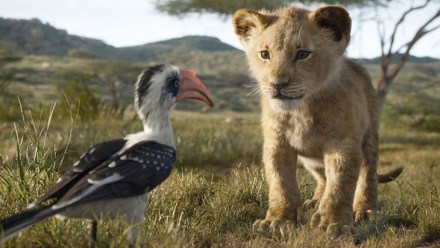
Dumbo is an elephant we can’t forget. More than 70 years since Disney’s 1941 film, the big-eared baby is still the most famous pachyderm on the planet. Director Tim Burton has dared to enter the ring with this iconic grey beast and remake the Disney classic not as a cartoon, but as live action. In his 2019 Dumbo, there are two competing circuses — a traditional, down-on-its-luck, tented American circus run by ringmaster Max Medici (Danny DeVito) that thunders across America by rail and the huge, sinister theme park Dreamland, run by the avaricious, unprincipled and flamboyant V. A. Vandevere (Michael Keaton), whose character bears a passing resemblance to Trump, not least the endlessly played with and thinning strawberry-blonde hair.

Sublime salvage

More from Arts

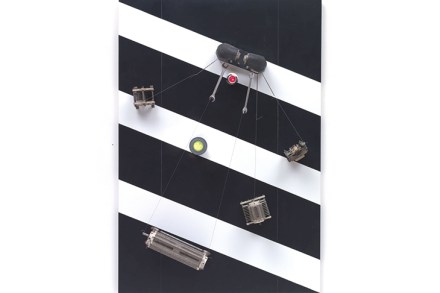
There was a moment more than 20 years ago when Bankside Power Station was derelict but its transformation into Tate Modern had not yet begun. I remember thinking, on a visit to the site, how beautiful and impressive the huge rusting generators looked — like enormous real-life sculptures by Anthony Caro. Nothing that has since been exhibited in what came to be called the Turbine Hall has looked quite so strong. A quarter of a century later, the artist Mike Nelson has reversed the process — not at Tate Modern, but at Tate Britain where he has filled the Duveen Galleries with massive pieces of redundant machinery: cement mixers, engine blocks, metal filing cabinets, drill bits, racks, scaffolding and pallets of rough, functional wood.

The secret of their success

Television

Which of the Beatles would you most like to have been? Not either of the dead ones, presumably. Nor the one continually derided for his alleged lack of talent. Definitely not the embarrassing, gurning, two-thumbs-up uncool one… Anyway, it’s a trick question. The correct answer, at least it is for me after watching The Beatles: Made on Merseyside (BBC4, Friday), is Pete Best — the drummer who got ousted just before the band got big because he was too good-looking, too quiet and, some say, because Brian Epstein couldn’t handle his mum’s pushiness. Best, I’d always imagined, was the unluckiest man in history.

Forza majeure

Opera

To stage Verdi’s Il Trovatore, they say, is easy: you just need the four greatest singers in the world. The Royal Opera has applied this principle to La forza del destino. Jonas Kaufmann sings Alvaro, Anna Netrebko is his beloved Leonora, and Ludovic Tézier her brother Carlo, with the mighty Ferruccio Furlanetto completing the set as the priest Padre Guardiano. The results have been pretty much as you might expect, ranging from the now-traditional speculation about whether Kaufmann would actually show up (he did) to reports of tickets changing hands privately for £5,000 apiece. And yes, it was extraordinary: a four-hour rush of some of the most glorious singing anyone born after 1970 will probably ever have heard in one place.

Toxic waste

Theatre

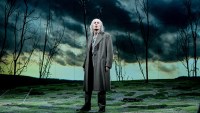
Bruce Norris is a firefighter among dramatists. He runs towards danger while others sprint in the other direction. His Pulitzer-winning hit Clybourne Park studied ethnic bigotry among American yuppies and it culminated in a gruesomely funny scene in which smug liberals exchange racist jokes in public. The play was morally complex, dramatically satisfying and an absolute hoot to watch. His new show, Downstate, co-commissioned by the NT and Steppenwolf Theatre in Chicago, takes on a far crunchier topic than racism. Child sex abuse. We’re in a residential home occupied by a quartet of tagged offenders monitored by a sharp-tongued probation officer. We meet the molesters. Fred was once a music teacher who thought it was OK to seduce the boys perched on his piano stool.

Foreign exchange | 28 March 2019

Radio

As the ravens circle around Broadcasting House in London’s West End, presaging difficult times ahead for BBC Radio, with less money to play with at a time of increased competition from its commercial rivals, a very different kind of listening experience was on offer last week in an upstairs room above a café in Canterbury. The UK International Radio Drama Festival is in its fifth year, gathering dramas from across Europe and beyond for a week of intense and unusual audio, transmitted in 18 different languages. Thirty or so of us sat around as the plays were broadcast through a number of old-fashioned radio sets, listening to monologues, musicals, character studies, experimental sound art in Czech, German, Farsi, Spanish, Slovene, Serbian, Romanian, Russian and more.

Art institutions should stop virtue-signalling about funding and focus on what they’re showing

The ethics of the private patronage of arts institutions has never been straightforward issue. But as the preoccupation with transparency and corporate responsibility has grown, wealthy benefactors can nowadays turn from pillars of respectable society to moral pariahs in the blink of an eye. Such is the fate of the fabulously rich Sackler family, major philanthropists with fingers in arts institutions across the UK, in the face of mounting criticism over its close links to Purdue Pharma, the family-owned US pharmaceuticals giant and maker of the opioid painkiller OxyContin – the drug now the focus of outrage over the opioid epidemic that has made addicts of thousands in the US over the last two decades.

Playing dead | 21 March 2019

Arts feature

In March 1968, Frank Zappa released an album called We’re Only in it for the Money. Presumably, then, Zappa — who died a little over a quarter of a century ago — would be delighted to discover that he begins his latest tour next month, with a series of shows in the US followed by a visit to the UK in May, including a show at the Palladium in London. Zappa will be appearing in holographic form, using footage filmed in a Los Angeles rehearsal space in 1974, his disembodied voice backed by a live band. The show is to be made up of ‘footage that no one has ever seen, as it has been locked in the vaults since the early 70s,’ says Jeff Pezzuti of Eyellusion, the company that produced the hologram.

The shock of the nude

Exhibitions

Early in the 16th century, Fra Bartolomeo painted an altarpiece of St Sebastian for the church of San Marco in Florence. Though stuck full of arrows, the martyr was, according to Vasari, distinctly good-looking in this picture: ‘sweet in countenance, and likewise executed with corresponding beauty of person’. By and by the friars of San Marco discovered through the confessional that this image was giving rise to ‘light and evil thoughts’ among women in the congregation. It was removed and eventually sold to the King of France (who was presumably less bothered by that sort of thing). So even during the heyday of Michelangelo and Raphael depictions of human bodies without any clothes were not necessarily all about art.

Double trouble | 21 March 2019

Cinema

Us is a second feature from Jordan Peele after his marvellous debut Get Out, which was more brilliantly satirical than scary and may well be the best ever horror film for non-horror people (i.e. me). Us has also garnered five stars everywhere, as well as, at the time of writing, a 100 per cent rating on the aggregate review site Rotten Tomatoes, so I’m out of step, I know, but I found it disappointing. The second act is essentially a zombie-style, home-invasion splatterfest that goes on and on and on. Allusions that you think will pay off don’t. It’s ultimately baffling and although I’m fine with baffling as a rule, if I’m going to sit through a zombie-style splatterfest it would have to be for a good reason. The opening is terrific.

Resistance is futile

Opera

You can see Graham Vick’s work at La Scala or the New York Met. But if you want to be directed by him, you need to go to Birmingham. The Tower Ballroom is a sticky-floored former nightspot out by Edgbaston Reservoir, artfully trashed by Block9, the people behind Banksy’s Dismaland. You crunch across the tarmac, pass the humanoid rats and the drug dealer with his prostitute cards (‘Sonyetka: Exotic Dancing – Russian Lessons’) and enter the crowd. Suddenly Vick’s on you: barking under his breath that you need to move and, should you fail to comply, shoving you firmly out of the way. Seconds later, a double bed careens through, or the space fills with knife-wielding brides in blood-smeared dresses.

Horror show | 21 March 2019

Features

OK, Archers fans out there. All five million of you. Ask yourselves a straightforward question. Why on earth do you — do we — listen to this show full of completely awful people? Why do we subject ourselves to this 13 minutes of daily torment, not to mention the Sunday omnibus, wallowing in the lives of fictitious characters who, let’s be ruthlessly honest, are almost universally loathsome? Don’t get me wrong. I love The Archers. I have lain in bed sweating with a fever in Mogadishu, glued to the comings and goings in Ambridge. In 2005, as al Qaeda’s bearded bombers did their worst in Baghdad, I hunkered down in my trailer hooked on Ed and Will’s fight over Emma.

Black magic | 21 March 2019

Radio

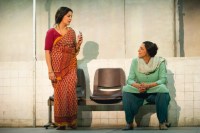
‘You’re thinking these girls all wrong,’ Miss Mai tells Enid in Winsome Pinnock’s play Leave Taking, adapted from the recent Bush Theatre revival for Radio 3 (and produced by Pauline Harris). ‘They don’t know where they come from.’ Miss Mai continues: ‘These girls got Caribbean souls,’ but they’re living in south London. Viv and Del have been taken to see Miss Mai, known locally as an obeah woman, by their mother Enid for a palm reading, a prediction, or perhaps a casting out of demons. Del has got into bad company, has lost her job at the burger bar for being cheeky, and fears she must be pregnant. Viv was the studious one, her mother’s great hope, but is now beginning to wonder what Shakespeare has to say to her.

Mummy porn

Television

What can parents do about the avalanche of pornography available to their children on tablet, phone and laptop? This question was the starting point for a documentary series that began on Wednesday — and the answer proved unexpected. Having gathered five mothers together and shown them a hair-raising selection of online filth, the programme blithely declared that the best way for these women to ‘make a change’ was ‘by making their own mum-approved porn film’, which they’d then screen for their families and friends. If this premise struck anyone involved in Mums Make Porn (Channel 4, obviously) as at all questionable, they didn’t mention it.

Great expectations | 21 March 2019

Theatre

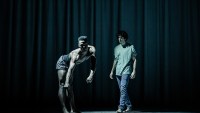
No menace, no Venice. This new production of Pinter’s Betrayal is set on a bare stage with scant regard for the play’s physical requirements. The script specifies a handful of furnished locations: a pub, a study, a flat, a hotel bedroom, a living room. But instead we get an off-white void where three youngish actors prowl in circles, ogling each other. This is Pinter’s finest work, a tense romantic tragedy with flashes of comic fireworks, and it differs from the rest of his output by revealing its themes directly to the audience, by delivering an intelligible plot full of suspense and surprises, by focusing relentlessly on the human duel at its core, and by never relapsing into obscurities or screeds of reminiscence spoken by dotty vagabonds.

Dream on | 14 March 2019

Exhibitions

Art movements come and go but surrealism, in one form or another, has always been with us. Centuries before Freud’s scientific observation that the stuff of dreams will out, artists were painting it. The English have never been much cop at surrealism — too buttoned up; the Celts are better. The Scottish painters Alan Davie and John Bellany, jointly celebrated in Newport Street Gallery’s latest show, Cradle of Magic, were both surrealists in different ways. Both attended Edinburgh College of Art — Davie in the late 1930s, Bellany in the early 1960s — and both came out fighting in a punchy style of painting combining expressionistic brushwork with strong colour.

Gaming isn’t art, whatever fans might say

I was hooked once too. I also used to gun down civilians, do battle with the LAPD and win the Premier League before I’d even had my breakfast, a small pyjamed boy sat breathless in the front room, smarting behind the eyes from three hours of close-range televisual retina damage. I knew it was killing me and robbing me of my youth – which is not even to mention the drain it was on my one-pound-a-week pocket money – but I couldn’t stop. The power of my addiction to video gaming was too strong. I dabbled in most things, but what really did it for me was a street drug named Nightfire, a first-person shooter game that allowed me to become a pixelated James Bond for as long as the disk whirred inside my Playstation 2.

Secrets and lies | 14 March 2019

Television

Halfway through the first part of Channel 4’s extraordinary documentary Leaving Neverland (Thursdays), I flicked through the comments on social media in order to gauge the global reaction. Surely, I thought, Michael Jackson’s reputation will never recover from these bombshell revelations. If you sat, squirming, though Dan Reed’s excruciatingly prurient documentary you’ll know what I mean. Lots of those who didn’t have been justifying their decision to ignore it with excuses like ‘Yeah, but we knew this already. Michael Jackson was a paedo. It’s hardly news, is it?’ But this strikes me as glib and dishonest.