Culture

Culture

The good, the bad and the ugly in books, exhibitions, cinema, TV, dance, music, podcasts and theatre.

The end of the beginning | 17 January 2019

Theatre

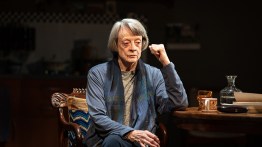
One masterpiece, one dud, and one interesting rediscovery. That’s Pinter Five. Victoria Station is a hilarious sketch which might have been turned into TV gold by the Pythons or the Two Ronnies. A radio controller needs a cabbie to collect a fare from Victoria Station, but the only driver available is a charming lunatic whose car is idling near a ‘dark park’. The cabbie already has a passenger on board, who may be a murder victim, and although he claims not to know Victoria Station he insists that he’s the best man for the job. This dotty piece of verbal slapstick feels a bit dated because cab firms no longer rely on radios.

Target practice | 17 January 2019

Television

As the Allies advanced towards Germany in September 1944, their supplies were brought all the way from western Normandy in a constant shuttle convoy known as the Red Ball Express. If you were making a realistic movie about this, three quarters of the truck drivers would be played by black actors, because that’s how it was in real life. Similar rules would have to apply to any remake of Zulu or Zulu Dawn. It is an awkward but inescapable historical fact that there was no diversity whatsoever among Cetewayo’s Impis: they were all, resolutely, from the same African tribe.

Peak beard

Cinema

Mary Queen of Scots is a historical costume drama that, unlike The Favourite, does not breathe new life into the genre, or any kind of life, even of the old accustomed sort. It is lifeless, in other words, and quite the slog, with jerky pacing, such an abundance of bearded men you lose track of which bearded man is which, and it reduces two of history’s most fascinating women to not much of anything. However, on the plus side, the scenery is ravishing, the two leads (Saoirse Ronan as Mary and Margot Robbie as Elizabeth I) are better than the film probably deserves, and the hair and make-up are cheeringly insane. By the end, Elizabeth most put me in mind of Ronald McDonald.

Let’s hear it for the girls

Radio

Whether by accident or design, Zoë Ball took over the coveted early-morning slot on Radio 2 this week just as Radio 4 launched another of its Riot Girls series, celebrating ‘extraordinary’ women writers, those who have overturned convention, risen up against the status quo, proved themselves to be just as capable as their male oppressors (if not more so). Ball launched herself on to the airwaves on Monday morning at a pace it was hard to keep up with when it was still dark outside and the house had not yet warmed up. Her first track, that key statement of how she intends to reshape the breakfast show, give it a woman’s own makeover, was of course from Aretha Franklin. It just had to be. And the track — ‘Respect’.

On Nobel Prize winners and Mastermind losers

Columns

I once worked my way through two whole books of IQ tests devised by Hans Eysenck and by the time I had finished I was much cleverer than that self-publicising ass Einstein, according to the helpful chart, and quite possibly the cleverest person ever to have walked on the face of the earth. So I came to two conclusions. First, that — as I had long suspected — I was indeed the clever-est person ever to walk the earth and it was pleasant to have this suspicion of mine validated. And second, that one can learn to excel at IQ tests, despite the insistence from their promulgators that they are pristine and unrelated to culture or education: my score had risen by about 25 per cent by the time I threw the books away.

Big in Japan

Arts feature

An early morning in late November in the peaceful glades that surround an ancient temple complex. A Shinto priest in sombre silks slips through a sliding door; a maple leaf catches the breeze. Suddenly, the silence is broken by the crunching thwack as two 400lb slabs of prime meat collide. It is the 15th and final day of one of Japan’s six annual sumo tournaments: the Kyushu Basho, held every autumn in the balmy southern city of Fukuoka. A group of visiting wrestlers have begun their pre-breakfast workout in one of the outbuildings of Torikai Hachiman-gu, preparing for the afternoon bouts at the arena three miles away.

Thinking outside the box | 10 January 2019

Theatre

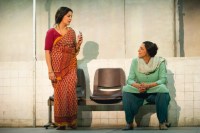
Sweat, set in the Pennsylvanian rust belt, looks at a blue-collar community threatened by a factory closure. The script uses the flashback device. Scene One informs us that two lads were found guilty of doing a Bad Thing eight years ago. What Bad Thing? The author won’t tell us because the play needs suspense but the revelation is delayed so long that our patience is tested to the limit. The flaccid writing doesn’t help. Scene Two lasts 30 minutes and introduces us to the main characters, who visit the same bar every evening to get hammered and scream at each other. The only dramatic point in this lengthy scene is the revelation that two lovers had a big row about a fish tank.

Beat it

Television

Here’s a tricky quiz question for you. What word completes this sentence from a BBC4 documentary on Friday: ‘The world as we know it was created by the…’? The answer, bizarrely enough, is ‘backbeat’ — because the documentary in question was On Drums… Stewart Copeland!, in which the former Police percussionist took a fiercely drum-centric view of well, more or less everything. This was a programme, for example, that compared Elvin Jones’s stick work for John Coltrane to Moses’s parting of the Red Sea; that attributed the Beatles’ success largely to Ringo; and that put forward Dee Dee Chandler as one of the key figures of 20th-century global history.

Points of view

Radio

I suspect that whether or not you admire Neil MacGregor’s latest series for Radio 4, As Others See Us (produced by Paul Kobrak and Tom Alban), will depend on how you feel about Brexit. To my ears, it was shamelessly in favour of a Britain that stays in Europe and remains committed to its global role as the voice of moderation, a disseminator of liberal values, unusual in its ability to draw in other influences while retaining a strong sense of its own identity — and therefore to be cheered and recommended as essential listening. MacGregor is doing everything within his power to show us what we need to hear, before it’s too late, in these five intense and impassioned programmes.

Love match

Cinema

You mess with Laurel and Hardy at your peril. Their fan base is essentially the entire world. Samuel Beckett adored them: many think they inspired Waiting For Godot. Eric Morecambe’s reluctance to appear in bed with Ernie Wise melted when he was reminded that Stan and Ollie had used the same conceit. In Poland the duo are known as Flip i Flap, in Germany as Dick und Doof. I once attended a New Year’s Eve party at which the two dozen children present (toddlers to teenagers) were parked in front of a screen with a stack of Laurel and Hardy DVDs — not one of them left the room all evening. You have to ask yourself: could you honestly be friends with someone who didn’t love Laurel and Hardy? Which means that Stan & Ollie has got us nervous.

A tribute to Woolworths, the naff hero of the high street

Won’t somebody think of the Woolwennials this weekend? Precisely one decade has passed since Britain lost the true hero of the high street. And for those aged over 24, whose childhood weekends were wasted in its labyrinth of kitsch, this Woolworths anniversary stirs up communal grief. So spare a knowing nod to fellow rustlers of the DVD bargain-bucket, a reassuring squeeze to the hand clutching the cola-bottle scooper, and a sympathetic cheek-stroke to the vacant-eyed browser of discounted superhero pyjamas. Together, somehow, we’ll muddle on. Nostalgia, like love, is blind – and the world is filled with hackneyed wasn’t-it-wonderful articles of bygone Britain. And, yes, Woolworth worship is the very stuff of satire.

The write stuff | 3 January 2019

Arts feature

Given their track record, you might think that Dick Clement and Ian La Frenais would be spared the struggles that lesser screenwriters go through to see their writing on screen. But this, it turns out, would be naive. Clement and La Frenais may have written some of the best-loved programmes in British television history: Auf Wiedersehen, Pet; Porridge; The Likely Lads; Whatever Happened to the Likely Lads? Their CV may contain the huge hit film The Commitments — as well as more recently acclaimed TV dramas like The Rotters’ Club and Archangel. Yet, when I meet Clement on a solo visit to London, the two most striking things about him are how driven he remains at 81, and how driven he apparently needs to be.

Comic genius

Exhibitions

For the hundredth, possibly the thousandth, time, Lucy van Pelt offers to hold the football for Charlie Brown so he can kick it. She cajoles him with the innocence of her eyes. He falls for it; he falls for it every time. Lucy, as she always does, whips the ball away. Charlie loops into the air and crashes to the ground. ‘What you have learned here today, Charlie Brown,’ she explains, ‘will be of immeasurable value to you for many years to come.’ Lucy is a cynic, a sadist, a huckster, a realist. Nevertheless, she would be right but for the fact that nothing is ever of ‘immeasurable value’ to Charlie Brown. He is too battered by life to be an idealist but he clings to hope, to the possibility that there is justice somewhere in the cosmos.

Save the rabbits from the predatory BBC

Columns

For a while, as a 13-year-old, I was obsessed with rabbits — the consequence of having read Watership Down by Richard Adams. I tried to share my enthusiasm for the book with my parents, but my father told me that he thought the scenario depicted by Adams was ‘improbable’. However, they did consent to take me to that indeterminate, shifting area where the novel is set, with its back legs in Berkshire and its front paws in the last remaining unspoilt quadrant of Hampshire. We were on the way home from a holiday at some grim Methodist guest house in the West Country and were undoubtedly tired from the drive. But still they followed me around with my map and tried to look excited when I suddenly proclaimed: ‘Look, that’s the combe where Bigwig met the fox!

Chilling out

More from Arts

The Royal Ballet’s Les Patineurs is January as you would wish it. No slush, no new-year sales, no streaming chest colds. Winter, as imagined by Frederick Ashton, is an eternal ice rink lit by Chinese lanterns hung from icing-sugar branches. Ashton’s choreography is ingenious. His dancers really do seem to glide, the boards of the stage to freeze. You believe completely that they are on skates, not slippers. The men wear sheepskin jackets, the women bonnets and polka-dot tulle. Sleigh bells ring and fresh flakes fall. The ensemble slip, slide and dance a skating conga. Fumi Kaneko and William Bracewell are a Torvill-and-Dean dream in the pas de deux. Kaneko is light, flowing, sweetly flustered as her partner tips her upside-down.

All in the mind | 3 January 2019

Theatre

The Tell-Tale Heart is based on a teeny-weeny short story by Edgar Allan Poe. The full text appears in the programme notes. Here’s the gist. A madman kills his landlord and is haunted by a ghostly heartbeat that prompts him to confess his crime. Anthony Neilson’s adaptation turns both characters into women and gives away the ending in the opening scene. An English writer lodging with a young Irish landlady is accused of murdering her by a detective. At a stroke, all uncertainty is effaced. The only remaining mystery is why Neilson can’t understand his chosen genre. He tries to interest us in the causes of the murder, and we watch the developing relationship between landlady and lodger.

Out of control | 3 January 2019

Radio

You may have noticed the flood of podcasts that’s been pouring out of the BBC since the launch of its BBC Sounds app. This is supposed to give us easier access to the programme archive but actually has been an excuse to show off the podcasts now made by the corporation, from the specially made How to be a Muslim Woman to Turbulence, a clever series of linked short stories by David Szalay, which was commissioned by Radio 4 and released as a podcast at the same time as being broadcast on the network. Podcasts are not bound by time and the demands of a schedule. They can last for ten, 20, 50, 100 minutes, taking as long as the story, the conversation, the facts require.

Books Podcast: Ed Vulliamy – how music helps me report from the frontline

In this week’s books podcast we’re going to the wars. My guest is Ed Vulliamy, the veteran war correspondent who has written a fascinating memoir called When Words Fail: A Life With Music, War and Peace. In it, Ed talks about how his lifelong love of music — he saw Hendrix at the Isle of Wight — has threaded through his terrifying adventures in conflict zones from Bosnia to Iraq to the Mexican/American border; and of how music really can salve the soul when everything else is broken. He describes his own terrifying experiences with PTSD, snagging the last interview with BB King, and how playing “Kashmir” over and over again while roaring unembedded around a battle-zone led him to a friendship with Led Zeppelin’s Robert Plant.

The Green Room podcast: Auctions, sculptures, and horse flesh – the best art exhibitions in 2018

This week, I’m casting the pod with a congeries of crack art critics from The New Criterion: James Panero, Benjamin Riley and Andrew Shea. In the background, instead of sleigh bells and carol singers, you can dimly hear the smashing of plates and the roar of laughter as The New Criterion’s Christmas party gets under way. Meanwhile, the Three Scrooges of art criticism, warmed by the heat of single microphone, say ‘Bah! Humbug!’ to critical fashion. Like all critics, these three have their convictions, but they can plead extenuating circumstances. For this was a vintage year for great drawing and painting. 2018 began with two excellent shows at the Met in New York, Michelangelo’s drawings and the first Delacroix exhibition in decades.

Birth of a masterpiece

Arts feature

In the early 1370s an elderly Scandinavian woman living in Rome had a vision of the Nativity. Her name was Birgitta Birgersdotter, and she was later venerated as St Bridget of Sweden. In her account of the experience, transcribed by her confessor, she described herself as an eye witness. Her narrative began: ‘When I was present by the manger of the Lord in Bethlehem…’ Around a century later, Piero della Francesca (c.1412–92) used Bridget’s vision — or parts of it — as a starting point for a painting. This picture, now in the National Gallery, is one of the best-loved depictions of this immensely popular subject in the history of art. In some respects, Piero followed Bridget’s visionary account closely.

Get your skates on

Exhibitions

In landscape terms, the Fens don’t have much going for them. What you can say for them, though, is that they’re flat — a selling point for lovers of flat racing. This aspect was not lost on James I when, while out hunting in 1605, he came across the village of Newmarket, and 60 years later his grandson Charles II, who inherited the Stuart love of the sport of kings, would build a palace and stables in the Suffolk village. Today the remains of Palace House and the King’s Yard are home to the National Heritage Centre for Horseracing & Sporting Art, which houses a world-class collection of sporting art by Stubbs, Landseer, Munnings and Skeaping. But its latest exhibition focuses on a sport with a more surprising Stuart connection — skating.

The empress of art

Arts feature

Somewhere in the bowels of the Tehran Museum of Contemporary Art is a portrait from a lost world. Its subject is a beautiful young woman: Her Imperial Majesty, Empress Farah Pahlavi of Iran. The condition of the work, however, a luminous print by Andy Warhol from 1977, is so bad that it could be a metaphor for Iran itself. Fundamentalist vandals have slashed at it with knives. The Empress — forced into exile when the Iranian Revolution overthrew her husband, the Shah, two years after the portrait was completed — discovered this upsetting news while watching French TV in her Paris apartment. ‘Seeing that, I said, “They are stupid”,’ she tells me. ‘Instead of tearing it they could have sold it!’ One day, she hopes to see it on display again.

Renaissance man | 13 December 2018

Arts feature

The first thing Gary Kemp bought when Spandau Ballet started making money was a chair. He’s very proud of that chair. He talks about his chair in tones midway between one of Monty Python’s four Yorkshiremen and Nicholas Serota. ‘I wasn’t making any money until “True” was successful, in 1983,’ he says. ‘The first thing I really bought was a William Morris chair. What the fuck is a 22-year-old boy living in a council house with his mum and dad doing going out and buying a William Morris chair?’ It was the first chair anyone in the Kemp family had ever owned outright, he says. ‘Everything in our house was on HP, apart from the cat. It’s very different to the old Alan Clark thing. We were handed down no furniture.