Vladimir putin

The international criminal justice system was prejudiced from the start

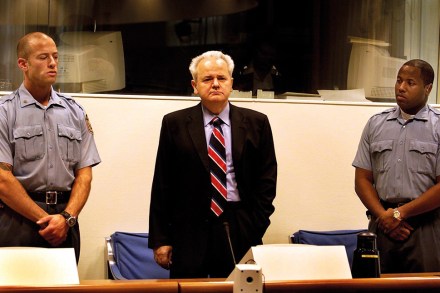
Three generations ago, Britain and the United States joined forces to propose the establishment of a revamped international rules-based system to remake the world. This was initially articulated in a document that came to be known as the Atlantic Charter, signed in August 1941. Other countries, including the Soviet Union, were persuaded to join the effort, part of a grouping that came to be known as the United Nations. The new rules would address trade and other economic matters, decolonisation, war and the fundamental rights of human beings. In the summer of 1945, the Statute of the Nuremberg Tribunal was drafted, reflecting agreement on a list of international crimes and the notion of individual criminal liability, up to the very highest levels of public office.

Trump makes good on deportation promise

From our US edition

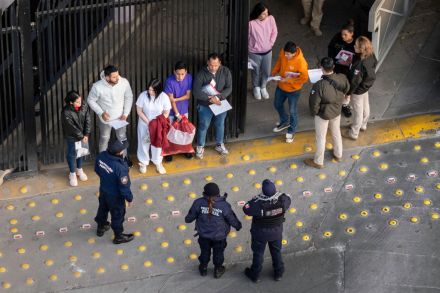
Days into his presidency, Donald Trump is delivering on one of the campaign promises that no doubt led to his re-election.“Deportation flights have begun,” Trump’s press secretary, Karoline Leavitt, wrote on X, along with photos of illegal migrants handcuffed and boarding military planes. “President Trump is sending a strong and clear message to the entire world: if you illegally enter the United States of America, you will face severe consequences.”The deportations are part of sweeping immigration changes Trump has implemented since being sworn-in as commander-in-chief on Monday. Remember that immigration was consistently top of mind for voters during the last cycle.

Live from the Presidential Inaugural Ceremony

From our US edition

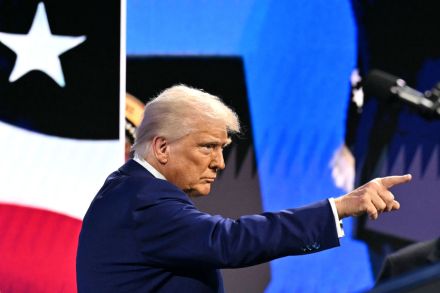
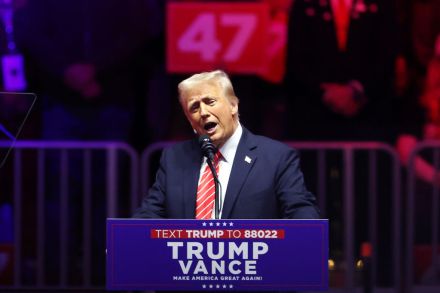
The 60th Presidential Inaugural Ceremony Viewing and Parade at the Capitol One Arena was an event of juxtaposition. The piercing cold endured by those who waited for hours, in weather so frigid it forced the day’s festivities indoors, contrasted sharply with the heat and energy that filled the stadium during the celebration of their political victory.The red carpet and the caps of the crowd blended with the blue lights above, mirroring not only the colors of the nation’s flag but also the hue of the 47th president’s inaugural tie.

Why Biden should let Ukraine strike Russian targets during the lame-duck period

From our US edition

On the back of President Trump’s victory November 5, the end of the election season will open an interesting eleven-week window. President Biden will assume lame-duck status and be freed from any concern that a more aggressive posture toward Russia might hurt Kamala Harris’s presidential campaign. Biden might also be considering the implication of handing over Ukraine policy to an individual who has repeatedly signaled his pro-Putin views. Both of these factors argue for Biden breaking from his self-imposed restrictions and supporting Ukraine striking targets in Russian territory during this lame-duck period. Imagine a moderately successful Ukraine attack now, after the November 5 election, on a moderately relevant target, such as a railroad terminal fifty miles inside of Russia.

Kyiv

Meet the western conservatives moving to Russia

Tofurious Maximus Crane was sitting in a barber’s chair in Moscow when he received the greatest news of his life. It was 19 August, the day Vladimir Putin signed a decree allowing foreigners to immigrate to Russia. Now, the 46-year-old native of Virginia Beach, Virginia, could finally achieve his life’s dream of remaining in Russia for ever. ‘For me, the decree is the best thing that ever happened in my life besides, you know, family and children,’ says Crane, a charismatic bear of an American who sports a long Old Testament beard and perfectly coiffed hipster hair. ‘I got the notification about the decree, and I jumped up out of the chair and was crying. I was very excited.

Ukraine’s Nato fantasy

Ukraine’s President Zelensky was in Downing Street last week – as well as Paris, Rome, Berlin and Dubrovnik – asking for Nato membership. In every city, he heard the same ‘not yet’ as he’d received in Washington last month. Some of Kyiv’s western allies believe membership is the only way to guarantee Ukraine’s independence. Russia has never attacked a Nato country, because of the Article 5 guarantee that an attack against one is an attack against all. Therefore, Ukraine will never be safe from Russia unless it joins. The US government wants to avoid the war that Ukrainian membership would oblige it to fight But there’s a fundamental flaw to this logic: Ukraine cannot join Nato in the foreseeable future.

Joan Collins, Owen Matthews, Sara Wheeler, Igor Toronyi-Lalic and Tanya Gold

30 min listen

On this week’s Spectator Out Loud: Joan Collins reads an extract from her diary (1:15); Owen Matthews argues that Russia and China’s relationship is just a marriage of convenience (3:19); reviewing The White Ladder: Triumph and Tragedy at the Dawn of Mountaineering by Daniel Light, Sara Wheeler examines the epic history of the sport (13:52); Igor Toronyi-Lalic looks at the life, cinema, and many drinks, of Marguerite Duras (21:35); and Tanya Gold provides her notes on tasting menus (26:07).  Presented and produced by Patrick Gibbons.

What’s the real aim of Ukraine’s Russian offensive?

On Monday morning, Vladimir Putin was briefed about Ukraine’s audacious invasion of Russian territory. With his military chiefs in front of him, he announced that Kyiv had been doing the bidding of its western masters but would succeed only in the ‘annihilation’ of the troops it had sent to Kursk. All this was, as usual, broadcast live by the Kremlin to reassure Russians that the President was in control of the situation – then everything started to go wrong. Alexei Smirnov, the acting governor of the invaded Kursk region, had been expected to give details of the successful evacuation of citizens. Instead, he began to reel off the extent of the defeat. The Ukrainians, he said, had captured territory eight miles deep and 25 miles wide.

The new alliances dedicated to destroying democracy

After staging a failed coup and going to prison, the Venezuelan army officer Hugo Chavez ran to be president in 1998, campaigning against corruption and offering revolutionary change. His nation was seen as a prosperous beacon of stability, built on its great oil wealth, envied by many people elsewhere in the region. He won by promising to tackle the inequality that scarred it so badly and take on the oligarchs enriching themselves through favours and nepotism. Western celebrities, journalists and politicians, from Sean Penn through to Jeremy Corbyn, started flocking to South America to hail their new progressive hero supposedly fighting for social justice.

From the front line of the battle to save Kharkiv

Moonlight shines on the wings of the reconnaissance drone as it glides over the field. Within minutes, the Leleka – Ukrainian for ‘stork’ – crosses the border into Russia’s Belgorod region. The soldiers monitoring it wait in their car, hidden in the undergrowth. Soon the image on their laptop freezes: the Russians are jamming the signal. They manoeuvre the Leleka back and forth, eventually finding a gap in the enemy’s electronic defences. The drone is back in contact, sending footage of Russian roads and towns. The hunt for enemy troops begins. Some 30,000 Russian soldiers are amassed north of Vovchansk, a Ukrainian border town that was attacked two months ago.

What I saw at the Okhmatdyt bomb site

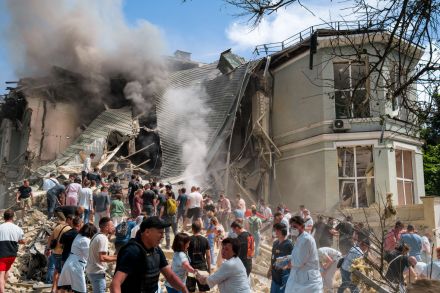
Kyiv For weeks, Kyiv had felt relatively safe compared with just about everywhere else in Ukraine. People had adjusted to wartime life as the city’s air defences managed to intercept most of Russia’s missiles and drones. There had been a sense that things were improving. This was shattered on Monday morning when a missile struck a children’s cancer hospital in the capital. Okhmatdyt is the largest paediatric clinic in Ukraine, the equivalent of London’s Great Ormond Street. Each year, it treats more than 20,000 children with the most serious health conditions. That Russia had targeted it came as a shock but not a surprise: some 1,700 medical facilities in Ukraine have been hit since the start of the full-scale invasion.

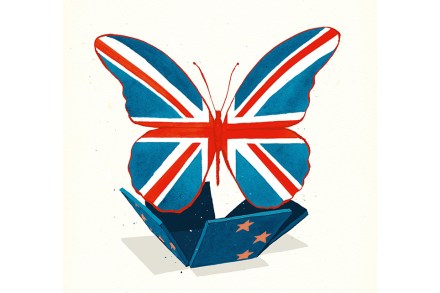
Brexit has helped the EU

There was hardly an election poster to be seen on the roadside during a two-hour drive from London to the country. The British do not appreciate this miracle. In Poland five days before an election, every other fence would be disfigured with photoshopped faces. Our lovely lunch hosts seemed resigned to the coming Red Terror: a purge of the remaining hereditary peers in the House of Lords, a new relationship with the European Union, inheritance taxes. I tried to cheer them up with a piece of Central European wisdom: there is always time for a magnum of champagne between the revolution and the firing squad.

Why Russia is flaunting its ships in the Caribbean

From our US edition

Two Russian ships docked Tuesday in Venezuela’s La Guaira port, twenty miles away from Caracas. The stop comes after military exercises were conducted in the Atlantic, with four vessels stopping in Havana late last month. This is all part of a decades-long “look-at-us” operation, also known as a “show the flag” move, as Russia’s defense ministry puts it. While Russia’s presence in Cuba and Venezuela is not a new phenomenon, conflict in the East has only accelerated their muscle-flexing in the West. These movements mark Russia’s first extensive military exercises in the hemisphere in five years, as well as their first deployment of a nuclear submarine in close proximity to the US since the Cold War.

Russia

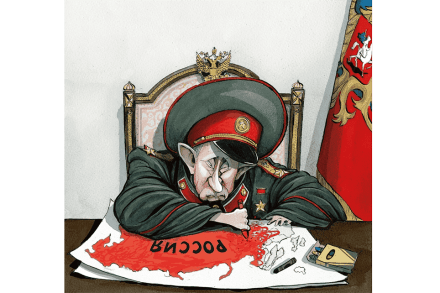
Putin is trying to annexe people, not just land

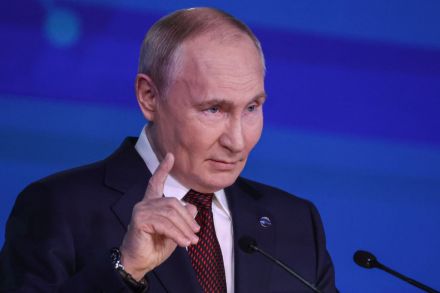
On 1 September 2021, six months before his full-scale invasion of Ukraine, Vladimir Putin was speaking at the All-Russian Children’s Centre, known as ‘Ocean’, near the harbour city of Vladivostok. He turned to a topic that obviously haunted him during his long Covid-19 isolation. He told his audience of children that Russia’s population could have been about half a billion today, rather than the current 146 million, if it hadn’t been for the shocks of the past century: two world wars, the Bolshevik Revolution and the collapse of the Soviet Union.

My return to Ukraine

I arrive at Lviv station just before 9 a.m. As the clock strikes, the conductor announces a minute’s silence: a daily commemoration for those who have fallen in the war. But it’s observed only by the railway staff, who stand up to bow their heads. The passengers just carry on. After all, isn’t part of the resistance to carry on life as normal, despite the war? This was the idea at first, but soldiers at the front line have come to resent the chasm between those who are fighting and those who don’t want to have any part in the war. It’s just one of many ways in which, returning to Ukraine, I can see the Russian invasion reshaping my country. Coming home to my village in the west of Ukraine, I see how the war is draining the life out of it.

Seized Russian assets should be used against Putin

From our US edition

The seizure of enemy treasure, formerly known as plunder and pillage, is an ancient tool of war. Though still practiced in the world’s nastiest conflict zones, it’s a tricky business within a rules-based international order. The G7’s agreement to lend $50 billion to Ukraine — using income from $300 billion of frozen Russian assets to cover interest and repayments on the loan — is a vivid case in point. And some would say, a lily-livered half-measure. The key feature of the deal is that it does not actually claim ownership of Russian loot — which however ill-gotten is mostly held in EU banks in the form of western government bonds. It merely diverts interest payments due on the bonds from the issuing governments.

Russian

Zelensky’s peace summit flop

Volodymyr Zelensky’s Global Peace Summit in Switzerland was meant to demonstrate the world’s support for Kyiv and underscore Russia’s isolation. It did the opposite. Russia wasn’t invited. China didn’t send a delegation. Other major countries that might influence the Kremlin – including Brazil, India, Saudi Arabia, South Africa and the UAE – refused to sign the watered-down final communiqué. According to a former senior member of Zelensky’s administration, Ukraine’s leader had ‘hoped the conference would mark a new benchmark of international support… [but] it just showed how badly we have lost the support in the Global South’. Take Brazil’s President, Lula da Silva.

Ukraine’s greatest, yet least publicised success

Odessa Our conference here is about Black Sea security, where I am the guest of UK Friends of Ukraine. Its subject reflects one of Ukraine’s greatest, yet least publicised successes. Almost a third of the Russian fleet has been destroyed, mostly by sea drones. The rest is trapped in ports much further east. As a result, almost normal amounts of grain and other goods flow to the wider world. It says something not good about third-world politics that all 11 recipients of WFP relief in the form of Ukrainian grain, including Nigeria, Yemen, the Democratic Republic of Congo and Gaza, support Russia in international forums. Tony Abbott, the former prime minister of Australia, gives us a rousing keynote speech, praising Ukraine for ‘defeating the Russian fleet without a navy’.

The Joe Biden Shuffle defines the G7

From our US edition

Things are always worse than they seem. That adage may seem amusingly cynical, but that is only because it is of what Kant called “the crooked timber of humanity.” Often, as we all know, things are better than they seem. But then there are mournful spectacles like the Group of 7+, which just met in Italy.   The plus sign is for Ursula von der Leyen who, as president of the European Commission, gets to tag along like a poodle, a superfluous though preening and self-important mascot for the increasingly superfluous and self-important OnlyFans forum representing Canada, France, Germany, Italy, Japan, the United Kingdom and the United States.

g7

Who actually gets hurt by sanctioning Russia?

From our US edition

The US crackdown on trade finance for Russia from international banks — designed to impede imports needed for the continuing assault on Ukraine — is biting hard, reports the FT, quoting an investor who thinks “the logical endpoint of this is turning Russia into Iran.” Quite right too: sanctions like these are a vital non-military way to hobble Vladimir Putin’s campaign. But war and finance intersect in many different ways. Consider also the fate of 400 western-owned commercial aircraft that were leased to Russian airlines before the invasion in February 2022. Now stuck in Russia or its satellites, unmaintained to western standards and unfit to fly back into our airspace, they’re a potential multibillion loss for their owners and insurers.

Russia