Vladimir putin

The battle for Ukraine’s electric grid

From our US edition

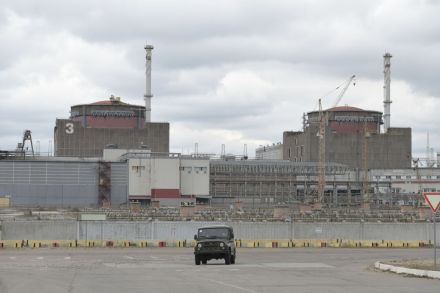
On Sunday, Ukrainian drones attacked the Shatura Power Station located about 75 miles east of Moscow. The 1,500-megawatt gas-fired facility provides heat and power to the residents of Shatura, a town of about 33,000. The drone attack caused three transformers at the plant to catch fire, and a local official said, “All efforts are being taken to promptly restore heat supply,” to the town. According to Reuters, the drone strike was “one of Kyiv’s biggest attacks to date on a power station deep inside Russia.” Sunday’s attack on the power plant in Shatura came two weeks after Ukrainian drones and missiles hit power infrastructure in the Russian cities of Belgorod, Voronezh and Taganrog.
electric

Will the Russia peace deal backfire on Trump?

Kyiv The rumor reverberating around Kyiv is that the FBI has been leaning on Ukrainian anti-corruption police to investigate Zelensky’s inner circle in order to force him to swallow the bitter US peace deal. Trump, as they say, has put the screws, or the feds, on Zelensky. The National Anti-Corruption Bureau – which is unravelling a $100 million war-profiteering scandal that has implicated many of Zelensky’s closest political allies – has denied the accusation point blank, and there’s not a single shred of evidence that it is true.

Witkoff’s Ukraine peace proposal is unworkable

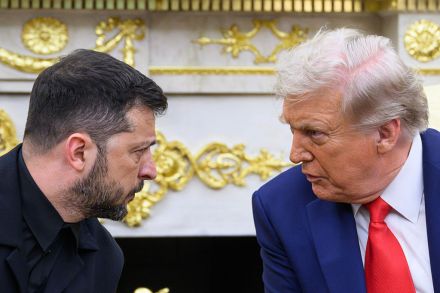
With Ukrainian president Volodymyr Zelensky’s political authority already under grave assault in the wake of a major corruption scandal, he now faces a new challenge – this time from his erstwhile ally, the United States. A high-level US delegation led by army secretary Daniel Driscoll is meeting Zelensky in Kyiv today to present the latest version of a peace plan aimed at ending the war. The contents of the plan have not been officially revealed and so far it has not been publicly endorsed by Donald Trump. But two things are already clear. One is that there’s nothing new in it. And two, there’s nothing good in it for Zelensky.

ukraine

Putin thinks time is on his side

From our US edition

Very well then – war. That is the bottom line of Vladimir Putin’s response to Donald Trump’s latest attempts at mediating an end to Russia’s invasion of Ukraine. In August, Putin rejected the peace deal that Trump lined up in Alaska. Now, the Kremlin has scuttled the White House’s plan for a summit in Budapest by insisting that Russia’s demands for Ukrainian demilitarization and “de-nazification” remain in force. Clearly, the Russian President still believes that he can win the war on the battlefield – and terrorize Ukraine’s civilians. What is Putin’s plan?

putin

Moldova has been saved from Russian influence, but at what cost?

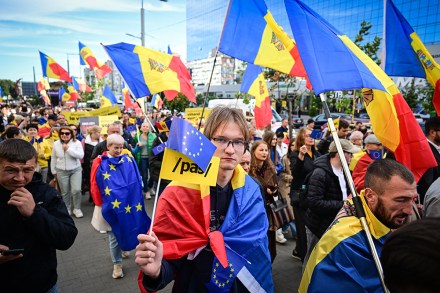
The European Union, guardian and champion of democracy, rightly takes a dim view when ruling parties ban their opponents, refuse to open polling stations in areas likely to vote against them, censor opposition news channels and allow a large staff of foreign election monitors to police social media in the run-up. If Serbia, say, or Georgia tried systematic election rigging of this kind, Brussels would be the first to call foul and disregard the result as illegitimate. But when it’s the EU that’s running the interference, as in Moldova this week, the rules are apparently quite different. This week the pro-EU party of Maia Sandu, Moldova’s President and a former World Bank official, won a slim majority in a general election.

Believe it or not, Russia is great

I have been invited to Moscow by the Russian Orthodox patriarchate because the organiser is a fan of my podcast. Everyone at home thinks I am either dangerous or mad. My mother is convinced I’m going to be bumped off by the FSB or killed by a drone. Others claim I have become a useful idiot of the evil dictator Putler because the patriarchate are merely his stooges. ‘Is that true?’ I ask the patriarchate’s media affairs guy. ‘Well, under Peter the Great we were run by the government. And under communism we weren’t allowed to exist. So you could argue that, historically, we’re about as independent as we’ve ever been.’ When I put the same question to an archbishop, his response is more forthright.

How powerful is the China-Russia alliance?

From our US edition

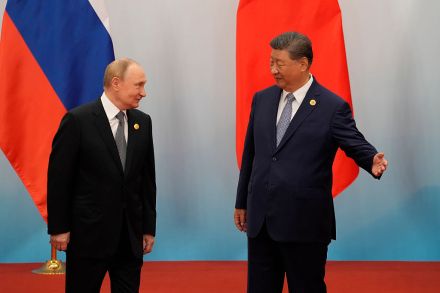
This summer’s big security summit in Tianjin, followed by the military parade in Beijing on September 3, has been widely interpreted as a sign of a new global realignment. At a time of growing friction within the US alliances in East Asia and Europe, President Xi Jinping of China, President Vladimir Putin of Russia and about 20 leaders mostly from Central Asia have not just reaffirmed their nations’ close ties. They sought to strengthen the emerging multipolar system, which they see as a rejection of the US-dominated global order. This idea is hardly new.

China

Is the British Council really a ‘nest of espionage’?

I worked for nearly a decade at the British Council in East Asia. Every day, under the guise of teaching English and promoting awareness of British culture abroad, I would compile dossiers on people of interest, take pictures of government buildings and military installations and pass secret documents to couriers to smuggle back to Britain. I would sometimes meet contacts in parks where we would have brief, cryptic conversations beginning with a code line like ‘The geese are flying south early this year’, without ever directly looking at each other. Except of course I did none of these things and neither, I am convinced, did anyone else.

Ukraine’s own Wagner Group

From our US edition

As peace in Ukraine seems still far and the conflict is witnessing a new escalation of violence, a new breed of private military companies is already emerging, ready for a post-conflict Ukraine. Rooted in a draft legislation “On International Defense Companies” proposed on April 2024, the Ukrainian government aims to channel combat-seasoned veterans into regulated, transparent security firms rather than leave them adrift or, worse, turn them into mercenaries for hire in distant conflicts from the Sahel to the DRC.

Ukraine

Where have all the upper-class Tories gone?

A currently fashionable conservatism is militantly against Ukraine and, by more cautious implication, pro-Russia. We who disagree are, I quote Matthew Parris in these pages last week, ‘prey to the illusion that the second world war was a template for future conflict, and Hitler a template for Putin’. Others put it more unkindly, speaking of ‘Ukraine brain’ as a mental affliction among the Cold War generations. One should not project the entire second world war on to now, but some similarities with the 1930s are undeniable.

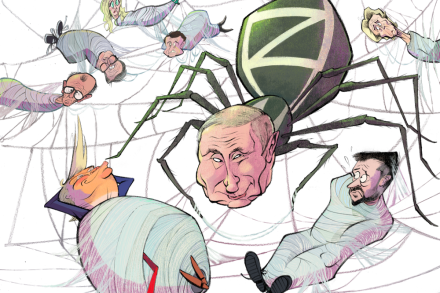
Putin’s trap: how Russia plans to split the western alliance

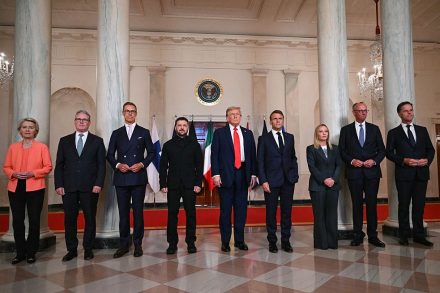
Though you wouldn’t know from the smiles around the table at the White House this week, a trap has been set by Vladimir Putin designed to split the United States from its European allies. In Washington on Monday, Europe’s leaders, plus Sir Keir Starmer and Volodymyr Zelensky, agreed with Donald Trump that the killing in Ukraine should and can be ended as soon as possible. They lavished praise on Trump for reaching out to the Kremlin, despite having themselves treated Putin as a pariah for the past three years. And they even enthusiastically applauded the notion of security guarantees similar to Nato’s Article Five ‘all-for-one and one-for-all’ mutual defence clause as a way to safeguard Ukraine’s borders in the future.

The Trump-Zelensky meetings offered a show of Western unity

From our US edition

Did President Trump make any progress toward ending the war in Ukraine after successive meetings with Vladimir Putin, Volodymyr Zelensky and key NATO partners?  The short answer is “yes – but it’s very slight, and there are still formidable obstacles, which could block a final deal.” The biggest obstacles are Ukraine agreeing to cede sovereign territory and Russia agreeing to the presence of a combined European-American military force within Ukraine, meant to prevent another Russian attack.  The joint military force is the most important proposal to emerge from Monday’s meeting. We already knew Ukraine would have to cede territory – or “swap it” as Trump delicately puts it.

western alliance nato ukraine

The Alaska summit went much as expected

From our US edition

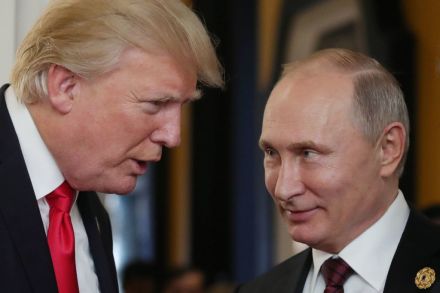
The summit between Presidents Donald Trump and Vladimir Putin ended predictably, without a ceasefire deal or, it seems, assent on much else. Trump said “Many points were agreed to, and there are just a very few that are left,” but failed to offer any details. Even if true, the leftovers are critical, and the gulf between the two governments on the war remains huge. Critically, Putin cares more about security than image or economics, and understandably believes that he would lose leverage by agreeing to halt military operations before winning the concessions he demands from Ukraine. Nevertheless, the summit improved, however slightly, the prospects for negotiating an end to the war.

Trump Putin

The real reason Trump’s Alaska summit matters

Donald Trump has never lacked confidence. ‘I’m here to get the thing over with,’ he said last week when announcing the meeting with Vladimir Putin. ‘President Putin, I believe, wants to see peace. And Zelensky wants to see peace. Now, President Zelensky has to get… everything he needs, because he’s going to have to get ready to sign something.’ To many, that sounded like a variation on Trump’s much repeated election claim that he would end the Ukraine war in 24 hours: a grandiose statement that will probably bear little if any fruit this week. Indeed, the smart money is on the Alaska summit resulting in claims of a ‘historic breakthrough’, which will change little on the front lines.

Has Zelensky become a liability?

Is Volodymyr Zelensky becoming a liability for the West and for his own country? We are entitled at least to pose this question as we (I mean America and Europe) are funding this war.  The fact is that neither side seems capable of winning, so let’s park the sermonising and look for the compromise in which so many wars – just wars as well as unjust ones – have always ended I ask because it is clear, and for years has been clear, that the conflict with Russia must end in a compromise, and the shape of that compromise should not be in doubt. Russia must be given a ladder to climb down and this must involve land.

Trump’s Alaska meeting is a gift for Putin 

From the Kremlin’s point of view, holding a US-Russia summit in Anchorage, Alaska is an idea of fiendish brilliance. The venue itself determines the agenda. Literally half a world away from the petty concerns of the European continent, Donald Trump and Vladimir Putin can flex the vastness of their respective countries. Anchorage is an eight-hour flight from Washington D.C. and roughly the same distance from Moscow, flying over no other country but Russia for most of the way. By travelling to the point where their countries almost touch in the North Pacific, both leaders can feel justified in prioritising issues that concern just the two of them, from arms control treaties to space cooperation to Arctic mineral rights.

Is Putin taking Trump for a ride?

From our US edition

Already the Kremlin is setting the terms of the forthcoming summit between Donald Trump and Vladimir Putin. Steve Witkoff, Trump's emissary, set the meeting in motion with his mission to Moscow on Wednesday, which Trump called “highly productive.” But productive of what? Putin’s foreign-policy adviser Yuri Ushakov stated today that it was the White House, not the Kremlin, that wanted the meeting. He went on to dismiss Trump's proposal that Ukrainian President Volodymyr Zelensky could take part in a tripartite negotiation, noting that “for this to happen, certain conditions must be created. Unfortunately, such conditions are far away yet.” Those conditions remain the complete surrender of Ukraine.  The Kremlin, in other words, has a strategic plan.

trump Steve Witkoff and Vladimir Putin shake hands (Getty)

Tariffs and the psychodrama of Trump diplomacy

From our US edition

A bleached white conference room, somewhere near Jeddah in Saudi Arabia. On one side sits Volodymyr Zelensky, the Ukrainian leader, in his soldier-boy outfit. On the other, Russian President Vladimir Putin in dark suit and tie. And in the middle, a beaming President Donald J. Trump. "People said this could never happen," he says, as Zelensky and Putin stare awkwardly at the floor. "But it’s a beautiful thing." A White House memo lands in inboxes across the world: "THE PEACEMAKER-IN-CHIEF..." Pure fantasy, perhaps, but Trump does have an almost cosmic ability to get what he wants – and he really wants to end the war in Ukraine. Last night, having spent weeks telling the world how "disappointed" he was with Putin, Trump abruptly announced "great progress" in US-Russia dialogue.

Trump takes on the homelessness problem

From our US edition

Street sweepers The Trump Administration’s plans to completely reshape the nation’s homeless policy got lost in last week’s tidal wave of news. They intend to address the “root causes” of homelessness by enforcing prohibitions on illegal drug use, urban camping and squatting. “Shifting homeless individuals into long-term institutional settings for humane treatment through the appropriate use of civil commitment will restore public order,” the White House announced. This is  a curious order. It’s a reverse of a Reagan-era policy of emptying out the asylums and also a harsh rebuke of the policies of progressive cities, who offer safe consumption sites and Narcan vending machines.

I have a bone to pick with Tulsi Gabbard

From our US edition

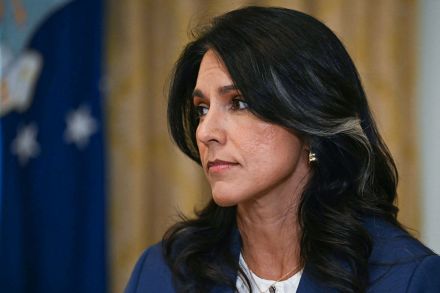
I have a bone to pick with Tulsi Gabbard. I had thought, six months into Donald Trump’s second term, that I could safely say “sayonara” to the Russia Collusion Delusion and all its works. I started to count how many columns I had written about that embarrassing effort to destroy Donald Trump, but gave up. The answer is: many.   I had hoped I had finished with the subject forever. But now the president’s Director of National Intelligence, that same T. Gabbard, has weighed in with what she rightly describes as “historic” evidence of a plot, directed by Barack Obama with various high-ranking lieutenants, to undermine the first Trump administration.  Is there anything new in her evidence? Some say no, not really.