Radek Sikorski

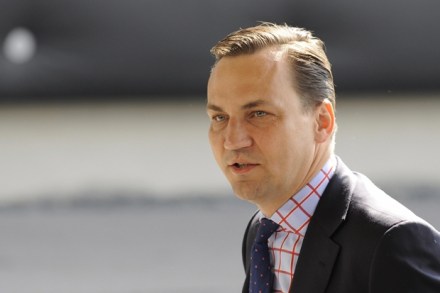
Radek Sikorski is Poland’s minister of foreign affairs.

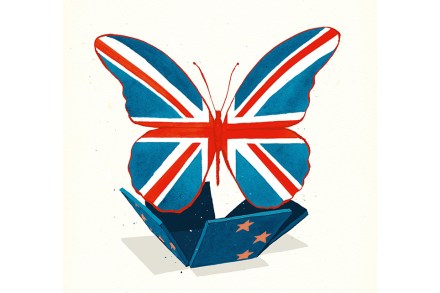
Brexit has helped the EU

From our UK edition

There was hardly an election poster to be seen on the roadside during a two-hour drive from London to the country. The British do not appreciate this miracle. In Poland five days before an election, every other fence would be disfigured with photoshopped faces. Our lovely lunch hosts seemed resigned to the coming Red Terror: a purge of the remaining hereditary peers in the House of Lords, a new relationship with the European Union, inheritance taxes. I tried to cheer them up with a piece of Central European wisdom: there is always time for a magnum of champagne between the revolution and the firing squad.
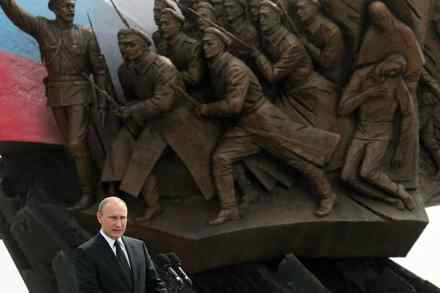
Putin’s war is a disaster for Russia

From our UK edition

Strasbourg Europhobes will never have a better argument against European integration than the seat of the European parliament in Strasbourg. It’s not just the €200 million per year it costs to move MEPs to and from Brussels once a month at great inconvenience to everyone; the building itself is a disgrace. It feels like a prison: identical glass corridors look out over a useless inner courtyard, so you can go on walks without the danger of escape. The former president of the European Commission José Manuel Barroso once suggested turning the building into the headquarters of the European Institute of Technology, which was an excellent offer both for the country and the city, but to no avail.

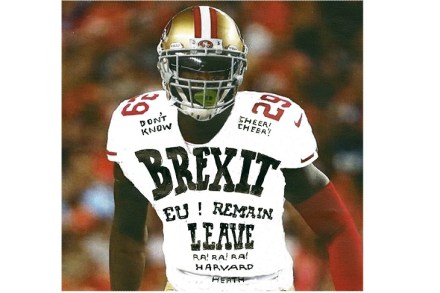
None of my Harvard students thinks Brexit is a good idea

Across the street at the Museum of Fine Arts, there is an extraordinary collection of Georgian furniture and paintings from Boston just before the revolution. It all seems a lot more sumptuous than the sort of thing that would have been found in a contemporary English town of 15,000. The colonials were, of course, more lightly taxed than the British, yet they rebelled. Might it have been to do with sovereignty and ‘taking back control’? I suppose it worked out for them. Still, when I asked my study group at Harvard’s Kennedy School whether Brexit was a good idea, not a single hand went up.

harvard brexit

Boston Notebook

From our UK edition

My wife laughs that my love of gadgets is a remnant of my Communist upbringing, when western toys were objects of veneration. A couple of days ago, I found myself on a Lufthansa flight over the Atlantic indulging precisely that love: using an app, I could see live pictures of our house in rural Poland via the security cameras. I could also check that the alarm is on, heating system off and the new photovoltaic farm is producing more energy than the house is consuming. I suppose that’s the consumerist heaven we fought for in those days, just as much as for freedom and democracy. Back in Boston, I am reminded why I prefer museums created by the whim of a millionaire to those assembled by committees.

Radek Sikorski’s notebook: Goose-steppers in Oxford, and a drone in my garden

From our UK edition

As the BA flight from Warsaw landed at Heathrow, I felt a little tremor of anxiety, though it wasn’t anything to do with fear of flying. I was here for the Pembroke College gaudy. I had never attended a reunion before, and I had doubts about it. What if the people I really liked didn’t show up? What if I didn’t remember somebody’s name, while they remembered me? Above all, did I really want to see a bunch of old people claiming to be my contemporaries? It turned out to be a delight.

Radek Sikorski’s diary: Show Putin what you think of him – eat a Polish apple

From our UK edition

I made a welcome escape from sweltering Warsaw to the cloudy cool of Bodø, halfway up the coast of Norway, north of Iceland. Bodø’s harbour stays ice-free all year round only thanks to the Gulf Stream. The fjords bubble with whirlpools and offer some of the best cold-water scuba diving in the world. When the mist clears, the air in this visibly prosperous place has an Alpine, colour-enhancing quality. It’s my first time beyond the Arctic circle and the dusk through the night makes it hard to sleep. ‘Now imagine,’ says the wife over the phone from Washington, ‘what it was like to try to go to sleep in a Soviet-era hotel in Vorkuta, in late June, without curtains.

Yearning to breathe free

From our UK edition

Radek Sikorski says Russia is using strong-arm tactics to see that its man is returned in Ukraine’s presidential elections The architecture of Independence Square in central Kiev is late Brezhnev but the ambience is Prague 1989. Groups of people stand around tables scattered with the propaganda of the various candidates, or make impassioned speeches to cameras. The atmosphere of a genuine election, one in which the outcome is uncertain — so rare now in the former Soviet Union — is unmistakable. Boys and girls with orange scarves hand out campaign leaflets. It’s cool to be political and there is a sense of hope, urgency and foreboding that I last witnessed when I was their age during the Solidarity revolution in Poland in 1980.

New life in a land of death

From our UK edition

I had long wanted to return to Kushk-e-Serwan, a small Afghan village at the narrower end of the Hari Rud river oasis, between the Hindu Kush and Iran. The first time I went there, I was travelling with Ismael Khan, the leader of the Afghan resistance in Western Afghanistan. Most days bombs fell on places where we had stayed a day or two before, as soon as Communist spies could report our whereabouts. We arrived in the vicinity on the morning of 11 August 1987, and while I was there with his men, a couple of Soviet jets arrived too. Afghan houses look impressive, but the mud brick turns to dust at the slightest impact. The valley darkened as the bombs fell and the dust dispersed. I spent the next couple of hours watching villagers dig out their dead, mostly women and children.

Diary – 30 July 2004

From our UK edition

Kabul Gandamack Lodge is Harry Flashman’s fictitious address in the original George MacDonald Fraser novel about the caddish officer, set at the time of the first Afghan war. You can now stay at Gandamack Lodge, a handsome if dilapidated villa in downtown Kabul. A lawn, wicker chairs, prints of Surrey on the walls: if it wasn’t for the electricity cuts and the coffee, which the Afghans just can’t get right, this would be a piece of England in the heart of the slum that is Kabul. Two of Osama bin Laden’s wives, number one and number two, lived here during the Taleban’s reign. In their haste to depart, as American bombs fell in October 2001, they left behind an old bra and $450 in unpaid rent.