Vladimir putin

Biden’s family misfortune

From our US edition

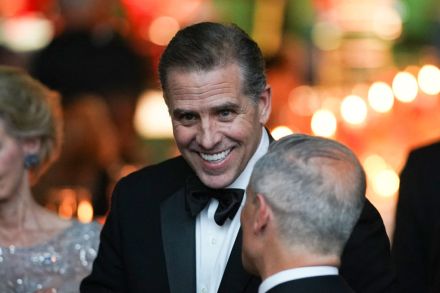
For years, it seemed as though nothing could stick when it came to the impact of Hunter Biden’s escapades on his father’s presidency. The White House could stick to its don’t-even-go-there denials. The press seemed determined not to do its job. The alleged crimes and shady business practices of the president’s son were not to be brought up in polite company.  Slowly, but perceptibly, that is changing. The sheer weight of evidence that has continued stacking up, the plea deal and the serious claims made by the IRS whistleblower this month have combined to push the Hunter Biden story into the foreground. The hand-wafting dismissals by Democrats of anyone who took the Hunter story seriously were always unpersuasive and dishonest. But that is more obvious now.

Russian failure is a lesson for America

From our US edition

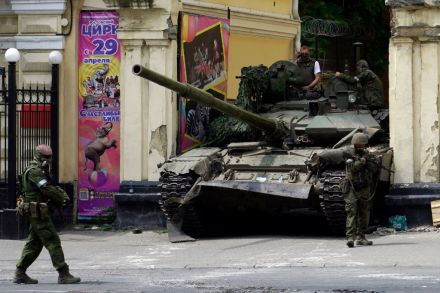
We may never understand the series of events and decisions that led Yevgeny Prigozhin to stage an armed rebellion against Russian president Vladimir Putin’s administration with his Wagner Group private military company, or PMC. Prigozhin was opposed to the planned forcible incorporation of Wagner into the Russian armed forces. He also came to be a sharp critic of the fabricated rationale for Russia’s war on Ukraine and the sloppy way it was being waged by its generals, who are more focused on politics than on defeating Kyiv.

russian military
Yevgeny Prigozhin influencer

Yevgeny Prigozhin, the world’s strangest influencer

From our US edition

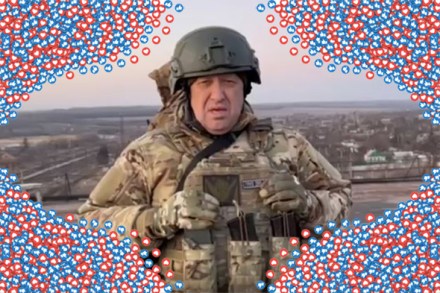
How did Yevgeny Prigozhin, the hot dog vendor-cum-leader of the Wagner private military company, become addicted to the allure of likes, retweets and digital validation? From the outside looking in, the warlord posts like a rich kid splayed over his dad’s Porsche — except rather than a swanky car, Prigozhin brags of the travails of the world’s deadliest private military, replete with tanks and artillery.   The early war days of PMC Wagner’s social media presence could be compared to that of ISIS or other paramilitary groups: the posts had a clear agenda, including intimidation, like the “hammer of revenge” video they circulated over Telegram, which documented the brutal murder of Yevgeny Nuzhin, a former Wagner Group member.

Prigozhin turns back, halting ‘coup’ attempt

From our US edition

Yevgeny Prigozhin, the leader of the Wagner mercenary group, has tonight halted his march on Moscow, in return for assurances from the Kremlin on his men’s safety. Alexander Lukashenko, Belarusian president, brokered the agreement. Prigozhin has just released the following statement on Telegram: We marched out on June 23 on the Justice March. In one day, we got within 200 kilometers of Moscow. During this time we did not spill a single drop of blood of our fighters. Now comes the moment when blood may be spilled. Therefore, understanding the responsibility that Russian blood will be spilled on one side, we are turning our columns around and retreating in the opposite direction to the field camps.

prigozhin

How does the Russian public view the invasion of Ukraine?

‘It’s too soon,’ said an anti-war Russian friend about the crop of books which have been emerging since late last year on Putin’s invasion of Ukraine. Perhaps he is right. Yet, mindful of Lenin’s maxim that ‘there are weeks when decades happen’, many may feel the period since February last year to have been one of the longest of their lives. Amid the fog of war – an endless news cycle in which events pile up, too enigmatic or episodic for the big picture to emerge – one is grateful to any writer who sets out to give the wider narrative. ‘To look at Russia now, as someone who loves the country, is to despair’ One such is Serhii Plokhy, the Zaporizhzhia-born historian and Ukrainian specialist, in The Russo-Ukrainian War.

Lawmakers demand Vladimir Kara-Murza’s release

From our US edition

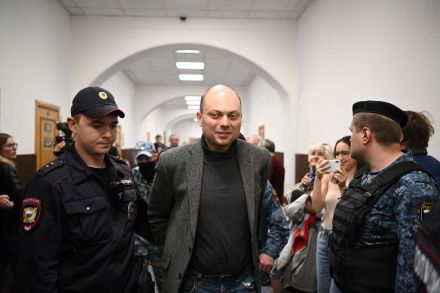
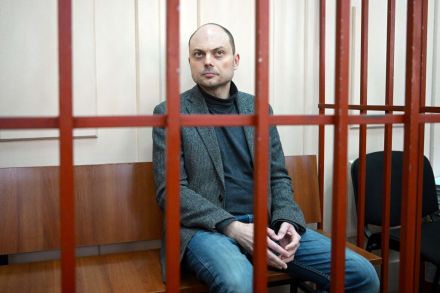
The legacy of John McCain was on full view in the halls of Congress this week, where a bipartisan group of lawmakers repeatedly invoked his legacy to demand that Russia release a journalist detained for criticizing Vladimir Putin. One year ago, Vladimir Kara-Murza, a Russian political dissident and journalist, was arrested by Putin’s regime on trumped-up charges of spreading false information about Russia’s military during a speech he gave in McCain’s home state of Arizona. To commemorate his detention, and to call for his release, the McCain Institute hosted an event in the nation’s capital where lawmakers from both parties — who served jointly with McCain for almost 100 years between them — rallied to Kara-Murza’s defense.

vladimir kara-murza

The valiant Vladimir Kara-Murza

From our US edition

Vladimir Kara-Murza dies hard. He has withstood not one but two poisoning attempts by Vladimir Putin's government. He has withstood the targeting of Russia's officials. And he has borne the ramifications of the West's turn away from confrontation with a regime he understands for its villainy. Now, Kara-Murza is facing what could be a final challenge — a trial against him based on the 2022 laws against "misinformation" about the Russian military in the Ukraine war, by an authoritarian regime bent on silencing all its critics and sending them into the dark quiet of a cell where they will end their days. Kara-Murza is forty-one, the father of three, a former advisor to assassinated Putin critic Boris Nemtsov and a longtime advocate against the regime.

vladimir kara-murza

Putin is copying the propaganda playbook of Serbian war criminals

A year ago, Ukrainian soldiers discovered evidence of the Bucha massacre in which Russian forces slaughtered hundreds of Ukrainians in cold blood. Far from owning up to its crimes, Russia has spent the past 12 months trying to spin the massacre as a Western-inspired conspiracy.  The Kremlin said the allegations are a ‘monstrous forgery’ aimed at denigrating the Russian army. This attempt to whitewash the truth has disturbing parallels with the cover up of atrocities that occurred in my home country, Bosnia, during the 1990s.

After his trip to Moscow, Xi Jinping still holds all the cards

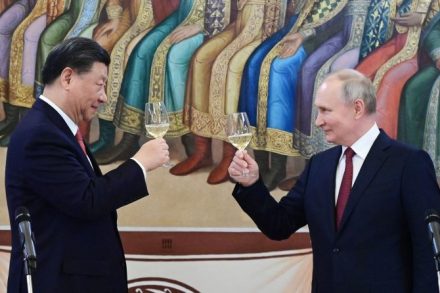
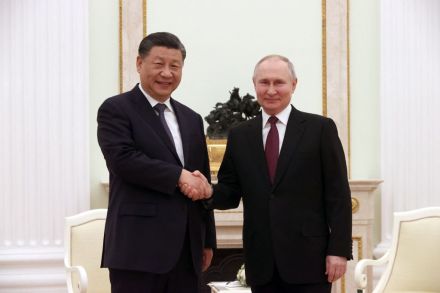
After his arrival in Moscow on Monday, President Xi Jinping said that China is ready, along with Russia, ‘to stand guard over the world order based on international law’. This statement came closer than ever before to articulating his view that a normative struggle is going on between a western-dominated order, and one more suited to Beijing’s interests. As he departed yesterday, he went further: ‘Right now there are changes, the likes of which we haven’t seen for 100 years. And we are the ones driving these changes together.’ Having positioned himself as a potential peacemaker, Xi clearly believes the war in Ukraine presents him with a win-win situation ­­­– or even a win-win-win one.

Putin and Xi: authoritarian bros

From our US edition

Relationships between dictators are bound to be a bit strange, but Xi Jinping and Vladimir Putin’s stands out for its theatrical quality. Meetings are carefully choreographed for maximum propaganda effect. Lavish gifts and gilded state rooms are the norm. Fluent in the language of autocratic flattery, the two always have gushing praise for each other. In 2019, before traveling to Russia, Xi said that Putin was his “best and bosom friend,” while just a year earlier Putin praised Xi as being a “remarkable thinker” and “a good friend I can count on.” Leading up to this week’s visit, Putin referred to Xi as his “good old friend,” and recalling Confucius, wrote, “Isn’t it a joy when a friend comes from afar!

putin xi authoritarian bros

What Beijing wants out of the Russian invasion

52 min listen

As Xi Jinping visits Vladimir Putin in Russia this week, this episode of Chinese Whispers is returning to one of the missions of this podcast series – to look at things as the Chinese see them.  My guest today is Zhou Bo, a retired Senior Colonel of the People’s Liberation Army whose military service started in 1979. He is now a senior fellow at the Center for International Security and Strategy at Tsinghua University. He’s an eloquent and informed advocate of Beijing’s perspective. On the podcast, we discuss why China hasn’t criticised Russia more, despite its purported support for sovereignty, to what extent it really means its peace plan, and whether China is about to invade Taiwan.

There’s no excuse for Russia’s downing of a US drone

From our US edition

A US MQ-9 Reaper drone’s propeller was hit by a Russian Su-27 fighter jet over the Black Sea on Tuesday, causing the drone to lose control and crash. Before the fighter made contact with the drone, it and its wingman released fuel in what was likely an attempt to impair the American aircraft. The drone was in international airspace — which Russia seems to acknowledge — leaving no justification under international law for Moscow’s aggressive actions. Whether or not the physical contact was premeditated remains unknown. The Kremlin claims the drone’s “sharp maneuvers” caused it to crash and that its jet did not hit it.

vladimir putin army

Why South Africa is cozying up to Russia and China

From our US edition

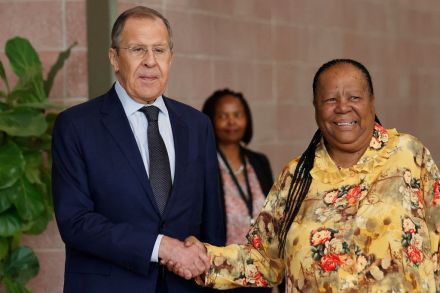
Vladimir Putin’s invasion of Ukraine opened the most dramatic divide between East and West since the Cold War. Most of these divisions were clear beforehand — Hungary and Turkey were longtime thorns in the side of NATO, for example. Yet South Africa’s warming ties with Russia and China seemed to come out of nowhere. South Africa's initial reaction to the invasion was the same as much of the Western world, demanding that Russia leave Ukraine. That did not last, however. South African President Cyril Ramaphosa said on March 17 that “The war could have been avoided if NATO had heeded the warnings from amongst its own leaders and officials over the years that its eastward expansion would lead to greater, not less, instability in the region.

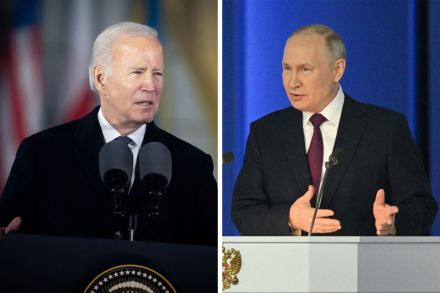
The contrast between Biden’s and Putin’s speeches

From our US edition

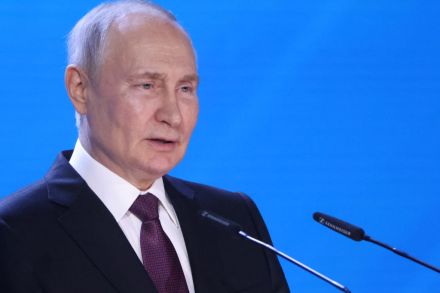
The contrast between the two presidents could hardly be starker. One is dwelling in his own dream palace, indulging fantasies about a return to superpower status while transforming his dismal fiefdom into a larger North Korea. The other is on a roll, creating a new grand alliance to prevent his foe from claiming suzerainty over Ukraine and engaging in further territorial predation. In his state of the nation address on Tuesday, Vladimir Putin served up his usual nauseating soup of anti-Western conspiracy theories, complete with references to Ukraine’s “neo-Nazi regime” and a Western “totalitarian” mission. If anyone knows anything about totalitarian impulses, it’s Putin himself.

leader loser

How Pink Floyd drama erupted over global politics

From our US edition

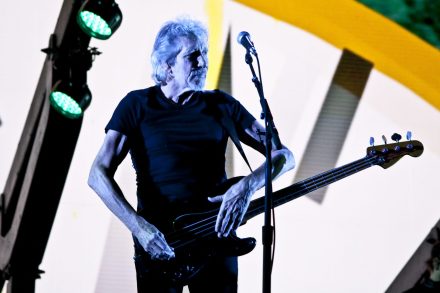
The author and lyricist Polly Samson did not mince her words earlier this month when she attacked the musician Roger Waters on Twitter. She described him as “anti-Semitic to your rotten core. Also a Putin apologist and a lying, thieving, hypocritical, tax-avoiding, lip-synching, misogynistic, sick-with-envy, megalomaniac.” She ended with “Enough of your nonsense.” Not only did her husband, Pink Floyd singer and guitarist David Gilmour, retweet her attack on his former bandmate, he added, “Every word demonstrably true.” Waters’s response was to tweet, with appropriate pomposity, “Roger Waters is aware of the incendiary and wildly inaccurate comments made about him on Twitter by Polly Samson which he rejects utterly.

Trump is wrong that the US should negotiate peace in Ukraine

From our US edition

The GOP’s foreign policy doves and soft isolationists have grown stronger, with 40 percent of “Republican and Republican-leaning independents” saying the US is giving too much aid to Ukraine. Former president Donald Trump has now taken up the mantle of this movement, firmly anchoring himself to the anti-Ukraine aid faction of the party. Trump recently gave an interview to radio host Hugh Hewitt in which he made one thing clear: he’s no fan of aiding Ukraine. Asked about sending F-16s, Trump said, “I think the United States should negotiate peace between these two countries, and I don’t think they should be sending very much.” When Hewitt asked if the former president would cut aid to Kyiv, Trump responded, “we’ve got to make peace.

The balloon is a Chinese middle finger to the US

From our US edition

Military fighter jets have just shot down the Chinese Communist Party's gigantic spy balloon that had been hovering about 60,000 feet over the United States. The balloon was "taken care of," to quote President Biden, over the Atlantic Ocean, off the coast of South Carolina. Prior to the maneuver, the balloon drifted, unharmed, over our sensitive military sites and fellow citizens. It lingered there, doing what Chinese President Xi Jinping pleased, while rightfully indignant members of Congress representing those violated states took to press releases and cable TV to demand the federal government secure our sovereign airspace. All of this was no doubt churned back through the CCP's propaganda outlets, smearing America as divided, weak, and foolish.

Russia’s military disaster could lead to famine in the Caucasus

Two years ago, 13-year-old singer Maléna was rehearsing for Eurovision Junior when war broke out. While her rivals battled in Warsaw on stage, she stayed home in Armenia. Young men picked up AK-47s to fight against their Azerbaijani neighbours in the disputed region of Nagorno-Karabakh. More than 4,000 never returned. A year later, Maléna re-entered Eurovision Junior and won, giving her country the right to host Eurovision Junior in December 2022. Armenian authorities staged celebrations in the capital, Yerevan. Crowds huddled around outdoor televisions in the central square to watch the show. A group of young musicians from Nagorno-Karabakh joined the party in Yerevan, coming into the capital on the only road that links the capital to the breakaway region.

The rise of Sudden Oligarch Death Syndrome

From our US edition

Since Moscow launched the invasion of Ukraine in February, the deaths of Russian oligarchs seem to be constantly in the headlines. Despite the official causes of death given, Cockburn has a sneaking suspicion that Vladimir Putin might have something to do with it. Death by unusual, news-making circumstances is a hallmark of his regime. The Russian leader intends for such deaths to make the news and for the world to blame the Kremlin for them. It forms part of his strategy of intimidating potential opponents and dissidents. Enemies of Putin that have gone to the West have faced radiation poisoning and attacks with powerful nerve agents. Those who have countered Putin in Russian politics have been jailed or gunned down in the streets. Now, apparently, oligarchs are in the crosshairs.

sanctions putin russia davos oligarch

The year the Russian empire really collapsed

In a quiet suburb of Moscow, a twenty-minute metro ride from the Kremlin, is the Soviet Union’s answer to Disneyland. Between a budget supermarket and a teacher training college is the Exhibition of Achievements of National Economy, known to locals by its Russian-language acronym, VDNKh. The ‘Kh’ is said like you are clearing your throat. Every year, tens of thousands of visitors pass under the triumphal arch that stands at the entrance to the VDNKh. It looks like London’s Marble Arch and is topped with two gold-plated proletarians holding up a bundle of wheat. Past it, there’s stalls selling hot dogs, an imposing statue of Lenin, and a water fountain that plays out old Communist songs. The main attraction, though, is the horseshoe of pavilions around the park.