Vienna

Fresh, original Mozart

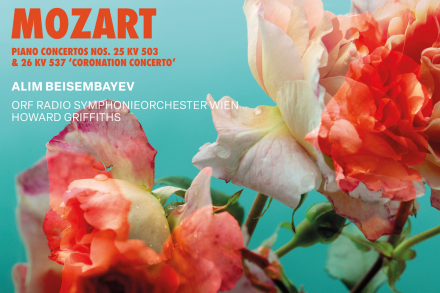
It’s spring in Vienna; well, OK, it’s early summer but it’s a gray day when Mozart doesn’t make you feel younger and I reckon this new release from Alim Beisembayev will do just that. In a world of infinite entertainment possibilities, Beisembayev has done the hard bit – the choosing – for you. Here we have two late piano concertos (Mozart wrote them between the ages of 30 and 32, as his own solo career wound down) charged with a grandeur, a playfulness and an endless smiling compassion that will come as a glorious corrective to anyone whose last experience of Mozart involved bodily fluids and confectionery in Sky’s hellish remake of Amadeus.

mozart

The Panic of 1873 seems eerily familiar

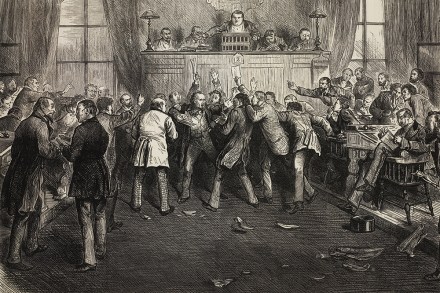
On 18 September 1873, the leading American bank Jay Cooke & Co collapsed after a disastrous bet on the railroad boom. Like the bankruptcy of Lehman Brothers in 2008, it was a watershed moment in an unfolding global financial crisis. Yet ‘the first Great Depression’, which lasted until 1896, is now mostly forgotten, despite some intriguing parallels to contemporary events and a fascinating dramatis personae, which includes the Rothschilds, Ottoman sultans and Otto von Bismarck. The Panic of 1873 and its aftermath took place in a period of financial globalisation and technological growth, with bond markets funding the epochal projects of America’s first transcontinental railroad and the Suez Canal. US railroads were the artificial intelligence investment of the day.

An outpouring of jaunty black comedy

In 2005 Xandra Bingley published Bertie, May and Mrs Fish, an extraordinarily lively and enjoyable memoir of her childhood on a Cotswold farm during the second world war. Much of the writing was glancing rather than straightforward, its narrative not strictly chronological, while its title hinted at something not fully explained in the text. Dispensing altogether with conventional punctuation, the book contained not a single comma or quotation mark, using instead ellipses. This was brilliantly imitative of both the clipped speech of its upper-class characters, particularly when facing disasters large and small, and the hell-for-leather pace of lives spent galloping on horseback across the Gloucestershire countryside.

The joy of composers’ graves

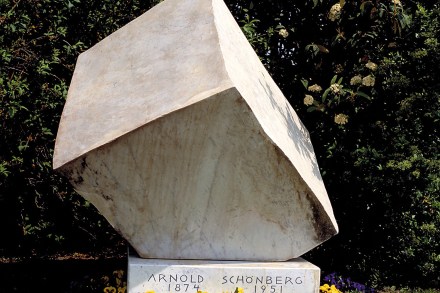
I called on Hugo Wolf the other week, and he didn’t look too great. He wouldn’t, of course; he died in a mental asylum in 1903 after suicide attempts, professional disappointment and the slow poison of tertiary syphilis. His face gazes glumly out from his monument in Vienna: above him, a single laurel branch, beneath him an eternal flame. But at least he’s not alone. A muscular youth, semi-ripped, looks away at one side. And on the other, a naked couple clinch in a passionate embrace. Talk about rubbing it in. It’s not that I make a habit of hanging around composers’ graves, you understand. But somewhere along the way I seem to have notched up an awful lot of these posthumous courtesy calls. With the big beasts – Beethoven, Mahler and co.

Alice in Nightmareland: The Matchbox Girl, by Alice Jolly, reviewed

Vienna, 25 July 1934 is a significant date in Austria’s history. But in The Matchbox Girl, the big events happen offstage, the world seen entirely through the eyes of its youthful narrator. We focus not on the assassination of Chancellor Dollfuss and a failed Nazi coup, but the children’s hospital, where 12-year-old Adelheid Brunner is waiting to be assessed for admission because she’s mute – designated ‘special’. Or, as her grandmother puts it, hopeless, ‘an idiot’. In the tall, shabby hospital, the young inmates are a protected community, closely observed by a team of specialist doctors, among them young Hans Asperger, later to find fame with his syndrome. Sister Victorine, a patient, saintly nun, oversees the gaggle of unruly, sometimes frenzied children.

Hope springs eternal: The Café with No Name, by Robert Seethaler, reviewed

Call it a mosaic. Here it all is – the pathos of a botched first date, a birth, a death, a feud, a stumble into love. The Café With No Name deals with the small dramas of everyday life.  The setting is Vienna – not the elegant city of Schönbrunn but the Karmelitermarkt, one of the poorest districts, debris from Allied bombs still filling the basements in 1966. Robert Simon has worked in the market for seven years, shifting crates of swedes, restacking firewood, cleaning the floor at the fishmonger. He enjoys his work, but he’s 31 and restless. He finds himself casting a speculative eye at the café on the corner, shabby and abandoned, ivy climbing up the wall. His landlady, a war widow, encourages him: ‘You always need a bit more hope than worries.

In search of kindred spirits: An Absence of Cousins, by Lore Segal, reviewed

In Lore Segal’s An Absence of Cousins, Nat Cohn, a fellow at the Concordance Institute, a small college in Connecticut, browses through a children’s novel during a staff meeting and exclaims: ‘We don’t write stories like this any more. Chronic plot deficiency is our problem.’ The problem for contemporary novelists is that tightly woven plots of cause and effect belie the way their readers experience the world. Like her compatriot Elizabeth Strout in Olive Kitteridge and Olive Again, Segal addresses it by featuring a single protagonist, Ilka Weisz, a young Austrian émigrée, and various recurring subsidiary characters, in a series of closely interlinked stories.

Hero and villain: The Two Loves of Sophie Strom, by Sam Taylor, reviewed

Counterfactual thinking can be compelling. We imagine love affairs missed out on, tragedies averted. What if I hadn’t boarded that bus or woken from that sleep? Sam Taylor throws this thinking into a vital moment in a young boy’s life that has massive, world- historical resonance. Vienna, 1933. Nazi sympathisers burn down the flat of a Jewish family. Max Spiegelman, aged 13, escapes, but his parents burn to death. Or do they? In a parallel narrative, Max awakes from this dream into the very fire he’s just dreamed about, early enough to rescue his parents.

In defence of the EU

Eastern Europe is the graveyard of empires. Rome failed on the Danube, Napoleon on the Dnieper. The epic struggle between the empires of Austria, Russia and Turkey in the first world war ended with the destruction of all three and the fragmentation of eastern Europe, giving rise to the word ‘Balkanisation’. Driving through the Balkans today, I am continually reminded that history has no full stops. Every empire leaves its ghosts to haunt its successors. Vienna, like London, is an imperial city without an empire. The ethnic antagonisms of the Balkans, which provoked the first world war, survived to divide Yugoslavia in the second and then destroy it in the 1990s. The region still wears the robes of the past.

The many lives of George Weidenfeld, legendary publisher and ladies’ man

‘You can go ahead,’ said the voice at the other end of the telephone. ‘The DPP has decided not to prosecute.’ It was the call that allowed the publication of Lolita, one of the greatest gambles of George Weidenfeld’s career. The moment George – it is impossible to think of him as anything other than George – had read this controversial book, available from the Olympia Press in Paris, known for its pornographic list, he had wanted to publish it himself; but as the law then stood, it would have been pulped immediately, owing to its story of a middle-aged professor who becomes obsessed with a 12-year-old girl and kidnaps and sexually abuses her.

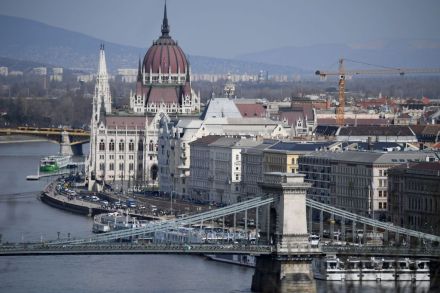
Reminders of the Cold War in Vienna and Budapest

From our US edition

Apparently an acquaintance has dubbed me the “Kremlinologist of the right.” Redolent as it is of the Cold War-era drama surrounding the Kremlin, when the West was desperately trying to suss out what Winston Churchill called a riddle wrapped in a mystery inside an enigma, I could hardly object to this quip upon learning of it. Indeed, I recently traveled to two hot spots of the Cold War, Vienna and Budapest. I went full immersion in Vienna, where I attended a screening of Orson Welles’s The Third Man, a humdinger of a movie if there ever was one. Graham Greene set it in postwar Vienna, which was divided between the four occupying powers, France, Great Britain, America and the Soviet Union.

Cold War

Love in the shadow of the Nazi threat

The 1930s saw Walter Benjamin write The Work of Art in the Age of Mechanical Reproduction, Marlene Dietrich rise to fame in The Blue Angel and Pablo Picasso paint ‘Guernica’. If history books mention these events, it’s usually as footnotes to the main European narrative of the pre-war decade. To shift the rise of Nazism, the Spanish Civil War, the Great Terror and other landmarks to the background, one could turn to the cultural history, or the micro-history. In his new book, the German art historian Florian Illies combines both genres to reconstruct the 1930s. Snippets from period documents, including private letters and diaries of notable figures of European and American culture, are distilled into short (between a couple of lines and a few paragraphs) episodes.

What the Royal Society of Chemistry gets wrong about free speech

Why has the Royal Society of Chemistry published a 37 page opinion piece entitled 'Academic free speech or right-wing grievance?' in their new journal Digital Discovery? Digital Discovery publishes 'theoretical and experimental research at the intersection of chemistry, materials science and biotechnology' focusing on 'the development and application of machine learning'. So it is a little surprising for them to publish a piece that 'argues that those who wish to have an honest debate about the limits around freedom of speech need to engage that conversation in a manner that avoids resonance with the language of White (heterosexual, cisgender male) supremacy, lest their arguments provide intellectual cover to those who would attack historically marginalised communities'.

Was this footballer killed for scoring against the Nazis?

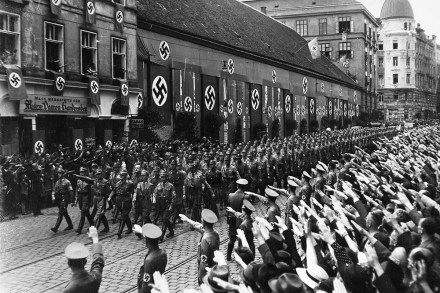
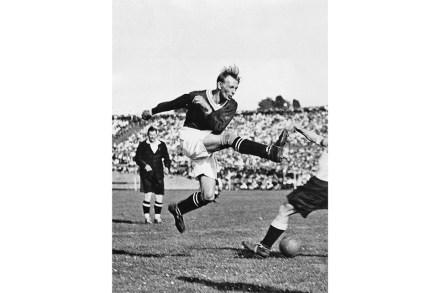
Vienna, April 1938. To mark the Anschluss, the annexation of Austria by the Third Reich, the German football team plays a match against the Austrian team, which will cease to exist when the match is over. The Austrians are much better, but can’t seem to score – aha, the match has been fixed by the Nazis. And then, in the 70th minute, Austria’s best player, Matthias Sindelar, can’t take the pretence any more and puts the ball in the German net. At the end of the match, to underline his feelings, he performs a victory dance in front of the Nazi dignitaries. This might sound like fiction but it really happened. Sindelar, the ‘Paper Man’ of this book’s title, was 35 at the time, and, in his prime, had been probably the best player in the world.

How to make the most of Vienna’s Christmas markets

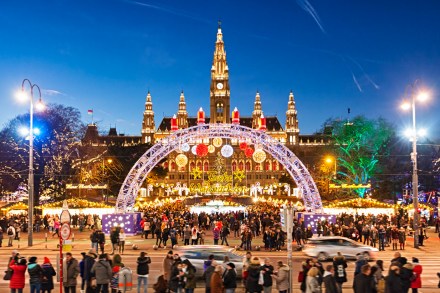
Oh, Vienna. Home to Mozart, Beethoven, Haydn, Freud, the Danube, waltzing and coffee house culture, to name but a few. Famous for its history and culture, the Austrian capital’s cobbled streets fizz with stories of ages past.  In my opinion, there is no better time to visit than in the winter – and the run-up to Christmas in particular. This city knows how to do Christmas. The streets are lit with a plethora of Christmas lights, some of which have acquired fame in their own right (I am told a friendly rivalry exists between the fans of the chandeliers on Graben – designed to create the impression of a gigantic outdoor ballroom – and the ‘curtain of lights’ around the corner on Kohlmarkt).  But the biggest draw of all are Vienna’s Christmas markets.

Biden finalizes terrible new Iran deal

From our US edition

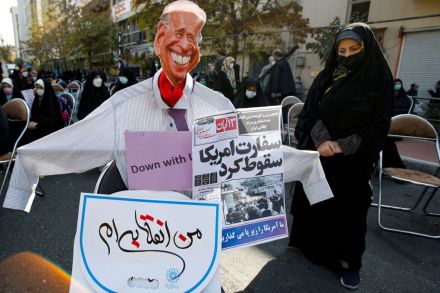
Several sources in the negotiating team in Vienna tell Cockburn we can expect a "new Iran deal" between the Biden administration and the mullahs as early as Thursday morning. For the last few months, Iran has been behaving stubbornly in negotiations, refusing to back down from its “red lines,” including lifting sanctions on Supreme Leader Ali Khamenei and the Islamic Revolutionary Guard Corps. Instead, it's kept to the original timeline on the Iran deal, which would allow it to test ballistic missiles next year and remove all restrictions by 2030. Now, Iran’s resolve seems to have paid off. Sanctions: Cockburn's sources say the Biden team is set to waive virtually all sanctions on Iran.

iran

The trouble with Austria’s vaccine passport plan

Are vaccine passports being used in other countries in an attempt to cut Covid infections – or to try and boost vaccine take up by curtailing the social lives of those who refuse? The latest change in policy in Austria would appear to confirm that for them, it’s the latter. From today, access to restaurants, bars and any event with more than 25 guests will be limited to people who can prove they have been fully vaccinated, that they have previously recovered from Covid or that they have had one jab and a negative PCR test. In four weeks’ time, only the double-jabbed and those who can show they have recovered from Covid will be allowed in. Austria, like many EU countries, has had a vaccine passport scheme for several months.

Waiting for Gödel is over: the reclusive genius emerges from the shadows

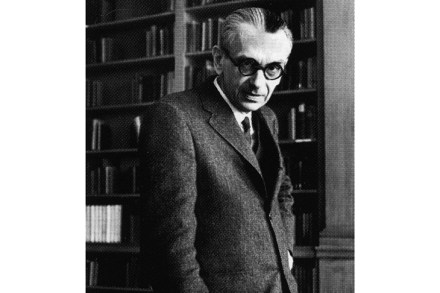
The 20th-century Austrian mathematician Kurt Gödel did his level best to live in the world as his philosophical hero Gottfried Wilhelm Leibniz imagined it: a place of pre-established harmony, whose patterns are accessible to reason. It’s an optimistic world, and a theological one: a universe presided over by a God who does not play dice. It’s most decidedly not a 20th-century world, but ‘in any case’, as Gödel himself once commented, ‘there is no reason to trust blindly in the spirit of the time’. His fellow mathematician Paul Erdös was appalled: ‘You became a mathematician so that people should study you,’ he complained, ‘not that you should study Leibnitz.

There’s no better sonic hangover cure: New Year’s Day Concert reviewed

The best moment in the Vienna Philharmonic’s annual New Year’s Day Concert comes after the end of the advertised programme. The conductor gives a tiny gesture, the violins start a shimmer of tremolando, and a ripple of applause spreads through the hall. At this point, if you’re watching with first-timers, they’ll look at you, surprised. Why have they stopped? And you smile, because you know what the conductor knows, what the orchestra knows and what even the audience in the Musikverein — those bejewelled Eurostiffs in their £1,000 seats — knows. We’re about to hear The Blue Danube, and music doesn’t get any better than that. Well, that’s how it feels to me, anyway.

The forgotten female composer fêted by Mozart and Haydn

A few years ago, I was sitting in the London Library researching a book about blind people across the ages. As a semi-blind person myself, I sighed at the lack of women, other than the endlessly chipper Helen Keller, who never had a bad day. Ever. My sister, however, drew my attention to a two-line wiki entry for the 18th-century composer, singer and professor — and darling of the Viennese musical court — Maria Theresia von Paradis (1759–1824). Ten years passed, and after many hours of research in libraries and chats with music scholars, we now find ourselves — to our utter amazement — co-writing a chamber opera about her life.