Vienna

An elegy for Vienna

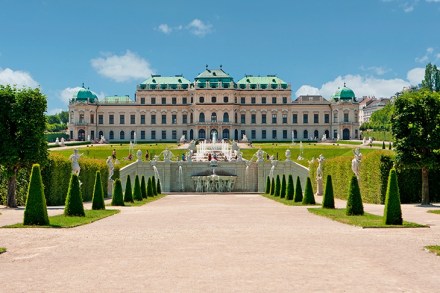
Vienna Somebody once described Vienna as a top opera performed by understudies. The remark was unquestionably witty, but utterly false when it was made. It is perfectly true today, however. During the 650-year rule of the Habsburgs, Vienna reigned supreme, an opera sung by its greatest stars. It is the present-day Vienna, which has lost its empire, its imperial family and its power, that is sung by the understudies. I’ve just spent three days there, in Harry Lime time.

Civilized caffeination

From our US edition

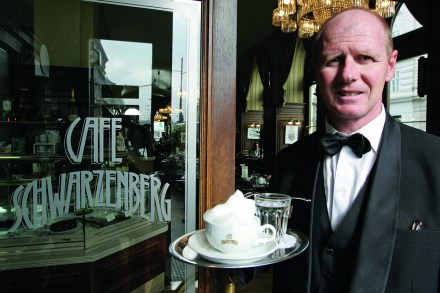
Palaces, art galleries, parks, composers’ houses, operas, concerts, Spanish Riding School horses, full-throated choirboys wearing sailor suits...yes, I go to Vienna for all these delights. But, deep down, probing my true desires and motives, I really go there for the coffeehouses. It’s just that to make the coffeehouse experience the most delicious it can be, you need to arrive cold, hungry, intellectually stimulated and with aching feet from visiting one of the above attractions. Then you’ll feel the warmth seeping into you as you sink down onto a coffeehouse banquette.

viennese coffeehouse

The rude, ripe tastelessness of John Eliot Gardiner’s Berlioz is the perfect antidote to Haitink’s Instagram Bruckner

Conducting is one of those professions — being monarch is perhaps another — where the less you do, the more everyone loves you. Orchestral players, for example, tend not to complain about being let off early from rehearsals. I prefer my maestros to have their head under the bonnet: loosening, tightening, fixing, replacing. Much of the classical music world, however, fetishises the idea of ‘letting the music speak for itself’. As if ‘the music’ were an objective thing. As if the score were a rendering that could be printed out in 3D, rather than a map to be deciphered and interpreted.

The Rite stuff

It was Stravinsky himself who suggested that, in order to preserve its difficulty, the opening bassoon solo of The Rite of Spring should be raised by a semitone every decade. And it was a performance by Birmingham Royal Ballet in 2005 that convinced me that he wasn’t entirely joking. The audience nattered away over the opening bars; the unlucky bassoonist wobbled and cracked. Clearly, this orchestra was not remotely prepared for what was about to hit it. Rhythms splintered like shrapnel and misplaced entries spattered across every silence. As they hurtled into the final Sacrificial Dance, you could almost hear the prayers of musicians audibly struggling simply to hang on. It’s still, without question, the most thrilling Rite of Spring I’ve ever heard.

Life ‘n’ Arts Podcast: History and Ism’s with David Pryce-Jones

In this week’s Spectator USA Life ’n’ Arts podcast, I’m casting the pod with David Pryce-Jones. Novelist, correspondent, historian, editor at National Review and, most recently, author of the autobiography and family history Fault Lines, Pryce-Jones has the longest association with the Spectator of any Life ’n’ Arts podcaster yet. In 1963, Pryce-Jones began his literary journey to the status of national treasure on both sides of the Pond by becoming books’ editor of our London mothership. ‘My past seems unbelievable. I can’t explain it to myself, let alone anyone else,’ Pryce-Jones says. Now into his ninth decade, he is a living history of modern letters, and a key witness to the events of the twentieth-century.

All together now | 18 October 2018

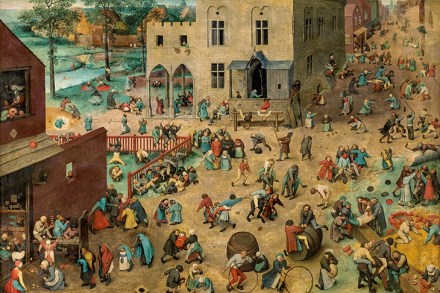
‘About suffering’, W.H. Auden memorably argued in his poem ‘Musée des Beaux Arts’, the old masters ‘were never wrong’. Great and terrible events — martyrdoms and nativities — took place amid everyday life, while other people were eating, opening a window or ‘just walking dully along’. As an example, Auden took ‘The Fall of Icarus’ by Pieter Bruegel the Elder. As it happens, Auden himself was wrong there, because the work he cited is no long thought to be by the painter after all. This picture is not, therefore, included in the exhibition Bruegel at the Kunsthistorisches Museum, Vienna.

Charming old fox

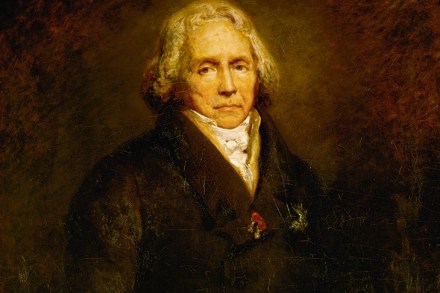
Talleyrand was 76 when he took up the post of French ambassador in London in 1830. Linda Kelly deals only with the last phase of Talleyrand’s long and tumultuous career, but this short book brings him marvellously to life. He was not an impressive figure. Little over 5’3” in height, he walked with a limp —one leg was in an iron brace. ‘Always dress slowly when you are in a hurry,’ was one of his maxims, and each morning during his lengthy toilette his valet coiffed his long, straggly white locks with curling tongs. One wag described him as ‘a big packet of flannel enveloped in a blue coat and surmounted by a death’s head covered in parchment’.

Carry on Don

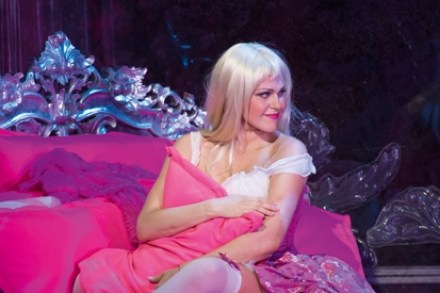
One of these days I will probably see a production of Don Giovanni set in a research station in the Antarctic. English Touring Opera, ambitious and valiant, haven’t gone that far yet. But Lloyd Wood’s new staging, part of an ETO threesome now hopping round the country, still makes the eyebrows shoot up. This time the Don and his girl bevy are scuttling round the Viennese sewers, circa 1900. Well, that’s what the programme booklet tells us; though if it hadn’t been for Elvira’s Wiener Werkstätte dress, the hint of a Klimt mosaic and a tiddly horn gramophone, you might just accept Anna Fleischle’s grim designs as a fair solution to the simple need for a single set, easily transported.

Spot the ball

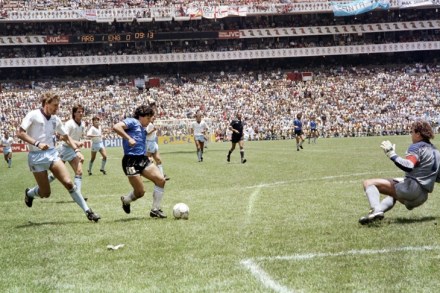
The purest form of radio is probably sports commentating, creating pictures in the mind purely through language so that by some magic the listener believes that they were there, too, when Geoff Hurst scored that final goal, Shergar ran out the field at Epsom, Mo Farah sped ahead on Super Saturday. As Mike Costello said last Thursday on Radio Five Live’s celebration of 90 years since the first outside broadcast from a rugby match on 15 January 1927, ‘We’re all blind when we listen now, just as we were back in the 1930s.’ The technology has changed radically but radio still relies on the skill of an inspired individual to communicate the atmosphere, the tension, the thrill of seeing something extraordinary happening in a sports arena.

Brahms’s benders

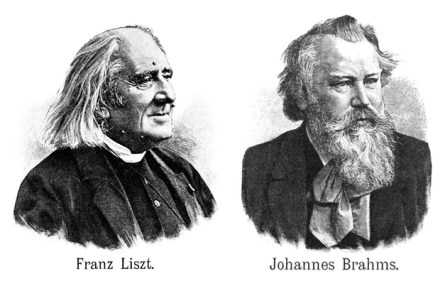
‘Brahms and Liszt’ is a lovely bit of rhyming slang, but it doesn’t have the ring of authenticity. Can you really imagine cockney barrow boys whistling tunes from the Tragic Overture and the Transcendental Études? Also, the Oxford English Dictionary reckons it only dates back to the 1930s. It always made me snigger, though, because it conjured up an implausible vision of pompous beardy Johannes and the social-climbing Abbé rolling around legless. Not so implausible, it turns out. The other day I was reading a review of a new life of Liszt by Oliver Hilmes that reveals ‘hair-raising episodes of drunkenness’ in his later years.

Hero or collaborator?

Steve Silberman’s stunning new book looks across history, back to Henry Cavendish, the 18th-century natural scientist who discovered hydrogen, Hugo Gernsbach, the early-20th-century inventor and pioneer of amateur ‘wireless’ radio, and countless other technically brilliant but socially awkward, eccentric non-conformists, members of the ‘neurotribe’ we now call the autism spectrum. He argues passionately for the ‘neurodiversity’ model rather than the medical disease model, for society to stop trying to ‘cure’ or ‘normalise’ those with autism, but to recognise them as neurologically differently wired, to accept difference, and support their disabilities when these surface in certain environments.

A deal for the good of the world, but in Vienna rather than Brussels

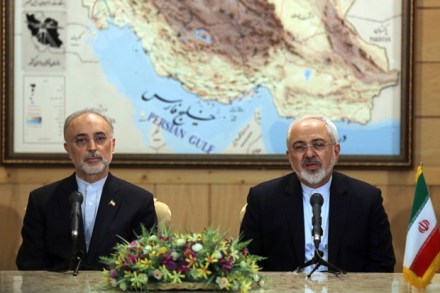
As an occasional lecturer on the abstruse topic of the efficacy of sanctions in conflict resolution, I find myself much more excited about the emergence in Vienna of a settlement of the Iranian nuclear stand-off than I am about a third Greek bailout — which left-wingers of the Syriza party regard as a vindictive form of sanctions regime designed to humiliate the government in Athens and remove its fiscal autonomy. The only thing that’s clear about the Greek crisis is that it’s not over: impossible to see how it could be ‘over’ without the debt relief Prime Minister Tspiras asked for but the Germans adamantly refused.

The Iranian regime is anti-Western and anti-Semitic. Can we really trust its nuclear deal?

It is often said that British ambition and influence in the world are on the wane. But there can be few greater demonstrations of this than our country’s lack of attention to one of the biggest issues of our time. I am in Washington at the moment, and have been admiring how intensely the Vienna negotiations have been on the political and news agendas here. But in Britain? Obviously the British Foreign Secretary, Philip Hammond, has been involved in the P5+1 talks. But it would have been easy to miss the fact. There has been no meaningful criticisms from within the Conservative party to the deal which Philip Hammond has just put this country’s name to.

Pliny the Younger on Fifa

In any huge enterprise (like Fifa), where does the rot begin? Pliny the Younger mused on this question in a letter to a friend about a games festival held in the Roman colony Vienna (Vienne, south of Lyons). Vienna had been celebrating Greek-style gymnastic games as a result of a bequest, when the town’s mayor decided to abolish them; they were corrupting, unlike good, honest Roman games. The case was contested and came before the emperor in Rome, with Pliny one of the assessors. There the mayor, ‘a true Roman and fine citizen’, came out on top. He was supported, Pliny wrote, by one Mauricus, another Roman famed for straight talking. Courageously, in Pliny’s view, Mauricus expressed the opinion that such Greek fripperies had no place in Rome either.

Letters | 7 May 2015

Bees vs Belgians Sir: To answer Rory Sutherland and Glen Weyl’s question: yes, everyone should vote and no, just because someone is more interested in politics, his opinion should not count more heavily (‘Plan Bee’, 2 May). Belgium has had compulsory voting for over a century. The troubles that follow every general election may seem to make it a strange example to follow, but those troubles are a consequence of the fragmented political landscape and not of the polling system. Compulsory voting motivates people to stay informed and care about what is happening to their country. It is, however, only compulsory to show up at the polling station, not to cast a valid vote, so the happily apathetic can draw a chicken or write a poem on their ballot paper if they’d rather.

High life | 23 April 2015

A recent column in the FT made me mad as hell. The writer, Simon Kuper, calls Vienna a backwater, which is a bit like calling the Queen a busted flush because of her age. Sure, he writes how great Vienna was back when the Habsburgs ruled the roost, attracting people from all over, ‘some of them nuts’. He includes Freud, Hitler, Stalin and Trotsky. Not the nicest bunch I can think of, but then the paper is a pink one. He fears London might go the way of Vienna, and price itself out of the reach of everyone but a few Chinese, Russian and Indian billionaires. He’s right about London but dead wrong where Vienna is concerned. (Vienna, incidentally, is dirt cheap.

Vienna is a crossroads of the world again – but something’s missing

People get the wrong idea about Vienna and I blame Johann Strauss. His plinky-plonky waltzes have become the soundtrack to the city, cementing Vienna’s public image as a place of balls and carriages and cream cakes. It’s an image the tourist board is keen to cultivate, and it makes good business sense. Tour groups visit the Spanish Riding School and the Vienna Boys’ Choir, eat a slice of Sachertorte and depart contented. It makes for a happy holiday, but Vienna is much more interesting than that. Like a lot of stereotypes, Viennese clichés have some substance. Once upon a time, this was the mecca of modern music: Schubert was the local hero; Haydn, Mozart, Beethoven, Brahms and Wagner hung out here.

The Nazi origins of the Vienna Phil’s New Year’s Day concert

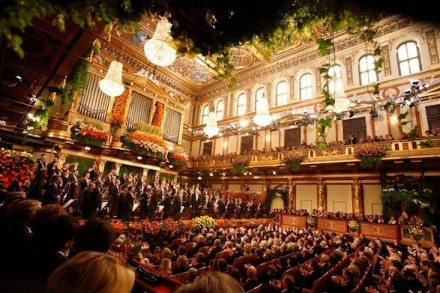
It may be the last water-cooler moment in world television. On the first morning of the year, at 11.15 Central European Time, in a place that considers itself the epicentre of Europe, a group of men in formal dress mount the Musikvereinssaal stage in Vienna to perform a ritual that passes for culture and tradition. It is, of course, neither. The music is strictly bar-room, written by members of the Strauss family as social foreplay for the soldiery and serving classes in low taverns. Like most forms of dirty dancing, the music rose vertically from barroom to ballroom and was soon performed as encores by symphonic orchestras to dowager purrs of wie schön. The New Year’s Day concert is an annual jellybox of waltzes, polkas, galops, marches and any old tritsch-trash.

Egon Schiele at the Courtauld: a one-note samba of spindly limbs, nipples and pudenda

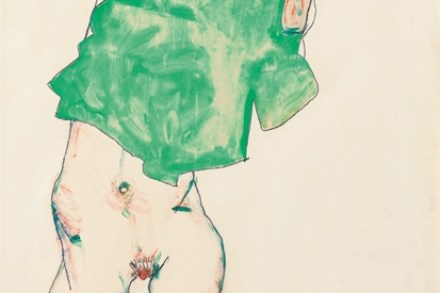
One day, as a student — or so the story goes — Egon Schiele called on Gustav Klimt, a celebrated older artist, and showed him a portfolio of drawings with the abrupt query, ‘Do I have talent?’ Klimt looked at them, then answered, ‘Much too much!’ One gets an inkling of what Klimt was getting at from the feverishly intense work on show in Egon Schiele: The Radical Nude. From childhood, Schiele drew with manic fluency. His father, a syphilitic stationmaster, was irritated to discover that a sketchbook, a gift to the boy intended to last for months, had been filled in less than a day.

Fischer’s is like visiting Vienna without having to go to Austria (thank God)

Fischer’s is Austria made safe for liberals, gays, Jews and other Untermenschen riffraff, because it is a restaurant, not a concentration camp, and because it is in Marylebone High Street, not Linz. It is the new restaurant from Chris Corbin and Jeremy King, who opened the Wolseley, the Delaunay and Brasserie Zédel, and it is more profound and lovely than any of them. There is always a clock in a Corbin and King restaurant, a big old clock from some fairytale train station, poised over the clientele as they stuff and age; for remembrance of mortality, I guess. Or maybe they just like big clocks?