John Armstrong

John Armstrong is Reader in Financial Mathematics at King's College London.

Why did it take the Olympics so long to see common sense?

From our UK edition

The International Olympic Committee looks set to ban males who identify as trans from all female sports after a review of the scientific evidence. World Athletics announced a similar ban way back in March 2023, but athletics is only one of the constellation of sports that make up the summer and winter Olympics. To say we should not presume male advantage in a sport unless we have specific data for that sport is like arguing that just because most of the apples in a tree have fallen to the ground, we shouldn’t presume the remaining apples are also subject to gravity The news follows a presentation last week by Dr Jane Thornton, the IOC’s medical chief, which described the many physical advantages retained by males undergoing testosterone suppression.

Why I am threatening to sue the London Mathematical Society

From our UK edition

Last month, in apparent defiance of the Supreme Court, the Council of the London Mathematical Society published a new Statement of Commitment to Trans Inclusion which states: ‘The LMS provides gender-neutral toilets and supports the use of facilities that align with a person’s affirmed identity.’ Many organisations have been slow to update their policies to reflect the Supreme Court’s April judgement that, for the purposes of the Equality Act, sex means biological sex. However, the LMS have gone one further. They have chosen to write their first ever trans policy after the judgement and this policy appears to openly flout the Court’s ruling.

Have a tenth of all gay people really had an exorcism?

From our UK edition

According to research commissioned by Stonewall, clerics are conducting one LGBTQ+ exorcism for every two religious wedding ceremony they perform. This shocking finding is the logical conclusion of Stonewall’s ‘Culture Wars and Hate’ survey which found that 10 per cent of LGBTQ+ people in the UK have experienced an exorcism which aimed to change their gender or sexual orientation. At first glance, this may seem to contradict the government’s National LGBT Survey which found in 2017 that only 2 per cent of LGBT people had undergone conversion practices. Perhaps there has been a recent boom in exorcisms? Stonewall’s full data set finds that that 8.2 per cent of LGBTQ+ people in the UK have experienced an exorcism in the last five years alone. Given there are 1.

The baffling decision to defund a national academy for mathematics

From our UK edition

The government has shocked the mathematics community by announcing that it is withdrawing £6 million in grant funding from a new Academy for Mathematical Sciences.  The impetus for creating this Academy came from a 2018 review chaired by professor Philip Bond. His review recommended how to maximize the benefits of mathematical sciences to the UK economy and to wider society. It drew on responses from a host of universities and all the learned societies in mathematics and was advised by a board of mathematical luminaries. Its number one recommendation was the creation of this new academy – which would improve links between academia, government and industry.

Why academia failed to challenge trans ideology

From our UK edition

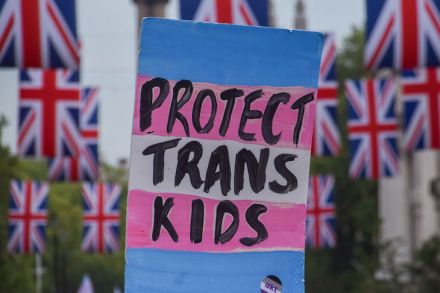
Dr Hilary Cass’s long-awaited review into healthcare for transgender children and young people was released this week. Her verdict was damning, and was delivered with Swiftian understatement: ‘The adoption of a medical treatment with uncertain risks, based on an unpublished trial that did not demonstrate clear benefit, is a departure from normal clinical practice.’ But perhaps even more shocking was this quote: ‘There is minimal research evidence to inform questions regarding likely trajectories and outcomes particularly in the context of: a) physical treatments (e.g. hormone blockers to suppress the onset of puberty); b) social transition (where a child presents to other people as their experienced gender e.g.

KCL’s sinister diversity and inclusion policies

From our UK edition

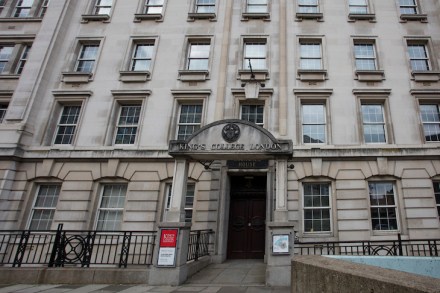
Last week the King’s College London LGBTQ staff network, called Proudly King’s, demonstrated its intellectual level and its view of women by tweeting a picture of a woman holding a banner saying ‘TERF FART (Feminist Appropriating Radical Transphobes)’.  If you thought that endorsing this kind of behaviour would make you less likely to be promoted to professor, you might be surprised to see the King’s academic promotion criteria.  To apply for promotion to Reader or Professor, academics at King’s must write five pages on research, teaching and administration and one further page devoted to ‘Inclusion and Support’.

Diversity and inclusion doesn’t belong in the maths curriculum

From our UK edition

In March, the Quality Assurance Agency for Higher Education (QAA) – an independent body which oversees standards and quality in UK universities – released new guidance on curriculum design in mathematics. This guidance states: ‘Values of EDI [Equality Diversity and Inclusion] should permeate the curriculum and every aspect of the learning experience.’ At least on the face of it, this guidance seems odd. University lecturers are not teaching racist courses on calculus or sexist proofs of the prime number theorem. There is, therefore, no need for the QAA to tell them that they shouldn’t do this. Can saying 2+2=4 be racist? Astonishingly, there is a hardcore of postmodernists who would say that it can.

What the Royal Society of Chemistry gets wrong about free speech

From our UK edition

Why has the Royal Society of Chemistry published a 37 page opinion piece entitled 'Academic free speech or right-wing grievance?' in their new journal Digital Discovery? Digital Discovery publishes 'theoretical and experimental research at the intersection of chemistry, materials science and biotechnology' focusing on 'the development and application of machine learning'. So it is a little surprising for them to publish a piece that 'argues that those who wish to have an honest debate about the limits around freedom of speech need to engage that conversation in a manner that avoids resonance with the language of White (heterosexual, cisgender male) supremacy, lest their arguments provide intellectual cover to those who would attack historically marginalised communities'.

Climate activism must not be allowed to undermine climate science

From our UK edition

Student activist Edred Whittingham baffled the snooker world last week by jumping onto the green baize at the Snooker World Championships in Sheffield and detonating a package of orange chalk across the table in a bid to end global warming. A few days earlier, the German government had baffled scientists by shutting down their three remaining nuclear power plants; this despite a despairing open letter from scientists, including two Nobel Laureates, explaining the plants’ potential to reduce Germany’s carbon footprint by up to 30 million tons of C02 per year. As these stories show, there is no shortage of good intentions to save the planet, but there remains scope for improvement in how we turn these good intentions into practical results.

World Athletics’ trans policy isn’t scientific

From our UK edition

This week it was revealed in the Telegraph that World Athletics is engaged in a confidential consultation with national governing bodies over the question of whether transwomen should be allowed to compete in the female category.   World Athletics’ current rules allow males to compete in the female category if their legal sex is female and they have held their serum testosterone levels below 5 nMol/l for 12 months. Their ‘preferred option’ in the consultation is to change the acceptable testosterone level to 2.5 nMol/l for 24 months.

LSE is right to cut ties with Stonewall

From our UK edition

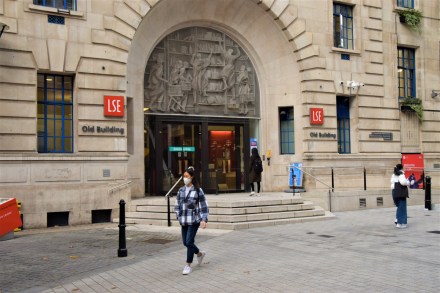
The London School of Economics (LSE) shocked their student union this week by informing them that the university is disaffiliating from Stonewall. The union responded with horror, demanding a consultation before reversing ‘the decision to disaffiliate’. The SU has also demanded the establishment of a ‘gender expression fund to pay for items necessary to support transition’ (the equivalent fund at UCL helps transwomen purchase essentials such as makeup) and a ‘designated queer space on campus.

It’s not just social science that could do with more mathematics

From our UK edition

The physics department at King’s College London offers a module called ‘Gender Action’. Students studying this module go into schools and nurseries to work on projects related to the elimination of gender stereotypes. The course is run in association with a charity, also called Gender Action, who explain on their website that the problem with phrases such as ‘boys will be boys’ is that they imply ‘a person’s biological sex is fixed.’ A study which is required reading for one week of the course explains how ‘the most propitious means for dismantling patriarchal language’ is to modify discourse ‘to consider sexual difference as contiguous, rather than hierarchical.

Academic freedom is being stifled at Imperial College London

From our UK edition

We have become used to the erosion of academic freedom in the humanities and social sciences. It is no longer surprising to find that a Gender Studies department holds the institutional view that it is racist and colonialist to say that sex is binary, or promotes a student essay which fantasises about holding a knife to the throat of gender-critical women.   But attacks on academic freedom are not restricted to gender studies and anthropology departments anymore. Academics in all fields are now under pressure to conform to fashionable theories on gender and race. Indeed, science-focused institutions can, paradoxically, be especially susceptible to this, because of their lack of expertise when it comes to social issues.

The sinister attempts to ‘decolonise’ mathematics

From our UK edition

Mathematicians in British universities are now being asked to ‘decolonise’ the curriculum. This autumn, the Quality Assurance Agency for Higher Education (QAA) – an independent charity which reviews university courses – launched a consultation that urged universities to teach a ‘decolonised view’ of mathematics.   It is easy when you work at a university to roll your eyes at this sort of thing and play along. But as a mathematics academic, I felt it was my duty to challenge this unscientific proposal. This week I published an open letter to the QAA criticising their consultation and was delighted that a number of high-profile professors and mathematicians from minority groups agreed to add their signatures.