Vaccines

Travel quarantine scrapped for double-jabbed

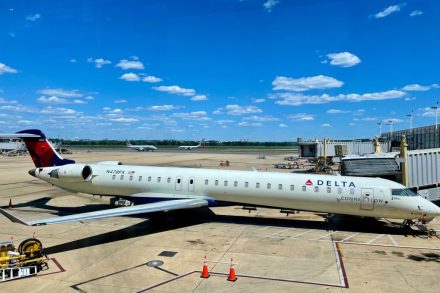
International travel rules will be relaxed on 19 June as part of the wider scrapping of social distancing rules and masks. Transport secretary Grant Shapps told the House of Commons that those entering England from green and amber nations will not be expected to self-isolate — provided they are fully vaccinated. In practice, what this means is that British summer holidays have been given the go ahead. France, Spain, Portugal and Italy are all on the amber travel list. Currently, the rules state that returning travellers must isolate for ten days, as well as complete a day two and day eight test. That second test has also been scrapped.  The crucial point is that the relaxation is only for those that have been fully vaccinated.
What is the purpose of test and trace?

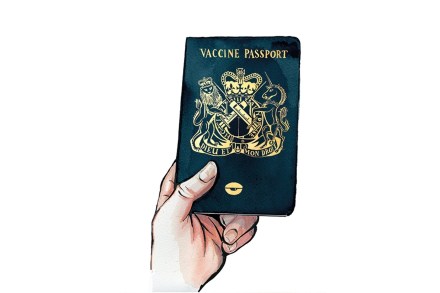
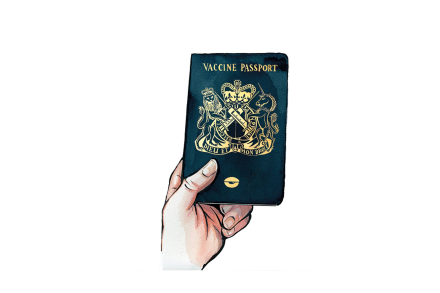
At yesterday’s press conference, Boris Johnson announced that his government was shelving plans for domestic ‘Covid certificates’ (i.e. vaccine passports), at least for the time being, although this won’t stop private businesses or venues from deciding to use them.  We also learned today that it won’t stop the creation of a two-tier system (as Lara Prendergast warned months ago) for the ‘jabs and jab nots’. New policies have been confirmed that will allow for the double-jabbed to skip quarantine if they’ve been in contact with someone who tests positive for Covid-19 (with exemptions granted to under-18s as well).

Boris’s ‘freedom day’ spells misery for many

The projection from Sajid Javid that Covid-19 infections could surge to a record 100,000 per day in a few weeks, as all social distancing and mask-wearing regulations are removed, is especially terrifying for those whose immune systems are impaired or are clinically vulnerable in other ways. There are millions of these frail people. For those whose immune systems are compromised or suppressed, the efficacy of vaccines is much reduced. For others among the frail, any residual risk of becoming infected is too great, because for them it is literally a matter of life or death.

Boris Johnson’s Covid double act

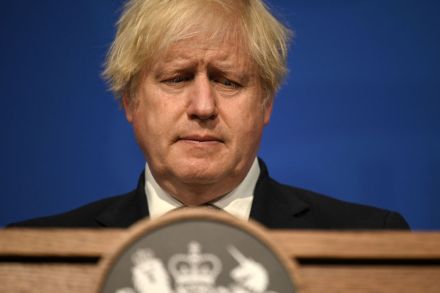
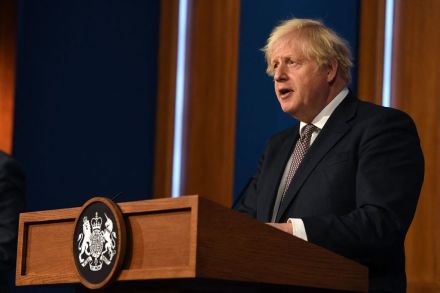
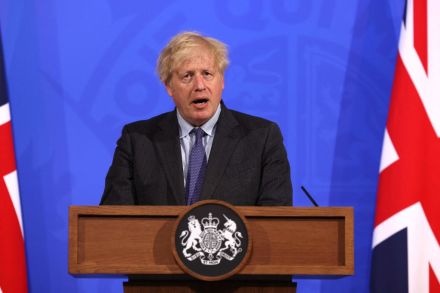
Boris Johnson used today's press conference to unveil the government's plan for stage four of the roadmap. Announcing that the public need to learn to live with Covid, the Prime Minister declared his intention from 19 July to reopen all remaining businesses, lift limits on gatherings and lift the bulk of rules on wearing a mask. While no final decision on what happens on 19 July will be made until next week, Johnson said it was time to move away from 'legal restrictions and allow people to make their own informed decisions'. Although the contents of the PM's statement points towards a big bang reopening, Johnson's tone was rather more cautious.

Should we be mixing AstraZeneca and Pfizer shots?

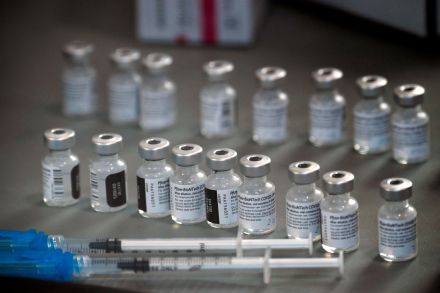
To date, the Covid vaccination programme in Britain has involved two doses of one of three vaccines – AstraZeneca, Pfizer or Moderna. But it has stuck rigidly to giving people two doses of the same vaccine. The NHS has not allowed patients to mix vaccines except in a few strict scenarios, such as allowing a second dose of Pfizer when someone developed a blood clot from a first dose of AstraZeneca. But could we actually improve vaccine efficacy by mixing doses? An Oxford study suggests that we could. The study recruited 830 volunteers who were given one vaccine shot. Some – on a blind, randomised basis – were, four weeks later, given a second shot of the same vaccine and others were given a different vaccine for their second shot.

When do vaccine incentives become coercive?

From our US edition

The vaccine programs launched this year appear to offer a Happy Ending to the Horrible Story of the COVID-19 Pandemic. But I am cautious. Not because I am ‘antivax’, but because lasting ‘ever afters’ are never written in the language of emotional manipulation and coercive control. Herd immunity, when enough people have either recovered from COVID or been vaccinated, will end the pandemic. The pressure to get there has given us a vaccination drive with an unprecedentedly strong behavioral psychology and emergency response approach. A panoply of persuasions has been deployed to encourage the hesitant, the slow and the complacent. From dating app bonuses to donuts, lotteries to laminated vaccination cards — when do incentives become coercive?

france vaccine

Boris Johnson delays the end of lockdown

Boris Johnson has this evening confirmed that he will delay the lifting of all Covid restrictions by four weeks to 19 July. Announcing the decision in a press conference, Johnson said the Indian variant – also known as the Delta variant – has changed the picture and meant the government was no longer able to proceed with the full unlocking plan they had first hoped.  The Prime Minister said two jabs were very effective against the new variant. The problem? 'There are still millions of younger adults who have not been vaccinated and sadly a proportion of the elderly and vulnerable may still succumb even if they have had two jabs,' Johnson said.

How serious is Britain’s third wave?

The link between Covid cases and hospitalisations has been broken, we keep being told – vaccination having reduced the severity of infections, especially among more vulnerable older groups. It is a point reinforced this morning by Public Health England which reveals that the number of cases of the delta (formerly Indian) variant have increased from 12,431 to 42,323 in a week, but without a corresponding rise in hospitalisations. But how true is it that what looks like a third wave in new infections will not be accompanied by a large wave of hospitalisations? Previous experience with Covid – using PHE data – suggests there is not a very long lag between cases and hospitalisations.

Why the vaccines should prevent a deadly third wave

Among the scientists and medics calling this week for caution in the government’s reopening of the economy was Dr Lisa Spencer, a consultant in Liverpool and honorary secretary of the British Thoracic Society, who warned on the Today programme on Tuesday that the country was covered with a series of ‘mini Covid volcanoes’ which ‘could explode and send a massive gas plume across much more of the UK.’ Her reasoning was that a quarter of adults could still be susceptible to Covid-19, either because the vaccine didn’t work for them or because they refused to have the vaccine at all. She suggested that 10 per cent of people might refuse to have the vaccine.

Could 21 June be delayed?

There are two key questions ahead of the 21 June reopening. First, as I say in the magazine this week, there is the issue of how much more transmissible the Indian variant is than the Kent one. According to papers published by Sage, it is a ‘realistic possibility’ that it is up to 50 per cent more transmissible. If the true figure is at the top of this range, then a full reopening would likely lead to another big wave of cases and put pressure on hospitals. But the view in Whitehall is that if it is only 30 per cent more transmissible, then it should be safe to proceed with reopening. More data on this is expected next week. The second question is how many people have had their second jab by then.

The many failures of China’s vaccine programme

At the start of the year Sebastián Piñera, president of Chile, went to Santiago airport personally to greet a consignment of vaccines from China. ‘Today is a day of joy, excitement and hope,’ he said from a podium on the tarmac. ‘As you see behind me, there is the plane that brought a shipment of almost two million doses of Sinovac vaccines.’ By April, Chile had suffered one of the worst Covid surges in Latin America. The joy and hope, it seemed, had been misplaced. A few weeks ago, Chile’s government announced that, after a real-world study involving 10.5 million Chileans, Sinovac turned out to be only 16 per cent effective at reducing the risk of infection after one shot and 67 per cent effective two weeks after the second dose.

The local lockdown debacle

What a mess. Ministers have today been defending the decision to place eight areas in what is being called a 'lockdown by stealth', after it turned out that the government had quietly published guidance to slow the spread of the Indian variant without telling anyone in those areas.  That guidance, which pitched up on the gov.uk website at 5.26pm on Friday, told people to avoid indoor meetings and avoid travelling in and out of affected areas unless it is essential. But when journalists from the Manchester Evening News approached local politicians and public health officials, it turned out that they didn't know about this guidance. Which rather begs the question of what the point of it is.

The international travel ban is cruel and unscientific

From our US edition

A man can cry in public. What can I say, I was raised in a Western-European feminist household in the 1970s. But as a middle-aged guy I did feel deeply uncomfortable the other day with my abundant display of tears. It happened at Schiphol Airport in Holland, holding on tightly to my mother before saying goodbye. She was sobbing just as hard. After the long era of separation we all experienced, I had decided to fly from Los Angeles to Amsterdam on my Dutch passport. Armed with documents proving two Moderna shots and a negative COVID test I felt completely safe to make the trip. The plan was to grab my parents, who are also vaccinated, then fly them home to LA using my American passport. Given their ages and health issues, they would need some help during the trip.

travel ban

To waive or not to waive

From our US edition

Biden’s new-found support for a temporary waiver of COVID vaccine patents raises another fascinating set of questions. World Health Organization chief Tedros Adhanom Ghebreyesus makes the case for a waiver in terms of overwhelming priorities and the inequitable distribution of doses to date — 80 percent to the richest countries. Economic pragmatists add that the faster the whole world is vaccinated, the sooner global trade, including demand for exports from the rich West, will also recover.

waive

Hugging gets the green light

The next stage of the roadmap is set to go ahead. At tonight’s No. 10 press conference, Boris Johnson announced from next Monday, 17 May, groups of up to six (or two households) can meet indoors, while up to 30 people will be able to meet up outside. Face coverings in school classrooms will be scrapped, and there will no longer be a cap on the number of people attending a funeral. Indoor hospitality can reopen, including restaurants and pubs, while hotels, cinemas and theatres can also open their doors, albeit with social distancing still in place.

The mystery of natural COVID immunity

From our US edition

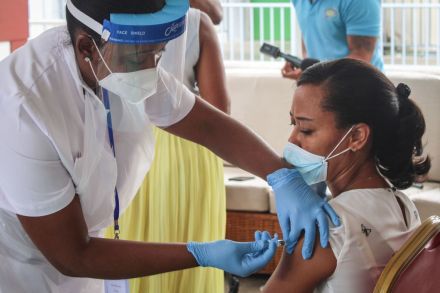
The Seychelles has become a place to watch. Known as the world’s most vaccinated nation, ahead of even Israel, a third wave of COVID is hitting the archipelago despite the fact that over 60 percent of its population has been fully vaccinated — and nearly 70 percent have received at least one shot. In April the Seychelles was hopeful it was soon to reach herd immunity. But now 456 new cases reported over three days (the population is approximately 98,000) has cooled optimism there — especially since a third of the new cases were fully vaccinated (the remainder had received only one shot or were unvaccinated). It’s perhaps too soon to draw conclusions, but it doesn’t look like good news for those hoping widespread vaccination will bring about herd immunity.

immunity

In defence of Biden’s Covid-19 patent waiver

For a man who is regularly derided by Republicans, president Joe Biden has racked up a fine number of achievements. He made his latest on 5 May, when he threw his support behind waiving the Covid-19 patents, overturning decades of American protection of its industries’ intellectual property rights. His words packed a punch: the Frankfurt-listed shares in BioNTech promptly lost 14 per cent, while Moderna and Novavax closed three to six per cent down in New York. The U.S. pharmaceutical industry was quick to denounce the measure, as Jeremy Levin, chair of the biotech trade association Bio, asserted that ‘securing vaccines rapidly will not be the result.’ But, in fact, that’s exactly what the result will be.

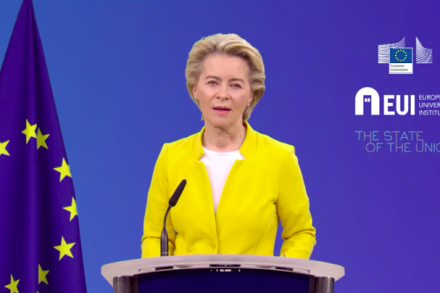
Watch: von der Leyen’s vaccine amnesia

How well has the EU dealt with the pandemic? According to Ursula von der Leyen, the bloc's performance has been world beating. In an address yesterday, the Commission president lauded her own performance while claiming that the EU had proven its detractors wrong. During her so-called 'state of the union', she said: We all heard the nagging questions, especially in the first months of this pandemic: aren't nation states better equipped to fight this crisis? Isn't our union of 27 too slow to react? And our processes too cumbersome and our stakeholders too diverse? Today I am here to say: Europe has proven these claims wrong...Most importantly we decided to procure vaccines together in our union.

Vaxxed lives matter!

From our US edition

Now that COVID-19 vaccines are widely available in the US, the CDC have released a handy chart to illustrate the relative risks of certain activities to vaccinated vs unvaccinated people. The color-coded chart, titled ‘Choosing Safer Activities’ and published this week, seems to be meant to persuade more people to get jabbed: the vaccinated figure is given a green light to do all sorts of things, including seeing friends, going to the movies and dining indoors, while the unvaccinated person gets a red or yellow danger alert for all but the smallest outdoor gatherings. However, the vaccinated figure is also pictured wearing a mask, which seems to suggest a startling lack of confidence in the vaccines' efficacy.

vaxxed protest

When will vaccines begin boosting the economy?

Britain may be about to go from one economic extreme to another. This winter the OECD calculated Britain suffered one of the highest levels of economic damage in the developed world, compared with the year before, due to its stringent lockdown. Fast forward to spring and the UK’s trajectory for economic recovery is now being revised, with forecasts only moving in one direction: up. Today alone, two heavy hitters boosted their predictions. This morning EY Item Club revised its 2021 growth forecast from 5 per cent to 6.8 per cent – which, if accurate, would see the UK grow at its fastest rate on record, recovering to pre-pandemic levels months earlier than originally anticipated.